
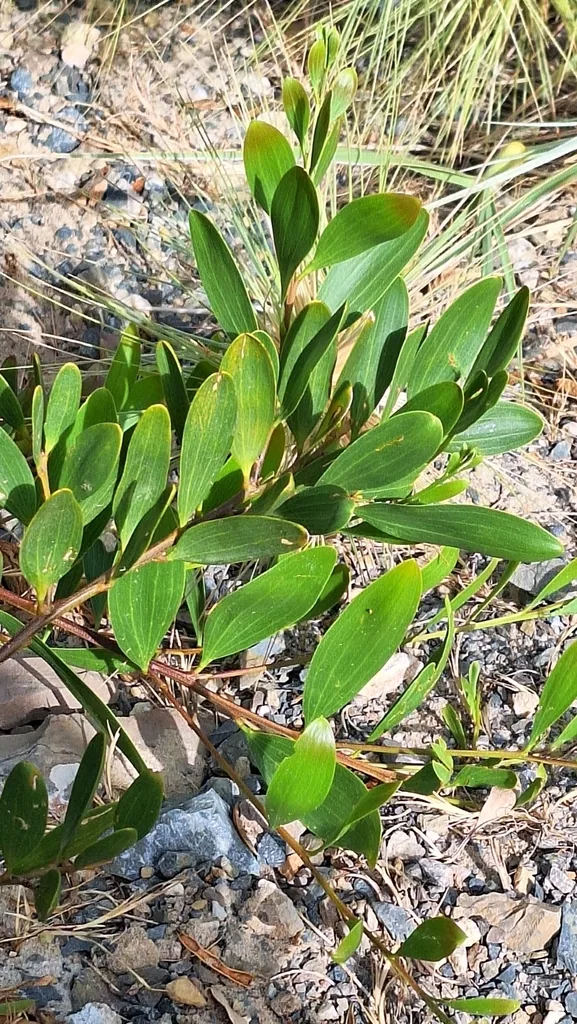

How to Grow and Care for Acacia longifolia
Acacia longifolia
Written by Emilio Marruso · last checked
Toxic to: People · Why
At a glance
This acacia is an easy, undemanding plant: give it full sun or light shade and well-drained soil, and it gets by on little water. It can grow up to 26 feet tall, and it gives back more than looks: its pollen-rich flowers are often used in fritters, and its seeds are edible and highly nutritious.
- Sun
Full sun; light shade is fine too
What the sources say (2)
Light: Full sun; light shade tolerated
A position in full sun or light shade is suitable and the species is tolerant of at least moderate frosts.
— Acacia longifolia - Australian Native Plants Society (Australia) [3] Grows best in full sun, may get a bit thin and stretched in shaded conditions.
— Acacia longifolia – Sydney Golden Wattle [6] - Water
Needs little water; the soil must drain well
What the sources say (2)
- Soil
Grows in many kinds of soil, as long as it never stays soggy
What the sources say (1)
Watering notes: Tolerates a range of soils provided they are not waterlogged
Plants are suited to a wide range of soil types provided they are not waterlogged.
— Acacia longifolia - Australian Native Plants Society (Australia) [3] - Harvest
The seeds are edible and very nutritious; the flowers are often used in fritters
- Size
Up to 26 ft tall
What the sources say (1)
Mature height: up to 800 cm (8 m)
Arbolillo perennifolio de hasta 8 m de altura, diferenciable de A. melanoxylon por tener la cor-teza
— Atlas de las Plantas Alóctonas Invasoras en España [2] - Propagation
From seed soaked in boiling water or scratched first; cuttings can work but are rarely used
What the sources say (2)
Propagation: Seed after pretreatment by soaking in boiling water or scarification; cuttings may succeed but are not often used
Propagation is relatively easy by normal seed raising methods following pretreatment by soaking in boiling water or by scarification.
— Acacia longifolia - Australian Native Plants Society (Australia) [3] Propagation: Seeds (better results with hot water treatment), heeled semi-hardwood cuttings in summer
— Sydney Golden Wattle (Acacia longifolia) [7] - Safety
In droughts the leaves can build up a poison that is dangerous for grazing animals
Overview
Acacia longifolia is an evergreen shrub or small tree, often cultivated in gardens as an ornamental. [1][6] It grows best in full sun, tolerates a range of soils that are not waterlogged, and is propagated from seed after pretreatment. [6][3] It is an aggressive invasive weed in parts of its native range and in several countries where it was introduced. [1]
This record is incomplete: the sources we read do not cover every field yet.
Not yet covered by our sources: Hardiness, coldest zone, Pruning
Acacia longifolia care
How to water Acacia longifolia
Watering
Low water; needs good drainage
Watering notes
Tolerates a range of soils provided they are not waterlogged
What the sources say (1)
Plants are suited to a wide range of soil types provided they are not waterlogged.How much light Acacia longifolia needs
Full sun; light shade tolerated
What the sources say (2)
A position in full sun or light shade is suitable and the species is tolerant of at least moderate frosts.Grows best in full sun, may get a bit thin and stretched in shaded conditions.How much cold Acacia longifolia can take
Hardiness, coldest zone
Not stated in the sources we read.
Hardiness, warmest zone
11 [winter low 4.4 to 10 °C (40 to 50 °F)]
What the sources say (1)
USDA: 9-11
Frost Tolerance: Young trees are very sensitive to frost
Sun Exposure: Full sunHow to propagate Acacia longifolia
Seed after pretreatment by soaking in boiling water or scarification; cuttings may succeed but are not often used
What the sources say (2)
Propagation is relatively easy by normal seed raising methods following pretreatment by soaking in boiling water or by scarification.Propagation: Seeds (better results with hot water treatment), heeled semi-hardwood cuttings in summerHow to grow Acacia longifolia
The plant
Family
Mimosaceae
What the sources say (1)
Clase: Magnoliopsida Cronq. Takht. & Zimmerm. Orden: Fabales Bromhead Familia: Mimosaceae R. Br. Especie: Acacia longifolia (Andrews) Willd., Sp. Pl. 4: 1052 (1806).Mature height
up to 800 cm (8 m)
What the sources say (1)
Arbolillo perennifolio de hasta 8 m de altura, diferenciable de A. melanoxylon por tener la cor-tezaRemedies
Each remedy shows what official sources say about it; traditional remedies without an official source are marked as such. Harmful ones are listed so you know to avoid them.
Getting rid of it
sydney golden wattle seedlings
hand pulling or digging out seedlings Not verified
Traditional remedy, not verified by an official source.
If hand pulling, try not to disturb the soil too much. This may encourage new growth of seeds already in the ground.
— boprc.govt.nz [9] How: Hand pull or dig seedlings all year round, with minimum soil disturbance.
sydney golden wattle mature plants
felling mature plants and ringbarking older trees Not verified
Traditional remedy, not verified by an official source.
Follow up treated areas 3 times per year. Crown lift to allow understory plants to establish or to underplant prior to controlling large trees.
— tiakitamakimakaurau.nz [10] Trees over 4 metres in height should be removed by a qualified arborist.
— tiakitamakimakaurau.nz [10] Do not mow site, as wattle recovers faster than native species and the higher light levels induce more seed germination.
— weedbusters.org.nz [11] How: Hand-pull seedlings, fell mature plants close to the ground, or ringbark older trees.
Is Acacia longifolia poisonous?
Reported by the source, quoted verbatim. This is not medical or veterinary advice: if a person or an animal may have eaten this plant, contact a poison control centre or a veterinarian.
Especially in times of drought, many Acacia species can concentrate high levels of the toxin Hydrogen cyanide in their foliage, making them dangerous for herbivores to eat.
[1]Genus-level warning: refers to the whole genus, not documented for this species
Calendar
Pruning
Not stated in the sources we read.
Months as given by the sources, which are mostly from the United States (northern hemisphere). In the southern hemisphere they shift by about six months.
Edibility
Reported by the source, quoted verbatim. Do not eat a plant on the basis of this page alone: identification mistakes can be dangerous.
Similar plants
- Silver wattle Acacia dealbata
- Golden wattle Acacia pycnantha
- Koa Acacia koa
- Acacia retinodes Acacia retinodes
- Abies grandis Abies grandis
- Abraham Trachystemon orientalis
- Abyssinian banana Ensete ventricosum
- Acanthus hungaricus Acanthus hungaricus
Sources
Every value above is quoted from these documents. Links lead to the original publisher.
- Acacia longifolia - Useful Temperate Plants · temperate.theferns.info, consulted
- Atlas de las Plantas Alóctonas Invasoras en España · miteco.gob.es, consulted
- Acacia longifolia - Australian Native Plants Society (Australia) · anpsa.org.au, consulted
- Acacia longifolia - Trees and Shrubs Online · treesandshrubsonline.org, consulted
- Acacia longifolia - Useful Tropical Plants · tropical.theferns.info, consulted
- Acacia longifolia – Sydney Golden Wattle · hornsby.nsw.gov.au, consulted
- Sydney Golden Wattle (Acacia longifolia) · desert-tropicals.com, consulted
- Acacia longifolia Profile – California Invasive Plant Council · cal-ipc.org, consulted
- boprc.govt.nz · boprc.govt.nz
- tiakitamakimakaurau.nz · tiakitamakimakaurau.nz
- weedbusters.org.nz · weedbusters.org.nz
Written by Emilio Marruso · last checked