
How to Grow and Care for Silver wattle
Acacia dealbata
Written by Emilio Marruso · last checked
Toxic to: People · Why
At a glance
Mimosa is an easygoing plant once it settles in: give it full sun and shelter from strong winds, and mature plants need very little water. Its pollen-rich flowers are even used in fritters, and a gum from the trunk is edible. Plant it in late spring, after the last frosts, and enjoy a plant that shrugs off drought.
- Sun
Full sun, sheltered from strong winds
What the sources say (2)
Light: Full sun, sheltered from strong winds
Grow mimosa tree in a sheltered, sunny spot in well drained, neutral to acidic soil.
— How to Grow a Mimosa Tree | BBC Gardeners World Magazine [4] Prefers a sandy loam and a very sunny position sheltered from strong winds
— Acacia dealbata - Useful Temperate Plants [5] - Water
Water regularly the first couple of weeks; once mature, only in long droughts
What the sources say (3)
Watering: Mature plants need very little water; water only during prolonged drought
La caratteristica della mimosa adulta è la sua scarsa richiesta d’acqua : bisogna bagnare solo a fronte di perdurante siccità.
— La mimosa, Acacia dealbata, fiorisce a marzo. Potatura - Cose di Casa [8] Watering notes: Water regularly for the first couple of weeks after planting; very drought tolerant and also tolerant of wet conditions
Water your mimosa tree regularly for the first couple of weeks after planting. After that, your tree will require very little care.
— How to Grow a Mimosa Tree | BBC Gardeners World Magazine [4] Although it prefers a well-drained soil, the plant is tolerant of both drought and wet conditions
— Acacia dealbata - Useful Temperate Plants [5] - Cold
Plant out only after the last frosts; frost can damage its growth in winter
What the sources say (2)
Planting: Late spring
seedlings raised in a greenhouse (fonte: Plants for a Future): Plant them out in late spring or early summer, after the last expected frosts
— Acacia dealbata - Useful Temperate Plants [5] Because it's not fully hardy, mimosa tree is best planted in late spring
— How to Grow a Mimosa Tree | BBC Gardeners World Magazine [4] - Soil
Acidic to neutral soil, pH 5.0–7.0
- Planting
Late spring, after the last frosts
What the sources say (2)
Planting: Late spring
seedlings raised in a greenhouse (fonte: Plants for a Future): Plant them out in late spring or early summer, after the last expected frosts
— Acacia dealbata - Useful Temperate Plants [5] Because it's not fully hardy, mimosa tree is best planted in late spring
— How to Grow a Mimosa Tree | BBC Gardeners World Magazine [4] - Pruning
Lightly trim frost-damaged growth back to living wood
- Harvest
The flowers go into fritters; the gum from the trunk is edible
- Watch out
Can spread into wild areas; pinch out suckers from the base as soon as they appear
- Propagation
By seed, soaked in boiling water or nicked before sowing
What the sources say (2)
Propagation: Seed (soaked in boiling water or scarified before sowing)
Propagate from seed that should be soaked in boiling water before sowing.
— Acacia dealbata | Australian Plants Society [3] may benefit from scarification before sowing to speed up germination
— Acacia dealbata - Useful Temperate Plants [5] - Sowing
Sow in spring in a greenhouse, best as soon as the seed is ripe
What the sources say (2)
- Safety
Its pollen can cause allergies
Overview
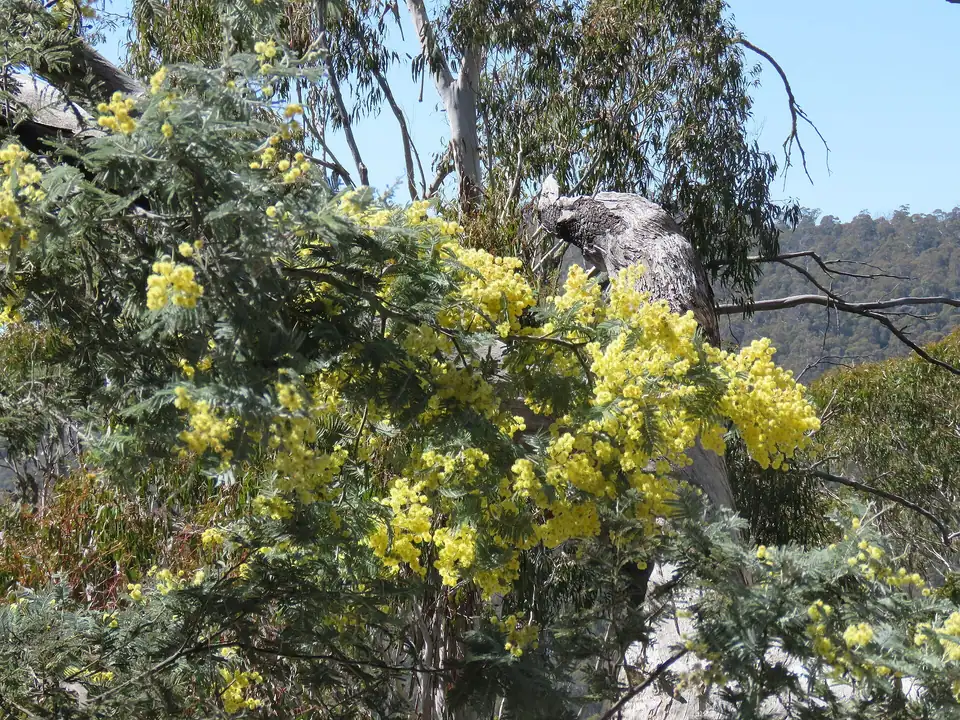
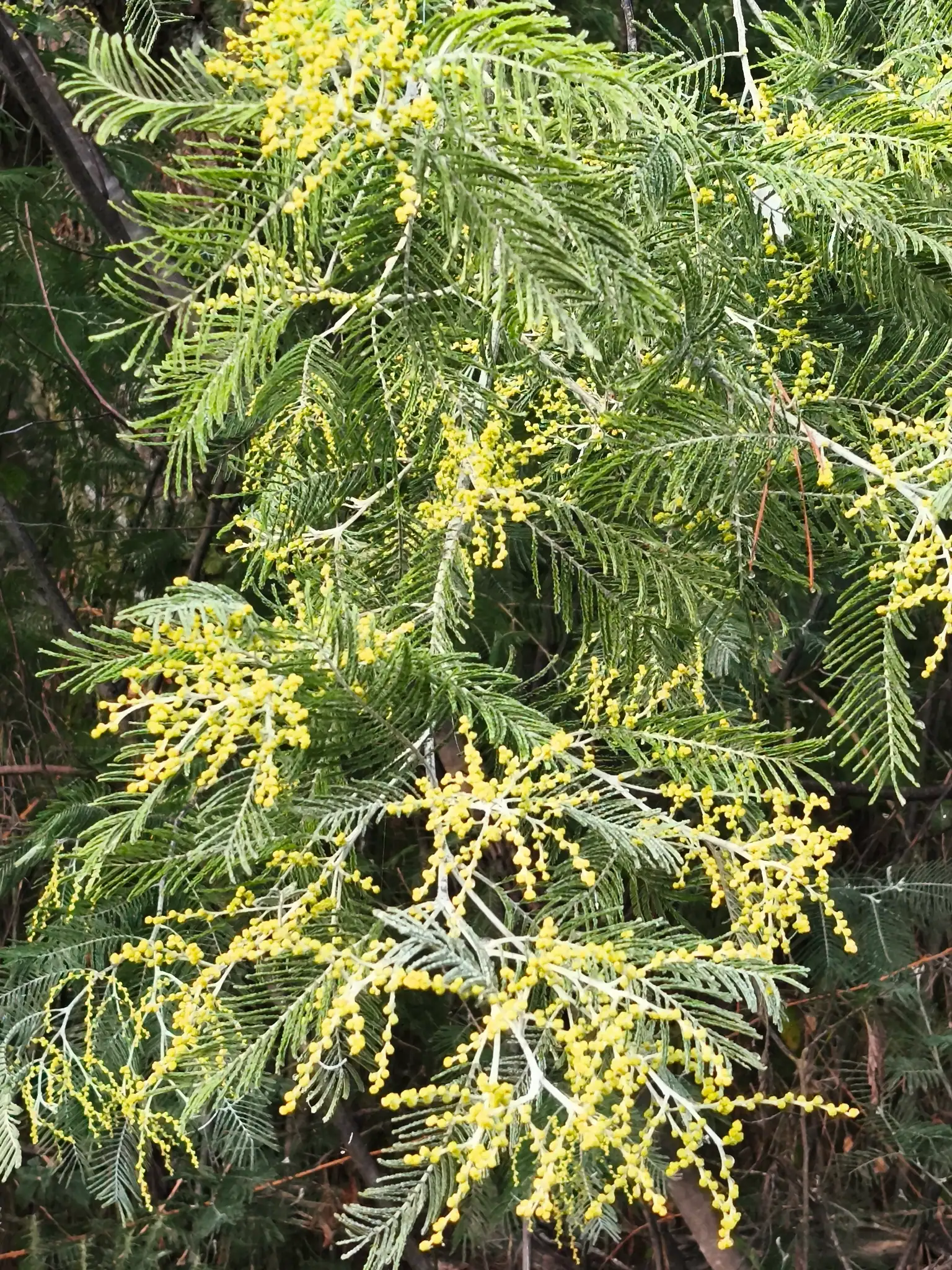
Silver wattle (mimosa) is an evergreen tree from south-eastern Australia and the most widely used ornamental mimosa in Europe. [2] It needs a sunny, sheltered position and well-drained soil, and it is not fully hardy. [4] It is considered a very dangerous invasive plant in temperate and subtropical areas, spreading by seed and by stump resprouting. [2]
This record is incomplete: the sources we read do not cover every field yet.
Not yet covered by our sources: Hardiness, coldest zone, Hardiness, warmest zone
Silver wattle care
How to water Silver wattle
Watering
Mature plants need very little water; water only during prolonged drought
What the sources say (1)
La caratteristica della mimosa adulta è la sua scarsa richiesta d’acqua : bisogna bagnare solo a fronte di perdurante siccità.Watering notes
Water regularly for the first couple of weeks after planting; very drought tolerant and also tolerant of wet conditions
What the sources say (2)
Water your mimosa tree regularly for the first couple of weeks after planting. After that, your tree will require very little care.Although it prefers a well-drained soil, the plant is tolerant of both drought and wet conditionsHow much light Silver wattle needs
Full sun, sheltered from strong winds
How much cold Silver wattle can take
Hardiness, coldest zone
Not stated in the sources we read.
Hardiness, warmest zone
Not stated in the sources we read.
Best soil for Silver wattle
Soil pH, minimum
5.0
What the sources say (1)
Prefers a pH in the range 5.5 - 6.5, tolerating 5 - 7Soil pH, maximum
7.0
What the sources say (1)
Prefers a pH in the range 5.5 - 6.5, tolerating 5 - 7How to propagate Silver wattle
Seed (soaked in boiling water or scarified before sowing)
How to grow Silver wattle
The plant
Family
Mimosaceae
What the sources say (1)
Clase: Magnoliopsida Cronq. Takht. & Zimmerm. Orden: Fabales Bromhead Familia: Mimosaceae R. Br. Especie: Acacia dealbata LinkSilver wattle pests and problems
Frost damage
Symptom: Frost-damaged growth in winter
What to do: Lightly trim back to living wood.
What the sources say (1)
You may also find frost-damaged growth in winter, lightly trim this back to living wood.
— How to Grow a Mimosa Tree | BBC Gardeners World Magazine [4] Suckers
Symptom: Suckers develop from the base
What to do: Pinch out suckers as soon as they appear.
What the sources say (1)
As soon as they appear, pinch out any suckers that develop from the base.
— How to Grow a Mimosa Tree | BBC Gardeners World Magazine [4] Invasiveness
Symptom: Colonises areas where natural vegetation has been destroyed, preventing its regeneration
What to do: Prevention: keep natural plant cover in good condition and fight forest fires; avoid using it in gardens in risk areas.
What the sources say (1)
Mantener en buen estado la cubierta vegetal natural y luchar activamente contra los incendios forestales, tanto en prevención como en extin-ción, es lo mejor que puede hacerse para evitar su expansión.
— Atlas de las Plantas Alóctonas Invasoras en España [2]
Remedies
Each remedy shows what official sources say about it; traditional remedies without an official source are marked as such. Harmful ones are listed so you know to avoid them.
Getting rid of it
invasive silver wattle seedlings
hand pulling or digging seedlings Not verified
Traditional remedy, not verified by an official source.
Only control where wattle is a recent threat, of low incidence or poses a high ecological threat.
— weedbusters.org.nz [9] How: Hand pull or dig seedlings (all year round), keeping soil disturbance to a minimum.
Is Silver wattle poisonous?
Reported by the source, quoted verbatim. This is not medical or veterinary advice: if a person or an animal may have eaten this plant, contact a poison control centre or a veterinarian.
Il sistema radicale della mimosa è super-ficiale e aumenta il rischio di erosione delle rive. Il suo polline può causare allergie.
[7]
Calendar
Planting
Late spring
What each source says
seedlings raised in a greenhouse (fonte: Plants for a Future): Late spring or early summer, after the last expected frosts
What the sources say (2)
seedlings raised in a greenhouse (fonte: Plants for a Future): Plant them out in late spring or early summer, after the last expected frostsBecause it's not fully hardy, mimosa tree is best planted in late springPruning
The sources give different values depending on region, zone or growing conditions.
What each source says
According to BBC Gardeners World: After flowering, no later than late summer
According to RHS: Mid-spring (usually April), once the risk of frost has passed
According to Cose di Casa: After flowering, in spring
What the sources say (3)
According to BBC Gardeners World: If you want to trim your mimosa or keep its growth in check, cut back after flowering but no later than late summerAccording to RHS: It is best to undertake any pruning in mid-spring (usually April), once the risk of frost has passed.According to Cose di Casa: Dopo la fioritura, in primavera, si accorciano i rami, si eliminano quelli secchi, deboli o filati.Months as given by the sources, which are mostly from the United States (northern hemisphere). In the southern hemisphere they shift by about six months.
Edibility
Reported by the source, quoted verbatim. Do not eat a plant on the basis of this page alone: identification mistakes can be dangerous.
Similar plants
- Acacia longifolia Acacia longifolia
- Golden wattle Acacia pycnantha
- Koa Acacia koa
- Acacia retinodes Acacia retinodes
- Abies grandis Abies grandis
- Abraham Trachystemon orientalis
- Abyssinian banana Ensete ventricosum
- Acanthus hungaricus Acanthus hungaricus
Sources
Every value above is quoted from these documents. Links lead to the original publisher.
- CATÁLOGO ESPAÑOL DE ESPECIES EXÓTICAS · miteco.gob.es, consulted
- Atlas de las Plantas Alóctonas Invasoras en España · miteco.gob.es, consulted
- Acacia dealbata | Australian Plants Society · resources.austplants.com.au, consulted
- How to Grow a Mimosa Tree | BBC Gardeners World Magazine · gardenersworld.com, consulted
- Acacia dealbata - Useful Temperate Plants · temperate.theferns.info, consulted
- Acacia: Pruning Guide | RHS Advice · rhs.org.uk, consulted
- Gruppo di lavoro · m4.ti.ch, consulted
- La mimosa, Acacia dealbata, fiorisce a marzo. Potatura - Cose di Casa · cosedicasa.com, consulted
- weedbusters.org.nz · weedbusters.org.nz
Written by Emilio Marruso · last checked