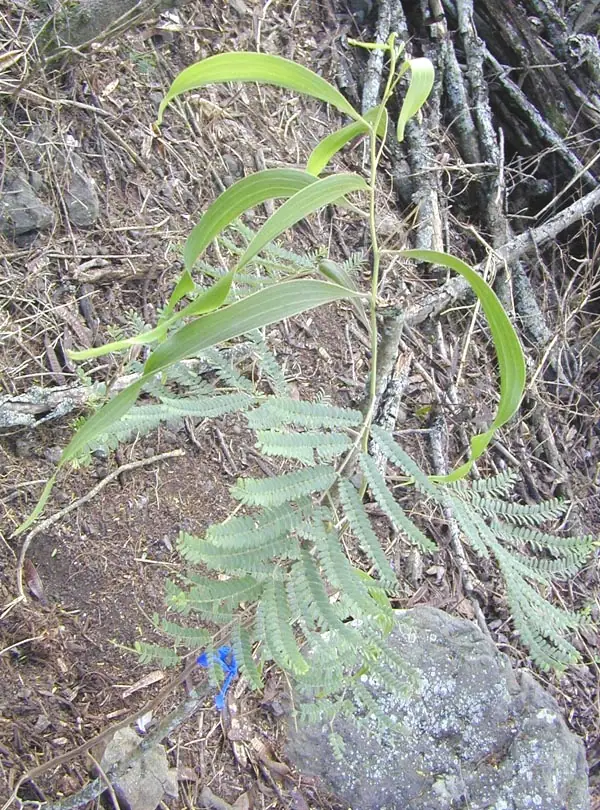
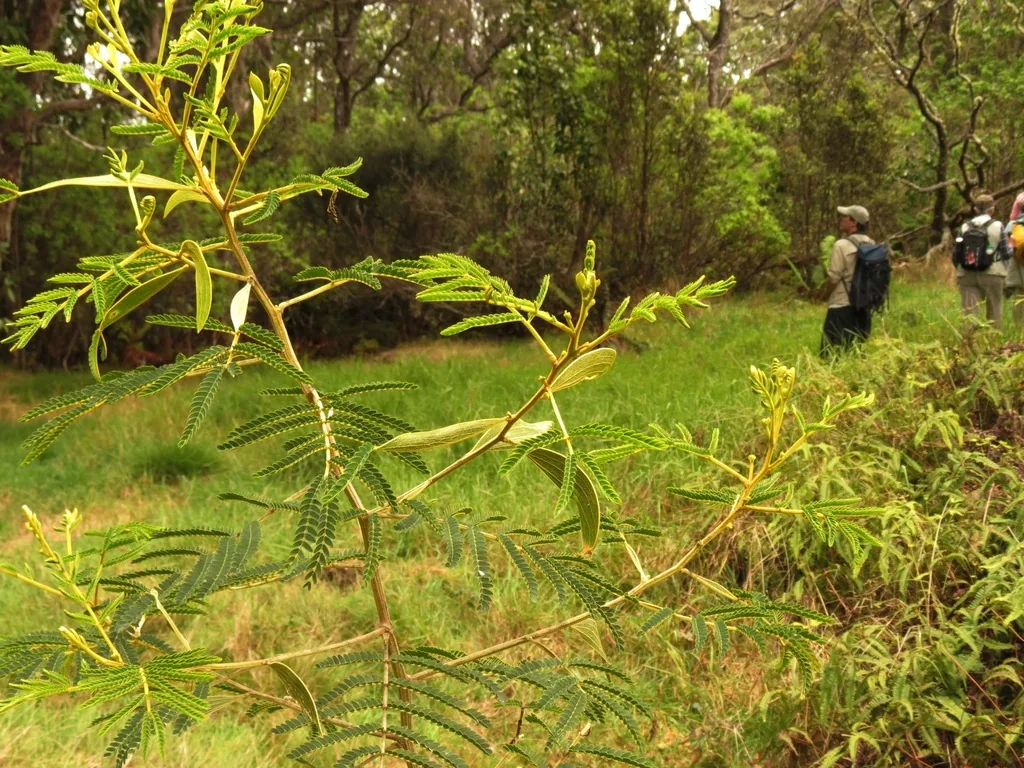

How to Grow and Care for Koa
Acacia koa
Written by Emilio Marruso · last checked
At a glance
Koa is a majestic tree that can reach 115 feet tall and spread 20 to 40 feet wide. It loves full sun and well-drained soil, and it takes nitrogen from the air, so it usually needs no extra feeding. Water it until it settles in, then just once a month in dry months, and watch it become a true giant.
- Sun
Full sun
- Water
Water until it settles in; then once a month in dry months, more often near the coast
What the sources say (2)
Watering: Once a month during dry months, more often for coastal trees
Water once a month during dry months, more often for
— Acacia koa | Native Hawaiʻi Plants [1] Watering notes: Water until established, then regular rainfall is adequate in Hawaii; soil must drain well
Water the tree until it is established, but then regular rainfall should be adequate. Make sure that the soil drains well.
— Acacia Koa Care - Learn How To Grow Koa Acacia Trees In The Landscape | Gardening Know How [2] - Soil
Soil must drain well
What the sources say (1)
Watering notes: Water until established, then regular rainfall is adequate in Hawaii; soil must drain well
Water the tree until it is established, but then regular rainfall should be adequate. Make sure that the soil drains well.
— Acacia Koa Care - Learn How To Grow Koa Acacia Trees In The Landscape | Gardening Know How [2] - Spacing
30–40 ft between trees
- Feeding
No extra nitrogen: it takes nitrogen from the air and usually doesn't need it
What the sources say (1)
Avoid: Extra nitrogen: koa fixes nitrogen from the air and usually does not need it
Lightly fertilize seedlings 2 or 3 weeks after secondary growth. Since koa are nitrogen fixing trees, additional nitrogen is usually not necessary.
— Acacia koa | Native Hawaiʻi Plants [1] - Pests
Aphids, whiteflies and beetles; root rot, wilt and rust
What the sources say (4)
Pests: aphids, whiteflies, Chinese rose beetles, seed weevils, koa seed worm, koa moth, black twig borer, Acacia psyllid
Koa is known to attract aphids, whiteflies, Chinese rose beetles, seed weevils ( Aracerus levipennis, Stator spp.), koa seed worm ( Cryptophlebia illepida ), koa moth,*
— Acacia koa | Native Hawaiʻi Plants [1] A serious pest attacking koa in lower elevation is the black twig borer ( Xylosandrus compactus , Xyloborus spp.).
— Acacia koa | Native Hawaiʻi Plants [1] The Acacia psyllid ( Acizzia uncatoides ) can greatly infest koa plantations resulting in branchy, poorly formed trees.
— Acacia koa | Native Hawaiʻi Plants [1] Diseases: Fusarium wilt, root rot, rusts, wood-rotting fungi
Several fungi ( Fusarium oxysporum , F. solani , Calonectria spp.), root rot ( Armillaria spp. Pythium sp.), and rusts ( Ateloclauda spp., Endoraecium spp.) on phyllodes are known infect koa.
— Acacia koa | Native Hawaiʻi Plants [1] - Watch out
One mower or trimmer cut can let rot in and kill it: keep a wide ring of mulch around it
- Size
Up to 115 ft tall and 20–40 ft wide
What the sources say (2)
Mature height: 3505.2 cm (115 ft)
Koa is the largest native tree in the Hawaiian Islands reaching heights of about 115 feet (33 m)!
— Acacia koa | Native Hawaiʻi Plants [1] Mature width: 609.6-1219.2 cm (20-40 ft)
Koa can have a canopy spread of 40 feet or more. But typically, with a canopy spread of 20-40 feet.
— Acacia koa | Native Hawaiʻi Plants [1] - Propagation
From seed: nick the seed coat and soak the seeds before sowing
What the sources say (1)
Propagation: Seed (with scarification and soaking)
Germination can be done from seed with the help of scarification and soaking.
— Acacia koa | Koa | Plant Pono [3]
Overview
Koa is the largest native tree of the Hawaiian Islands, reaching about 115 feet (33 m) in the wild. [1] It does best in full sun with well-drained soil and is easily damaged by mowers and trimmers. [1][2]
This record is incomplete: the sources we read do not cover every field yet.
Not yet covered by our sources: Hardiness, coldest zone, Hardiness, warmest zone, Pruning
Koa care
How to water Koa
Watering
Once a month during dry months, more often for coastal trees
What the sources say (1)
Water once a month during dry months, more often forWatering notes
Water until established, then regular rainfall is adequate in Hawaii; soil must drain well
What the sources say (1)
Water the tree until it is established, but then regular rainfall should be adequate. Make sure that the soil drains well.How much light Koa needs
How much cold Koa can take
Hardiness, coldest zone
Not stated in the sources we read.
Hardiness, warmest zone
Not stated in the sources we read.
Where to grow Koa
How to propagate Koa
Seed (with scarification and soaking)
What the sources say (1)
Germination can be done from seed with the help of scarification and soaking.How to grow Koa
The plant
Mature height
3505.2 cm (115 ft)
What the sources say (1)
Koa is the largest native tree in the Hawaiian Islands reaching heights of about 115 feet (33 m)!Mature width
609.6-1219.2 cm (20-40 ft)
What the sources say (1)
Koa can have a canopy spread of 40 feet or more. But typically, with a canopy spread of 20-40 feet.Pests and diseases
Pests
aphids, whiteflies, Chinese rose beetles, seed weevils, koa seed worm, koa moth, black twig borer, Acacia psyllid
What the sources say (3)
Koa is known to attract aphids, whiteflies, Chinese rose beetles, seed weevils ( Aracerus levipennis, Stator spp.), koa seed worm ( Cryptophlebia illepida ), koa moth,*A serious pest attacking koa in lower elevation is the black twig borer ( Xylosandrus compactus , Xyloborus spp.).The Acacia psyllid ( Acizzia uncatoides ) can greatly infest koa plantations resulting in branchy, poorly formed trees.Diseases
Fusarium wilt, root rot, rusts, wood-rotting fungi
What the sources say (1)
Several fungi ( Fusarium oxysporum , F. solani , Calonectria spp.), root rot ( Armillaria spp. Pythium sp.), and rusts ( Ateloclauda spp., Endoraecium spp.) on phyllodes are known infect koa.Fertilizing
When
The sources give different values depending on region, zone or growing conditions.
What each source says
seedlings: Lightly, 2 or 3 weeks after secondary growth
What the sources say (1)
seedlings: Lightly fertilize seedlings 2 or 3 weeks after secondary growth. Since koa are nitrogen fixing trees, additional nitrogen is usually not necessary.Avoid
Extra nitrogen: koa fixes nitrogen from the air and usually does not need it
What the sources say (1)
Lightly fertilize seedlings 2 or 3 weeks after secondary growth. Since koa are nitrogen fixing trees, additional nitrogen is usually not necessary.Koa pests and problems
Mower and trimmer damage
Symptom: One small cut can cause rot to set in and often ends up killing the tree.
What to do: Keep a wide ring of mulch around koa trees to protect them from physical damage.
What the sources say (2)
They are susceptible to damage from lawn mowers and weed whackers and one small cut can cause rot to set in and often ends up killing a tree.
— Acacia Koa Care - Learn How To Grow Koa Acacia Trees In The Landscape | Gardening Know How [2] Keep a wide ring of mulch around koa trees to protect them from physical damage.
— Acacia Koa Care - Learn How To Grow Koa Acacia Trees In The Landscape | Gardening Know How [2]
Remedies
Each remedy shows what official sources say about it; traditional remedies without an official source are marked as such. Harmful ones are listed so you know to avoid them.
Treating the plant
mower and trimmer damage
wide ring of mulch Works
How: Keep a wide ring of mulch around koa trees and keep weed-eating implements away.
Keep a wide ring of mulch around koa trees to protect them from physical damage.
— Acacia Koa Care - Learn How To Grow Koa Acacia Trees In The Landscape | Gardening Know How [2] What the evidence says How to prevent unnecessary injury for these fragile trees? J. B. says that “a wide band of mulch and keep weed-eating implements away.”
— Acacia koa | Native Hawaiʻi Plants [1]
black twig borer
pruning infected twigs Works
How: Periodic pruning and removal of infected twigs.
Periodic pruning and removal of infected twigs is a best management program for this pest.
— Acacia koa | Native Hawaiʻi Plants [1] What the evidence says Periodic pruning and removal of infected twigs is a best management program for this pest.
— Acacia koa | Native Hawaiʻi Plants [1]
aphids
insecticidal soap spray Not verified
Traditional remedy, not verified by an official source.
How: Spray the aphids with insecticidal soap; two or three sprayings a few days apart prevent their reappearance.
chinese rose beetle
bright light at dusk Not verified
Traditional remedy, not verified by an official source.
How: Plant susceptible plants under a bright light left on for a few hours after dusk.
handpicking beetles Not verified
Traditional remedy, not verified by an official source.
How: Handpick and kill the beetles.
field fence barrier Not verified
Traditional remedy, not verified by an official source.
How: A cylinder of field fence covered with weedcloth reduces rose beetle damage.
fusarium wilt
improving soil drainage and pH Not verified
Traditional remedy, not verified by an official source.
How: Improve soil conditions such as better drainage and raising the soil pH.
lime to raise soil pH Not verified
Traditional remedy, not verified by an official source.
How: Amend the soil around the plant with lime (calcium carbonate) to increase the pH.
soil solarization Not verified
Traditional remedy, not verified by an official source.
How: Use plastic sheeting to trap the sun's heat and kill the fusarium in the top layers of soil.
removing the diseased plant Not verified
Traditional remedy, not verified by an official source.
How: If the plant continues to decline or dies, remove it and dispose of it in municipal garbage, not in a compost pile.
Calendar
Pruning
Not stated in the sources we read.
Months as given by the sources, which are mostly from the United States (northern hemisphere). In the southern hemisphere they shift by about six months.
Indicative values
Values from a secondary source, not checked word for word like the rest of this page. Use them as a starting point.
- Life cycle
- PerennialIndicative value, adapt it to your climate · Secondary source
- Drought tolerant
- yesIndicative value, adapt it to your climate · Secondary source
- Soil pH
- 5.5-6.5Indicative value, adapt it to your climate · Secondary source
- USDA hardiness zones
- 10-11 [winter low −1.1 to 10 °C (30 to 50 °F)]Indicative value, adapt it to your climate · Secondary source
- Care level
- MediumIndicative value, adapt it to your climate · Secondary source
- Growth rate
- HighIndicative value, adapt it to your climate · Secondary source
- Pruning
- December, JanuaryIndicative value, adapt it to your climate · Secondary source
Similar plants
- Acacia longifolia Acacia longifolia
- Golden wattle Acacia pycnantha
- Silver wattle Acacia dealbata
- Acacia retinodes Acacia retinodes
- Abies grandis Abies grandis
- Abraham Trachystemon orientalis
- Abyssinian banana Ensete ventricosum
- Acanthus hungaricus Acanthus hungaricus
Sources
Every value above is quoted from these documents. Links lead to the original publisher.
- Acacia koa | Native Hawaiʻi Plants · nativeplants.hawaii.edu, consulted
- Acacia Koa Care - Learn How To Grow Koa Acacia Trees In The Landscape | Gardening Know How · gardeningknowhow.com, consulted
- Acacia koa | Koa | Plant Pono · plantpono.org, consulted
Written by Emilio Marruso · last checked