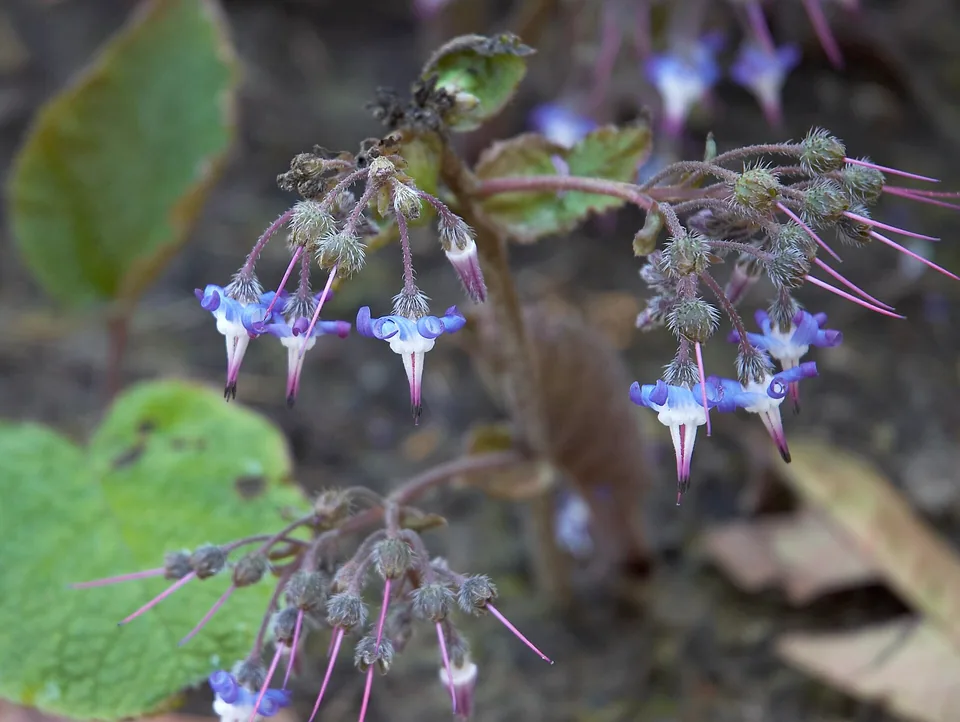


How to Grow and Care for Abraham
Trachystemon orientalis
Written by Emilio Marruso · last checked
At a glance
Trachystemon is an easygoing perennial that is happy in partial to deep shade, and it can grow in full sun too. It tolerates drought, spreads on its own to fill a natural, shady corner and needs little care beyond keeping it in its place. As a bonus, its flowers, stems, underground stems and young leaves can all be prepared and eaten.
- Sun
Partial to deep shade; it can also grow in full sun
What the sources say (2)
Light: Partial to deep shade; can grow in full sun
It can grow in full sun, but for the best performance, shade is the answer.
— Trachystemon orientalis (Abraham, Isaac and Jacob, Early-flowering Borage, Eastern Borage, Oriental Borage) | North Carolina Extension Gardener Plant Toolbox [1] Light: Deep shade (Less than 2 hours to no direct sunlight) Partial Shade (Direct sunlight only part of the day, 2-6 hours)
— Trachystemon orientalis (Abraham, Isaac and Jacob, Early-flowering Borage, Eastern Borage, Oriental Borage) | North Carolina Extension Gardener Plant Toolbox [1] - Water
Tolerates drought
What the sources say (1)
Watering: Drought tolerant
low maintenance with showy flowers as well as tolerant to erosion, drought, and heavy shade.
— Trachystemon orientalis (Abraham, Isaac and Jacob, Early-flowering Borage, Eastern Borage, Oriental Borage) | North Carolina Extension Gardener Plant Toolbox [1] - Cold
Survives winters down to −10 °F (−23.3 °C)
Very hardy · USDA 6a · RHS H7 · Z6
What the sources say (2)
Hardiness, coldest zone: 6a [winter low −23.3 to −20.6 °C (−10 to −5 °F)]
USDA Plant Hardiness Zone: 6a, 6b, 7a, 7b, 8a, 8b, 9a, 9b
— Trachystemon orientalis (Abraham, Isaac and Jacob, Early-flowering Borage, Eastern Borage, Oriental Borage) | North Carolina Extension Gardener Plant Toolbox [1] Hardiness, warmest zone: 9b [winter low −3.9 to −1.1 °C (25 to 30 °F)]
USDA Plant Hardiness Zone: 6a, 6b, 7a, 7b, 8a, 8b, 9a, 9b
— Trachystemon orientalis (Abraham, Isaac and Jacob, Early-flowering Borage, Eastern Borage, Oriental Borage) | North Carolina Extension Gardener Plant Toolbox [1] - Soil
Moist soil that drains well
What the sources say (1)
Watering notes: Moist, well-drained soil
Soil Drainage: Good Drainage Moist
— Trachystemon orientalis (Abraham, Isaac and Jacob, Early-flowering Borage, Eastern Borage, Oriental Borage) | North Carolina Extension Gardener Plant Toolbox [1] - Harvest
Flowers, stems, underground stems and young leaves can all be prepared and eaten
- Watch out
Spreads by underground stems and can turn weedy: plant it in a shady wild corner and keep it in its place
- Size
12–18 in tall and 18–24 in wide
What the sources say (2)
Mature height: 30.48-45.72 cm (1 ft 0 in - 1 ft 6 in)
Dimensions: Height: 1 ft. 0 in. - 1 ft. 6 in. Width: 1 ft. 6 in. - 2 ft. 0 in.
— Trachystemon orientalis (Abraham, Isaac and Jacob, Early-flowering Borage, Eastern Borage, Oriental Borage) | North Carolina Extension Gardener Plant Toolbox [1] Mature width: 45.72-60.96 cm (1 ft 6 in - 2 ft 0 in)
Dimensions: Height: 1 ft. 0 in. - 1 ft. 6 in. Width: 1 ft. 6 in. - 2 ft. 0 in.
— Trachystemon orientalis (Abraham, Isaac and Jacob, Early-flowering Borage, Eastern Borage, Oriental Borage) | North Carolina Extension Gardener Plant Toolbox [1] - Propagation
Divide the clumps or take root cuttings
What the sources say (1)
Propagation: Division; root cutting
Recommended Propagation Strategy: Division Root Cutting
— Trachystemon orientalis (Abraham, Isaac and Jacob, Early-flowering Borage, Eastern Borage, Oriental Borage) | North Carolina Extension Gardener Plant Toolbox [1] - Containers
Grows in containers too
What the sources say (1)
In containers: Yes
Landscape Location: Container Naturalized Area
— Trachystemon orientalis (Abraham, Isaac and Jacob, Early-flowering Borage, Eastern Borage, Oriental Borage) | North Carolina Extension Gardener Plant Toolbox [1]
Overview
Trachystemon orientalis is a low-maintenance herbaceous perennial ground cover with showy flowers, tolerant of drought and heavy shade. [1] It spreads by rhizomes and can be somewhat weedy, so it suits a shady naturalized area. [1] Its flowers, stems, rhizomes and young leaves can be prepared and eaten. [1]
This record is incomplete: the sources we read do not cover every field yet.
Not yet covered by our sources: Pruning
Abraham care
How to water Abraham
Watering
Drought tolerant
What the sources say (1)
low maintenance with showy flowers as well as tolerant to erosion, drought, and heavy shade.Watering notes
Moist, well-drained soil
What the sources say (1)
Soil Drainage:
Good Drainage
MoistHow much light Abraham needs
Partial to deep shade; can grow in full sun
What the sources say (2)
It can grow in full sun, but for the best performance, shade is the answer.Light:
Deep shade (Less than 2 hours to no direct sunlight)
Partial Shade (Direct sunlight only part of the day, 2-6 hours)How much cold Abraham can take
Hardiness, coldest zone
6a [winter low −23.3 to −20.6 °C (−10 to −5 °F)]
What the sources say (1)
USDA Plant Hardiness Zone:
6a, 6b, 7a, 7b, 8a, 8b, 9a, 9bHardiness, warmest zone
9b [winter low −3.9 to −1.1 °C (25 to 30 °F)]
What the sources say (1)
USDA Plant Hardiness Zone:
6a, 6b, 7a, 7b, 8a, 8b, 9a, 9bWhere to grow Abraham
Yes
What the sources say (1)
Landscape Location:
Container
Naturalized AreaHow to propagate Abraham
Division; root cutting
What the sources say (1)
Recommended Propagation Strategy:
Division
Root CuttingHow to grow Abraham
The plant
Life cycle
perennial
What the sources say (1)
Early-flowering Borage is a herbaceous perennial that is low maintenance with showy flowers as well as tolerant to erosion, drought, and heavy shade.Family
Boraginaceae
What the sources say (1)
Genus:
Trachystemon
Species:
orientalis
Family:
Boraginaceae
Life Cycle:
Perennial
Recommended Propagation Strategy:
DivisionMature height
30.48-45.72 cm (1 ft 0 in - 1 ft 6 in)
What the sources say (1)
Dimensions:
Height: 1 ft. 0 in. - 1 ft. 6 in.
Width: 1 ft. 6 in. - 2 ft. 0 in.Mature width
45.72-60.96 cm (1 ft 6 in - 2 ft 0 in)
What the sources say (1)
Dimensions:
Height: 1 ft. 0 in. - 1 ft. 6 in.
Width: 1 ft. 6 in. - 2 ft. 0 in.Abraham pests and problems
Weedy spread
Symptom: Spreads by rhizomes and naturalizes, becoming somewhat weedy
What to do: Best used in a shady naturalized area; requires little care except to keep it in its place
What the sources say (1)
Spreading by rhizomes, it will naturalize in your garden. This will also cause this plant to be somewhat weedy. It may be best used in a shady naturalized area.
— Trachystemon orientalis (Abraham, Isaac and Jacob, Early-flowering Borage, Eastern Borage, Oriental Borage) | North Carolina Extension Gardener Plant Toolbox [1]
Remedies
Each remedy shows what official sources say about it; traditional remedies without an official source are marked as such. Harmful ones are listed so you know to avoid them.
Treating the plant
scruffy summer foliage
cutting back with a strimmer Not verified
Traditional remedy, not verified by an official source.
How: If the plant starts to look scruffy in summer, go over it lightly with a strimmer to cut it all back; it grows back in about a week.
Getting rid of it
spreading rhizomes
dig up the area and sift the soil Not verified
Traditional remedy, not verified by an official source.
How: Dig up the entire sector and sift the soil before replacing it, to pick out even very small sections of rhizome.
black plastic tarp Not verified
Traditional remedy, not verified by an official source.
How: Cover the whole area with a black plastic tarp wider than the plant spread and leave it in place for an entire growing season.
repeated cutting to the ground Not verified
Traditional remedy, not verified by an official source.
How: Starting at the beginning of the season, cut the plant to the ground and cut back every new shoot as soon as it appears.
Calendar
Pruning
Not stated in the sources we read.
Months as given by the sources, which are mostly from the United States (northern hemisphere). In the southern hemisphere they shift by about six months.
Edibility
Reported by the source, quoted verbatim. Do not eat a plant on the basis of this page alone: identification mistakes can be dangerous.
The flowers, stems, rhizomes and young leaves can all be prepared and eaten.
[1]
Indicative values
Values from a secondary source, not checked word for word like the rest of this page. Use them as a starting point.
- Drought tolerant
- yesIndicative value, adapt it to your climate · Secondary source
- Soil pH
- 6-7.5Indicative value, adapt it to your climate · Secondary source
- Care level
- MediumIndicative value, adapt it to your climate · Secondary source
- Growth rate
- HighIndicative value, adapt it to your climate · Secondary source
- Pruning
- February, March, AprilIndicative value, adapt it to your climate · Secondary source
Similar plants
- Alkanet Anchusa azurea
- Blue Showers Cynoglossum amabile
- Blueweed Echium vulgare
- Borage Borago officinalis
- Broad-leaf Waterleaf Hydrophyllum canadense
- Bugloss Anchusa capensis
- Clasping Heliotrope Heliotropium amplexicaule
- Comfrey Symphytum grandiflorum
Sources
Every value above is quoted from these documents. Links lead to the original publisher.
- Trachystemon orientalis (Abraham, Isaac and Jacob, Early-flowering Borage, Eastern Borage, Oriental Borage) | North Carolina Extension Gardener Plant Toolbox · plants.ces.ncsu.edu, consulted
Written by Emilio Marruso · last checked