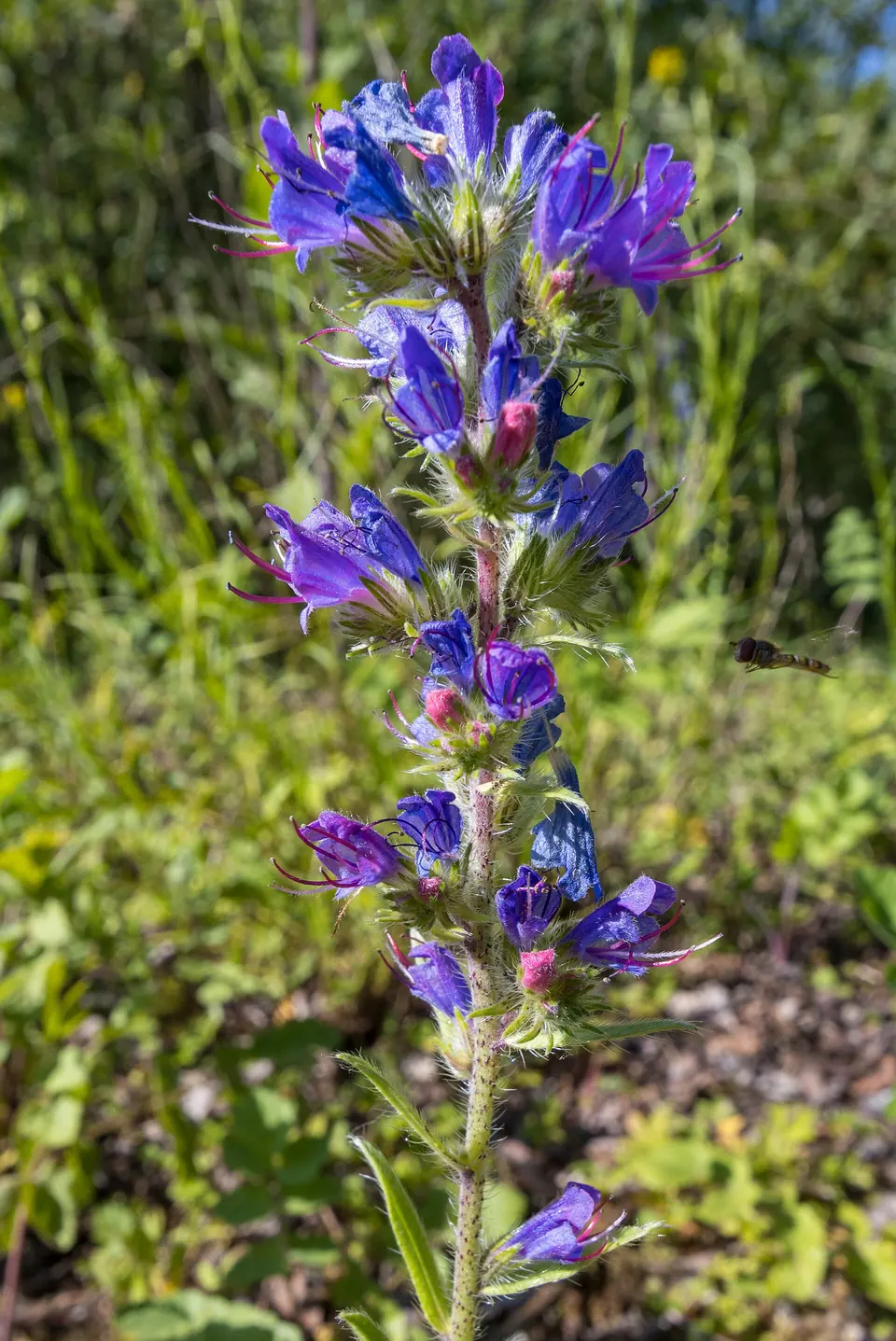


How to Grow and Care for Blueweed
Echium vulgare
Written by Emilio Marruso · last checked
Toxic to: Horses, Livestock, People · Why
At a glance
Viper's bugloss is an easygoing plant for sunny spots: give it full sun and it shrugs off drought. It grows 1 to 3 feet tall, needs no rich soil or extra feeding, and has few problems beyond the occasional slug. Grow it from seed, and snip off faded blooms so it doesn't spread too freely.
- Sun
Full sun
What the sources say (1)
Light: Full sun
Light: Full sun (6 or more hours of direct sunlight a day)
— Echium vulgare (Adderwort, Blue Devil, Blue Thistle, Blueweed, Bugloss, Cat's Tail, North American Blueweed, Snake Flower, Viper's Bugloss, Viper's Grass, Viper's Herb) | North Carolina Extension Gardener Plant Toolbox [1] - Water
Handles drought well: little watering needed
What the sources say (1)
Watering: Drought tolerant
If you desire to grow this plant, it is tolerant of poor soils in full sun and is drought and deer-resistant.
— Echium vulgare (Adderwort, Blue Devil, Blue Thistle, Blueweed, Bugloss, Cat's Tail, North American Blueweed, Snake Flower, Viper's Bugloss, Viper's Grass, Viper's Herb) | North Carolina Extension Gardener Plant Toolbox [1] - Feeding
Skip rich soil and extra feeding: too much fertilizer means fewer flowers
What the sources say (2)
Avoid: Do not over-fertilize or plant it in rich soil
Do not over-fertilize or plant in rich soils as this will decrease flowering.
— Echium vulgare (Adderwort, Blue Devil, Blue Thistle, Blueweed, Bugloss, Cat's Tail, North American Blueweed, Snake Flower, Viper's Bugloss, Viper's Grass, Viper's Herb) | North Carolina Extension Gardener Plant Toolbox [1] Signs of excess: Reduced flowering
Do not over-fertilize or plant in rich soils as this will decrease flowering.
— Echium vulgare (Adderwort, Blue Devil, Blue Thistle, Blueweed, Bugloss, Cat's Tail, North American Blueweed, Snake Flower, Viper's Bugloss, Viper's Grass, Viper's Herb) | North Carolina Extension Gardener Plant Toolbox [1] - Pests
Only the occasional slug; no other big problems
What the sources say (1)
Pests: slugs
Insects, Diseases, and Other Plant Problems: No significant problems. Slugs are an occasional issue.
— Echium vulgare (Adderwort, Blue Devil, Blue Thistle, Blueweed, Bugloss, Cat's Tail, North American Blueweed, Snake Flower, Viper's Bugloss, Viper's Grass, Viper's Herb) | North Carolina Extension Gardener Plant Toolbox [1] - Watch out
Faded flowers drop lots of seed and it can turn weedy: cut them off
- Size
1 to 3 ft tall and 1 to 1.5 ft wide
What the sources say (2)
Mature height: 30-91 cm (1-3 ft)
Dimensions: Height: 1 ft. 0 in. - 3 ft. 0 in. Width: 1 ft. 0 in. - 1 ft. 6 in.
— Echium vulgare (Adderwort, Blue Devil, Blue Thistle, Blueweed, Bugloss, Cat's Tail, North American Blueweed, Snake Flower, Viper's Bugloss, Viper's Grass, Viper's Herb) | North Carolina Extension Gardener Plant Toolbox [1] Mature width: 30-46 cm (1-1.5 ft)
Dimensions: Height: 1 ft. 0 in. - 3 ft. 0 in. Width: 1 ft. 0 in. - 1 ft. 6 in.
— Echium vulgare (Adderwort, Blue Devil, Blue Thistle, Blueweed, Bugloss, Cat's Tail, North American Blueweed, Snake Flower, Viper's Bugloss, Viper's Grass, Viper's Herb) | North Carolina Extension Gardener Plant Toolbox [1] - Propagation
Grows from seed; it usually lives two years
What the sources say (2)
Propagation: Seed
Life Cycle: Annual Biennial Recommended Propagation Strategy: Seed
— Echium vulgare (Adderwort, Blue Devil, Blue Thistle, Blueweed, Bugloss, Cat's Tail, North American Blueweed, Snake Flower, Viper's Bugloss, Viper's Grass, Viper's Herb) | North Carolina Extension Gardener Plant Toolbox [1] Life cycle: biennial (sometimes annual)
Blueweed is a weedy biennial or annual plant native to Europe and Asia in the borage family.
— Echium vulgare (Adderwort, Blue Devil, Blue Thistle, Blueweed, Bugloss, Cat's Tail, North American Blueweed, Snake Flower, Viper's Bugloss, Viper's Grass, Viper's Herb) | North Carolina Extension Gardener Plant Toolbox [1] - Safety
Poisonous to people, horses and farm animals; the bristly hairs can irritate skin
Overview
Echium vulgare is a weedy biennial or annual wildflower in the borage family that grows up to 3 feet [91 cm] tall with spikes of blue flowers. [1] It tolerates poor soils in full sun and is drought and deer-resistant. [1] The plant is poisonous to livestock and humans, and its bristly hairs can cause dermatitis. [1]
Blueweed care
Measurements in square brackets are our conversion into the other unit system; the quoted text is unchanged.
How to water Blueweed
Drought tolerant
What the sources say (1)
If you desire to grow this plant, it is tolerant of poor soils in full sun and is drought and deer-resistant.How much light Blueweed needs
Full sun
What the sources say (1)
Light:
Full sun (6 or more hours of direct sunlight a day)How much cold Blueweed can take
Hardiness, coldest zone
The sources give different values depending on region, zone or growing conditions.
What each source says
According to NC State Extension (Echium vulgare): 4a [winter low −34.4 to −31.7 °C (−30 to −25 °F)]
According to NC State Extension (genus Echium): 9a [winter low −6.7 to −3.9 °C (20 to 25 °F)]
What the sources say (3)
According to NC State Extension (Echium vulgare): USDA Plant Hardiness Zone:
4a, 4b, 5a, 5b, 6a, 6b, 7a, 7b, 8a, 8bAccording to NC State Extension (genus Echium): USDA Plant Hardiness Zone:
9a, 9b, 10a, 10b, 11a, 11bUSDA Plant Hardiness Zone:
4a, 4b, 5a, 5b, 6a, 6b, 7a, 7b, 8a, 8bHardiness, warmest zone
The sources give different values depending on region, zone or growing conditions.
What each source says
According to NC State Extension (Echium vulgare): 8b [winter low −9.4 to −6.7 °C (15 to 20 °F)]
According to NC State Extension (genus Echium): 11b [winter low 7.2 to 10 °C (45 to 50 °F)]
What the sources say (3)
According to NC State Extension (Echium vulgare): USDA Plant Hardiness Zone:
4a, 4b, 5a, 5b, 6a, 6b, 7a, 7b, 8a, 8bAccording to NC State Extension (genus Echium): USDA Plant Hardiness Zone:
9a, 9b, 10a, 10b, 11a, 11bUSDA Plant Hardiness Zone:
4a, 4b, 5a, 5b, 6a, 6b, 7a, 7b, 8a, 8bHow to propagate Blueweed
Seed
What the sources say (1)
Life Cycle:
Annual
Biennial
Recommended Propagation Strategy:
SeedHow to grow Blueweed
The plant
Life cycle
biennial (sometimes annual)
What the sources say (1)
Blueweed is a weedy biennial or annual plant native to Europe and Asia in the borage family.Family
Boraginaceae
What the sources say (1)
Attributes:
Genus:
Echium
Species:
vulgare
Family:
Boraginaceae
Uses (Ethnobotany):
In ancient times the root was used to treat snake bites.Mature height
30-91 cm (1-3 ft)
What the sources say (1)
Dimensions:
Height: 1 ft. 0 in. - 3 ft. 0 in.
Width: 1 ft. 0 in. - 1 ft. 6 in.Mature width
30-46 cm (1-1.5 ft)
What the sources say (1)
Dimensions:
Height: 1 ft. 0 in. - 3 ft. 0 in.
Width: 1 ft. 0 in. - 1 ft. 6 in.Pests and diseases
Pests
slugs
What the sources say (1)
Insects, Diseases, and Other Plant Problems: No significant problems. Slugs are an occasional issue.Fertilizing
Avoid
Do not over-fertilize or plant it in rich soil
What the sources say (1)
Do not over-fertilize or plant in rich soils as this will decrease flowering.Signs of excess
Reduced flowering
What the sources say (1)
Do not over-fertilize or plant in rich soils as this will decrease flowering.Blueweed pests and problems
Slugs
Symptom: Occasional slug damage; no other significant problems
What the sources say (1)
No significant problems. Slugs are an occasional issue.
— Echium vulgare (Adderwort, Blue Devil, Blue Thistle, Blueweed, Bugloss, Cat's Tail, North American Blueweed, Snake Flower, Viper's Bugloss, Viper's Grass, Viper's Herb) | North Carolina Extension Gardener Plant Toolbox [1] Aggressive reseeding
Symptom: Spent blooms seed aggressively; the plant is considered by some gardeners a weed
What to do: Deadhead spent blooms
What the sources say (1)
Be sure to deadhead spent blooms to prevent aggressive reseeding.
— Echium vulgare (Adderwort, Blue Devil, Blue Thistle, Blueweed, Bugloss, Cat's Tail, North American Blueweed, Snake Flower, Viper's Bugloss, Viper's Grass, Viper's Herb) | North Carolina Extension Gardener Plant Toolbox [1] Contact dermatitis
Symptom: Bristly hairs on foliage and stem can cause dermatitis for some
What the sources say (1)
The bristly hairs on both the foliage and stem can cause dermatitis for some.
— Echium vulgare (Adderwort, Blue Devil, Blue Thistle, Blueweed, Bugloss, Cat's Tail, North American Blueweed, Snake Flower, Viper's Bugloss, Viper's Grass, Viper's Herb) | North Carolina Extension Gardener Plant Toolbox [1]
Remedies
Each remedy shows what official sources say about it; traditional remedies without an official source are marked as such. Harmful ones are listed so you know to avoid them.
Treating the plant
slugs
hand-picking slugs Not verified
Traditional remedy, not verified by an official source.
How: Pick these pests off by hand when they appear; they usually show up after heavy rains or with poor soil drainage.
Getting rid of it
invasive spread
hand pulling and digging young plants Works
Wear long sleeves and sturdy gloves because the hairy stems and foliage can cause severe skin irritation
— gardeningknowhow.com [7] How: Pull or dig the plants before they bloom (midsummer), after watering the area the day before to soften the soil so the whole taproot, up to 24 inches (60 cm), comes out; pull new seedlings as they appear.
you can maintain control by hand pulling and digging young plants. Wear long sleeves and sturdy gloves because the hairy stems and foliage can cause severe skin irritation
— gardeningknowhow.com [7] What the evidence says To control weeds without using manufactured herbicides, the best option is to pull, remove or interfere with weed growth. Regularly pulling, hoeing or mowing weeds and encouraging grass to grow and out-compete the weeds is an excellent solution.
— extension.usu.edu [8] mowing to prevent seed set Works
How: Mow the area to keep plants from setting seed; mowing is helpful but does not eradicate established plants.
You can also mow the area to keep plants from setting seed.
— gardeningknowhow.com [7] What the evidence says To control weeds without using manufactured herbicides, the best option is to pull, remove or interfere with weed growth. Regularly pulling, hoeing or mowing weeds and encouraging grass to grow and out-compete the weeds is an excellent solution.
— extension.usu.edu [8]
aggressive reseeding
deadheading spent blooms Works
How: Deadhead spent blooms to prevent aggressive reseeding; pluck flowers off as soon as they wilt and put them in the trash.
Be sure to deadhead spent blooms to prevent aggressive reseeding.
— Echium vulgare (Adderwort, Blue Devil, Blue Thistle, Blueweed, Bugloss, Cat's Tail, North American Blueweed, Snake Flower, Viper's Bugloss, Viper's Grass, Viper's Herb) | North Carolina Extension Gardener Plant Toolbox [1] What the evidence says Be sure to deadhead spent blooms to prevent aggressive reseeding.
— Echium vulgare (Adderwort, Blue Devil, Blue Thistle, Blueweed, Bugloss, Cat's Tail, North American Blueweed, Snake Flower, Viper's Bugloss, Viper's Grass, Viper's Herb) | North Carolina Extension Gardener Plant Toolbox [1]
Is Blueweed toxic to pets?
Reported by the source, quoted verbatim. This is not medical or veterinary advice: if a person or an animal may have eaten this plant, contact a poison control centre or a veterinarian.
Animals
This plant is poisonous to livestock and humans.
[1]- Poisonous parts
Poison Part: Bark Flowers Fruits Leaves Roots Sap/Juice Seeds Stems
[1]- Toxic principle
Poison Toxic Principle: Pyrrolizidine alkaloids
[1]- Symptoms
CAUSES SEVERE PAIN IN THE MOUTH IF EATEN! Digestive upset and liver damage as well as skin irritation from the coarse hairs.
[1]- Symptoms
It is toxic to livestock due to a buildup of toxins in the liver.
[1]- Severity
Poison Severity: Medium Poison Symptoms: CAUSES ONLY LOW TOXICITY IF EATEN.
[1]
It is toxic to livestock due to a buildup of toxins in the liver.
[1]- Poisonous parts
Poison Part: Bark Flowers Fruits Leaves Roots Sap/Juice Seeds Stems
[1]- Toxic principle
Poison Toxic Principle: Pyrrolizidine alkaloids
[1]- Symptoms
It is toxic to livestock due to a buildup of toxins in the liver.
[1]- Severity
Poison Severity: Medium Poison Symptoms: CAUSES ONLY LOW TOXICITY IF EATEN.
[1]
Problems: Contact Dermatitis Poisonous to Humans Problem for Horses
[1]
People
Digestive upset and liver damage as well as skin irritation from the coarse hairs.
[1]- Poisonous parts
Poison Part: Bark Flowers Fruits Leaves Roots Sap/Juice Seeds Stems
[1]- Toxic principle
Poison Toxic Principle: Pyrrolizidine alkaloids
[1]- Symptoms
CAUSES SEVERE PAIN IN THE MOUTH IF EATEN! Digestive upset and liver damage as well as skin irritation from the coarse hairs.
[1]- Severity
Poison Severity: Medium Poison Symptoms: CAUSES ONLY LOW TOXICITY IF EATEN.
[1]
Calendar
Pruning
The sources give different values depending on region, zone or growing conditions.
What each source says
According to NC State Extension (Echium vulgare): Late winter or early spring
According to NC State Extension (genus Echium): Fall
What the sources say (3)
According to NC State Extension (Echium vulgare): This low maintenance plant should be cut back in the late winter months or early springAccording to NC State Extension (genus Echium): Pruning is not necessary, however, a trim in the fall as well as the removal of the old flower spikesThis low maintenance plant should be cut back in the late winter months or early spring in order to provide the optimum conditions for a showy display of flowers and foliage.Months as given by the sources, which are mostly from the United States (northern hemisphere). In the southern hemisphere they shift by about six months.
Indicative values
Values from a secondary source, not checked word for word like the rest of this page. Use them as a starting point.
- Hours of sun
- 6-8 hoursIndicative value, adapt it to your climate · Secondary source
- Drought tolerant
- yesIndicative value, adapt it to your climate · Secondary source
- Soil
- Rocky, gravelly, dry, Well-drainedIndicative value, adapt it to your climate · Secondary source
- Soil pH
- 6-8Indicative value, adapt it to your climate · Secondary source
- Care level
- MediumIndicative value, adapt it to your climate · Secondary source
- Growth rate
- HighIndicative value, adapt it to your climate · Secondary source
Similar plants
- Echium wildpretii Echium wildpretii
- Paterson's Curse Echium plantagineum
- Italian viper's bugloss Echium italicum
- Pride of Madeira Echium candicans
- Abraham Trachystemon orientalis
- Alkanet Anchusa azurea
- Blue Showers Cynoglossum amabile
- Borage Borago officinalis
Sources
Every value above is quoted from these documents. Links lead to the original publisher.
- Echium vulgare (Adderwort, Blue Devil, Blue Thistle, Blueweed, Bugloss, Cat's Tail, North American Blueweed, Snake Flower, Viper's Bugloss, Viper's Grass, Viper's Herb) | North Carolina Extension Gardener Plant Toolbox · plants.ces.ncsu.edu, consulted
- Bugloss - Echium vulgare | North Carolina Extension Gardener Plant Toolbox · plants.ces.ncsu.edu, consulted
- Viper's Grass - Echium vulgare | North Carolina Extension Gardener Plant Toolbox · plants.ces.ncsu.edu, consulted
- Viper's Herb - Echium vulgare | North Carolina Extension Gardener Plant Toolbox · plants.ces.ncsu.edu, consulted
- Blue Thistle - Echium vulgare | North Carolina Extension Gardener Plant Toolbox · plants.ces.ncsu.edu, consulted
- Echium (Blue Devil., Blueweed, Viper's Bugloss) | North Carolina Extension Gardener Plant Toolbox · plants.ces.ncsu.edu, consulted
- gardeningknowhow.com · gardeningknowhow.com
- extension.usu.edu · extension.usu.edu
Written by Emilio Marruso · last checked