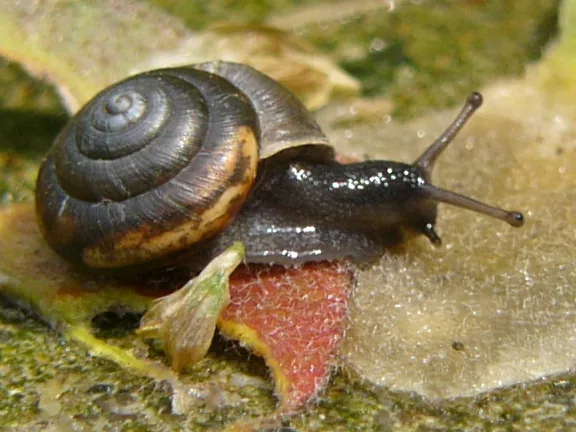

Mollusc
Slugs
Stylommatophora
Written by Emilio Marruso
Classification: Mollusca › Gastropoda
Plants it attacks
Plants in our guide where this problem is reported. Open a plant to see the sources.
- Sunset Huskmallow
Symptom: Listed as possible plant problems.
- Bear's Breeches
Symptom: Occasional feeding damage
- Bear's Breeches
Symptom: Slugs and snails can do damage.
- Pheasant's Eye
Symptom: Plant may be damaged by slugs.
- Century Plant
Symptom: Weevil can be troublesome; slugs and snails may damage foliage; root rot may occur in poorly drained or overly moist soils
- Broadleaf wild leek
Symptom: Damage to young seedlings.
- Parrot Flower
Symptom: Slugs can occur
- Garden chervil
Symptom: Slugs are listed as the pest to watch for.
- Japanese Jack-in-the-pulpit
Symptom: Pests to watch for
- Sea Thrift
Symptom: Listed as pests and disease to watch for
- Little Brown Jugs
Symptom: Snails and slugs are occasional visitors
- Wild Ginger
Symptom: Occasional pests.
Also reported on: African Blood Lily, African Blue Lily, African Marigold, Aji, Algerian Iris, Allegheny Stonecrop, Alumroot, American ginseng, American Water-Pennywort, Angelica, Annual Candytuft, Appalachian Bellflower, Appalachian Sunflower, Asiatic pennywort, Asparagus, Autumn Crocus, Autumn Fern, Autumn Sage, Balloon Flower, Barren Strawberry, Basil, Belladonna, Bellflower, Bellwort, Bent White Trillium, Bergenia, Betony, Betony, Big-leaf Aster, Bitter Melon, Black-eyed Susan, Blackberry Lily, Bleeding Heart, Bloodroot, Bloody Dock, Blue Flax, Blue Iris, Blue Star Creeper, Bluebead Lily, Bluebells, Blueweed, Bog White Viola, Boston Fern, Bougainvillea, Broad Beech Fern, Broad Wood Fern, Broad-leaf Waterleaf, Brodiaea, Brown-Eyed Susan, Bulblet Bladder Fern, Bush Clematis, Bush Clematis, Cabbage, Caladium, Calendula, Canadian Violet, Candytuft, Canterbury Bells, Cardinal Flower, Cardoon, Carolina Bellwort, Carolina Larkspur, Carolina Phlox, Carolina Pink, Carpathian Bellflower, Carpet Sedum, Catesby's Trillium, Celandine Poppy, Celery, Chameleon Plant, Chicory, Chinese Ground Orchid, Chinese Pink, Chinese Wild Ginger, Clary Sage, Coastal Spiderlily, Cobra Lily, Cockscomb, Coleus, Comfrey, Comfrey, Common Goldstar, Common Mullein, Common Sorrel, Common turmeric, Common Valerian, Coral Bells, Coriander, Corn, Cornflower Aster, Corsican Hellebore, Creeping Jenny, Creeping Phlox, Creeping Thyme, Crimson River Lily, Cultivated endive, Cultivated radish, Daylily, Daylily, Delphinium, Dew Flower, Dogfennel, Donkey's Ears, Downy Lobelia, Dusty Miller, Dutchman's Breeches, Dwarf Iris, Dwarf Iris, Dwarf Larkspur, Dwarf Larkspur, Dwarf Wakerobin, Dysosma, Early Meadowrue, Eastern Gray Beardtongue, Eastern Shooting Star, Ebony Spleenwort, Edelweiss, Eleocharis dulcis, English Iris, Eryngo, European lily of the valley, Evening Primrose, Evergreen Orpine, Evergreen Woodfern, Feverfew, Field Pansy, Field pumpkin, Field Pussytoes, Findern Flower, Fireweed, Flowering Flax, Foamflower, Forest Lily, Forget-me-not, Forget-me-not, Fosteriana Tulips, Foxglove, Foxglove Beardtongue, French Marigold, Fringed Bleeding Heart, Fringed Poppy Mallow, Garden lettuce, Garden lovage, Garden pea, Garlic Chives, Gentian, Giant Coneflower, Glade Fern, Globe Amaranth, Golden Bell Clematis, Goldenseal, Great Blue Lobelia, Green Dragon, Green-and-Gold, Guinea, Hairy Toad Lily, Hairy Yellow Violet, Hardy Fushia, Hardy Gloxinia, Heath Aster, Hellebore, Hollyhock, Hosta, Hyacinth, Hydrangea, Iris, Irish Moss, Italian Arum, Ivy Geranium, Jack-in-the-pulpit, Jacob's Ladder, Japanese Aster, Japanese ginger, Japanese Painted Fern, Japanese Parsley, Japanese Roof Iris, Jerusalem Artichoke, Jeweled Wakerobin, Jonquil, Kahili Ginger, Kangaroo Paw, Kaufmanniana Tulips, Kenilworth Ivy, Kidneyleaf Violet, Lady Tulip, Lady's Mantle, Large Bellwort, Large-Flowered Trillium, Larger Blue Flag Iris, Late Figwort, Lemon Marigold, Lenten Rose, Leopard Plant, Leopard's-Bane, Lesser Celandine, Ligularia, Lilyturf, Lilyturf, Little Heartleaf, Liverwort, Loquat, Louisiana Wakerobin, Lungwort, Lungwort, Lungwort, Marsh Blue Violet, Marshallia, Mazus, Meadow Anemone, Meadowrue, Meadowsweet, Mexican Sunflower, Moccasin Flower, Mondo Grass, Mondo Grass, Moonflower, Moss Rose, Moss Sandwort, Moss Stonecrop, Mother Spleenwort, Mottled Wakerobin, Mountain Hydrangea, Mouseear Chickweed, Naked Lady, Nasturtium, Navelwort, Nettle-leaved Bellflower, New York Fern, New Zealand Flax, New Zealand Hair Sedge, Nodding Trillium, Northern Maidenhair, Orange Fringed Orchid, Orchid Daffodil, Oriental Poppy, Oxlip, Painted Trillium, Pale Violet, Pansy, Patrinia scabiosifolia, Peach-leaved Bellflower, Peacock-eye Pink, Perennial Wallrocket, Persian Buttercup, Pincushion Flower, Pineapple Lily, Poppy Anemone, Poppy Mallow, Prairie Trillium, Primrose, Primrose, Queen's Cup, Quinoa, Rain Lily, Rain Lily, Red Spider Lily, Red Trillium, Rock Soapwort, Rocketsalad, Round-lobed Hepatica, Rue, Rue Anemone, Rugosa Rose, Runner Bean, Saffron, Sage, Savannah Iris, Scarlett Strawberry, Sessile Bellwort, Siberian bugloss, Siberian Iris, Silver Sage, Sneezeweed, Snowflake, Society Garlic, Solomon's Seal, Sorrel, Southern Blue Flag Iris, Southern Lady Fern, Southern Red Trillium, Southern Sneezeweed, Southern Woodfern, Spearleaf Violet, Spider Lily, Spiked Lobelia, Spinach, Spinulose Woodfern, Spotted Bellflower, Spring Beauty, Spring Meadow Saffron, Spring Starflower, Squash, Squash, Squirrel Corn, St. Bernard's Lily, Star of Bethlehem, Star of Persia, Stinking Hellebore, Stonecrop, Stonecrop, Stonecrop, Stonecrop, Stonecrop, Stonecrop, Strawberry, Strawflower, Summer Bluet, Sunflower, Swamp Lily, Sweet Betsy, Sweet Flag, Sweet pea, Sweet Pitcher Plant, Sweet White Violet, Sweet William, Sweet Woodruff, Sweetscented marigold, Tall Larkspur, Tea Camellia, Texas Clematis, Threadleaf Coreopsis, Thyme, Tickseed, Toad Lily, Toadshade Trillium, Tuberose, Turk's-cap Lily, Turtlehead, Turtlehead, Twinleaf, Twinspur, Twisted Trillium, Umbrella-leaf, Vasey's Trillium, Violet, Virgin's-Bower, Virginia Heartleaf, Walking Fern, Walter's Violet, Water Iris, White Clintonia, White Turtlehead, Whitetop Pitcher Plant, Wild Geranium, Wild Lupine, Wild White Violet, Willow Leaf Foxglove, Winter Flowering Clematis, Winter Squash, Wood Anemone, Woodland Sage, X heucherella, Yellow Archangel, Yellow Fumewort, Yellow Lady Slipper, Yellow Trillium, Yucca brevifolia, Yulan, Zigzag Spiderwort, Zinnia
Remedies
What our plant sheets report, with the outcome checked against official sources. Traditional remedies without an official source are flagged.
Treat
beer trap Works
How: Shallow pans of stale beer sunk so that the lip of the container is even with the soil surface; replace the beer when it dries up or is diluted by rain.
Reported for 46 plants: Bear's Breeches, Field Pussytoes, Wild Ginger, Mother Spleenwort, Bellflower, Canterbury Bells
hand-picking Works
How: pick them off the plant instead of using pesticides as this delicate lily is easily affected by chemicals
Reported for 33 plants: Garlic Chives, Parrot Flower, St. Bernard's Lily, Leopard's-Bane, Spring Beauty, Virgin's-Bower
handpicking Works
How: When found, these pests can be removed by handpicking.
Reported for 29 plants: Wild Ginger, Japanese Painted Fern, Bulblet Bladder Fern, Twinspur, Autumn Fern, Pineapple Lily
picking by hand Works
How: Handpick at night, about two hours after sunset, with a flashlight; place captured slugs and snails in a container of hot soapy water for later disposal.
Reported for 22 plants: Japanese Jack-in-the-pulpit, Little Brown Jugs, Mother Spleenwort, Walking Fern, Fringed Poppy Mallow, Yellow Fumewort
copper barrier Works
How: Mesh copper screens or sheeting 8 inches wide around the plants to protect.
Reported for 18 plants: Betony, Yellow Lady Slipper, Spinulose Woodfern, Pineapple Lily, Leopard Plant, Gentian
diatomaceous earth Works
How: Apply it to areas where slugs crawl; an inch-wide band around the plants to protect, reapplied after heavy rains.
Reported for 11 plants: Betony, Squirrel Corn, Broad Wood Fern, Crimson River Lily, Iris, Basil
beer trap Partly works
How: Bury beer traps at ground level in the garden and check traps daily.
Reported for 24 plants: Wood Anemone, Green Dragon, Little Brown Jugs, Walking Fern, Betony, Turtlehead
diatomaceous earth Partly works
How: Sprinkle diatomaceous earth around the plants; reapply after rain or watering.
Reported for 16 plants: Wild Ginger, Twinspur, Gentian, Goldenseal, Broad-leaf Waterleaf, Annual Candytuft
diatomaceous earth barrier Partly works
How: Natural barriers based on ash, diatomaceous earth or eggshells, which work in dry weather and mainly on the smaller slugs and snails.
Reported for 13 plants: Bear's Breeches, Japanese Painted Fern, Chinese Ground Orchid, Big-leaf Aster, Hosta, Mountain Hydrangea
copper barrier Partly works
How: Use a 4- to 6- inch-wide band of copper, buried an inch below the soil or attached around the edge of a raised bed.
Reported for 11 plants: Wood Anemone, St. Bernard's Lily, Ebony Spleenwort, Bulblet Bladder Fern, Guinea, Common Goldstar
beer traps Partly works
How: Bury beer traps at ground level in the garden to catch snails and slugs and check them daily.
Reported for 9 plants: St. Bernard's Lily, Belladonna, Spring Beauty, Virgin's-Bower, Gentian, Goldenseal
copper tape Partly works
How: Surround plants with copper tape or flashing, wide enough for the slug and kept clean and dry.
Reported for 6 plants: Little Brown Jugs, Chinese Wild Ginger, Japanese Parsley, Broad Wood Fern, Lungwort, Vasey's Trillium
beer trap Official source, not independently tested
How: A trap baited with beer, or with water, granulated sugar and yeast.
Reported for 37 plants: Sunset Huskmallow, Northern Maidenhair, Japanese Jack-in-the-pulpit, Chinese Wild Ginger, Virginia Heartleaf, Ebony Spleenwort
diatomaceous earth Official source, not independently tested
How: Use the powder as a barrier around plants; slugs that cross it dry out and die.
Reported for 16 plants: Little Brown Jugs, Little Heartleaf, Chinese Wild Ginger, Virginia Heartleaf, Tickseed, Evergreen Woodfern
handpicking Official source, not independently tested
How: Slugs and snails can be removed by handpicking. The best time to look for them is a few hours after dark using a flashlight.
Reported for 12 plants: Little Heartleaf, Chinese Wild Ginger, Virginia Heartleaf, New Zealand Hair Sedge, Appalachian Sunflower, Glade Fern
board trap Official source, not independently tested
How: Lay a board in the garden overnight; remove and dispose of slugs and snails from the underside in the morning.
Reported for 9 plants: Kangaroo Paw, Chinese Wild Ginger, Peach-leaved Bellflower, Spotted Bellflower, White Clintonia, American Water-Pennywort
copper barrier Official source, not independently tested
How: Surround raised beds or individual plants with a 3-inch-wide band of copper; make sure there are no slugs inside the barrier.
Reported for 8 plants: Chinese Ground Orchid, Turtlehead, Water Iris, Spiked Lobelia, Jacob's Ladder, Stonecrop
removing mulch and leaf litter Official source, not independently tested
How: Remove mulch and leaf litter near plants.
Reported for 7 plants: Wild Ginger, Chinese Wild Ginger, Eastern Shooting Star, Sweet Betsy, Mottled Wakerobin, Dwarf Wakerobin
beer trap Not verified
How: set a bowl of beer with the rim level with the ground
Reported for 43 plants: African Blue Lily, Broadleaf wild leek, Leopard's-Bane, Asparagus, Siberian bugloss, Cockscomb
beer traps Not verified
How: set beer traps around the pot
Reported for 28 plants: Sweet Flag, Naked Lady, Celery, Southern Lady Fern, Bergenia, Cabbage
diatomaceous earth Not verified
How: A spread of diatomaceous earth around the plant, per the source.
Reported for 11 plants: Bear's Breeches, Poppy Anemone, Bergenia, Aji, Dutchman's Breeches, Sweet Woodruff
hand picking Not verified
How: go out into your garden at night with a flashlight, grab any slugs or snails that you find, and dispose of them in sealed plastic bags.
Reported for 7 plants: Jack-in-the-pulpit, Bergenia, Delphinium, Corsican Hellebore, Stinking Hellebore, Sweet Pitcher Plant
coffee grounds Not verified
How: Coffee grounds spread against snails.
Reported for 6 plants: Carpathian Bellflower, Crimson River Lily, Algerian Iris, Creeping Jenny, Prairie Trillium, Rain Lily
copper tape Not verified
How: copper wire or tape around the plants
Reported for 6 plants: African Blue Lily, Celery, Rocketsalad, Algerian Iris, Star of Bethlehem, Nasturtium
coffee grounds Not proven
How: Coffee grounds are sometimes scattered as a deterrent.
Reported for 9 plants: St. Bernard's Lily, Japanese Parsley, Kenilworth Ivy, Gentian, Stonecrop, Cornflower Aster
crushed eggshells Not proven
How: Sometimes suggested as a deterrent barrier around plants.
Reported for 5 plants: Gentian, Stonecrop, Cornflower Aster, Sweet Betsy, Toadshade Trillium
crushed egg shells Not proven
How: Crushed egg shells are sometimes scattered as a deterrent.
Reported for 4 plants: St. Bernard's Lily, Japanese Parsley, Kenilworth Ivy, Ligularia
crushed eggshell barrier Not proven
How: Create a circle of something sharp around the plants, such as crushed egg shell, sharp gravel or crushed shells.
Reported for 1 plant: Japanese ginger
crushed eggshells around the corms Not proven
How: Place eggshells around the patch of corms to deter pests from damaging young shoots.
Reported for 1 plant: Green Dragon
crushed eggshells or coffee grounds Not proven
How: Used as a barrier or deterrent around plants.
Reported for 1 plant: Queen's Cup
salt Harmful
How: Salt is sometimes used to destroy snails and slugs.
Reported for 42 plants: St. Bernard's Lily, Little Brown Jugs, Ebony Spleenwort, Walking Fern, Betony, Virgin's-Bower
salt on slugs Harmful
How: Salt is not recommended against slugs and snails.
Reported for 15 plants: Spotted Bellflower, Spring Beauty, Kenilworth Ivy, Pineapple Lily, Evergreen Orpine, Common Goldstar
salt, vinegar or boiling water Harmful
How: Salt, vinegar solutions or boiling water poured on slugs and snails.
Reported for 4 plants: Mother Spleenwort, Winter Flowering Clematis, Hosta, Forest Lily
salt, vinegar or boiling water on slugs Harmful
How: Listed by the source among methods that are not recommended.
Reported for 2 plants: New Zealand Hair Sedge, Late Figwort
salt, vinegar solutions or boiling water Harmful
How: Not recommended against slugs and snails.
Reported for 2 plants: Zigzag Spiderwort, Bellwort
vinegar solutions Harmful
How: Vinegar solutions on slugs and snails.
Reported for 2 plants: Evergreen Woodfern, Japanese Aster
301 more remedies are reported in single plant sheets.
Where it is found
No distribution data.