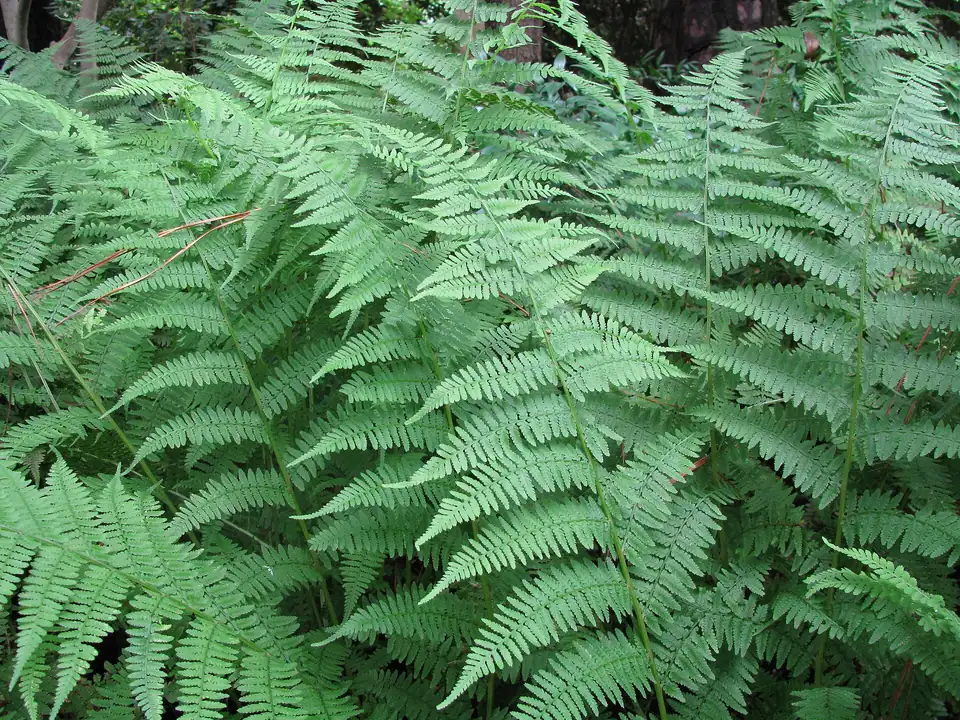
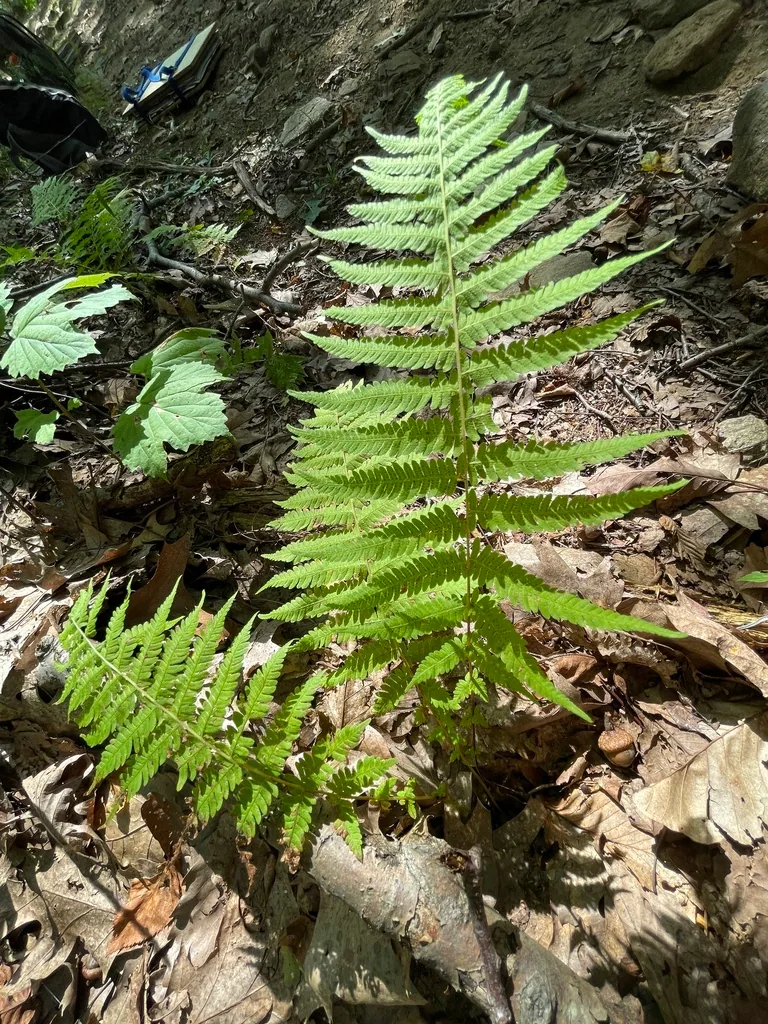

How to Grow and Care for New York Fern
Thelypteris noveboracensis
Written by Emilio Marruso · last checked
At a glance
Looking for something green for the shadiest corner of your garden? This perennial is happy anywhere from dappled sun to deep shade, in moist soil that can dry out now and then. It stays a tidy 1–2 ft tall and wide, likes acidic soil, and you can simply divide it to fill more space or share with friends.
- Sun
From dappled sun to deep shade
What the sources say (1)
Light: Dappled sun to deep shade
This fern grows in moist to occasionally dry, acidic soil. It does well in dappled sun to deep shade. Good drainage helps.
— Thelypteris noveboracensis (New York Fern) | North Carolina Extension Gardener Plant Toolbox [1] - Water
Keep the soil moist; drying out now and then is fine, and good drainage helps
What the sources say (2)
Watering: Moist to occasionally dry soil
This fern grows in moist to occasionally dry, acidic soil. It does well in dappled sun to deep shade. Good drainage helps.
— Thelypteris noveboracensis (New York Fern) | North Carolina Extension Gardener Plant Toolbox [1] Watering notes: Good drainage helps
This fern grows in moist to occasionally dry, acidic soil. It does well in dappled sun to deep shade. Good drainage helps.
— Thelypteris noveboracensis (New York Fern) | North Carolina Extension Gardener Plant Toolbox [1] - Cold
Survives winters down to −40 °F (−40 °C)
Very hardy · USDA 3a · RHS H7 · Z3
What the sources say (2)
Hardiness, coldest zone: 3a [winter low −40 to −37.2 °C (−40 to −35 °F)]
USDA Plant Hardiness Zone: 3a, 3b, 4a, 4b, 5a, 5b, 6a, 6b, 7a, 7b, 8a, 8b
— Thelypteris noveboracensis (New York Fern) | North Carolina Extension Gardener Plant Toolbox [1] Hardiness, warmest zone: 8b [winter low −9.4 to −6.7 °C (15 to 20 °F)]
USDA Plant Hardiness Zone: 3a, 3b, 4a, 4b, 5a, 5b, 6a, 6b, 7a, 7b, 8a, 8b
— Thelypteris noveboracensis (New York Fern) | North Carolina Extension Gardener Plant Toolbox [1] - Soil
Acidic soil, pH 6.0 or lower
What the sources say (1)
Soil pH, maximum: 6.0
Soil pH: Acid (<6.0) Soil Drainage: Good Drainage
— Thelypteris noveboracensis (New York Fern) | North Carolina Extension Gardener Plant Toolbox [1] - Size
1–2 ft tall and 1–2 ft wide
What the sources say (2)
Mature height: 30.48-60.96 cm (1-2 ft)
Dimensions: Height: 1 ft. 0 in. - 2 ft. 0 in. Width: 1 ft. 0 in. - 2 ft. 0 in.
— Thelypteris noveboracensis (New York Fern) | North Carolina Extension Gardener Plant Toolbox [1] Mature width: 30.48-60.96 cm (1-2 ft)
Dimensions: Height: 1 ft. 0 in. - 2 ft. 0 in. Width: 1 ft. 0 in. - 2 ft. 0 in.
— Thelypteris noveboracensis (New York Fern) | North Carolina Extension Gardener Plant Toolbox [1] - Propagation
Make new plants by dividing it
What the sources say (1)
Propagation: Division
Life Cycle: Perennial Recommended Propagation Strategy: Division Country Or Region Of Origin:
— Thelypteris noveboracensis (New York Fern) | North Carolina Extension Gardener Plant Toolbox [1]
Overview
New York fern is a perennial fern native to the eastern United States and Canada. [1] It grows in moist to occasionally dry, acidic soil and does well in dappled sun to deep shade. [1]
This record is incomplete: the sources we read do not cover every field yet.
Not yet covered by our sources: Pruning
New York Fern care
How to water New York Fern
Watering
Moist to occasionally dry soil
What the sources say (1)
This fern grows in moist to occasionally dry, acidic soil. It does well in dappled sun to deep shade. Good drainage helps.Watering notes
Good drainage helps
What the sources say (1)
This fern grows in moist to occasionally dry, acidic soil. It does well in dappled sun to deep shade. Good drainage helps.How much light New York Fern needs
Dappled sun to deep shade
What the sources say (1)
This fern grows in moist to occasionally dry, acidic soil. It does well in dappled sun to deep shade. Good drainage helps.How much cold New York Fern can take
Hardiness, coldest zone
3a [winter low −40 to −37.2 °C (−40 to −35 °F)]
What the sources say (1)
USDA Plant Hardiness Zone:
3a, 3b, 4a, 4b, 5a, 5b, 6a, 6b, 7a, 7b, 8a, 8bHardiness, warmest zone
8b [winter low −9.4 to −6.7 °C (15 to 20 °F)]
What the sources say (1)
USDA Plant Hardiness Zone:
3a, 3b, 4a, 4b, 5a, 5b, 6a, 6b, 7a, 7b, 8a, 8bBest soil for New York Fern
6.0
What the sources say (1)
Soil pH:
Acid (<6.0)
Soil Drainage:
Good DrainageHow to propagate New York Fern
Division
What the sources say (1)
Life Cycle:
Perennial
Recommended Propagation Strategy:
Division
Country Or Region Of Origin:How to grow New York Fern
The plant
Life cycle
perennial
What the sources say (1)
The New York fern is a perennial species of fern spleenwort family (Aspleniaceae) native to the eastern United States and CanadaFamily
Aspleniaceae
What the sources say (1)
The New York fern is a perennial species of fern spleenwort family (Aspleniaceae) native to the eastern United States and CanadaMature height
30.48-60.96 cm (1-2 ft)
What the sources say (1)
Dimensions:
Height: 1 ft. 0 in. - 2 ft. 0 in.
Width: 1 ft. 0 in. - 2 ft. 0 in.Mature width
30.48-60.96 cm (1-2 ft)
What the sources say (1)
Dimensions:
Height: 1 ft. 0 in. - 2 ft. 0 in.
Width: 1 ft. 0 in. - 2 ft. 0 in.Fertilizing
When
The sources give different values depending on region, zone or growing conditions.
What each source says
ferns in general: Spring, after new growth has begun
What the sources say (1)
ferns in general: Fertilizing should be done in spring after new growth has begun. Ferns can be sensitive to over fertilization, so it is best to use a slow-release fertilizer or organic fertilizer.Natural fertilizers
The sources give different values depending on region, zone or growing conditions.
What each source says
ferns in general: Organic fertilizer
What the sources say (1)
ferns in general: Fertilizing should be done in spring after new growth has begun. Ferns can be sensitive to over fertilization, so it is best to use a slow-release fertilizer or organic fertilizer.Mineral fertilizers
The sources give different values depending on region, zone or growing conditions.
What each source says
ferns in general: Slow-release fertilizer
What the sources say (1)
ferns in general: Fertilizing should be done in spring after new growth has begun. Ferns can be sensitive to over fertilization, so it is best to use a slow-release fertilizer or organic fertilizer.Avoid
The sources give different values depending on region, zone or growing conditions.
What each source says
ferns in general: Over-fertilization
What the sources say (1)
ferns in general: Fertilizing should be done in spring after new growth has begun. Ferns can be sensitive to over fertilization, so it is best to use a slow-release fertilizer or organic fertilizer.Remedies
Each remedy shows what official sources say about it; traditional remedies without an official source are marked as such. Harmful ones are listed so you know to avoid them.
Treating the plant
slugs
handpicking slugs under boards Works
How: Lay pieces of plastic or cardboard on the ground; slugs crawl under overnight and are picked off by hand in the morning.
overnight the slugs will crawl under there, and you can lift up the plastic in the morning and handpick them off
— extension.oregonstate.edu [3] What the evidence says they like to hide under there during the day, so that's a great way that you can handpick them out
— extension.oregonstate.edu [3] beer trap Works
How: Dig a hole and place the trap level with the ground; slugs go down into it and are disposed of the next day. Sugar and yeast mixed with water can replace beer.
dig a hole and place that trap level with the ground. The slugs will be attracted to the yeast and the sugar, go down into the trap, and then you can dispose of it the next day.
— extension.oregonstate.edu [3] What the evidence says The common trap is a beer trap, and the slugs are really attracted to the yeast and the sugar.
— extension.oregonstate.edu [3]
Getting rid of it
aggressive spreading
removing plants Not verified
Traditional remedy, not verified by an official source.
How: Remove plants once the fern starts to overtake more desirable species.
Calendar
Pruning
Not stated in the sources we read.
Months as given by the sources, which are mostly from the United States (northern hemisphere). In the southern hemisphere they shift by about six months.
Similar plants
- Kunth's Maiden Fern Thelypteris kunthii
- Asplenium ceterach Asplenium ceterach
- Brittle Bladder Fern Cystopteris fragilis
- Broad Beech Fern Phegopteris hexagonoptera
- Bulblet Bladder Fern Cystopteris bulbifera
- Cliff Fern Woodsia obtusa
- Deer Fern Blechnum spicant
- Ebony Spleenwort Asplenium platyneuron
Sources
Every value above is quoted from these documents. Links lead to the original publisher.
- Thelypteris noveboracensis (New York Fern) | North Carolina Extension Gardener Plant Toolbox · plants.ces.ncsu.edu, consulted
- pods.okstate.edu · pods.okstate.edu
- extension.oregonstate.edu · extension.oregonstate.edu
Written by Emilio Marruso · last checked