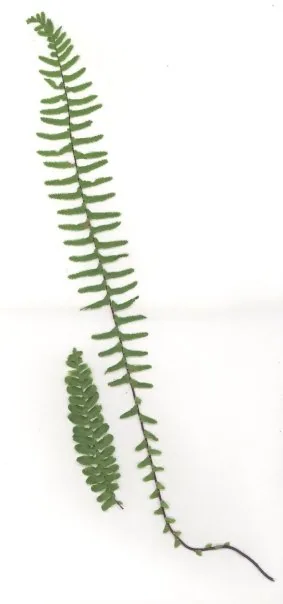


How to Grow and Care for Ebony Spleenwort
Asplenium platyneuron
Written by Emilio Marruso · last checked
At a glance
This small perennial fern is happy in shade or part sun, the spots where many plants struggle. It likes dry to medium moisture and grows 8 to 20 inches tall and wide. Even better, it makes new ferns all by itself: little buds at the base of the fronds fall off and grow into new plants where they touch the soil.
- Sun
Shade to part sun
What the sources say (2)
Light: Shade to part sun
This fern grows best in well-drained, rocky soils, in shade to part sun, with dry to medium moisture.
— Asplenium platyneuron (Brownstem Spleenwort, Ebony Spleenwort) | North Carolina Extension Gardener Plant Toolbox [1] Light: Dappled Sunlight (Shade through upper canopy all day) Deep shade (Less than 2 hours to no direct sunlight)
— Asplenium platyneuron (Brownstem Spleenwort, Ebony Spleenwort) | North Carolina Extension Gardener Plant Toolbox [1] - Water
Dry to medium moisture; soil that stays too wet can rot the crown
What the sources say (2)
Watering: Dry to medium moisture
This fern grows best in well-drained, rocky soils, in shade to part sun, with dry to medium moisture.
— Asplenium platyneuron (Brownstem Spleenwort, Ebony Spleenwort) | North Carolina Extension Gardener Plant Toolbox [1] Watering notes: If conditions remain too wet, it may be susceptible to crown rot
If conditions remain too wet, it may be susceptible to crown rot.
— Asplenium platyneuron (Brownstem Spleenwort, Ebony Spleenwort) | North Carolina Extension Gardener Plant Toolbox [1] - Cold
Survives winters down to −40 °F (−40 °C)
Very hardy · USDA 3a · RHS H7 · Z3
What the sources say (2)
Hardiness, coldest zone: 3a [winter low −40 to −37.2 °C (−40 to −35 °F)]
USDA Plant Hardiness Zone: 3a, 3b, 4a, 4b, 5a, 5b, 6a, 6b, 7a, 7b, 8a, 8b, 9a, 9b
— Asplenium platyneuron (Brownstem Spleenwort, Ebony Spleenwort) | North Carolina Extension Gardener Plant Toolbox [1] Hardiness, warmest zone: 9b [winter low −3.9 to −1.1 °C (25 to 30 °F)]
USDA Plant Hardiness Zone: 3a, 3b, 4a, 4b, 5a, 5b, 6a, 6b, 7a, 7b, 8a, 8b, 9a, 9b
— Asplenium platyneuron (Brownstem Spleenwort, Ebony Spleenwort) | North Carolina Extension Gardener Plant Toolbox [1] - Soil
Acidic soil, pH up to 6.0
What the sources say (1)
Soil pH, maximum: 6.0
Soil pH: Acid (<6.0) Soil Drainage: Good Drainage
— Asplenium platyneuron (Brownstem Spleenwort, Ebony Spleenwort) | North Carolina Extension Gardener Plant Toolbox [1] - Pests
Slugs and black fern aphids; crown rot if kept too wet
What the sources say (2)
Pests: slugs, black fern aphid
This fern has no major diseases but is susceptible to slugs and black fern aphid.
— Asplenium platyneuron (Brownstem Spleenwort, Ebony Spleenwort) | North Carolina Extension Gardener Plant Toolbox [1] Diseases: crown rot
If conditions remain too wet, it may be susceptible to crown rot.
— Asplenium platyneuron (Brownstem Spleenwort, Ebony Spleenwort) | North Carolina Extension Gardener Plant Toolbox [1] - Size
8 to 20 in tall and wide
What the sources say (2)
Mature height: 20.32-50.8 cm (8 in - 1 ft 8 in)
Height: 0 ft. 8 in. - 1 ft. 8 in. Width: 0 ft. 8 in. - 1 ft. 8 in.
— Asplenium platyneuron (Brownstem Spleenwort, Ebony Spleenwort) | North Carolina Extension Gardener Plant Toolbox [1] Mature width: 20.32-50.8 cm (8 in - 1 ft 8 in)
Height: 0 ft. 8 in. - 1 ft. 8 in. Width: 0 ft. 8 in. - 1 ft. 8 in.
— Asplenium platyneuron (Brownstem Spleenwort, Ebony Spleenwort) | North Carolina Extension Gardener Plant Toolbox [1] - Propagation
By spores, or from buds at the base of the fronds that root where they fall
What the sources say (2)
Propagation: Spores; buds that form at the base of the fronds, fall off and grow into new ferns on contact with soil
Ebony Spleenwort reproduces by spores and vegetatively by forming buds near the base of the base either sterile or fertile fronds.
— Asplenium platyneuron (Brownstem Spleenwort, Ebony Spleenwort) | North Carolina Extension Gardener Plant Toolbox [1] When buds fall off and contact soil, they produce new ferns as the parent plant dies off.
— Asplenium platyneuron (Brownstem Spleenwort, Ebony Spleenwort) | North Carolina Extension Gardener Plant Toolbox [1]
Overview
Ebony spleenwort is a small evergreen fern native to eastern North America and South Africa. [1] It grows best in well-drained, rocky soils in shade to part sun with dry to medium moisture. [1] It reproduces by spores and by buds that form on the fronds. [1]
This record is incomplete: the sources we read do not cover every field yet.
Not yet covered by our sources: Pruning
Ebony Spleenwort care
How to water Ebony Spleenwort
Watering
Dry to medium moisture
What the sources say (1)
This fern grows best in well-drained, rocky soils, in shade to part sun, with dry to medium moisture.Watering notes
If conditions remain too wet, it may be susceptible to crown rot
What the sources say (1)
If conditions remain too wet, it may be susceptible to crown rot.How much light Ebony Spleenwort needs
Shade to part sun
What the sources say (2)
This fern grows best in well-drained, rocky soils, in shade to part sun, with dry to medium moisture.Light:
Dappled Sunlight (Shade through upper canopy all day)
Deep shade (Less than 2 hours to no direct sunlight)How much cold Ebony Spleenwort can take
Hardiness, coldest zone
3a [winter low −40 to −37.2 °C (−40 to −35 °F)]
What the sources say (1)
USDA Plant Hardiness Zone:
3a, 3b, 4a, 4b, 5a, 5b, 6a, 6b, 7a, 7b, 8a, 8b, 9a, 9bHardiness, warmest zone
9b [winter low −3.9 to −1.1 °C (25 to 30 °F)]
What the sources say (1)
USDA Plant Hardiness Zone:
3a, 3b, 4a, 4b, 5a, 5b, 6a, 6b, 7a, 7b, 8a, 8b, 9a, 9bBest soil for Ebony Spleenwort
6.0
What the sources say (1)
Soil pH:
Acid (<6.0)
Soil Drainage:
Good DrainageHow to propagate Ebony Spleenwort
Spores; buds that form at the base of the fronds, fall off and grow into new ferns on contact with soil
What the sources say (2)
Ebony Spleenwort reproduces by spores and vegetatively by forming buds near the base of the base either sterile or fertile fronds.When buds fall off and contact soil, they produce new ferns as the parent plant dies off.How to grow Ebony Spleenwort
The plant
Life cycle
perennial
What the sources say (1)
Life Cycle:
Perennial
Country Or Region Of Origin:
North America E. of Rocky Mts., S. AfricaFamily
Aspleniaceae
What the sources say (1)
Ebony Spleenwort is a diminutive evergreen fern in the Spleenwort family (Aspleniaceae).Mature height
20.32-50.8 cm (8 in - 1 ft 8 in)
What the sources say (1)
Height: 0 ft. 8 in. - 1 ft. 8 in.
Width: 0 ft. 8 in. - 1 ft. 8 in.Mature width
20.32-50.8 cm (8 in - 1 ft 8 in)
What the sources say (1)
Height: 0 ft. 8 in. - 1 ft. 8 in.
Width: 0 ft. 8 in. - 1 ft. 8 in.Pests and diseases
Pests
slugs, black fern aphid
What the sources say (1)
This fern has no major diseases but is susceptible to slugs and black fern aphid.Diseases
crown rot
What the sources say (1)
If conditions remain too wet, it may be susceptible to crown rot.Ebony Spleenwort pests and problems
Slugs and black fern aphid
Symptom: Susceptible to slugs and black fern aphid
What to do: No management is given by the source.
What the sources say (1)
This fern has no major diseases but is susceptible to slugs and black fern aphid.
— Asplenium platyneuron (Brownstem Spleenwort, Ebony Spleenwort) | North Carolina Extension Gardener Plant Toolbox [1] Crown rot
Symptom: Crown rot if conditions remain too wet
What to do: Avoid keeping the plant too wet.
What the sources say (1)
If conditions remain too wet, it may be susceptible to crown rot.
— Asplenium platyneuron (Brownstem Spleenwort, Ebony Spleenwort) | North Carolina Extension Gardener Plant Toolbox [1]
Remedies
Each remedy shows what official sources say about it; traditional remedies without an official source are marked as such. Harmful ones are listed so you know to avoid them.
Treating the plant
slugs
hand picking Works
Do not crush snails and slugs in the garden as the eggs remain in the carcass and will hatch even though the parent is dead.
— extension.usu.edu [4] How: Pick them up and seal them in a plastic bag or drop them in a bucket of soapy water; daily removal is most effective, then once a week.
Handpicking is a time consuming but effective method of controlling slugs and snails when done regularly.
— extension.usu.edu [4] What the evidence says Handpicking is a time consuming but effective method of controlling slugs and snails when done regularly.
— extension.usu.edu [4] beer trap Official source, not independently tested
How: Use a pie plate with the edges buried at ground level, filled with beer or yeast water; remove the carcasses each day.
Bait traps using beer, yeast water or even plain water also attract slugs.
— extension.usu.edu [4] copper barrier Partly works
How: Mesh copper screens or sheeting 8 inches wide keep them out of small, selected areas.
Slugs and snails avoid irritating barriers. Numerous barriers are recommended but barriers only work if slugs and snails have other desirable places to feed or hide. Mesh copper screens or sheeting 8 inches wide make effective barriers.
— extension.usu.edu [4] What the evidence says Slugs and snails avoid irritating barriers. Numerous barriers are recommended but barriers only work if slugs and snails have other desirable places to feed or hide. Mesh copper screens or sheeting 8 inches wide make effective barriers.
— extension.usu.edu [4] salt Harmful
How: Putting salt on slugs is a promoted method.
One often promoted method of controlling the pests is to put salt on them.
— extension.usu.edu [4] What the evidence says This is not recommended because salt is very damaging to plants and might build up in the soil.
— extension.usu.edu [4]
aphids
insecticidal soap Works
How: Spray, testing first on delicate ferns.
The remedy is to spray with insecticidal soap or malathion, which are among the compounds registered for control of this pest in Connecticut, being sure to test spray any delicate ferns.
— portal.ct.gov [5] What the evidence says The remedy is to spray with insecticidal soap or malathion, which are among the compounds registered for control of this pest in Connecticut, being sure to test spray any delicate ferns.
— portal.ct.gov [5]
Calendar
Pruning
Not stated in the sources we read.
Months as given by the sources, which are mostly from the United States (northern hemisphere). In the southern hemisphere they shift by about six months.
Indicative values
Values from a secondary source, not checked word for word like the rest of this page. Use them as a starting point.
- Hours of sun
- 6-8 hoursIndicative value, adapt it to your climate · Secondary source
- Soil
- Sand, LoamIndicative value, adapt it to your climate · Secondary source
- Care level
- MediumIndicative value, adapt it to your climate · Secondary source
- Growth rate
- LowIndicative value, adapt it to your climate · Secondary source
- Pruning
- March, April, May, March, April, MayIndicative value, adapt it to your climate · Secondary source
Similar plants
- Asplenium ceterach Asplenium ceterach
- Maidenhair Spleenwort Asplenium trichomanes
- Mother Spleenwort Asplenium bulbiferum
- Nest Fern Asplenium nidus
- Walking Fern Asplenium rhizophyllum
- Hart's-tongue Asplenium scolopendrium
- Brittle Bladder Fern Cystopteris fragilis
- Cliff Fern Woodsia obtusa
Sources
Every value above is quoted from these documents. Links lead to the original publisher.
- Asplenium platyneuron (Brownstem Spleenwort, Ebony Spleenwort) | North Carolina Extension Gardener Plant Toolbox · plants.ces.ncsu.edu, consulted
- Asplenium | North Carolina Extension Gardener Plant Toolbox · plants.ces.ncsu.edu, consulted
- Brownstem Spleenwort - Asplenium platyneuron | North Carolina Extension Gardener Plant Toolbox · plants.ces.ncsu.edu, consulted
- extension.usu.edu · extension.usu.edu
- portal.ct.gov · portal.ct.gov
Written by Emilio Marruso · last checked