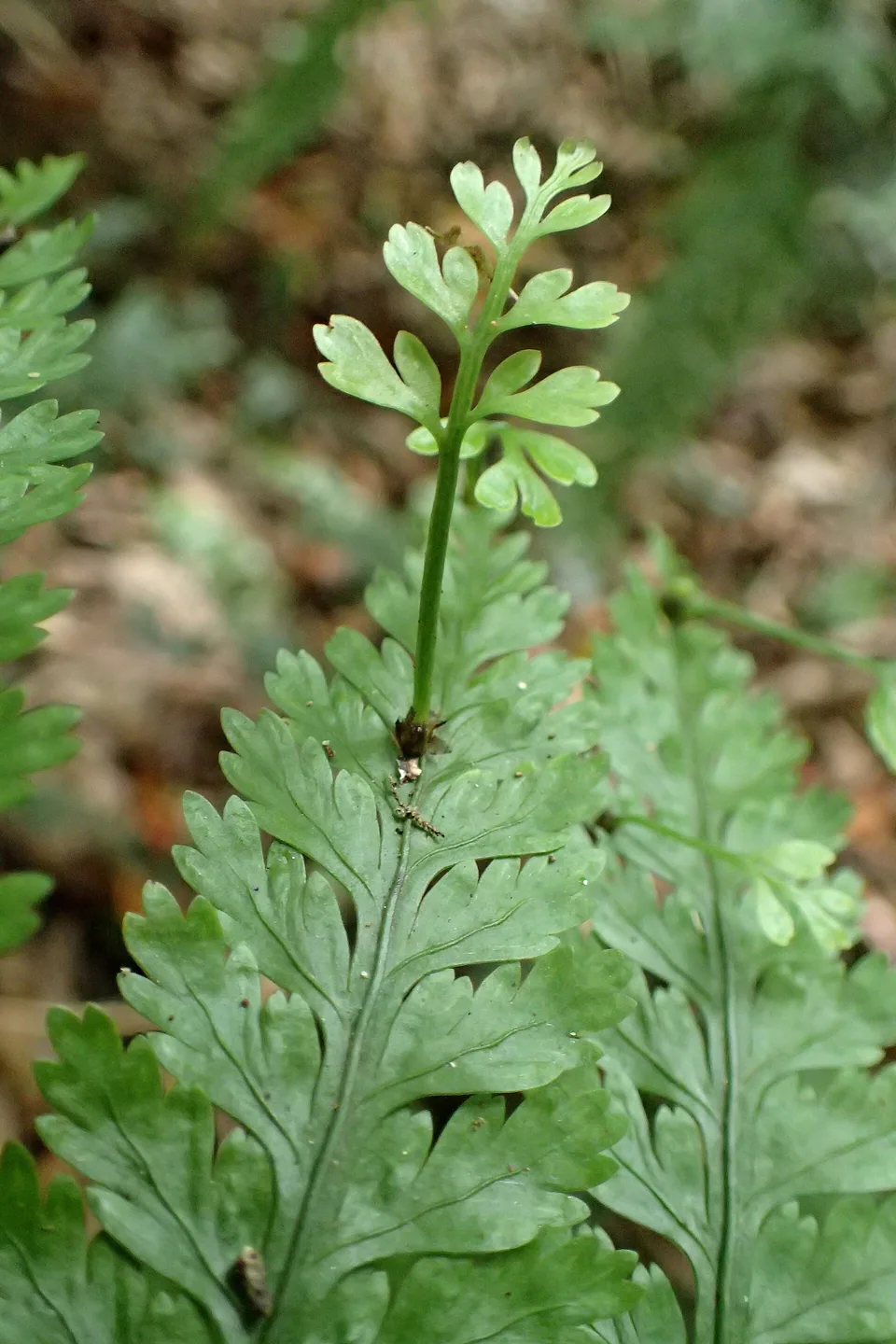


How to Grow and Care for Mother Spleenwort
Asplenium bulbiferum
Written by Emilio Marruso · last checked
Not toxic to cats and dogs, according to the sources · Sources
At a glance
This shade-loving fern has a magical trick: little plantlets form on its fronds, drop off and grow into new ferns right beside the parent. It thrives in dappled to deep shade with moist, well-drained soil, grows happily in a pot or indoors, and can reach 4 ft tall. Best of all, it is non-toxic for cats, dogs and horses.
- Sun
Dappled to deep shade; direct sun yellows the fronds
What the sources say (2)
Light: Dappled to deep shade
This fern prefers low light and grows best in dappled to deep shade on well-drained, moist, acidic soil.
— Asplenium bulbiferum (Hen and Chickens Fern, Mother Fern, Mother Spleenwort, New Zealand Common Spleenwort, Pikopiko) | North Carolina Extension Gardener Plant Toolbox [1] Light: Deep shade (Less than 2 hours to no direct sunlight) Partial Shade (Direct sunlight only part of the day, 2-6 hours)
— Asplenium bulbiferum (Hen and Chickens Fern, Mother Fern, Mother Spleenwort, New Zealand Common Spleenwort, Pikopiko) | North Carolina Extension Gardener Plant Toolbox [1] - Water
Keep the soil moist but never soggy: too much water rots the crown
What the sources say (2)
Watering: Moist, well-drained soil
This fern prefers low light and grows best in dappled to deep shade on well-drained, moist, acidic soil.
— Asplenium bulbiferum (Hen and Chickens Fern, Mother Fern, Mother Spleenwort, New Zealand Common Spleenwort, Pikopiko) | North Carolina Extension Gardener Plant Toolbox [1] Watering notes: Crown rot can develop from over-watering
Crown rot can develop from over-watering. Yellowing of the fronds may be caused by direct sun exposure and when root bound.
— Asplenium bulbiferum (Hen and Chickens Fern, Mother Fern, Mother Spleenwort, New Zealand Common Spleenwort, Pikopiko) | North Carolina Extension Gardener Plant Toolbox [1] - Cold
Survives winters down to 20 °F (−6.7 °C)
Hardy in average winters · USDA 9a · RHS H4 · Z9
What the sources say (2)
Hardiness, coldest zone: 9a [winter low −6.7 to −3.9 °C (20 to 25 °F)]
USDA Plant Hardiness Zone: 9a, 9b, 10a, 10b, 11a, 11b
— Asplenium bulbiferum (Hen and Chickens Fern, Mother Fern, Mother Spleenwort, New Zealand Common Spleenwort, Pikopiko) | North Carolina Extension Gardener Plant Toolbox [1] Hardiness, warmest zone: 11b [winter low 7.2 to 10 °C (45 to 50 °F)]
USDA Plant Hardiness Zone: 9a, 9b, 10a, 10b, 11a, 11b
— Asplenium bulbiferum (Hen and Chickens Fern, Mother Fern, Mother Spleenwort, New Zealand Common Spleenwort, Pikopiko) | North Carolina Extension Gardener Plant Toolbox [1] - Soil
Moist, well-drained soil with a pH of 6.0 or lower
What the sources say (2)
Soil pH, maximum: 6.0
Soil pH: Acid (<6.0) Soil Drainage: Good Drainage
— Asplenium bulbiferum (Hen and Chickens Fern, Mother Fern, Mother Spleenwort, New Zealand Common Spleenwort, Pikopiko) | North Carolina Extension Gardener Plant Toolbox [1] Watering: Moist, well-drained soil
This fern prefers low light and grows best in dappled to deep shade on well-drained, moist, acidic soil.
— Asplenium bulbiferum (Hen and Chickens Fern, Mother Fern, Mother Spleenwort, New Zealand Common Spleenwort, Pikopiko) | North Carolina Extension Gardener Plant Toolbox [1] - Harvest
Young fronds can be eaten raw or cooked like asparagus
- Pests
Watch for aphids, snails and slugs; give it good airflow to prevent crown rot
What the sources say (2)
Pests: aphids, snails, slugs
No serious insect or disease problems. Monitor for aphids, snails, and slugs.
— Asplenium bulbiferum (Hen and Chickens Fern, Mother Fern, Mother Spleenwort, New Zealand Common Spleenwort, Pikopiko) | North Carolina Extension Gardener Plant Toolbox [1] Diseases: crown rot (from over-watering)
Allow for good air circulation. Crown rot can develop from over-watering.
— Asplenium bulbiferum (Hen and Chickens Fern, Mother Fern, Mother Spleenwort, New Zealand Common Spleenwort, Pikopiko) | North Carolina Extension Gardener Plant Toolbox [1] - Watch out
Yellowing fronds? Move it out of direct sun and repot if the roots fill the pot
- Size
Up to 4 ft tall
What the sources say (1)
Mature height: 121.92 cm (4 ft)
Tall fronds, growing to a height of four feet, arch gracefully.
— Asplenium bulbiferum (Hen and Chickens Fern, Mother Fern, Mother Spleenwort, New Zealand Common Spleenwort, Pikopiko) | North Carolina Extension Gardener Plant Toolbox [1] - Propagation
From spores, or from the plantlets that form on the fronds and fall off
What the sources say (1)
Propagation: Spores; plantlets that form on the fronds, fall off and grow into new ferns near the parent
In addition to reproducing by spores, Mother Spleenwort also reproduces vegetatively. Fronds develop little plantlets that grow to about 2 inches in size, fall off, and grow into new ferns near the mother plant.
— Asplenium bulbiferum (Hen and Chickens Fern, Mother Fern, Mother Spleenwort, New Zealand Common Spleenwort, Pikopiko) | North Carolina Extension Gardener Plant Toolbox [1] - Containers
Grows well in containers and indoors
What the sources say (2)
In containers: Yes
It is attractive in containers, mass plantings, hanging baskets, or as specimens in shady or woodland gardens.
— Asplenium bulbiferum (Hen and Chickens Fern, Mother Fern, Mother Spleenwort, New Zealand Common Spleenwort, Pikopiko) | North Carolina Extension Gardener Plant Toolbox [1] Indoors: Yes
Plant Type: Fern Herbaceous Perennial Houseplant
— Asplenium bulbiferum (Hen and Chickens Fern, Mother Fern, Mother Spleenwort, New Zealand Common Spleenwort, Pikopiko) | North Carolina Extension Gardener Plant Toolbox [1] - Safety
Non-toxic for cats, dogs and horses
Overview
Mother spleenwort is a tropical fern native to New Zealand that grows best in dappled to deep shade on moist, well-drained, acidic soil. [1] It reproduces by spores and by plantlets that form on the fronds. [1] Crown rot can develop from over-watering. [1]
Mother Spleenwort care
How to water Mother Spleenwort
Watering
Moist, well-drained soil
What the sources say (1)
This fern prefers low light and grows best in dappled to deep shade on well-drained, moist, acidic soil.Watering notes
Crown rot can develop from over-watering
What the sources say (1)
Crown rot can develop from over-watering. Yellowing of the fronds may be caused by direct sun exposure and when root bound.How much light Mother Spleenwort needs
Dappled to deep shade
What the sources say (2)
This fern prefers low light and grows best in dappled to deep shade on well-drained, moist, acidic soil.Light:
Deep shade (Less than 2 hours to no direct sunlight)
Partial Shade (Direct sunlight only part of the day, 2-6 hours)How much cold Mother Spleenwort can take
Hardiness, coldest zone
9a [winter low −6.7 to −3.9 °C (20 to 25 °F)]
What the sources say (1)
USDA Plant Hardiness Zone:
9a, 9b, 10a, 10b, 11a, 11bHardiness, warmest zone
11b [winter low 7.2 to 10 °C (45 to 50 °F)]
What the sources say (1)
USDA Plant Hardiness Zone:
9a, 9b, 10a, 10b, 11a, 11bBest soil for Mother Spleenwort
6.0
What the sources say (1)
Soil pH:
Acid (<6.0)
Soil Drainage:
Good DrainageWhere to grow Mother Spleenwort
Indoors
Yes
What the sources say (1)
Plant Type:
Fern
Herbaceous Perennial
HouseplantIn containers
Yes
What the sources say (1)
It is attractive in containers, mass plantings, hanging baskets, or as specimens in shady or woodland gardens.How to propagate Mother Spleenwort
Spores; plantlets that form on the fronds, fall off and grow into new ferns near the parent
What the sources say (1)
In addition to reproducing by spores, Mother Spleenwort also reproduces vegetatively. Fronds develop little plantlets that grow to about 2 inches in size, fall off, and grow into new ferns near the mother plant.How to grow Mother Spleenwort
The plant
Life cycle
perennial
What the sources say (1)
Life Cycle: Perennial Country Or Region Of Origin: New ZelandFamily
Aspleniaceae
What the sources say (1)
Mother Spleenwort is a tropical fern in the Spleenwort family (Aspleniaceae). It is native to New Zealand and nearby islands.Mature height
121.92 cm (4 ft)
What the sources say (1)
Tall fronds, growing to a height of four feet, arch gracefully.Pests and diseases
Pests
aphids, snails, slugs
What the sources say (1)
No serious insect or disease problems. Monitor for aphids, snails, and slugs.Diseases
crown rot (from over-watering)
What the sources say (1)
Allow for good air circulation. Crown rot can develop from over-watering.Mother Spleenwort pests and problems
Crown rot
Symptom: Crown rot can develop from over-watering.
What to do: Allow for good air circulation and avoid over-watering.
What the sources say (1)
Allow for good air circulation. Crown rot can develop from over-watering.
— Asplenium bulbiferum (Hen and Chickens Fern, Mother Fern, Mother Spleenwort, New Zealand Common Spleenwort, Pikopiko) | North Carolina Extension Gardener Plant Toolbox [1] Frond yellowing
Symptom: Yellowing of the fronds
What to do: Avoid direct sun exposure and root-bound plants, the stated causes.
What the sources say (1)
Yellowing of the fronds may be caused by direct sun exposure and when root bound.
— Asplenium bulbiferum (Hen and Chickens Fern, Mother Fern, Mother Spleenwort, New Zealand Common Spleenwort, Pikopiko) | North Carolina Extension Gardener Plant Toolbox [1] Aphids, snails and slugs
Symptom: Pests to monitor
What to do: Monitor for aphids, snails, and slugs.
What the sources say (1)
No serious insect or disease problems. Monitor for aphids, snails, and slugs.
— Asplenium bulbiferum (Hen and Chickens Fern, Mother Fern, Mother Spleenwort, New Zealand Common Spleenwort, Pikopiko) | North Carolina Extension Gardener Plant Toolbox [1]
Remedies
Each remedy shows what official sources say about it; traditional remedies without an official source are marked as such. Harmful ones are listed so you know to avoid them.
Treating the plant
scale insects
insecticidal soap Official source, not independently tested
Make sure to test the soap and alcohol mixtures on a small portion of the plant prior to full application because some plants may be sensitive to soap or alcohol.
— planttalk.colostate.edu [5] How: Spray with insecticidal soap, test spraying delicate ferns first.
The remedy is to spray with insecticidal soap or malathion, which are among the compounds registered for control of this pest in Connecticut, being sure to test spray any delicate ferns.
— portal.ct.gov [4]
mealybugs
insecticidal soap Works
Make sure to test the soap and alcohol mixtures on a small portion of the plant prior to full application because some plants may be sensitive to soap or alcohol.
— planttalk.colostate.edu [5] How: Control mealybugs with insecticidal soap.
These pests may also be controlled with insecticidal soap.
— planttalk.colostate.edu [5] What the evidence says These pests may also be controlled with insecticidal soap.
— planttalk.colostate.edu [5] rubbing alcohol Official source, not independently tested
Make sure to test the soap and alcohol mixtures on a small portion of the plant prior to full application because some plants may be sensitive to soap or alcohol.
— planttalk.colostate.edu [5] How: Heavy infestations: spray 10 percent rubbing alcohol and 90 percent water; small ones: dab with a cotton swab dipped in rubbing alcohol; repeat weekly.
For heavy infestations, spray a mixture of 10 percent rubbing alcohol and 90 percent water directly onto the insects. For smaller infestations, dab the insects with a cotton swab dipped in rubbing alcohol.
— planttalk.colostate.edu [5]
slugs
picking by hand Works
How: Pick by hand or with tweezers, best two hours after sunset with a flashlight; drop captured slugs in hot soapy water.
Picking by hand or with tweezers, although not an enjoyable task, is a very effective method of immediate control and can last a reasonably long time if combined with other techniques.
— extension.umd.edu [6] What the evidence says Picking by hand or with tweezers, although not an enjoyable task, is a very effective method of immediate control and can last a reasonably long time if combined with other techniques.
— extension.umd.edu [6] beer trap Works
How: Shallow containers filled with beer; a mixture of any yeast and water also works. Dispose of drowned slugs in hot soapy water.
Most people are familiar with using shallow containers filled with beer as a method of baiting. Apparently, the yeast is what attracts them, and a simple mixture of any yeast and water will also work.
— extension.umd.edu [6] What the evidence says Slugs attracted to beer become tipsy and fall in to drown.
— extension.umd.edu [6] salt, vinegar or boiling water Harmful
How: Salt, vinegar solutions or boiling water poured on slugs and snails.
The use of salt, vinegar solutions, or boiling water is not recommended as it can cause plant damage.
— extension.umd.edu [6] What the evidence says The use of salt, vinegar solutions, or boiling water is not recommended as it can cause plant damage.
— extension.umd.edu [6] diatomaceous earth band Official source, not independently tested
DE dust can cause irritation, so use goggles and a dust mask during application.
— extension.umd.edu [6] How: Apply an inch-wide band of diatomaceous earth around plants needing protection; reapply after heavy rains.
Apply an inch-wide band of DE around plants needing protection. When slugs and snails crawl over the DE dust, it adheres to their bodies, causing desiccation (drying out).
— extension.umd.edu [6]
Is Mother Spleenwort poisonous?
Reported by the source, quoted verbatim. This is not medical or veterinary advice: if a person or an animal may have eaten this plant, contact a poison control centre or a veterinarian.
#non-toxic for cats #non-toxic for horses #non-toxic for dogs
[1]The source flags the risk for this animal but does not explain why.
Edibility
Reported by the source, quoted verbatim. Do not eat a plant on the basis of this page alone: identification mistakes can be dangerous.
The Maori use it as a food plant, collecting the young fronds that are eaten raw or cooked like a vegetable, similar to asparagus.
[1]
Similar plants
- Asplenium ceterach Asplenium ceterach
- Ebony Spleenwort Asplenium platyneuron
- Maidenhair Spleenwort Asplenium trichomanes
- Nest Fern Asplenium nidus
- Walking Fern Asplenium rhizophyllum
- Hart's-tongue Asplenium scolopendrium
- Brittle Bladder Fern Cystopteris fragilis
- Broad Beech Fern Phegopteris hexagonoptera
Sources
Every value above is quoted from these documents. Links lead to the original publisher.
- Asplenium bulbiferum (Hen and Chickens Fern, Mother Fern, Mother Spleenwort, New Zealand Common Spleenwort, Pikopiko) | North Carolina Extension Gardener Plant Toolbox · plants.ces.ncsu.edu, consulted
- Mother Fern - Asplenium bulbiferum | North Carolina Extension Gardener Plant Toolbox · plants.ces.ncsu.edu, consulted
- Mother Spleenwort - Asplenium bulbiferum | North Carolina Extension Gardener Plant Toolbox · plants.ces.ncsu.edu, consulted
- portal.ct.gov · portal.ct.gov
- planttalk.colostate.edu · planttalk.colostate.edu
- extension.umd.edu · extension.umd.edu
Written by Emilio Marruso · last checked