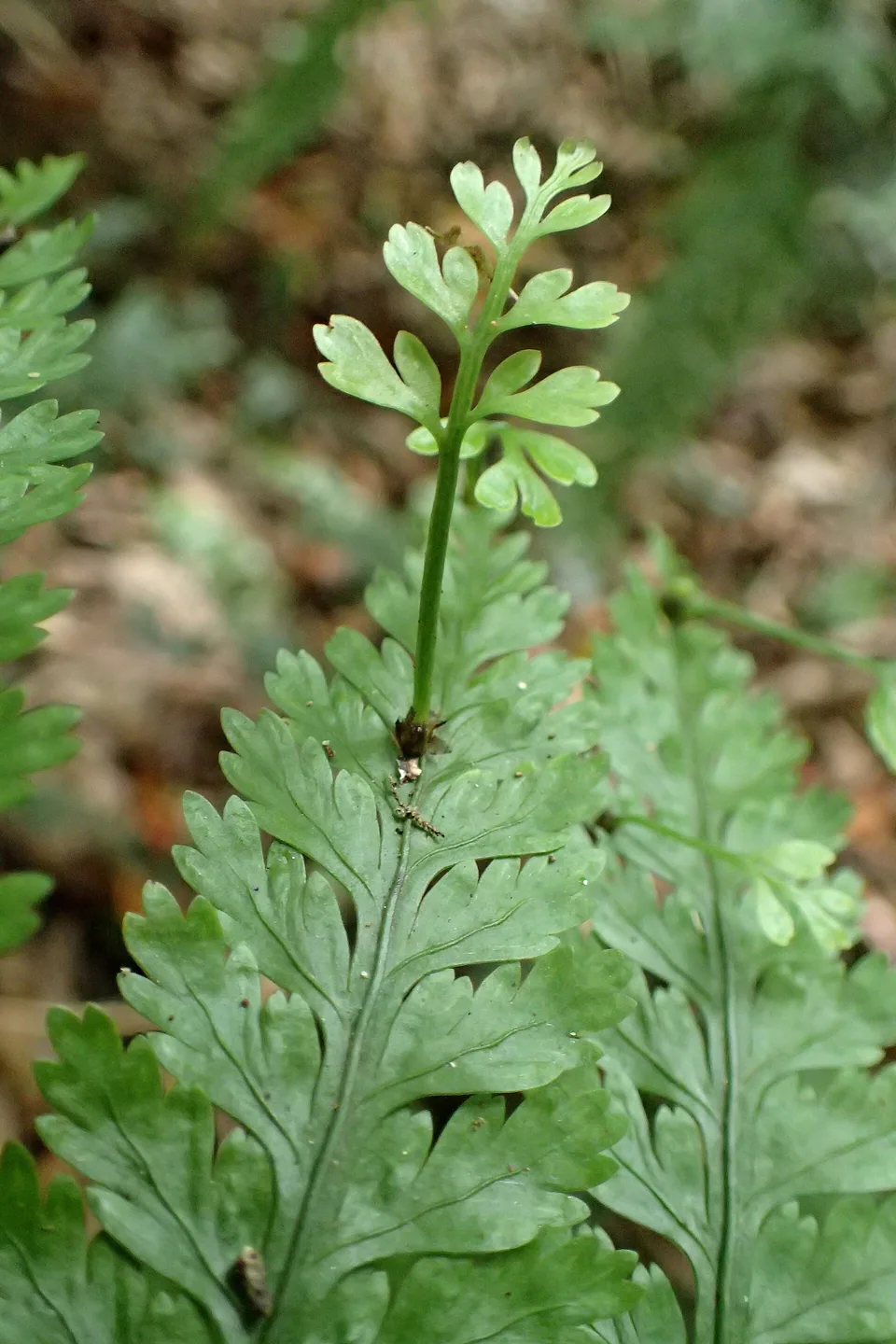


Cómo cultivar y cuidar Mother Spleenwort
Asplenium bulbiferum
Escrito por Emilio Marruso · última revisión
No tóxica para gatos y perros, según las fuentes · Fuentes
De un vistazo
Este helecho amante de la sombra tiene un truco mágico: en sus frondas se forman plantitas que caen y crecen como nuevos helechos junto a la planta madre. Le encantan la sombra moteada o profunda y la tierra húmeda y bien drenada, vive feliz en maceta o dentro de casa y puede alcanzar 1,2 m de alto. Además, no es tóxico para gatos, perros ni caballos.
- Sol
Sombra moteada o profunda; el sol directo amarillea las frondas
Qué dicen las fuentes (2)
Luz: Sombra filtrada a sombra profunda
This fern prefers low light and grows best in dappled to deep shade on well-drained, moist, acidic soil.
— Asplenium bulbiferum (Hen and Chickens Fern, Mother Fern, Mother Spleenwort, New Zealand Common Spleenwort, Pikopiko) | North Carolina Extension Gardener Plant Toolbox [1] Light: Deep shade (Less than 2 hours to no direct sunlight) Partial Shade (Direct sunlight only part of the day, 2-6 hours)
— Asplenium bulbiferum (Hen and Chickens Fern, Mother Fern, Mother Spleenwort, New Zealand Common Spleenwort, Pikopiko) | North Carolina Extension Gardener Plant Toolbox [1] - Riego
Mantén la tierra húmeda pero nunca encharcada: el exceso de agua pudre la corona
Qué dicen las fuentes (2)
Riego: Suelo húmedo y bien drenado
This fern prefers low light and grows best in dappled to deep shade on well-drained, moist, acidic soil.
— Asplenium bulbiferum (Hen and Chickens Fern, Mother Fern, Mother Spleenwort, New Zealand Common Spleenwort, Pikopiko) | North Carolina Extension Gardener Plant Toolbox [1] Notas sobre el riego: La pudrición de la corona puede desarrollarse por exceso de riego
Crown rot can develop from over-watering. Yellowing of the fronds may be caused by direct sun exposure and when root bound.
— Asplenium bulbiferum (Hen and Chickens Fern, Mother Fern, Mother Spleenwort, New Zealand Common Spleenwort, Pikopiko) | North Carolina Extension Gardener Plant Toolbox [1] - Frío
Aguanta inviernos de hasta −6,7 °C (20 °F)
Rústica en inviernos normales · USDA 9a · RHS H4 · Z9
Qué dicen las fuentes (2)
Rusticidad, zona más fría: 9a [mínima invernal de −6,7 a −3,9 °C (de 20 a 25 °F)]
USDA Plant Hardiness Zone: 9a, 9b, 10a, 10b, 11a, 11b
— Asplenium bulbiferum (Hen and Chickens Fern, Mother Fern, Mother Spleenwort, New Zealand Common Spleenwort, Pikopiko) | North Carolina Extension Gardener Plant Toolbox [1] Rusticidad, zona más cálida: 11b [mínima invernal de 7,2 a 10 °C (de 45 a 50 °F)]
USDA Plant Hardiness Zone: 9a, 9b, 10a, 10b, 11a, 11b
— Asplenium bulbiferum (Hen and Chickens Fern, Mother Fern, Mother Spleenwort, New Zealand Common Spleenwort, Pikopiko) | North Carolina Extension Gardener Plant Toolbox [1] - Suelo
Suelo húmedo y bien drenado, con pH de 6,0 o menos
Qué dicen las fuentes (2)
pH del suelo, máximo: 6.0
Soil pH: Acid (<6.0) Soil Drainage: Good Drainage
— Asplenium bulbiferum (Hen and Chickens Fern, Mother Fern, Mother Spleenwort, New Zealand Common Spleenwort, Pikopiko) | North Carolina Extension Gardener Plant Toolbox [1] Riego: Suelo húmedo y bien drenado
This fern prefers low light and grows best in dappled to deep shade on well-drained, moist, acidic soil.
— Asplenium bulbiferum (Hen and Chickens Fern, Mother Fern, Mother Spleenwort, New Zealand Common Spleenwort, Pikopiko) | North Carolina Extension Gardener Plant Toolbox [1] - Cosecha
Las frondas jóvenes se comen crudas o cocinadas, como los espárragos
- Plagas
Vigila pulgones, caracoles y babosas; dale buena ventilación para evitar la podredumbre de la corona
Qué dicen las fuentes (2)
Plagas: pulgones, caracoles, babosas
No serious insect or disease problems. Monitor for aphids, snails, and slugs.
— Asplenium bulbiferum (Hen and Chickens Fern, Mother Fern, Mother Spleenwort, New Zealand Common Spleenwort, Pikopiko) | North Carolina Extension Gardener Plant Toolbox [1] Enfermedades: pudrición de la corona (por exceso de riego)
Allow for good air circulation. Crown rot can develop from over-watering.
— Asplenium bulbiferum (Hen and Chickens Fern, Mother Fern, Mother Spleenwort, New Zealand Common Spleenwort, Pikopiko) | North Carolina Extension Gardener Plant Toolbox [1] - Atención
¿Frondas amarillas? Apártalo del sol directo y trasplántalo si las raíces llenan la maceta
- Tamaño
Hasta 1,2 m de alto
Qué dicen las fuentes (1)
Altura adulta: 121.92 cm (4 pies)
Tall fronds, growing to a height of four feet, arch gracefully.
— Asplenium bulbiferum (Hen and Chickens Fern, Mother Fern, Mother Spleenwort, New Zealand Common Spleenwort, Pikopiko) | North Carolina Extension Gardener Plant Toolbox [1] - Multiplicación
Por esporas o con las plantitas que se forman en las frondas y caen al suelo
Qué dicen las fuentes (1)
Propagación: Esporas; plantitas que se forman en las frondas, se desprenden y crecen como nuevos helechos cerca de la planta madre
In addition to reproducing by spores, Mother Spleenwort also reproduces vegetatively. Fronds develop little plantlets that grow to about 2 inches in size, fall off, and grow into new ferns near the mother plant.
— Asplenium bulbiferum (Hen and Chickens Fern, Mother Fern, Mother Spleenwort, New Zealand Common Spleenwort, Pikopiko) | North Carolina Extension Gardener Plant Toolbox [1] - Maceta
Crece bien en maceta y dentro de casa
Qué dicen las fuentes (2)
En maceta: Sí
It is attractive in containers, mass plantings, hanging baskets, or as specimens in shady or woodland gardens.
— Asplenium bulbiferum (Hen and Chickens Fern, Mother Fern, Mother Spleenwort, New Zealand Common Spleenwort, Pikopiko) | North Carolina Extension Gardener Plant Toolbox [1] En interior: Sí
Plant Type: Fern Herbaceous Perennial Houseplant
— Asplenium bulbiferum (Hen and Chickens Fern, Mother Fern, Mother Spleenwort, New Zealand Common Spleenwort, Pikopiko) | North Carolina Extension Gardener Plant Toolbox [1] - Seguridad
No es tóxico para gatos, perros ni caballos
Resumen
El asplenio madre es un helecho tropical nativo de Nueva Zelanda que crece mejor en sombra filtrada a sombra profunda en suelo húmedo, bien drenado y ácido. [1] Se reproduce por esporas y por plantitas que se forman en las frondas. [1] La pudrición de la corona puede desarrollarse por exceso de riego. [1]
Citado en inglés, como en la fuente.
Cuidados
Riego
Riego
Suelo húmedo y bien drenado
Qué dicen las fuentes (1)
This fern prefers low light and grows best in dappled to deep shade on well-drained, moist, acidic soil.Notas sobre el riego
La pudrición de la corona puede desarrollarse por exceso de riego
Qué dicen las fuentes (1)
Crown rot can develop from over-watering. Yellowing of the fronds may be caused by direct sun exposure and when root bound.Luz
Sombra filtrada a sombra profunda
Qué dicen las fuentes (2)
This fern prefers low light and grows best in dappled to deep shade on well-drained, moist, acidic soil.Light:
Deep shade (Less than 2 hours to no direct sunlight)
Partial Shade (Direct sunlight only part of the day, 2-6 hours)Clima y frío
Rusticidad, zona más fría
9a [mínima invernal de −6,7 a −3,9 °C (de 20 a 25 °F)]
Qué dicen las fuentes (1)
USDA Plant Hardiness Zone:
9a, 9b, 10a, 10b, 11a, 11bRusticidad, zona más cálida
11b [mínima invernal de 7,2 a 10 °C (de 45 a 50 °F)]
Qué dicen las fuentes (1)
USDA Plant Hardiness Zone:
9a, 9b, 10a, 10b, 11a, 11bSuelo
6.0
Qué dicen las fuentes (1)
Soil pH:
Acid (<6.0)
Soil Drainage:
Good DrainageDónde cultivarla
En interior
Sí
Qué dicen las fuentes (1)
Plant Type:
Fern
Herbaceous Perennial
HouseplantEn maceta
Sí
Qué dicen las fuentes (1)
It is attractive in containers, mass plantings, hanging baskets, or as specimens in shady or woodland gardens.Propagación
Esporas; plantitas que se forman en las frondas, se desprenden y crecen como nuevos helechos cerca de la planta madre
Qué dicen las fuentes (1)
In addition to reproducing by spores, Mother Spleenwort also reproduces vegetatively. Fronds develop little plantlets that grow to about 2 inches in size, fall off, and grow into new ferns near the mother plant.Cultivo
La planta
Ciclo de vida
perenne
Qué dicen las fuentes (1)
Life Cycle: Perennial Country Or Region Of Origin: New ZelandFamilia
Aspleniaceae
Qué dicen las fuentes (1)
Mother Spleenwort is a tropical fern in the Spleenwort family (Aspleniaceae). It is native to New Zealand and nearby islands.Altura adulta
121.92 cm (4 pies)
Qué dicen las fuentes (1)
Tall fronds, growing to a height of four feet, arch gracefully.Plagas y enfermedades
Plagas
pulgones, caracoles, babosas
Qué dicen las fuentes (1)
No serious insect or disease problems. Monitor for aphids, snails, and slugs.Enfermedades
pudrición de la corona (por exceso de riego)
Qué dicen las fuentes (1)
Allow for good air circulation. Crown rot can develop from over-watering.Problemas
Pudrición de la corona
Síntoma: La pudrición de la corona puede desarrollarse por exceso de riego.
Qué hacer: Permite una buena circulación de aire y evita el exceso de riego.
Qué dicen las fuentes (1)
Allow for good air circulation. Crown rot can develop from over-watering.
— Asplenium bulbiferum (Hen and Chickens Fern, Mother Fern, Mother Spleenwort, New Zealand Common Spleenwort, Pikopiko) | North Carolina Extension Gardener Plant Toolbox [1] Amarillamiento de las frondas
Síntoma: Amarillamiento de las frondas
Qué hacer: Evita la exposición directa al sol y las plantas con raíces apretadas, las causas indicadas.
Qué dicen las fuentes (1)
Yellowing of the fronds may be caused by direct sun exposure and when root bound.
— Asplenium bulbiferum (Hen and Chickens Fern, Mother Fern, Mother Spleenwort, New Zealand Common Spleenwort, Pikopiko) | North Carolina Extension Gardener Plant Toolbox [1] Pulgones, caracoles y babosas
Síntoma: Plagas a vigilar
Qué hacer: Vigila la presencia de pulgones, caracoles y babosas.
Qué dicen las fuentes (1)
No serious insect or disease problems. Monitor for aphids, snails, and slugs.
— Asplenium bulbiferum (Hen and Chickens Fern, Mother Fern, Mother Spleenwort, New Zealand Common Spleenwort, Pikopiko) | North Carolina Extension Gardener Plant Toolbox [1]
Remedios
Cada remedio indica qué dicen las fuentes oficiales; los remedios tradicionales sin fuente oficial aparecen marcados. Los perjudiciales están para que sepas evitarlos.
Cuidar la planta
cochinillas
jabón insecticida Fuente oficial, sin prueba independiente
Make sure to test the soap and alcohol mixtures on a small portion of the plant prior to full application because some plants may be sensitive to soap or alcohol.
— planttalk.colostate.edu [5] Cómo: Rocía con jabón insecticida; prueba rociando primero los helechos delicados.
The remedy is to spray with insecticidal soap or malathion, which are among the compounds registered for control of this pest in Connecticut, being sure to test spray any delicate ferns.
— portal.ct.gov [4]
cochinillas harinosas
jabón insecticida Funciona
Make sure to test the soap and alcohol mixtures on a small portion of the plant prior to full application because some plants may be sensitive to soap or alcohol.
— planttalk.colostate.edu [5] Cómo: Controla las cochinillas con jabón insecticida.
These pests may also be controlled with insecticidal soap.
— planttalk.colostate.edu [5] Qué dicen las pruebas These pests may also be controlled with insecticidal soap.
— planttalk.colostate.edu [5] alcohol isopropílico Fuente oficial, sin prueba independiente
Make sure to test the soap and alcohol mixtures on a small portion of the plant prior to full application because some plants may be sensitive to soap or alcohol.
— planttalk.colostate.edu [5] Cómo: Infestaciones graves: rocía 10 por ciento de alcohol isopropílico y 90 por ciento de agua; las pequeñas: aplica con un hisopo de algodón empapado en alcohol isopropílico; repite semanalmente.
For heavy infestations, spray a mixture of 10 percent rubbing alcohol and 90 percent water directly onto the insects. For smaller infestations, dab the insects with a cotton swab dipped in rubbing alcohol.
— planttalk.colostate.edu [5]
babosas
Recoge a mano. Funciona
Cómo: Recógelas a mano o con pinzas, mejor dos horas después de la puesta del sol con una linterna; sumerge las babosas capturadas en agua jabonosa caliente.
Picking by hand or with tweezers, although not an enjoyable task, is a very effective method of immediate control and can last a reasonably long time if combined with other techniques.
— extension.umd.edu [6] Qué dicen las pruebas Picking by hand or with tweezers, although not an enjoyable task, is a very effective method of immediate control and can last a reasonably long time if combined with other techniques.
— extension.umd.edu [6] trampa de cerveza Funciona
Cómo: Contenedores poco profundos llenos de cerveza; una mezcla de levadura y agua también funciona. Deshazte de las babosas ahogadas en agua jabonosa caliente.
Most people are familiar with using shallow containers filled with beer as a method of baiting. Apparently, the yeast is what attracts them, and a simple mixture of any yeast and water will also work.
— extension.umd.edu [6] Qué dicen las pruebas Slugs attracted to beer become tipsy and fall in to drown.
— extension.umd.edu [6] sal, vinagre o agua hirviendo Perjudicial
Cómo: Sal, soluciones de vinagre o agua hirviendo vertidas sobre las babosas y los caracoles.
The use of salt, vinegar solutions, or boiling water is not recommended as it can cause plant damage.
— extension.umd.edu [6] Qué dicen las pruebas The use of salt, vinegar solutions, or boiling water is not recommended as it can cause plant damage.
— extension.umd.edu [6] banda de tierra de diatomeas Fuente oficial, sin prueba independiente
DE dust can cause irritation, so use goggles and a dust mask during application.
— extension.umd.edu [6] Cómo: Aplica una banda de tierra de diatomeas de una pulgada de ancho alrededor de las plantas que necesiten protección; vuelve a aplicarla después de lluvias intensas.
Apply an inch-wide band of DE around plants needing protection. When slugs and snails crawl over the DE dust, it adheres to their bodies, causing desiccation (drying out).
— extension.umd.edu [6]
Toxicidad
Según la fuente, citada textualmente. No es un consejo médico ni veterinario: si una persona o un animal pudo haber ingerido esta planta, contacta con un centro de toxicología o con un veterinario.
#non-toxic for cats #non-toxic for horses #non-toxic for dogs
[1]La fuente señala el riesgo para este animal pero no explica por qué.
Comestibilidad
Según la fuente, citada textualmente. No comas una planta basándote solo en esta página: los errores de identificación pueden ser peligrosos.
The Maori use it as a food plant, collecting the young fronds that are eaten raw or cooked like a vegetable, similar to asparagus.
[1]
Plantas similares
- Asplenium ceterach Asplenium ceterach
- Bazo de ébano Asplenium platyneuron
- Culantrillo menudo Asplenium trichomanes
- Nest Fern Asplenium nidus
- Walking Fern Asplenium rhizophyllum
- Lengua cervina Asplenium scolopendrium
- Culantrillo blanco Cystopteris fragilis
- Broad Beech Fern Phegopteris hexagonoptera
Fuentes
Cada valor anterior se cita de estos documentos. Los enlaces llevan al editor original.
- Asplenium bulbiferum (Hen and Chickens Fern, Mother Fern, Mother Spleenwort, New Zealand Common Spleenwort, Pikopiko) | North Carolina Extension Gardener Plant Toolbox · plants.ces.ncsu.edu, consultado
- Mother Fern - Asplenium bulbiferum | North Carolina Extension Gardener Plant Toolbox · plants.ces.ncsu.edu, consultado
- Mother Spleenwort - Asplenium bulbiferum | North Carolina Extension Gardener Plant Toolbox · plants.ces.ncsu.edu, consultado
- portal.ct.gov · portal.ct.gov
- planttalk.colostate.edu · planttalk.colostate.edu
- extension.umd.edu · extension.umd.edu
Escrito por Emilio Marruso · última revisión