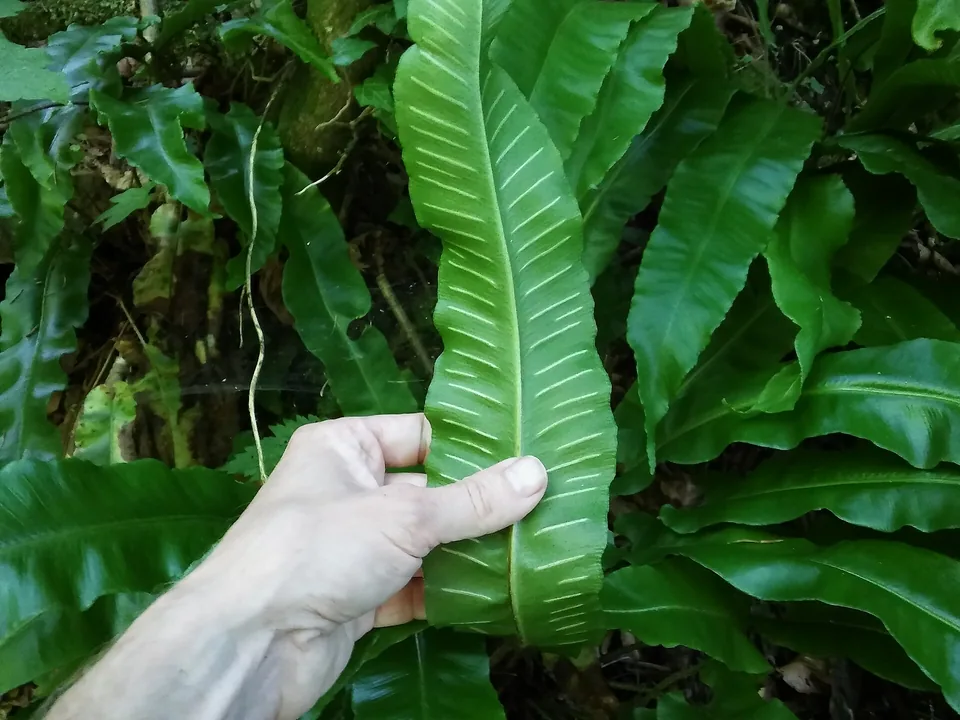
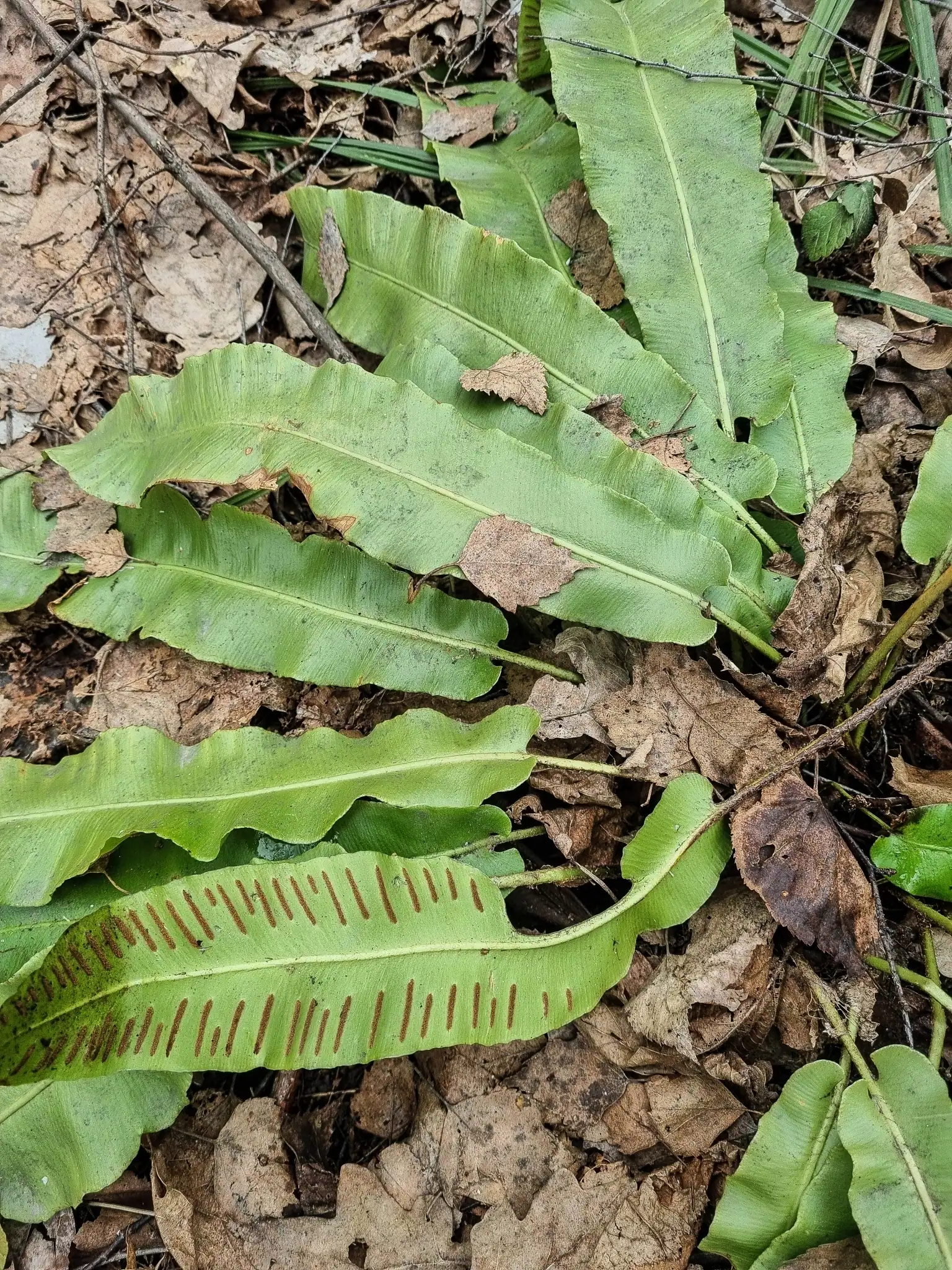

How to Grow and Care for Hart's-tongue
Asplenium scolopendrium
Written by Emilio Marruso · last checked
Toxic to: People · Why
At a glance
Hart's tongue fern is made for the shady corners of your garden: it is happy with no more than 3 hours of sun a day. Plant it in spring, once young plants are at least 6 inches tall, and set them up to 12 inches apart to cover the ground. You can even make new plants by dividing it in spring.
- Sun
Shade: no more than 3 hours of sun a day
What the sources say (2)
Light: Shade; no more than 3 hours of sun a day
Prefers a shady position with no more than 3 hours sunlight a day, greater exposure will cause yellowing and burning of the leaves
— Asplenium scolopendrium - Useful Temperate Plants [1] Shade tolerance permanent shade
— Hart's Tongue Fern (Asplenium scolopendrium) — Practical Plants [2] - Cold
Survives winters down to −20 °F (−28.9 °C)
Very hardy · USDA 5 · RHS H7 · Z5
What the sources say (1)
Hardiness, coldest zone: 5 [winter low −28.9 to −23.3 °C (−20 to −10 °F)]
Hardiness Zone 5+
— Hart's Tongue Fern (Asplenium scolopendrium) — Practical Plants [2] - Soil
Soil with a pH of 6 or higher
What the sources say (1)
Soil pH, minimum: 6
Requires a pH of 6 or more in order to flourish.
— Asplenium scolopendrium - Useful Temperate Plants [1] - Spacing
Up to 12 in apart each way when used as ground cover
What the sources say (1)
Spacing: Up to 30 cm [12 in] apart each way (30cm [12 in]), when used as ground cover
so long as it is planted no more than 30cm apart each way
— Asplenium scolopendrium - Useful Temperate Plants [1] - Planting
Plant in spring, once young plants are at least 6 in tall
What the sources say (1)
Planting: Spring (propagated plants once 15cm [5.9 in] or more tall)
Once the plants are 15cm or more tall, plant them out into their permanent positions in the spring.
— Asplenium scolopendrium - Useful Temperate Plants [1] - Propagation
From spores, leaf bases or by dividing the plant in spring
What the sources say (3)
Propagation: Spores; division in spring; leaf bases
Division in spring.
— Asplenium scolopendrium - Useful Temperate Plants [1] Spores - best sown as soon as they are ripe on the surface of a humus-rich sterilized soil.
— Asplenium scolopendrium - Useful Temperate Plants [1] Leaf bases - dig up the plant and wash off the soil until the old caudex covered with
— Asplenium scolopendrium - Useful Temperate Plants [1] - Safety
No known poisoning, but some ferns contain harmful substances: better not to eat it
Overview
Hart's tongue fern is an evergreen fern grown in shade, with many named forms selected for ornamental value. [1][2] It does well in shade on humus-rich, well-drained soil with a pH of 6 or more, and is propagated by spores, division or leaf bases. [1]
This record is incomplete: the sources we read do not cover every field yet.
Not yet covered by our sources: Hardiness, warmest zone, Pruning
Hart's-tongue care
Measurements in square brackets are our conversion into the other unit system; the quoted text is unchanged.
How to water Hart's-tongue
The sources give different values depending on region, zone or growing conditions.
What each source says
According to Temperate Plants Database: Succeeds in dry shade
According to Practical Plants: Moderate water; drought intolerant
How much light Hart's-tongue needs
Shade; no more than 3 hours of sun a day
What the sources say (2)
Prefers a shady position with no more than 3 hours sunlight a day, greater exposure will cause yellowing and burning of the leavesShade tolerance
permanent shadeHow much cold Hart's-tongue can take
Hardiness, coldest zone
5 [winter low −28.9 to −23.3 °C (−20 to −10 °F)]
What the sources say (1)
Hardiness
Zone 5+Hardiness, warmest zone
Not stated in the sources we read.
Best soil for Hart's-tongue
6
What the sources say (1)
Requires a pH of 6 or more in order to flourish.Where to grow Hart's-tongue
Up to 30 cm [12 in] apart each way (30cm [12 in]), when used as ground cover
What the sources say (1)
so long as it is planted no more than 30cm apart each wayHow to propagate Hart's-tongue
Spores; division in spring; leaf bases
What the sources say (3)
Division in spring.Spores - best sown as soon as they are ripe on the surface of a humus-rich sterilized soil.Leaf bases - dig up the plant and wash off the soil until the old caudex covered withRemedies
The sources we checked give no remedies for this plant.
Is Hart's-tongue poisonous?
Reported by the source, quoted verbatim. This is not medical or veterinary advice: if a person or an animal may have eaten this plant, contact a poison control centre or a veterinarian.
Although we have found no reports of toxicity for this species, a number of ferns contain carcinogens so some caution is advisable
[1]
Calendar
Planting
Spring (propagated plants once 15cm [5.9 in] or more tall)
What the sources say (1)
Once the plants are 15cm or more tall, plant them out into their permanent positions in the spring.Pruning
Not stated in the sources we read.
Months as given by the sources, which are mostly from the United States (northern hemisphere). In the southern hemisphere they shift by about six months.
Similar plants
- Asplenium ceterach Asplenium ceterach
- Ebony Spleenwort Asplenium platyneuron
- Maidenhair Spleenwort Asplenium trichomanes
- Mother Spleenwort Asplenium bulbiferum
- Nest Fern Asplenium nidus
- Walking Fern Asplenium rhizophyllum
- Aaron's Beard Hypericum calycinum
- Abies grandis Abies grandis
Sources
Every value above is quoted from these documents. Links lead to the original publisher.
- Asplenium scolopendrium - Useful Temperate Plants · temperate.theferns.info, consulted
- Hart's Tongue Fern (Asplenium scolopendrium) — Practical Plants · practicalplants.org, consulted
- Flora of New Zealand | Taxon Profile | Asplenium scolopendrium · nzflora.info, consulted
- How to Grow Asplenium - Bird's Nest Fern · harvesttotable.com, consulted
Written by Emilio Marruso · last checked