
How to Grow and Care for Nest Fern
Asplenium nidus
Written by Emilio Marruso · last checked
At a glance
The bird's nest fern is a lasting friend for your home: it lives for years and grows happily indoors and in pots, in bright light or light shade. Water when the top inch of soil feels dry, pouring along the edge of the pot to keep the center dry. From late spring through summer, a monthly dose of diluted houseplant food keeps it growing.
- Sun
Bright light or light shade; too much sun turns the fronds yellow
What the sources say (2)
Light: Bright light or light shade; partial to full shade outdoors
Bright light or light shade, such as a north-facing window, is suitable.
— Asplenium nidus (Bird's Nest Fern, Birds Nest Fern, Nest Fern) | North Carolina Extension Gardener Plant Toolbox [1] Plant it in an area with partial to full shade and rich soil.
— Birds Nest Fern – Gardening Solutions [2] - Water
Water when the top inch is dry, along the pot's edge; never leave it sitting in a saucer of water
What the sources say (4)
Watering: Water when the top inch of soil feels dry; do not allow the soil to dry out completely between waterings
Water when the top inch of soil feels dry
— How To Grow and Care for Bird’s Nest Fern (Asplenium Nidus) | Home & Garden Information Center [4] Do not allow the soil in the pot to dry out completely between waterings.
— How To Grow and Care for Bird’s Nest Fern (Asplenium Nidus) | Home & Garden Information Center [4] Watering notes: Water carefully so as not to get water on the leaves, along the outer edge of the pot to keep water out of the center of the plant; do not let the pot sit in a saucer of water as this can cause root rot
Water along the outer edge of the pot to prevent water from entering the center of the plant.
— How To Grow and Care for Bird’s Nest Fern (Asplenium Nidus) | Home & Garden Information Center [4] Do not let the pot sit in a saucer of water as this can cause root rot.
— How To Grow and Care for Bird’s Nest Fern (Asplenium Nidus) | Home & Garden Information Center [4] - Feeding
Monthly from late spring through summer, with houseplant food at half strength
What the sources say (6)
When: During active growth, from late spring through summer
Active growth periods may benefit from the monthly application of dilute liquid fertilizer.
— Asplenium nidus (Bird's Nest Fern, Birds Nest Fern, Nest Fern) | North Carolina Extension Gardener Plant Toolbox [1] Fertilize monthly during the growing season, from late spring through summer
— How To Grow and Care for Bird’s Nest Fern (Asplenium Nidus) | Home & Garden Information Center [4] How often: Monthly
Active growth periods may benefit from the monthly application of dilute liquid fertilizer.
— Asplenium nidus (Bird's Nest Fern, Birds Nest Fern, Nest Fern) | North Carolina Extension Gardener Plant Toolbox [1] Fertilize monthly during the growing season, from late spring through summer
— How To Grow and Care for Bird’s Nest Fern (Asplenium Nidus) | Home & Garden Information Center [4] Mineral fertilizers: Dilute liquid houseplant fertilizer, at half the label rate
Active growth periods may benefit from the monthly application of dilute liquid fertilizer.
— Asplenium nidus (Bird's Nest Fern, Birds Nest Fern, Nest Fern) | North Carolina Extension Gardener Plant Toolbox [1] Use a fertilizer specifically designed for houseplants. For ferns, use half the recommended rate on the label.
— How To Grow and Care for Bird’s Nest Fern (Asplenium Nidus) | Home & Garden Information Center [4] - Pests
Slugs, snails, scale and mealybugs; leaves can also get bacterial diseases
What the sources say (3)
Pests: slugs, snails, scale, mealybugs, leaf nematodes
Susceptible to slugs, snails, scale, mealybugs, bacterial leaf diseases, leaf nematodes, and chemical insecticides.
— Asplenium nidus (Bird's Nest Fern, Birds Nest Fern, Nest Fern) | North Carolina Extension Gardener Plant Toolbox [1] While few pest problems exist, gardeners can experience issues with foliar nematodes, scale, slugs, and snails.
— Birds Nest Fern – Gardening Solutions [2] Diseases: bacterial leaf diseases
Susceptible to slugs, snails, scale, mealybugs, bacterial leaf diseases, leaf nematodes, and chemical insecticides.
— Asplenium nidus (Bird's Nest Fern, Birds Nest Fern, Nest Fern) | North Carolina Extension Gardener Plant Toolbox [1] - Watch out
Avoid insecticides: they usually damage ferns
- Propagation
It grows new plants from spores
What the sources say (1)
Propagation: Spores
They do not produce flowers or fruits, rather, like all true ferns, reproduce by spores found on the undersides of fronds.
— Birds Nest Fern – Gardening Solutions [2] - Containers
Great in pots and as a houseplant
What the sources say (2)
In containers: Yes
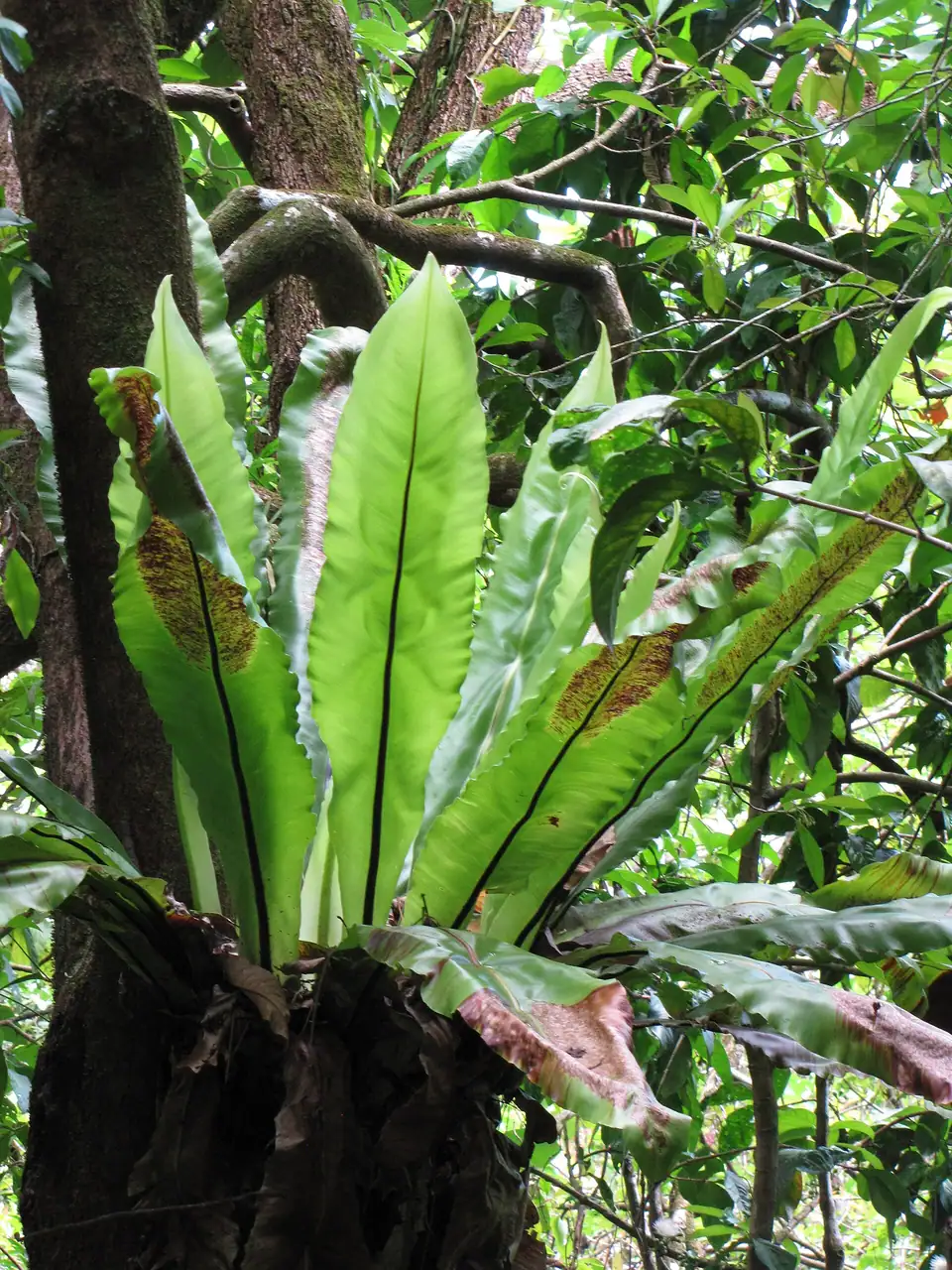
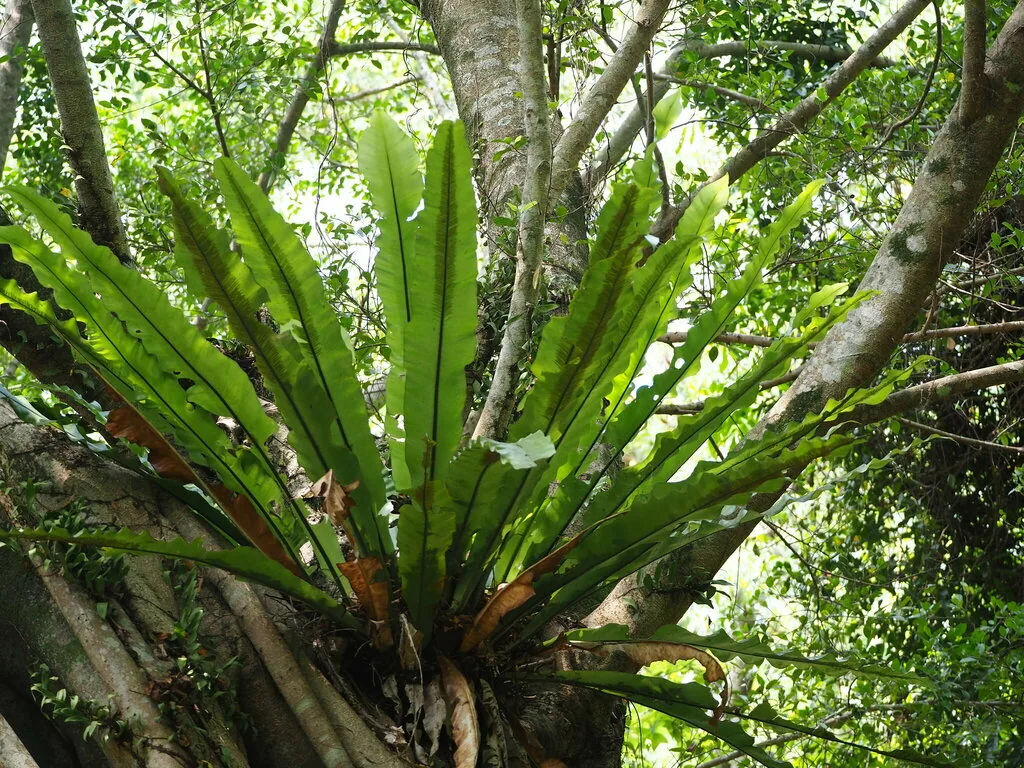
Outdoors, in tropical zones, it is attractive in containers, hanging baskets, and mass plantings or it can be allowed to grow epiphytically on tree trunks.
— Asplenium nidus (Bird's Nest Fern, Birds Nest Fern, Nest Fern) | North Carolina Extension Gardener Plant Toolbox [1] Indoors: Yes
Unlike many ferns, bird’s nest makes a fairly reliable houseplant when provided indirect light.
— Birds Nest Fern – Gardening Solutions [2]
Overview
Bird's nest fern is a tropical, evergreen, epiphytic herbaceous perennial that is typically grown as a houseplant outside the tropics. [1][2] It prefers bright indirect light or light shade and soil that is not allowed to dry out. [1][2]
Nest Fern care
How to water Nest Fern
Watering
Water when the top inch of soil feels dry; do not allow the soil to dry out completely between waterings
What the sources say (2)
Water when the top inch of soil feels dryDo not allow the soil in the pot to dry out completely between waterings.Watering notes
Water carefully so as not to get water on the leaves, along the outer edge of the pot to keep water out of the center of the plant; do not let the pot sit in a saucer of water as this can cause root rot
What the sources say (2)
Water along the outer edge of the pot to prevent water from entering the center of the plant.Do not let the pot sit in a saucer of water as this can cause root rot.How much light Nest Fern needs
Bright light or light shade; partial to full shade outdoors
What the sources say (2)
Bright light or light shade, such as a north-facing window, is suitable.Plant it in an area with partial to full shade and rich soil.How much cold Nest Fern can take
Hardiness, coldest zone
The sources give different values depending on region, zone or growing conditions.
What each source says
According to UF/IFAS Gardening Solutions: 9 [winter low −6.7 to −1.1 °C (20 to 30 °F)]
According to Clemson Home & Garden Information Center: 11 [winter low 4.4 to 10 °C (40 to 50 °F)]
According to NC State Extension: 11a [winter low 4.4 to 7.2 °C (40 to 45 °F)]
What the sources say (3)
According to UF/IFAS Gardening Solutions: Native to tropical Asia, bird’s nest fern thrives in Florida’s humid climate in zones 9 to 11; plants in zone 9 will need freeze protection.According to Clemson Home & Garden Information Center: Bird’s nest fern is hardy in zones 11 to 12.According to NC State Extension: USDA Plant Hardiness Zone:
11a, 11b, 12a, 12bHardiness, warmest zone
The sources give different values depending on region, zone or growing conditions.
What each source says
According to UF/IFAS Gardening Solutions: 11 [winter low 4.4 to 10 °C (40 to 50 °F)]
According to Clemson Home & Garden Information Center: 12 [winter low 10 to 15.6 °C (50 to 60 °F)]
According to NC State Extension: 12b [winter low 12.8 to 15.6 °C (55 to 60 °F)]
What the sources say (3)
According to UF/IFAS Gardening Solutions: Native to tropical Asia, bird’s nest fern thrives in Florida’s humid climate in zones 9 to 11; plants in zone 9 will need freeze protection.According to Clemson Home & Garden Information Center: Bird’s nest fern is hardy in zones 11 to 12.According to NC State Extension: USDA Plant Hardiness Zone:
11a, 11b, 12a, 12bWhere to grow Nest Fern
Indoors
Yes
What the sources say (1)
Unlike many ferns, bird’s nest makes a fairly reliable houseplant when provided indirect light.In containers
Yes
What the sources say (1)
Outdoors, in tropical zones, it is attractive in containers, hanging baskets, and mass plantings or it can be allowed to grow epiphytically on tree trunks.How to propagate Nest Fern
Spores
What the sources say (1)
They do not produce flowers or fruits, rather, like all true ferns, reproduce by spores found on the undersides of fronds.How to grow Nest Fern
The plant
Life cycle
perennial
What the sources say (1)
Genus: Asplenium Species: nidus Family: Aspleniaceae Life Cycle: Perennial Country Or Region Of Origin: Polynesia, HI, SE Asia, Australia, MadagascarFamily
Aspleniaceae
What the sources say (1)
Genus: Asplenium Species: nidus Family: Aspleniaceae Life Cycle: Perennial Country Or Region Of Origin: Polynesia, HI, SE Asia, Australia, MadagascarMature height
Pests and diseases
Pests
slugs, snails, scale, mealybugs, leaf nematodes
What the sources say (2)
Susceptible to slugs, snails, scale, mealybugs, bacterial leaf diseases, leaf nematodes, and chemical insecticides.While few pest problems exist, gardeners can experience issues with foliar nematodes, scale, slugs, and snails.Diseases
bacterial leaf diseases
What the sources say (1)
Susceptible to slugs, snails, scale, mealybugs, bacterial leaf diseases, leaf nematodes, and chemical insecticides.Fertilizing
When
During active growth, from late spring through summer
What the sources say (2)
Active growth periods may benefit from the monthly application of dilute liquid fertilizer.Fertilize monthly during the growing season, from late spring through summerHow often
Monthly
What the sources say (2)
Active growth periods may benefit from the monthly application of dilute liquid fertilizer.Fertilize monthly during the growing season, from late spring through summerMineral fertilizers
Dilute liquid houseplant fertilizer, at half the label rate
What the sources say (2)
Active growth periods may benefit from the monthly application of dilute liquid fertilizer.Use a fertilizer specifically designed for houseplants. For ferns, use half the recommended rate on the label.Nest Fern pests and problems
Yellowing and stopped growth in too much sun
Symptom: Fronds turn yellow and growth stops
What to do: Grow in bright light or light shade rather than sunny locations
What the sources say (2)
Too much sun may turn it yellow or stop growth.
— Asplenium nidus (Bird's Nest Fern, Birds Nest Fern, Nest Fern) | North Carolina Extension Gardener Plant Toolbox [1] When grown in sunnier locations, the fronds turn yellow and the plant stops growing.
— Birds Nest Fern – Gardening Solutions [2] Pests and insecticide damage
Symptom: Foliar nematodes, scale, slugs and snails
What to do: Avoid insecticides, which are typically damaging to ferns
What the sources say (1)
While few pest problems exist, gardeners can experience issues with foliar nematodes, scale, slugs, and snails. Insecticides are typically damaging to ferns, and bird’s nest is no exception.
— Birds Nest Fern – Gardening Solutions [2]
Remedies
Each remedy shows what official sources say about it; traditional remedies without an official source are marked as such. Harmful ones are listed so you know to avoid them.
Treating the plant
spider mites
mild soapy water wash Not verified
Traditional remedy, not verified by an official source.
Insecticides are typically damaging to ferns, and bird’s nest is no exception.
— Birds Nest Fern – Gardening Solutions [2] How: Wash down the plant with mild soapy water and a soft cloth
mealybugs
rubbing alcohol Not verified
Traditional remedy, not verified by an official source.
Insecticides are typically damaging to ferns, and bird’s nest is no exception.
— Birds Nest Fern – Gardening Solutions [2] How: Topical agents such as rubbing alcohol are said to eradicate the bugs
leaf tip burn
dry air
pebble tray with water Official source, not independently tested
How: Set the pot on a tray of pebbles with water, without letting the water touch the bottom of the pot
Or set pot on a tray of pebbles with water. Set the pot on top of the pebbles, but don’t allow the water to touch the bottom of the pot.
— How To Grow and Care for Bird’s Nest Fern (Asplenium Nidus) | Home & Garden Information Center [4]
Indicative values
Values from a secondary source, not checked word for word like the rest of this page. Use them as a starting point.
- Hours of sun
- 4-6 hoursIndicative value, adapt it to your climate · Secondary source · Data for the variety Asplenium nidus 'Antiquum'
- Soil pH
- 5.5-6.5Indicative value, adapt it to your climate · Secondary source · Data for the variety Asplenium nidus 'Antiquum'
- Growth rate
- LowIndicative value, adapt it to your climate · Secondary source · Data for the variety Asplenium nidus 'Antiquum'
- Pruning
- March, April, May, March, April, MayIndicative value, adapt it to your climate · Secondary source · Data for the variety Asplenium nidus 'Antiquum'
Similar plants
- Maidenhair Spleenwort Asplenium trichomanes
- Mother Spleenwort Asplenium bulbiferum
- Walking Fern Asplenium rhizophyllum
- Asplenium ceterach Asplenium ceterach
- Ebony Spleenwort Asplenium platyneuron
- Hart's-tongue Asplenium scolopendrium
- Brittle Bladder Fern Cystopteris fragilis
- Broad Beech Fern Phegopteris hexagonoptera
Sources
Every value above is quoted from these documents. Links lead to the original publisher.
- Asplenium nidus (Bird's Nest Fern, Birds Nest Fern, Nest Fern) | North Carolina Extension Gardener Plant Toolbox · plants.ces.ncsu.edu, consulted
- Birds Nest Fern – Gardening Solutions · gardeningsolutions.ifas.ufl.edu, consulted
- Bird's Nest Fern - Asplenium nidus | North Carolina Extension Gardener Plant Toolbox · plants.ces.ncsu.edu, consulted
- How To Grow and Care for Bird’s Nest Fern (Asplenium Nidus) | Home & Garden Information Center · hgic.clemson.edu, consulted
- extension.psu.edu · extension.psu.edu
Written by Emilio Marruso · last checked