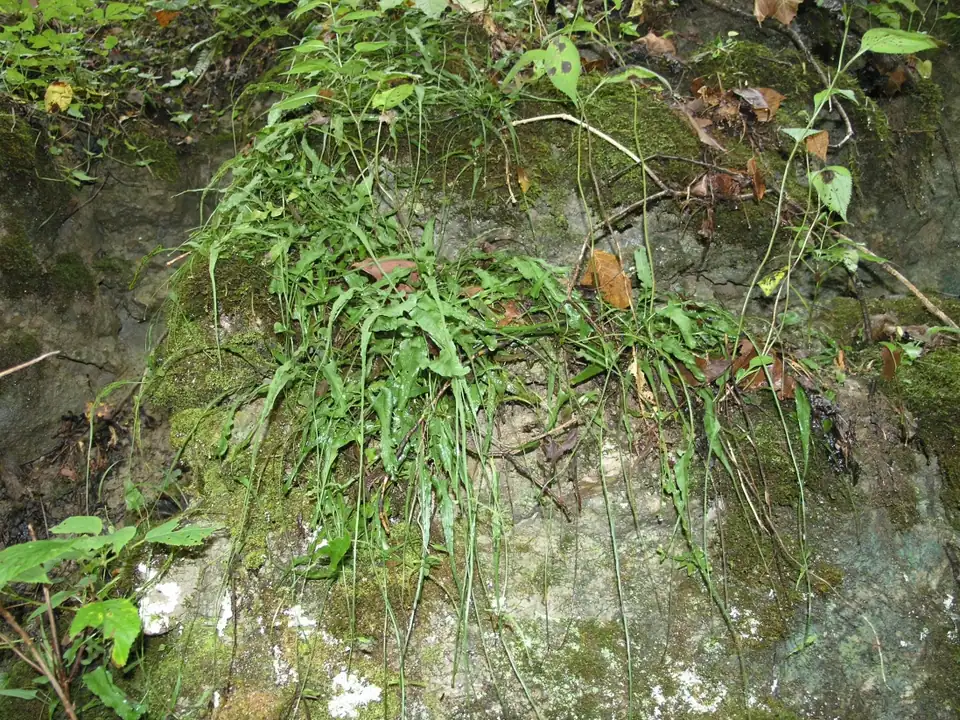
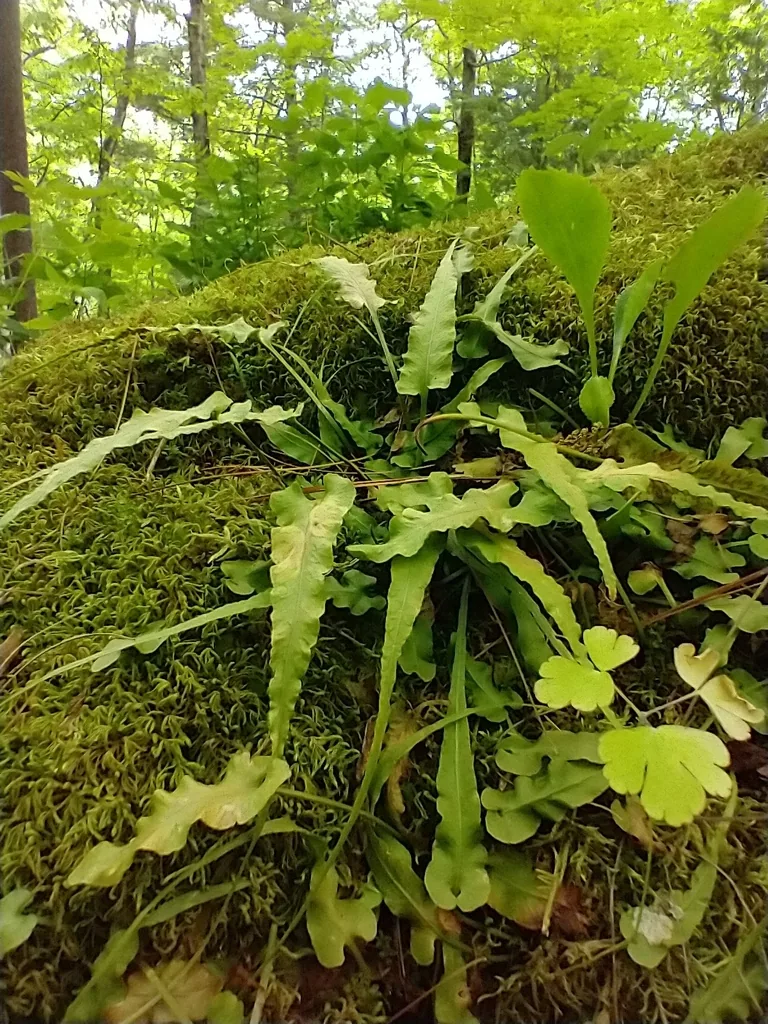

How to Grow and Care for Walking Fern
Asplenium rhizophyllum
Written by Emilio Marruso · last checked
At a glance
This little shade-loving fern has a charming trick: the tips of its fronds take root wherever they touch moist soil, slowly creating new plants. It stays between 2 inches and 1 foot tall, just right for a dim corner. Give it light to dense shade, plenty of moisture and high humidity, and this perennial will keep coming back.
- Sun
Light to dense shade
What the sources say (2)
Light: Light to dense shade
Walking Fern prefers light to dense shade, thin rocky soil, and areas sheltered from strong winds.
— Asplenium rhizophyllum (North American Walking Fern, Walking Fern) | North Carolina Extension Gardener Plant Toolbox [1] Partial Shade (Direct sunlight only part of the day, 2-6 hours)
— Asplenium rhizophyllum (North American Walking Fern, Walking Fern) | North Carolina Extension Gardener Plant Toolbox [1] - Water
Keep it very moist with high humidity; it can't handle long dry spells
What the sources say (2)
Watering: Requires abundant moisture and high humidity
It requires abundant moisture and high humidity.
— Asplenium rhizophyllum (North American Walking Fern, Walking Fern) | North Carolina Extension Gardener Plant Toolbox [1] Watering notes: Does not tolerate prolonged drought
Does not tolerate prolonged drought.
— Asplenium rhizophyllum (North American Walking Fern, Walking Fern) | North Carolina Extension Gardener Plant Toolbox [1] - Cold
Survives winters down to −30 °F (−34.4 °C)
Very hardy · USDA 4a · RHS H7 · Z4
What the sources say (2)
Hardiness, coldest zone: 4a [winter low −34.4 to −31.7 °C (−30 to −25 °F)]
USDA Plant Hardiness Zone: 4a, 4b, 5a, 5b, 6a, 6b, 7a, 7b, 8a, 8b
— Asplenium rhizophyllum (North American Walking Fern, Walking Fern) | North Carolina Extension Gardener Plant Toolbox [1] Hardiness, warmest zone: 8b [winter low −9.4 to −6.7 °C (15 to 20 °F)]
USDA Plant Hardiness Zone: 4a, 4b, 5a, 5b, 6a, 6b, 7a, 7b, 8a, 8b
— Asplenium rhizophyllum (North American Walking Fern, Walking Fern) | North Carolina Extension Gardener Plant Toolbox [1] - Soil
Alkaline soil, pH 8.0 or higher
What the sources say (1)
Soil pH, minimum: 8.0
Soil pH: Alkaline (>8.0)
— Asplenium rhizophyllum (North American Walking Fern, Walking Fern) | North Carolina Extension Gardener Plant Toolbox [1] - Pests
Watch for slugs, snails and aphids
What the sources say (1)
Pests: slugs, snails, aphids
May be susceptible to slugs, snails and some species of aphids.
— Asplenium rhizophyllum (North American Walking Fern, Walking Fern) | North Carolina Extension Gardener Plant Toolbox [1] - Size
2 inches to 1 foot tall and wide
What the sources say (2)
Mature height: 5.08-30.48 cm (2 in-1 ft)
Dimensions: Height: 0 ft. 2 in. - 1 ft. 0 in. Width: 0 ft. 2 in. - 1 ft. 0 in.
— Asplenium rhizophyllum (North American Walking Fern, Walking Fern) | North Carolina Extension Gardener Plant Toolbox [1] Mature width: 5.08-30.48 cm (2 in-1 ft)
Dimensions: Height: 0 ft. 2 in. - 1 ft. 0 in. Width: 0 ft. 2 in. - 1 ft. 0 in.
— Asplenium rhizophyllum (North American Walking Fern, Walking Fern) | North Carolina Extension Gardener Plant Toolbox [1] - Propagation
From spores, or let frond tips root where they touch moist soil
What the sources say (2)
Propagation: Spores; vegetative (frond tips root where they touch moist soil)
It reproduces through spore dispersal and also propagates vegetatively.
— Asplenium rhizophyllum (North American Walking Fern, Walking Fern) | North Carolina Extension Gardener Plant Toolbox [1] Frond tips root where they touch moist soil, forming colonies of new ferns around the parent plant
— Asplenium rhizophyllum (North American Walking Fern, Walking Fern) | North Carolina Extension Gardener Plant Toolbox [1]
Overview
Walking fern is a small, evergreen herbaceous perennial fern native to eastern North America. [1] It grows in moist, shady, rocky places and requires abundant moisture and high humidity. [1]
This record is incomplete: the sources we read do not cover every field yet.
Not yet covered by our sources: Pruning
Walking Fern care
How to water Walking Fern
Watering
Requires abundant moisture and high humidity
What the sources say (1)
It requires abundant moisture and high humidity.Watering notes
Does not tolerate prolonged drought
What the sources say (1)
Does not tolerate prolonged drought.How much light Walking Fern needs
Light to dense shade
What the sources say (2)
Walking Fern prefers light to dense shade, thin rocky soil, and areas sheltered from strong winds.Partial Shade (Direct sunlight only part of the day, 2-6 hours)How much cold Walking Fern can take
Hardiness, coldest zone
4a [winter low −34.4 to −31.7 °C (−30 to −25 °F)]
What the sources say (1)
USDA Plant Hardiness Zone:
4a, 4b, 5a, 5b, 6a, 6b, 7a, 7b, 8a, 8bHardiness, warmest zone
8b [winter low −9.4 to −6.7 °C (15 to 20 °F)]
What the sources say (1)
USDA Plant Hardiness Zone:
4a, 4b, 5a, 5b, 6a, 6b, 7a, 7b, 8a, 8bBest soil for Walking Fern
8.0
What the sources say (1)
Soil pH:
Alkaline (>8.0)How to propagate Walking Fern
Spores; vegetative (frond tips root where they touch moist soil)
What the sources say (2)
It reproduces through spore dispersal and also propagates vegetatively.Frond tips root where they touch moist soil, forming colonies of new ferns around the parent plantHow to grow Walking Fern
The plant
Life cycle
perennial
What the sources say (1)
Family: Aspleniaceae Life Cycle: Perennial Country Or Region Of Origin: E. Canada to U.S.A.Family
Aspleniaceae
What the sources say (1)
Family: Aspleniaceae Life Cycle: Perennial Country Or Region Of Origin: E. Canada to U.S.A.Mature height
5.08-30.48 cm (2 in-1 ft)
What the sources say (1)
Dimensions: Height: 0 ft. 2 in. - 1 ft. 0 in. Width: 0 ft. 2 in. - 1 ft. 0 in.Mature width
5.08-30.48 cm (2 in-1 ft)
What the sources say (1)
Dimensions: Height: 0 ft. 2 in. - 1 ft. 0 in. Width: 0 ft. 2 in. - 1 ft. 0 in.Pests and diseases
Pests
slugs, snails, aphids
What the sources say (1)
May be susceptible to slugs, snails and some species of aphids.Walking Fern pests and problems
Drought
Symptom: Does not tolerate prolonged drought
What to do: Requires abundant moisture and high humidity
What the sources say (1)
Does not tolerate prolonged drought. May be susceptible to slugs, snails and some species of aphids.
— Asplenium rhizophyllum (North American Walking Fern, Walking Fern) | North Carolina Extension Gardener Plant Toolbox [1] Slugs, snails and aphids
Symptom: May be susceptible to slugs, snails and some species of aphids
What the sources say (1)
May be susceptible to slugs, snails and some species of aphids.
— Asplenium rhizophyllum (North American Walking Fern, Walking Fern) | North Carolina Extension Gardener Plant Toolbox [1]
Remedies
Each remedy shows what official sources say about it; traditional remedies without an official source are marked as such. Harmful ones are listed so you know to avoid them.
Treating the plant
slugs and snails
picking by hand Works
How: Pick them by hand or with tweezers about two hours after sunset, with a flashlight, and put them in a container of hot soapy water.
Picking by hand or with tweezers, although not an enjoyable task, is a very effective method of immediate control and can last a reasonably long time if combined with other techniques.
— extension.umd.edu [3] What the evidence says Picking by hand or with tweezers, although not an enjoyable task, is a very effective method of immediate control and can last a reasonably long time if combined with other techniques.
— extension.umd.edu [3] beer trap Partly works
How: Fill shallow containers with beer as bait; drowned slugs and snails are disposed of in hot soapy water.
Most people are familiar with using shallow containers filled with beer as a method of baiting.
— extension.umd.edu [3] What the evidence says Slugs attracted to beer become tipsy and fall in to drown. Drowned or trapped slugs and snails should be disposed of in hot soapy water. The drawback to this type of trapping is that it requires frequent monitoring and bait replacement.
— extension.umd.edu [3] salt Harmful
How: Salt is sometimes used against slugs and snails.
The use of salt, vinegar solutions, or boiling water is not recommended as it can cause plant damage.
— extension.umd.edu [3] What the evidence says The use of salt, vinegar solutions, or boiling water is not recommended as it can cause plant damage.
— extension.umd.edu [3]
aphids
washing with water Works
How: Wash the plants with water to remove the aphids.
Washing the plants with water will remove most if not all the aphids and they cannot get back up to the plant.
— ask.extension.org [4] What the evidence says Washing the plants with water will remove most if not all the aphids and they cannot get back up to the plant.
— ask.extension.org [4] insecticidal soap Works
Do not use [nome commerciale] it will take the waxy finish off the plants.
— ask.extension.org [4] Do not spray the flowers as it will kill pollinators too.
— ask.extension.org [4] How: Hit the aphids with a hard water spray first, then use insecticidal soap, which can be made at home.
First by hitting them with a hard water spray, then using insecticidal soap which you can make at home.
— ask.extension.org [4] What the evidence says Even with a healthy invasion of aphids, they are really easy to get rid of. First by hitting them with a hard water spray, then using insecticidal soap which you can make at home.
— ask.extension.org [4]
Calendar
Pruning
Not stated in the sources we read.
Months as given by the sources, which are mostly from the United States (northern hemisphere). In the southern hemisphere they shift by about six months.
Similar plants
- Maidenhair Spleenwort Asplenium trichomanes
- Mother Spleenwort Asplenium bulbiferum
- Nest Fern Asplenium nidus
- Asplenium ceterach Asplenium ceterach
- Ebony Spleenwort Asplenium platyneuron
- Hart's-tongue Asplenium scolopendrium
- Brittle Bladder Fern Cystopteris fragilis
- Broad Beech Fern Phegopteris hexagonoptera
Sources
Every value above is quoted from these documents. Links lead to the original publisher.
- Asplenium rhizophyllum (North American Walking Fern, Walking Fern) | North Carolina Extension Gardener Plant Toolbox · plants.ces.ncsu.edu, consulted
- North American Walking Fern - Asplenium rhizophyllum | North Carolina Extension Gardener Plant Toolbox · plants.ces.ncsu.edu, consulted
- extension.umd.edu · extension.umd.edu
- ask.extension.org · ask.extension.org
Written by Emilio Marruso · last checked