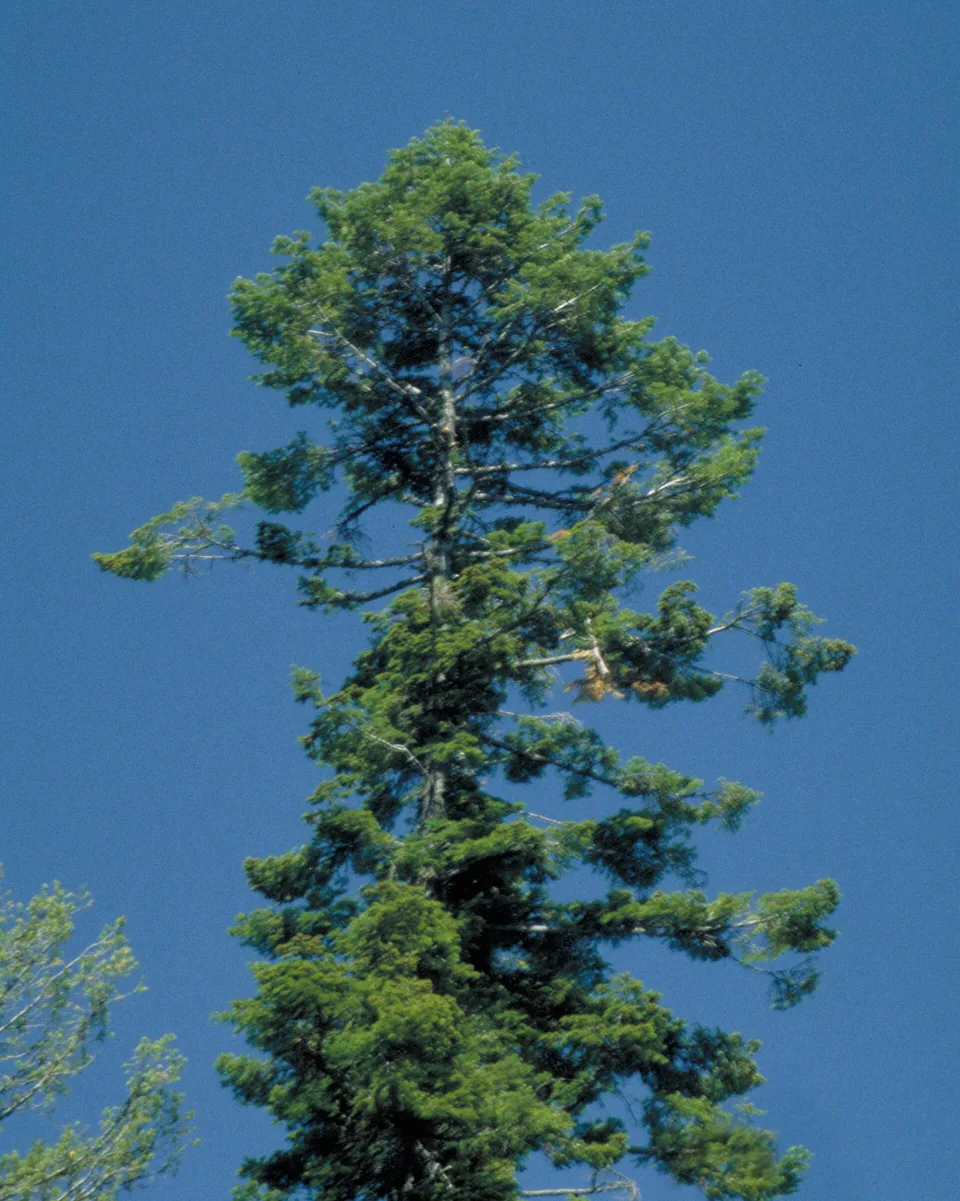


How to Grow and Care for Abies grandis
Abies grandis
Written by Emilio Marruso · last checked
At a glance
Grand fir is a true giant, growing 130–230 feet tall and 20–26 feet wide, and it is happy in full sun to partial shade. It is also a gift to wildlife: many animals shelter and nest in it, grouse eat the needles, deer and elk browse the foliage and twigs in winter, and birds, chipmunks and squirrels feast on the seeds.
- Sun
Full sun to partial shade
What the sources say (1)
Light: Full sun to partial shade
Light: Full sun (6 or more hours of direct sunlight a day) Partial Shade (Direct sunlight only part of the day, 2-6 hours)
— Abies grandis | North Carolina Extension Gardener Plant Toolbox [1] - Cold
Survives winters down to −30 °F (−34.4 °C)
Very hardy · USDA 4a · RHS H7 · Z4
What the sources say (2)
Hardiness, coldest zone: 4a [winter low −34.4 to −31.7 °C (−30 to −25 °F)]
USDA Plant Hardiness Zone: 4a, 4b, 5a, 5b, 6a, 6b
— Abies grandis | North Carolina Extension Gardener Plant Toolbox [1] Hardiness, warmest zone: 6b [winter low −20.6 to −17.8 °C (−5 to 0 °F)]
USDA Plant Hardiness Zone: 4a, 4b, 5a, 5b, 6a, 6b
— Abies grandis | North Carolina Extension Gardener Plant Toolbox [1] - Pests
Woolly adelgids, bark beetles, budworms and spider mites; watch for root rot and needle rust
What the sources say (3)
Pests: balsam woolly adelgid, bark beetles, spruce budworms, tussock moths, aphids, bagworms, scale, spider mites
The balsam woolly adelgid is a problem in some areas. Other potential insect pests include bark beetles, spruce budworms, tussock moths, aphids, bagworms and scale.
— Abies grandis | North Carolina Extension Gardener Plant Toolbox [1] Spider mites may occur in hot conditions.
— Abies grandis | North Carolina Extension Gardener Plant Toolbox [1] Diseases: cankers, heart rot, root rot, needle rust, twig blight
Potential disease problems include cankers, heart rot, root rot, needle rust and twig blight.
— Abies grandis | North Carolina Extension Gardener Plant Toolbox [1] - Size
Huge: 130–230 ft tall and 20–26 ft wide
What the sources say (2)
Mature height: 3962-7010 cm (130-230 ft)
Height: 130 ft. 0 in. - 230 ft. 0 in.
— Abies grandis | North Carolina Extension Gardener Plant Toolbox [1] Mature width: 610-792 cm (20-26 ft)
Width: 20 ft. 0 in. - 26 ft. 0 in.
— Abies grandis | North Carolina Extension Gardener Plant Toolbox [1] - Propagation
Grows from seed
What the sources say (1)
Propagation: Seed
Recommended Propagation Strategy: Seed Country Or Region Of Origin:
— Abies grandis | North Carolina Extension Gardener Plant Toolbox [1]
Overview
Grand fir is an evergreen conifer native to the Pacific Northwest and Northern California. [1] It is a large tree, probably best used for naturalization within its growing environment, and is very fragrant. [1] It is propagated by seed. [1]
This record is incomplete: the sources we read do not cover every field yet.
Not yet covered by our sources: Watering, Pruning
Abies grandis care
How to water Abies grandis
Not stated in the sources we read.
How much light Abies grandis needs
Full sun to partial shade
What the sources say (1)
Light:
Full sun (6 or more hours of direct sunlight a day)
Partial Shade (Direct sunlight only part of the day, 2-6 hours)How much cold Abies grandis can take
Hardiness, coldest zone
4a [winter low −34.4 to −31.7 °C (−30 to −25 °F)]
What the sources say (1)
USDA Plant Hardiness Zone:
4a, 4b, 5a, 5b, 6a, 6b Hardiness, warmest zone
6b [winter low −20.6 to −17.8 °C (−5 to 0 °F)]
What the sources say (1)
USDA Plant Hardiness Zone:
4a, 4b, 5a, 5b, 6a, 6b How to propagate Abies grandis
Seed
What the sources say (1)
Recommended Propagation Strategy:
Seed
Country Or Region Of Origin:How to grow Abies grandis
The plant
Family
Pinaceae
What the sources say (1)
Grand fir is an evergreen conifer native to the Pacific Northwest and Northern California, occurring at altitudes of sea level to 1,800 m. in the Pinaceae (pine) family.Mature height
3962-7010 cm (130-230 ft)
What the sources say (1)
Height: 130 ft. 0 in. - 230 ft. 0 in.Mature width
610-792 cm (20-26 ft)
What the sources say (1)
Width: 20 ft. 0 in. - 26 ft. 0 in.Pests and diseases
Pests
balsam woolly adelgid, bark beetles, spruce budworms, tussock moths, aphids, bagworms, scale, spider mites
What the sources say (2)
The balsam woolly adelgid is a problem in some areas. Other potential insect pests include bark beetles, spruce budworms, tussock moths, aphids, bagworms and scale.Spider mites may occur in hot conditions.Diseases
cankers, heart rot, root rot, needle rust, twig blight
What the sources say (1)
Potential disease problems include cankers, heart rot, root rot, needle rust and twig blight.Abies grandis pests and problems
Insect pests and diseases
Symptom: The balsam woolly adelgid is a problem in some areas; other potential pests include bark beetles, spruce budworms, tussock moths, aphids, bagworms and scale; spider mites may occur in hot conditions; potential diseases include cankers, heart rot, root rot, needle rust and twig blight.
What the sources say (2)
The balsam woolly adelgid is a problem in some areas. Other potential insect pests include bark beetles, spruce budworms, tussock moths, aphids, bagworms and scale.
— Abies grandis | North Carolina Extension Gardener Plant Toolbox [1] Spider mites may occur in hot conditions. Potential disease problems include cankers, heart rot, root rot, needle rust and twig blight.
— Abies grandis | North Carolina Extension Gardener Plant Toolbox [1]
Remedies
Each remedy shows what official sources say about it; traditional remedies without an official source are marked as such. Harmful ones are listed so you know to avoid them.
Treating the plant
aphids
forceful water spray Partly works
How: Spray infested parts with enough pressure to knock the insects off without injuring the plant; repeat because there is no residual effect.
The least toxic, lowest impact control method is to use a forceful water spray to dislodge aphids from host trees.
— yardandgarden.extension.iastate.edu [2] What the evidence says The least toxic, lowest impact control method is to use a forceful water spray to dislodge aphids from host trees.
— yardandgarden.extension.iastate.edu [2]
balsam twig aphid
insecticidal soap spray Works
How: Small trees can be sprayed with insecticidal soap.
Small trees can be sprayed with insecticidal soap, or there are some available insecticide products.
— yardandgarden.extension.iastate.edu [3] What the evidence says insecticidal soap is a safe, effective organic insecticide with minimal environmental impact.
— extension.psu.edu [4]
spider mites
garden hose water jet Partly works
How: Apply a forceful stream of water to dislodge mites from an infested small tree or shrub; repeat 3 or 4 times on consecutive days.
Use the garden hose to apply a forceful stream of water to dislodge mites from an infested plant. Repeat 3 or 4 times on consecutive days.
— yardandgarden.extension.iastate.edu [5] What the evidence says Use the garden hose to apply a forceful stream of water to dislodge mites from an infested plant. Repeat 3 or 4 times on consecutive days.
— yardandgarden.extension.iastate.edu [5] dishwashing detergent soap spray Partly works
How: Mix 5 tablespoons of liquid dishwashing detergent in 1 gallon of water; spray thoroughly, soap only controls mites it contacts directly.
To make your own insecticidal soap spray solution, mix 5 tablespoons of liquid dishwashing detergent in 1 gallon of water.
— yardandgarden.extension.iastate.edu [5] What the evidence says Soap sprays have no residual activity and only control mites and insects that are contacted directly. Thorough spraying is important for control.
— yardandgarden.extension.iastate.edu [5]
bagworms
hand removal of bags Official source, not independently tested
How: Bagworms can be removed with scissors or a sharp knife where practical.
Where practical, bagworms can be removed with scissors or a sharp knife.
— content.ces.ncsu.edu [6]
Calendar
Pruning
Not stated in the sources we read.
Months as given by the sources, which are mostly from the United States (northern hemisphere). In the southern hemisphere they shift by about six months.
Edibility
Reported by the source, quoted verbatim. Do not eat a plant on the basis of this page alone: identification mistakes can be dangerous.
Firs are useful to many animals for cover and nesting sites. Grouse eat the needles. Deer and elk eat the foliage and twigs in the winter. Birds, chipmunks and squirrels eat the seeds.
[1]Firs are useful to many animals for cover and nesting sites. Grouse eat the needles. Deer and elk eat the foliage and twigs in the winter. Birds, chipmunks and squirrels eat the seeds.
[1]Firs are useful to many animals for cover and nesting sites. Grouse eat the needles. Deer and elk eat the foliage and twigs in the winter. Birds, chipmunks and squirrels eat the seeds.
[1]
Indicative values
Values from a secondary source, not checked word for word like the rest of this page. Use them as a starting point.
- Life cycle
- PerennialIndicative value, adapt it to your climate · Secondary source
- Hours of sun
- 8-10 hoursIndicative value, adapt it to your climate · Secondary source
- Watering
- AverageIndicative value, adapt it to your climate · Secondary source
- Soil
- Sandy LoamyIndicative value, adapt it to your climate · Secondary source
- Soil pH
- 5-6.5Indicative value, adapt it to your climate · Secondary source
- Care level
- MediumIndicative value, adapt it to your climate · Secondary source
- Growth rate
- HighIndicative value, adapt it to your climate · Secondary source
- Pruning
- February, February, MarchIndicative value, adapt it to your climate · Secondary source
Similar plants
- Alpine Fir Abies lasiocarpa
- Balsam Fir Abies balsamea
- Fraser fir Abies fraseri
- Greek Fir Abies cephalonica
- Korean Fir Abies koreana
- Momi Fir Abies firma
- Noble Fir Abies procera
- Nordmann Fir Abies nordmanniana
Sources
Every value above is quoted from these documents. Links lead to the original publisher.
- Abies grandis | North Carolina Extension Gardener Plant Toolbox · plants.ces.ncsu.edu, consulted
- yardandgarden.extension.iastate.edu · yardandgarden.extension.iastate.edu
- yardandgarden.extension.iastate.edu · yardandgarden.extension.iastate.edu
- extension.psu.edu · extension.psu.edu
- yardandgarden.extension.iastate.edu · yardandgarden.extension.iastate.edu
- content.ces.ncsu.edu · content.ces.ncsu.edu
Written by Emilio Marruso · last checked