
How to Grow and Care for Momi Fir
Abies firma
Written by Emilio Marruso · last checked
At a glance
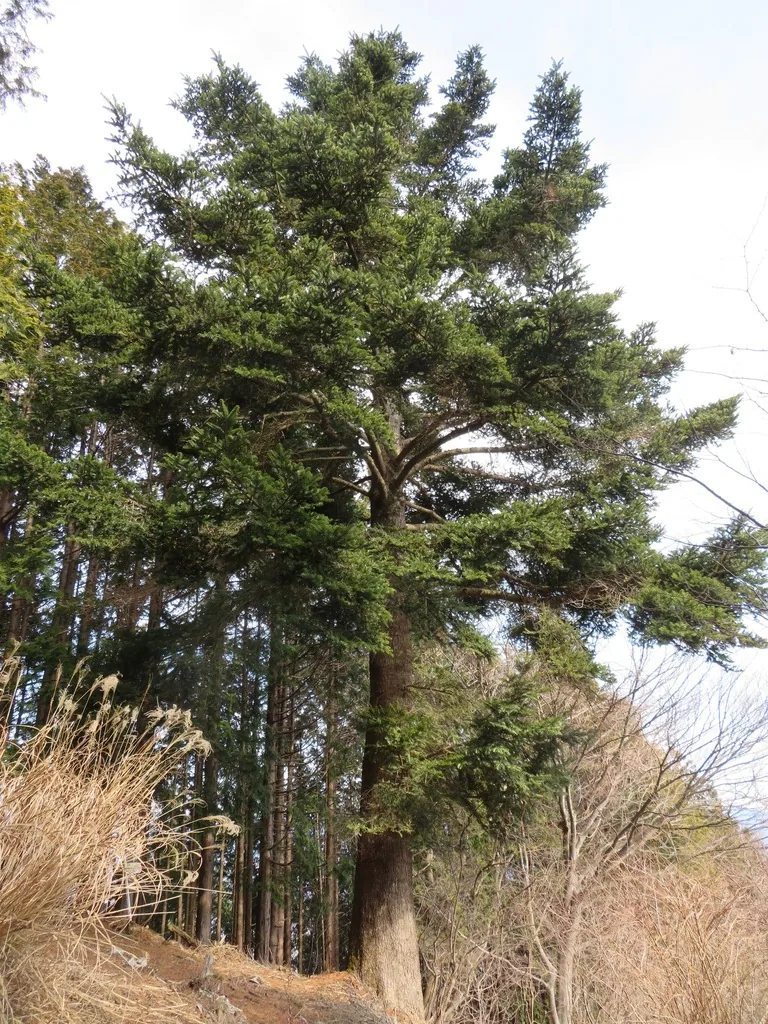
This fir grows into a grand tree, 40–70 ft tall and 30–40 ft wide, so give it plenty of room. It loves full sun or a little afternoon shade, and soil kept evenly moist, though it handles a range of moisture conditions. With no serious pests to worry about, it makes a calm, easygoing giant for a spacious yard.
- Sun
Full sun, or some afternoon shade
What the sources say (2)
Light: Full sun, or with some afternoon shade
Plant in full sun or with some afternoon shade in
— Abies firma (Japanese Fir, Momi Fir) | North Carolina Extension Gardener Plant Toolbox [1] It requires full sun to prosper. This tree
— Abies Firma, a Heat-Tolerant Fir for North Carolina - Extension Gardener | NC State Extension [2] - Water
Keep the soil evenly moist; it tolerates a range of moisture levels
What the sources say (2)
Watering: Average, consistently moist soil
Plant in full sun or with some afternoon shade in average, consistently moist and slightly acidic soil. It
— Abies firma (Japanese Fir, Momi Fir) | North Carolina Extension Gardener Plant Toolbox [1] Watering notes: Tolerant of a range of moisture conditions
It performs well in heavy clay soils and is tolerant of a range of moisture conditions.
— Abies Firma, a Heat-Tolerant Fir for North Carolina - Extension Gardener | NC State Extension [2] - Cold
Survives winters down to −10 °F (−23.3 °C)
Very hardy · USDA 6a · RHS H7 · Z6
What the sources say (2)
Hardiness, coldest zone: 6a [winter low −23.3 to −20.6 °C (−10 to −5 °F)]
USDA Plant Hardiness Zone: 6a, 6b, 7a, 7b, 8a, 8b, 9a, 9b
— Abies firma (Japanese Fir, Momi Fir) | North Carolina Extension Gardener Plant Toolbox [1] Hardiness, warmest zone: 9b [winter low −3.9 to −1.1 °C (25 to 30 °F)]
USDA Plant Hardiness Zone: 6a, 6b, 7a, 7b, 8a, 8b, 9a, 9b
— Abies firma (Japanese Fir, Momi Fir) | North Carolina Extension Gardener Plant Toolbox [1] - Pests
No serious pests; watch for aphids, spider mites and scale, plus root rot
What the sources say (2)
Pests: bark beetles, spruce budworms, aphids, bagworms, spider mites, scale
None serious. Possible insects are bark beetles, spruce budworms, aphids, bagworms, spider mites and scale. Potential disease problems include cankers, heart rot, root rot, needle rust, and twig blight.
— Abies firma (Japanese Fir, Momi Fir) | North Carolina Extension Gardener Plant Toolbox [1] Diseases: cankers, heart rot, root rot, needle rust, twig blight
None serious. Possible insects are bark beetles, spruce budworms, aphids, bagworms, spider mites and scale. Potential disease problems include cankers, heart rot, root rot, needle rust, and twig blight.
— Abies firma (Japanese Fir, Momi Fir) | North Carolina Extension Gardener Plant Toolbox [1] - Size
40–70 ft tall and 30–40 ft wide
What the sources say (2)
Mature height: 1219-2134 cm (40-70 ft)
Momi fir will grow 40-70 feet tall in cultivation, up to 150 feet tall in its native habitat and 30-40 feet wide.
— Abies firma (Japanese Fir, Momi Fir) | North Carolina Extension Gardener Plant Toolbox [1] Mature width: 914-1219 cm (30-40 ft)
Momi fir will grow 40-70 feet tall in cultivation, up to 150 feet tall in its native habitat and 30-40 feet wide.
— Abies firma (Japanese Fir, Momi Fir) | North Carolina Extension Gardener Plant Toolbox [1]
Overview
Momi fir grows 40-70 feet [12.2–21.3 m] tall in cultivation and 30-40 feet [9.1–12.2 m] wide, with a conical-pyramidal form. [1] It is more tolerant of hot humid climates than most firs and can be grown in the southeast. [1] It performs well in heavy clay soils and tolerates a range of moisture conditions. [2]
This record is incomplete: the sources we read do not cover every field yet.
Not yet covered by our sources: Pruning, Propagation
Momi Fir care
Measurements in square brackets are our conversion into the other unit system; the quoted text is unchanged.
How to water Momi Fir
Watering
Average, consistently moist soil
What the sources say (1)
Plant in full sun or with some afternoon shade in average, consistently moist and slightly acidic soil. ItWatering notes
Tolerant of a range of moisture conditions
What the sources say (1)
It performs well in heavy clay soils and is tolerant of a range of moisture conditions.How much light Momi Fir needs
Full sun, or with some afternoon shade
What the sources say (2)
Plant in full sun or with some afternoon shade inIt requires full sun to prosper. This treeHow much cold Momi Fir can take
Hardiness, coldest zone
6a [winter low −23.3 to −20.6 °C (−10 to −5 °F)]
What the sources say (1)
USDA Plant Hardiness Zone:
6a, 6b, 7a, 7b, 8a, 8b, 9a, 9bHardiness, warmest zone
9b [winter low −3.9 to −1.1 °C (25 to 30 °F)]
What the sources say (1)
USDA Plant Hardiness Zone:
6a, 6b, 7a, 7b, 8a, 8b, 9a, 9bHow to propagate Momi Fir
Not stated in the sources we read.
How to grow Momi Fir
The plant
Life cycle
woody
What the sources say (1)
Life Cycle:
Woody
Country Or Region Of Origin:
JapanFamily
Pinaceae
What the sources say (1)
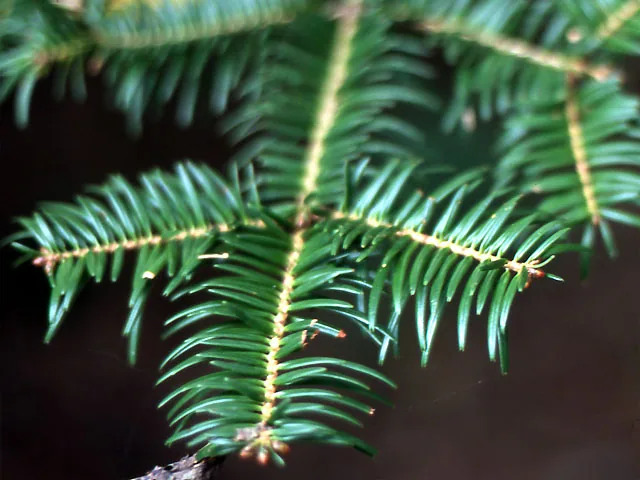
Momi Fir is a needled evergreen conifer in the pine (Pinaceae) family that is native to hills and mountain slopes in central to southern Japan.Mature height
1219-2134 cm (40-70 ft)
What the sources say (1)
Momi fir will grow 40-70 feet tall in cultivation, up to 150 feet tall in its native habitat and 30-40 feet wide.Mature width
914-1219 cm (30-40 ft)
What the sources say (1)
Momi fir will grow 40-70 feet tall in cultivation, up to 150 feet tall in its native habitat and 30-40 feet wide.Pests and diseases
Pests
bark beetles, spruce budworms, aphids, bagworms, spider mites, scale
What the sources say (1)
None serious. Possible insects are bark beetles, spruce budworms, aphids, bagworms, spider mites and scale. Potential disease problems include cankers, heart rot, root rot, needle rust, and twig blight.Diseases
cankers, heart rot, root rot, needle rust, twig blight
What the sources say (1)
None serious. Possible insects are bark beetles, spruce budworms, aphids, bagworms, spider mites and scale. Potential disease problems include cankers, heart rot, root rot, needle rust, and twig blight.Momi Fir pests and problems
Insect pests
Symptom: None serious; possible insects are bark beetles, spruce budworms, aphids, bagworms, spider mites and scale.
What the sources say (1)
Possible insects are bark beetles, spruce budworms, aphids, bagworms, spider mites and scale. Potential
— Abies firma (Japanese Fir, Momi Fir) | North Carolina Extension Gardener Plant Toolbox [1] Diseases
Symptom: Potential problems include cankers, heart rot, root rot, needle rust, and twig blight.
What the sources say (1)
Potential disease problems include cankers, heart rot, root rot, needle rust, and twig blight.
— Abies firma (Japanese Fir, Momi Fir) | North Carolina Extension Gardener Plant Toolbox [1]
Remedies
Each remedy shows what official sources say about it; traditional remedies without an official source are marked as such. Harmful ones are listed so you know to avoid them.
Treating the plant
spider mites
strong water spray Official source, not independently tested
Homeowners should not make foliar applications to trees over 10 ft tall.
— hortsense.cahnrs.wsu.edu [4] How: Hose trees with strong stream of water to wash off spider mites (where practical).
Hose trees with strong stream of water to wash off spider mites (where practical).
— hortsense.cahnrs.wsu.edu [4] insecticidal soap Official source, not independently tested
Homeowners should not make foliar applications to trees over 10 ft tall.
— hortsense.cahnrs.wsu.edu [4] How: Soaps should be applied in May or early June if mites are present.
Soaps should be applied in May or early June if mites are present.
— hortsense.cahnrs.wsu.edu [4]
Calendar
Pruning
Not stated in the sources we read.
Months as given by the sources, which are mostly from the United States (northern hemisphere). In the southern hemisphere they shift by about six months.
Indicative values
Values from a secondary source, not checked word for word like the rest of this page. Use them as a starting point.
- Soil pH
- 5-6.5Indicative value, adapt it to your climate · Secondary source
- Care level
- MediumIndicative value, adapt it to your climate · Secondary source
- Growth rate
- LowIndicative value, adapt it to your climate · Secondary source
- Pruning
- February, March, AprilIndicative value, adapt it to your climate · Secondary source
- Propagation
- Cutting, Grafting Propagation, Layering Propagation, Seed PropagationIndicative value, adapt it to your climate · Secondary source
Similar plants
- Abies grandis Abies grandis
- Alpine Fir Abies lasiocarpa
- Balsam Fir Abies balsamea
- Fraser fir Abies fraseri
- Greek Fir Abies cephalonica
- Korean Fir Abies koreana
- Noble Fir Abies procera
- Nordmann Fir Abies nordmanniana
Sources
Every value above is quoted from these documents. Links lead to the original publisher.
- Abies firma (Japanese Fir, Momi Fir) | North Carolina Extension Gardener Plant Toolbox · plants.ces.ncsu.edu, consulted
- Abies Firma, a Heat-Tolerant Fir for North Carolina - Extension Gardener | NC State Extension · extensiongardener.ces.ncsu.edu, consulted
- Japanese Fir - Abies firma | North Carolina Extension Gardener Plant Toolbox · plants.ces.ncsu.edu, consulted
- hortsense.cahnrs.wsu.edu · hortsense.cahnrs.wsu.edu
Written by Emilio Marruso · last checked