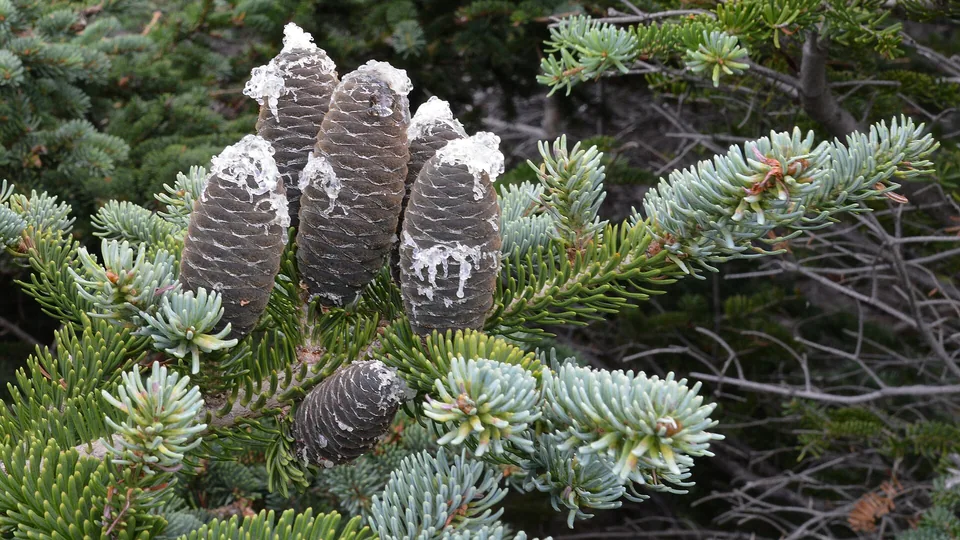


How to Grow and Care for Balsam Fir
Abies balsamea
Written by Emilio Marruso · last checked
At a glance
The balsam fir is a tall evergreen that grows 40 to 70 feet, a true centerpiece for a big garden. Give it full sun or light shade and moist, well-drained, acidic soil, and keep it sheltered from drying winds. Here's a lovely surprise: its needles are edible, and you can use them to make your own tea.
- Sun
Full sun to light shade
What the sources say (2)
- Water
Keep the soil moist but well drained
What the sources say (2)
- Cold
Survives winters down to −40 °F (−40 °C)
Very hardy · USDA 3a · RHS H7 · Z3
What the sources say (5)
Hardiness, coldest zone: 3a [winter low −40 to −37.2 °C (−40 to −35 °F)]
According to NC State Extension: USDA Plant Hardiness Zone: 3a, 3b, 4a, 4b, 5a, 5b, 6a, 6b, 7a, 7b
— Abies balsamea (Balm of Gilead, Balsam Fir) | North Carolina Extension Gardener Plant Toolbox [1] According to Iowa State Univ. Extension: Hardiness: Zones 3 through 6 Growth Rate: Slow Mature Shape: Densely pyramidal
— Balsam Fir | Natural Resources [4] USDA Plant Hardiness Zone: 3a, 3b, 4a, 4b, 5a, 5b, 6a, 6b, 7a, 7b
— Abies balsamea (Balm of Gilead, Balsam Fir) | North Carolina Extension Gardener Plant Toolbox [1] Hardiness, warmest zone:
According to NC State Extension: USDA Plant Hardiness Zone: 3a, 3b, 4a, 4b, 5a, 5b, 6a, 6b, 7a, 7b
— Abies balsamea (Balm of Gilead, Balsam Fir) | North Carolina Extension Gardener Plant Toolbox [1] According to Iowa State Univ. Extension: Hardiness: Zones 3 through 6 Growth Rate: Slow Mature Shape: Densely pyramidal
— Balsam Fir | Natural Resources [4] - Soil
Acidic, well-drained soil, pH no higher than 6.0
What the sources say (3)
Soil pH, maximum: 6.0
Soil Texture: Loam (Silt) Sand Soil pH: Acid (<6.0)
— Abies balsamea (Balm of Gilead, Balsam Fir) | North Carolina Extension Gardener Plant Toolbox [1] - Harvest
The needles are edible and can be used to make tea
- Pests
Woolly adelgids, bark beetles, budworms and aphids; also root rot and needle rust
What the sources say (4)
Pests: balsam woolly adelgids, bark beetles, spruce budworms, aphids, bagworms, scale, spider mites
Balsam woolly adelgids, bark beetles, spruce budworms, aphids, bagworms, and scale. Spider mites may occur in hot conditions.
— Abies balsamea (Balm of Gilead, Balsam Fir) | North Carolina Extension Gardener Plant Toolbox [1] Insects that Can Affect Balsam Fir - Conifer Spider Mites
— Balsam Fir | Natural Resources [4] Diseases: cankers, heart rot, root rot, needle rust, twig blight, seasonal needle loss, diplodia tip blight
Disease problems include cankers, heart rot, root rot, needle rust, and twig blight. Trees are intolerant of urban pollution.
— Abies balsamea (Balm of Gilead, Balsam Fir) | North Carolina Extension Gardener Plant Toolbox [1] Diseases that Can Affect Balsam Fir - Seasonal Needle Loss - Diplodia Tip Blight and Canker
— Balsam Fir | Natural Resources [4] - Watch out
Doesn't like heat or hot, humid climates; shelter it from drying winds
- Size
40 to 70 ft tall
What the sources say (3)
Mature height: 1219-2134 cm (40 ft - 70 ft)
variety phanerolepis (Canaan fir): 1219-1676 cm (40 ft 0 in - 55 ft 0 in): Dimensions: Height: 40 ft. 0 in. - 55 ft. 0 in. Width: 20 ft. 0 in. - 25 ft. 0 in.
— Canaan Fir - Abies balsamea var. phanerolepis | North Carolina Extension Gardener Plant Toolbox [3] Dimensions: Height: 40 ft. 0 in. - 70 ft. 0 in. Width: 15 ft. 0 in. - 25 ft. 0 in.
— Abies balsamea (Balm of Gilead, Balsam Fir) | North Carolina Extension Gardener Plant Toolbox [1] Hardiness: Zones 3 through 6 Growth Rate: Slow Mature Shape: Densely pyramidal Height: 40-70 feet Width: 15-20 feet
— Balsam Fir | Natural Resources [4]
Overview
Balsam fir is an evergreen conifer in the pine family, native to Eastern Canada and south to the Appalachian Mountains. [1] It grows in full sun to light shade with moist, well-drained soil and does not tolerate heat well. [4] It is popular as a Christmas tree because of its shape and long needle retention. [1]
This record is incomplete: the sources we read do not cover every field yet.
Not yet covered by our sources: Pruning, Propagation
Balsam Fir care
How to water Balsam Fir
Moist, well-drained soil
How much light Balsam Fir needs
Full sun to light shade
How much cold Balsam Fir can take
Hardiness, coldest zone
3a [winter low −40 to −37.2 °C (−40 to −35 °F)]
What each source says
According to NC State Extension: 3a [winter low −40 to −37.2 °C (−40 to −35 °F)]
According to Iowa State Univ. Extension: 3 [winter low −40 to −34.4 °C (−40 to −30 °F)]
What the sources say (3)
According to NC State Extension: USDA Plant Hardiness Zone:
3a, 3b, 4a, 4b, 5a, 5b, 6a, 6b, 7a, 7bAccording to Iowa State Univ. Extension: Hardiness: Zones 3 through 6
Growth Rate: Slow
Mature Shape: Densely pyramidalUSDA Plant Hardiness Zone:
3a, 3b, 4a, 4b, 5a, 5b, 6a, 6b, 7a, 7bHardiness, warmest zone
The sources give different values depending on region, zone or growing conditions.
What each source says
According to NC State Extension: 7b [winter low −15 to −12.2 °C (5 to 10 °F)]
According to Iowa State Univ. Extension: 6 [winter low −23.3 to −17.8 °C (−10 to 0 °F)]
What the sources say (2)
According to NC State Extension: USDA Plant Hardiness Zone:
3a, 3b, 4a, 4b, 5a, 5b, 6a, 6b, 7a, 7bAccording to Iowa State Univ. Extension: Hardiness: Zones 3 through 6
Growth Rate: Slow
Mature Shape: Densely pyramidalBest soil for Balsam Fir
6.0
What the sources say (1)
Soil Texture:
Loam (Silt)
Sand
Soil pH:
Acid (<6.0)How to propagate Balsam Fir
Not stated in the sources we read.
How to grow Balsam Fir
The plant
Family
Pinaceae
What the sources say (1)
Balsam Fir is an evergreen conifer in the pine (Pinaceae) family. It is native to Eastern Canada and south to the Appalachian Mountains in West Virginia.Mature height
1219-2134 cm (40 ft - 70 ft)
What each source says
variety phanerolepis (Canaan fir): 1219-1676 cm (40 ft 0 in - 55 ft 0 in):
What the sources say (3)
variety phanerolepis (Canaan fir): 1219-1676 cm (40 ft 0 in - 55 ft 0 in): Dimensions: Height: 40 ft. 0 in. - 55 ft. 0 in. Width: 20 ft. 0 in. - 25 ft. 0 in.Dimensions: Height: 40 ft. 0 in. - 70 ft. 0 in. Width: 15 ft. 0 in. - 25 ft. 0 in.Hardiness: Zones 3 through 6 Growth Rate: Slow Mature Shape: Densely pyramidal Height: 40-70 feet Width: 15-20 feetMature width
The sources disagree:
What each source says
variety phanerolepis (Canaan fir): 508-762 cm (20 ft 0 in - 25 ft 0 in):
What the sources say (1)
variety phanerolepis (Canaan fir): 508-762 cm (20 ft 0 in - 25 ft 0 in): Dimensions: Height: 40 ft. 0 in. - 55 ft. 0 in. Width: 20 ft. 0 in. - 25 ft. 0 in.Pests and diseases
Pests
balsam woolly adelgids, bark beetles, spruce budworms, aphids, bagworms, scale, spider mites
What the sources say (2)
Balsam woolly adelgids, bark beetles, spruce budworms, aphids, bagworms, and scale. Spider mites may occur in hot conditions.Insects that Can Affect Balsam Fir - Conifer Spider MitesDiseases
cankers, heart rot, root rot, needle rust, twig blight, seasonal needle loss, diplodia tip blight
What the sources say (2)
Disease problems include cankers, heart rot, root rot, needle rust, and twig blight. Trees are intolerant of urban pollution.Diseases that Can Affect Balsam Fir - Seasonal Needle Loss - Diplodia Tip Blight and CankerBalsam Fir pests and problems
Insect pests
Symptom: Balsam woolly adelgids, bark beetles, spruce budworms, aphids, bagworms, and scale; spider mites may occur in hot conditions.
What to do: Not stated in the sources.
What the sources say (1)
Balsam woolly adelgids, bark beetles, spruce budworms, aphids, bagworms, and scale. Spider mites may occur in hot conditions.
— Abies balsamea (Balm of Gilead, Balsam Fir) | North Carolina Extension Gardener Plant Toolbox [1] Diseases
Symptom: Cankers, heart rot, root rot, needle rust, and twig blight.
What to do: Not stated in the sources.
What the sources say (1)
Disease problems include cankers, heart rot, root rot, needle rust, and twig blight. Trees are intolerant of urban pollution.
— Abies balsamea (Balm of Gilead, Balsam Fir) | North Carolina Extension Gardener Plant Toolbox [1] Heat and drying winds
Symptom: Not suited to hot, humid climates; does not tolerate heat well.
What to do: Protect trees from drying winds.
What the sources say (1)
Protect trees from drying winds. Balsam firs do not tolerate heat well.
— Balsam Fir | Natural Resources [4]
Remedies
Each remedy shows what official sources say about it; traditional remedies without an official source are marked as such. Harmful ones are listed so you know to avoid them.
Treating the plant
bagworms
removing bagworms by hand Official source, not independently tested
How: When practical, remove the bags with scissors or a sharp knife.
When practical, bagworms can be removed with scissors or a sharp knife. Bagworms are attacked by several kinds of parasitic wasps.
— content.ces.ncsu.edu [5]
Calendar
Pruning
Not stated in the sources we read.
Months as given by the sources, which are mostly from the United States (northern hemisphere). In the southern hemisphere they shift by about six months.
Edibility
Reported by the source, quoted verbatim. Do not eat a plant on the basis of this page alone: identification mistakes can be dangerous.
Needles are edible and can be used to make tea.
[1]
Indicative values
Values from a secondary source, not checked word for word like the rest of this page. Use them as a starting point.
- Life cycle
- PerennialIndicative value, adapt it to your climate · Secondary source
- Hours of sun
- 6-8 hoursIndicative value, adapt it to your climate · Secondary source
- Soil
- Sandy LoamyIndicative value, adapt it to your climate · Secondary source
- Care level
- MediumIndicative value, adapt it to your climate · Secondary source
- Growth rate
- LowIndicative value, adapt it to your climate · Secondary source
- Pruning
- February, March, AprilIndicative value, adapt it to your climate · Secondary source
- Propagation
- Seed Propagation, Cutting, Layering Propagation, Grafting Propagation, Air Layering PropagationIndicative value, adapt it to your climate · Secondary source
Similar plants
- Abies grandis Abies grandis
- Alpine Fir Abies lasiocarpa
- Fraser fir Abies fraseri
- Greek Fir Abies cephalonica
- Korean Fir Abies koreana
- Momi Fir Abies firma
- Noble Fir Abies procera
- Nordmann Fir Abies nordmanniana
Sources
Every value above is quoted from these documents. Links lead to the original publisher.
- Abies balsamea (Balm of Gilead, Balsam Fir) | North Carolina Extension Gardener Plant Toolbox · plants.ces.ncsu.edu, consulted
- Balm of Gilead - Abies balsamea | North Carolina Extension Gardener Plant Toolbox · plants.ces.ncsu.edu, consulted
- Canaan Fir - Abies balsamea var. phanerolepis | North Carolina Extension Gardener Plant Toolbox · plants.ces.ncsu.edu, consulted
- Balsam Fir | Natural Resources · naturalresources.extension.iastate.edu, consulted
- content.ces.ncsu.edu · content.ces.ncsu.edu
Written by Emilio Marruso · last checked