
How to Grow and Care for Korean Fir
Abies koreana
Written by Emilio Marruso · last checked
At a glance
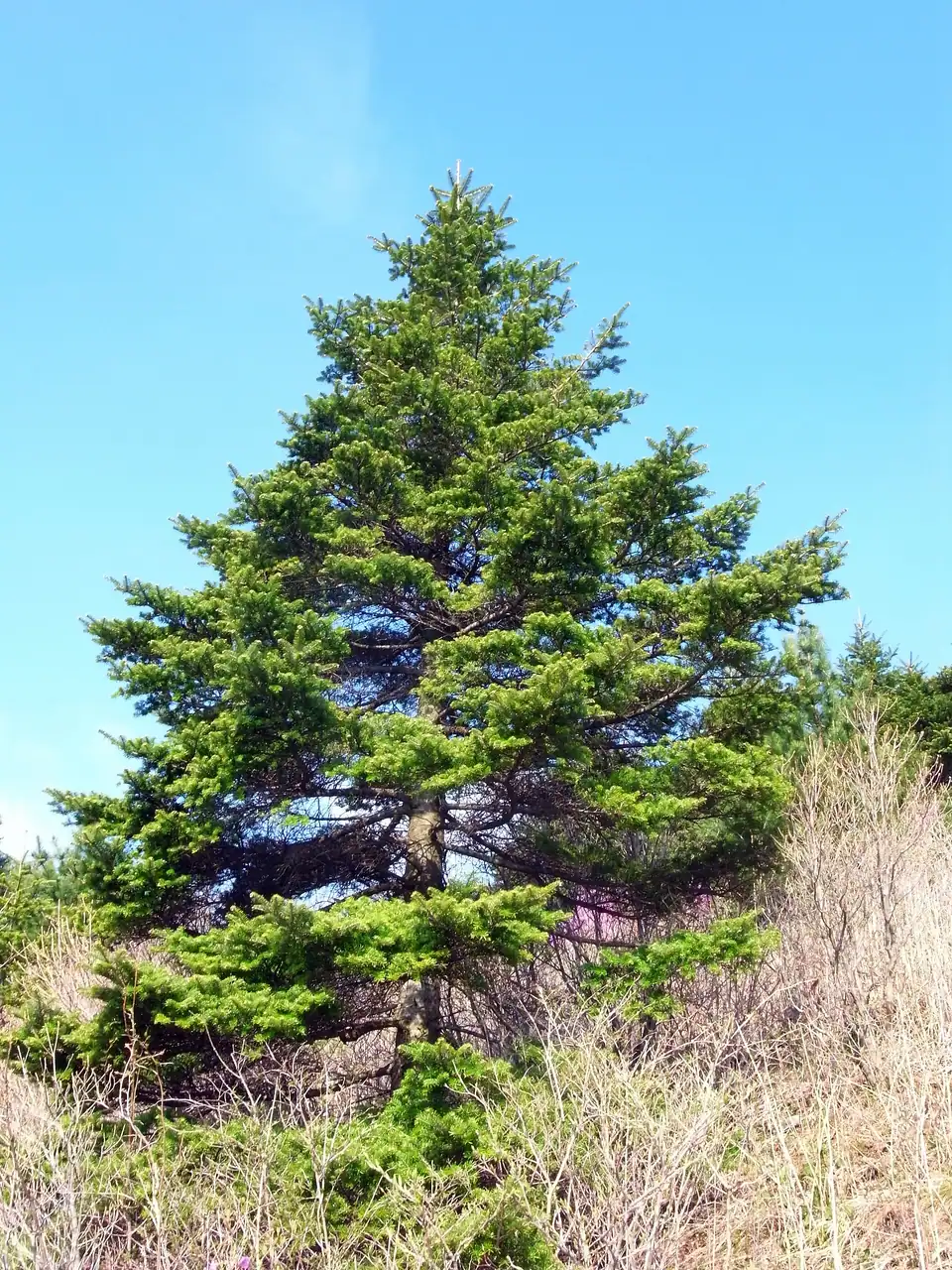
Korean fir is a conifer of the pine family that grows 15–30 feet tall and 6–12 feet wide, happy in full sun or partial shade. Give it moist, well-drained soil and it will feel right at home; just keep it away from wet spots, which invite root rot. You can even raise your own from seed.
- Sun
Full sun to partial shade
What the sources say (1)
Light: Full sun to partial shade
Plant in full sun to partial shade in moist well-drained soil.
— Abies koreana (Abeto Coreano, Korean Fir, Kusang Namu, Sapin Coréen) | North Carolina Extension Gardener Plant Toolbox [1] - Water
Keep the soil moist, but never soggy
What the sources say (1)
Watering notes: Moist, well-drained soil; intolerant of wet sites
Plant in full sun to partial shade in moist well-drained soil. It is intolerant of wet sites and urban conditions.
— Abies koreana (Abeto Coreano, Korean Fir, Kusang Namu, Sapin Coréen) | North Carolina Extension Gardener Plant Toolbox [1] - Cold
Survives winters down to −20 °F (−28.9 °C)
Very hardy · USDA 5a · RHS H7 · Z5
What the sources say (2)
Hardiness, coldest zone: 5a [winter low −28.9 to −26.1 °C (−20 to −15 °F)]
USDA Plant Hardiness Zone: 5a, 5b, 6a, 6b, 7a, 7b
— Abies koreana (Abeto Coreano, Korean Fir, Kusang Namu, Sapin Coréen) | North Carolina Extension Gardener Plant Toolbox [1] Hardiness, warmest zone: 7b [winter low −15 to −12.2 °C (5 to 10 °F)]
USDA Plant Hardiness Zone: 5a, 5b, 6a, 6b, 7a, 7b
— Abies koreana (Abeto Coreano, Korean Fir, Kusang Namu, Sapin Coréen) | North Carolina Extension Gardener Plant Toolbox [1] - Soil
Moist, well-drained soil; it can't stand wet spots
What the sources say (1)
Watering notes: Moist, well-drained soil; intolerant of wet sites
Plant in full sun to partial shade in moist well-drained soil. It is intolerant of wet sites and urban conditions.
— Abies koreana (Abeto Coreano, Korean Fir, Kusang Namu, Sapin Coréen) | North Carolina Extension Gardener Plant Toolbox [1] - Pests
Root rot, needle rust and twig blight; good drainage helps prevent them
What the sources say (1)
Diseases: root rot, needle rust, twig blight
Insects, Diseases, and Other Plant Problems: Disease problems include root rot, needle rust and twig blight.
— Abies koreana (Abeto Coreano, Korean Fir, Kusang Namu, Sapin Coréen) | North Carolina Extension Gardener Plant Toolbox [1] - Size
15–30 ft tall and 6–12 ft wide
What the sources say (2)
Mature height: 457-914 cm (15-30 feet)
This fir will slowly grow 15-30 feet tall and 6 to 12 feet wide with a conical to pyramidal form.
— Abies koreana (Abeto Coreano, Korean Fir, Kusang Namu, Sapin Coréen) | North Carolina Extension Gardener Plant Toolbox [1] Mature width: 183-366 cm (6 to 12 feet)
This fir will slowly grow 15-30 feet tall and 6 to 12 feet wide with a conical to pyramidal form.
— Abies koreana (Abeto Coreano, Korean Fir, Kusang Namu, Sapin Coréen) | North Carolina Extension Gardener Plant Toolbox [1] - Propagation
Grows from seed
What the sources say (1)
Propagation: Seed
Recommended Propagation Strategy: Seed Country Or Region Of Origin:
— Abies koreana (Abeto Coreano, Korean Fir, Kusang Namu, Sapin Coréen) | North Carolina Extension Gardener Plant Toolbox [1]
Overview
Korean fir is a slow-growing evergreen conifer native to North and South Korea. [1] It is grown as an ornamental yard and screening tree and prefers full sun to partial shade in moist, well-drained soil. [1]
This record is incomplete: the sources we read do not cover every field yet.
Not yet covered by our sources: Watering, Pruning
Korean Fir care
How to water Korean Fir
Watering
Not stated in the sources we read.
Watering notes
Moist, well-drained soil; intolerant of wet sites
What the sources say (1)
Plant in full sun to partial shade in moist well-drained soil. It is intolerant of wet sites and urban conditions.How much light Korean Fir needs
Full sun to partial shade
What the sources say (1)
Plant in full sun to partial shade in moist well-drained soil.How much cold Korean Fir can take
Hardiness, coldest zone
5a [winter low −28.9 to −26.1 °C (−20 to −15 °F)]
What the sources say (1)
USDA Plant Hardiness Zone:
5a, 5b, 6a, 6b, 7a, 7bHardiness, warmest zone
7b [winter low −15 to −12.2 °C (5 to 10 °F)]
What the sources say (1)
USDA Plant Hardiness Zone:
5a, 5b, 6a, 6b, 7a, 7bHow to propagate Korean Fir
Seed
What the sources say (1)
Recommended Propagation Strategy:
Seed
Country Or Region Of Origin:How to grow Korean Fir
The plant
Family
Pinaceae
What the sources say (1)
Korean fir is an evergreen conifer in the pine family (Pinaceae) and is native to North and South Korea.Mature height
457-914 cm (15-30 feet)
What the sources say (1)
This fir will slowly grow 15-30 feet tall and 6 to 12 feet wide with a conical to pyramidal form.Mature width
183-366 cm (6 to 12 feet)
What the sources say (1)
This fir will slowly grow 15-30 feet tall and 6 to 12 feet wide with a conical to pyramidal form.Pests and diseases
Diseases
root rot, needle rust, twig blight
What the sources say (1)
Insects, Diseases, and Other Plant Problems: Disease problems include root rot, needle rust and twig blight.Korean Fir pests and problems
Root rot, needle rust and twig blight
Symptom: Disease problems listed for the species
What to do: Intolerant of wet sites; plant in well-drained soil
What the sources say (1)
Insects, Diseases, and Other Plant Problems: Disease problems include root rot, needle rust and twig blight.
— Abies koreana (Abeto Coreano, Korean Fir, Kusang Namu, Sapin Coréen) | North Carolina Extension Gardener Plant Toolbox [1]
Remedies
Each remedy shows what official sources say about it; traditional remedies without an official source are marked as such. Harmful ones are listed so you know to avoid them.
Treating the plant
aphids
strong stream of water Official source, not independently tested
How: Hose infested trees with a strong stream of water to wash off the insects.
Hose infested trees with a strong stream of water to wash off insects. - Prune and destroy individual, heavily-infested branches.
— hortsense.cahnrs.wsu.edu [2]
balsam woolly adelgid
hand-wiping and hosing Official source, not independently tested
How: Hand-wipe minor infestations and hose infested trees with a strong stream of water.
Hand-wipe to remove minor infestations when possible. - Hose infested trees with strong stream of water to wash off these insects.
— hortsense.cahnrs.wsu.edu [3] horticultural oil or insecticidal soap spray Official source, not independently tested
Homeowners should not make foliar applications to trees over 10 ft tall.
— hortsense.cahnrs.wsu.edu [3] How: Apply to individual or small groups of trees when crawlers are active, in late spring and fall.
For individual or small groups of trees, insecticides including horticultural oil or insecticidal soap can be applied when crawlers are active during late spring and fall.
— extension.usu.edu [4] removing infested trees Works
How: Remove infested trees.
The most effective management option is removing infested trees.
— extension.usu.edu [4] What the evidence says The most effective management option is removing infested trees.
— extension.usu.edu [4]
Calendar
Pruning
Not stated in the sources we read.
Months as given by the sources, which are mostly from the United States (northern hemisphere). In the southern hemisphere they shift by about six months.
Indicative values
Values from a secondary source, not checked word for word like the rest of this page. Use them as a starting point.
- Life cycle
- PerennialIndicative value, adapt it to your climate · Secondary source · Data for the variety Abies koreana 'Aurea'
- Hours of sun
- 6-8 hoursIndicative value, adapt it to your climate · Secondary source · Data for the variety Abies koreana 'Aurea'
- Watering
- AverageIndicative value, adapt it to your climate · Secondary source · Data for the variety Abies koreana 'Aurea'
- Soil
- Well-drainedIndicative value, adapt it to your climate · Secondary source · Data for the variety Abies koreana 'Aurea'
- Soil pH
- 5.5-6.5Indicative value, adapt it to your climate · Secondary source · Data for the variety Abies koreana 'Aurea'
- Care level
- MediumIndicative value, adapt it to your climate · Secondary source · Data for the variety Abies koreana 'Aurea'
- Growth rate
- LowIndicative value, adapt it to your climate · Secondary source · Data for the variety Abies koreana 'Aurea'
- Pruning
- June, MayIndicative value, adapt it to your climate · Secondary source · Data for the variety Abies koreana 'Aurea'
- Pests
- Aphids, adelgids, Blight, needle cast, Caterpillar, cutworm, Root rot, Rust, Pest resistant, Disease resistant, Deer resistant, Drought resistantIndicative value, adapt it to your climate · Secondary source · Data for the variety Abies koreana 'Aurea'
Similar plants
- Abies grandis Abies grandis
- Alpine Fir Abies lasiocarpa
- Balsam Fir Abies balsamea
- Fraser fir Abies fraseri
- Greek Fir Abies cephalonica
- Momi Fir Abies firma
- Noble Fir Abies procera
- Nordmann Fir Abies nordmanniana
Sources
Every value above is quoted from these documents. Links lead to the original publisher.
- Abies koreana (Abeto Coreano, Korean Fir, Kusang Namu, Sapin Coréen) | North Carolina Extension Gardener Plant Toolbox · plants.ces.ncsu.edu, consulted
- hortsense.cahnrs.wsu.edu · hortsense.cahnrs.wsu.edu
- hortsense.cahnrs.wsu.edu · hortsense.cahnrs.wsu.edu
- extension.usu.edu · extension.usu.edu
Written by Emilio Marruso · last checked