
How to Grow and Care for American Water-Pennywort
Hydrocotyle americana
Written by Emilio Marruso · last checked
At a glance
This little perennial, just 2–10 inches tall, loves the spots other plants avoid: shade and soggy ground. Give it bright, indirect light or even deep shade and keep its soil always moist; its roots will happily grow in shallow water at the edge of a pond or stream. It's easy to share, too, by seed, division or stem cuttings.
- Sun
Bright indirect light, from dappled sun to deep shade; full sun can scorch the leaves
What the sources say (2)
Light: Bright but indirect light (dappled sunlight to deep shade)
Prefers bright but indirect light, high humidity, and organically rich
— Hydrocotyle americana (American Marshpennywort, American Marsh-Pennywort, American Water Pennywort, American Water-Pennywort, Navelwort, Water Pennywort, Water-pennywort) | North Carolina Extension Gardener Plant Toolbox [1] Light: Dappled Sunlight (Shade through upper canopy all day) Deep shade (Less than 2 hours to no direct sunlight)
— Hydrocotyle americana (American Marshpennywort, American Marsh-Pennywort, American Water Pennywort, American Water-Pennywort, Navelwort, Water Pennywort, Water-pennywort) | North Carolina Extension Gardener Plant Toolbox [1] - Water
Keep the soil always moist or wet; it can even grow in shallow water at pond edges
What the sources say (2)
Watering: Consistently moist or waterlogged soil
organically rich, loamy, consistently moist or waterlogged soil with a slightly acidic to neutral pH.
— Hydrocotyle americana (American Marshpennywort, American Marsh-Pennywort, American Water Pennywort, American Water-Pennywort, Navelwort, Water Pennywort, Water-pennywort) | North Carolina Extension Gardener Plant Toolbox [1] Watering notes: Roots can grow in shallow water at pond or stream margins; do not let the roots dry out completely
The plant does well along the margins of ponds or streams where it can root in shallow water. The roots should not be allowed to dry out completely.
— Hydrocotyle americana (American Marshpennywort, American Marsh-Pennywort, American Water Pennywort, American Water-Pennywort, Navelwort, Water Pennywort, Water-pennywort) | North Carolina Extension Gardener Plant Toolbox [1] - Cold
Survives winters down to −40 °F (−40 °C)
Very hardy · USDA 3a · RHS H7 · Z3
What the sources say (2)
Hardiness, coldest zone: 3a [winter low −40 to −37.2 °C (−40 to −35 °F)]
USDA Plant Hardiness Zone: 3a, 3b, 4a, 4b, 5a, 5b, 6a, 6b, 7a, 7b
— Hydrocotyle americana (American Marshpennywort, American Marsh-Pennywort, American Water Pennywort, American Water-Pennywort, Navelwort, Water Pennywort, Water-pennywort) | North Carolina Extension Gardener Plant Toolbox [1] Hardiness, warmest zone: 7b [winter low −15 to −12.2 °C (5 to 10 °F)]
USDA Plant Hardiness Zone: 3a, 3b, 4a, 4b, 5a, 5b, 6a, 6b, 7a, 7b
— Hydrocotyle americana (American Marshpennywort, American Marsh-Pennywort, American Water Pennywort, American Water-Pennywort, Navelwort, Water Pennywort, Water-pennywort) | North Carolina Extension Gardener Plant Toolbox [1] - Soil
Avoid clay soils that pack down and drain poorly
- Pests
Watch for aphids, spider mites and snails; it can get leaf spots and root rot
What the sources say (2)
Pests: aphids, spider mites, snails
Monitor for aphids, spider mites, and snails. May be susceptible to leaf spots and root rot.
— Hydrocotyle americana (American Marshpennywort, American Marsh-Pennywort, American Water Pennywort, American Water-Pennywort, Navelwort, Water Pennywort, Water-pennywort) | North Carolina Extension Gardener Plant Toolbox [1] Diseases: leaf spots, root rot
Monitor for aphids, spider mites, and snails. May be susceptible to leaf spots and root rot.
— Hydrocotyle americana (American Marshpennywort, American Marsh-Pennywort, American Water Pennywort, American Water-Pennywort, Navelwort, Water Pennywort, Water-pennywort) | North Carolina Extension Gardener Plant Toolbox [1] - Size
2 to 10 inches tall
What the sources say (1)
Mature height: 5.08-25.4 cm (2-10 in)
This plant grows 2 to 10 inches tall and spreads by rhizomes and creeping stems that easily root, forming a dense mat.
— Hydrocotyle americana (American Marshpennywort, American Marsh-Pennywort, American Water Pennywort, American Water-Pennywort, Navelwort, Water Pennywort, Water-pennywort) | North Carolina Extension Gardener Plant Toolbox [1] - Propagation
By seed, by dividing the clump or by stem cuttings
What the sources say (1)
Propagation: Seeds, division, stem cuttings
Easily propagated by seeds, division, or stem cuttings.
— Hydrocotyle americana (American Marshpennywort, American Marsh-Pennywort, American Water Pennywort, American Water-Pennywort, Navelwort, Water Pennywort, Water-pennywort) | North Carolina Extension Gardener Plant Toolbox [1]
Overview
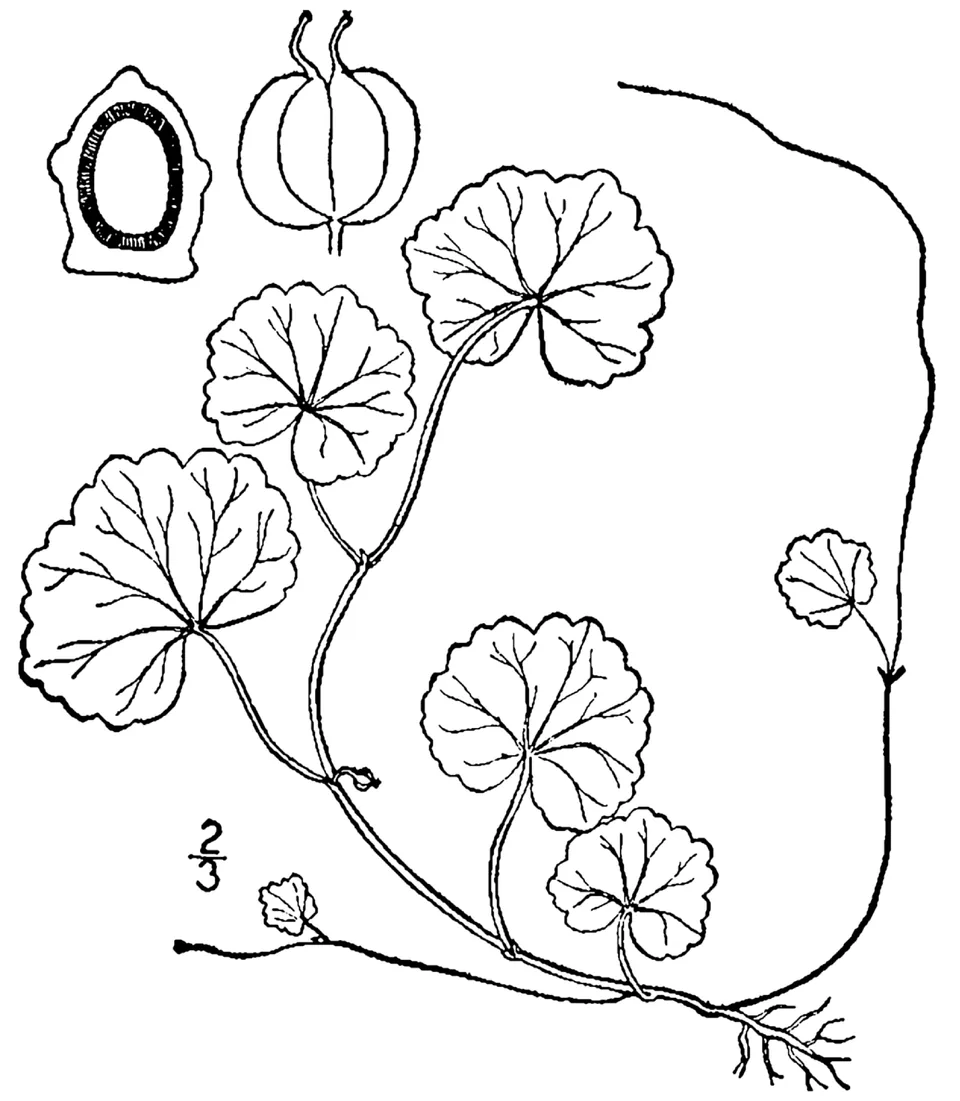
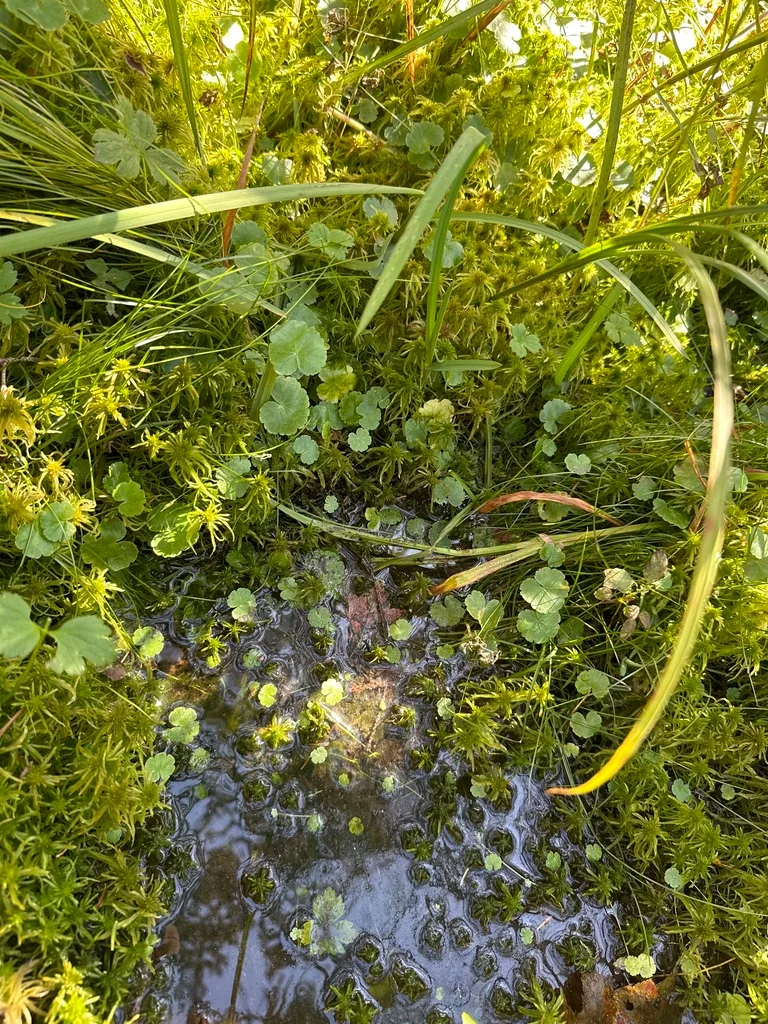
Hydrocotyle americana is a small, creeping, herbaceous perennial native marsh plant that grows in moist areas such as swamps, marshes, bogs and lake margins. [1] It grows 2 to 10 inches [5–25 cm] tall and spreads by rhizomes and creeping stems that root easily, forming a dense mat. [1] It suits shady, consistently wet sites such as rain gardens, garden ponds, bogs and stream banks. [1]
This record is incomplete: the sources we read do not cover every field yet.
Not yet covered by our sources: Pruning
American Water-Pennywort care
Measurements in square brackets are our conversion into the other unit system; the quoted text is unchanged.
How to water American Water-Pennywort
Watering
Consistently moist or waterlogged soil
What the sources say (1)
organically rich, loamy, consistently moist or waterlogged soil with a slightly acidic to neutral pH.Watering notes
Roots can grow in shallow water at pond or stream margins; do not let the roots dry out completely
What the sources say (1)
The plant does well along the margins of ponds or streams where it can root in shallow water. The roots should not be allowed to dry out completely.How much light American Water-Pennywort needs
Bright but indirect light (dappled sunlight to deep shade)
What the sources say (2)
Prefers bright but indirect light, high humidity, and organically richLight:
Dappled Sunlight (Shade through upper canopy all day)
Deep shade (Less than 2 hours to no direct sunlight) How much cold American Water-Pennywort can take
Hardiness, coldest zone
3a [winter low −40 to −37.2 °C (−40 to −35 °F)]
What the sources say (1)
USDA Plant Hardiness Zone:
3a, 3b, 4a, 4b, 5a, 5b, 6a, 6b, 7a, 7bHardiness, warmest zone
7b [winter low −15 to −12.2 °C (5 to 10 °F)]
What the sources say (1)
USDA Plant Hardiness Zone:
3a, 3b, 4a, 4b, 5a, 5b, 6a, 6b, 7a, 7bHow to propagate American Water-Pennywort
Seeds, division, stem cuttings
What the sources say (1)
Easily propagated by seeds, division, or stem cuttings.How to grow American Water-Pennywort
The plant
Life cycle
perennial
What the sources say (1)
American water-pennywort is a small, creeping, herbaceous perennial, native marsh plant that typically grows in moist areas such as swamps, marshes, bogs, wet woods, and lake margins.Family
Araliaceae
What the sources say (1)
Water pennywort is a member of the ivy family (Araliaceae).Mature height
5.08-25.4 cm (2-10 in)
What the sources say (1)
This plant grows 2 to 10 inches tall and spreads by rhizomes and creeping stems that easily root, forming a dense mat.Pests and diseases
Pests
aphids, spider mites, snails
What the sources say (1)
Monitor for aphids, spider mites, and snails. May be susceptible to leaf spots and root rot.Diseases
leaf spots, root rot
What the sources say (1)
Monitor for aphids, spider mites, and snails. May be susceptible to leaf spots and root rot.American Water-Pennywort pests and problems
Aphids, spider mites and snails
Symptom: Monitor for aphids, spider mites, and snails.
What to do: Monitor the plants.
What the sources say (1)
Monitor for aphids, spider mites, and snails. May be susceptible to leaf spots and root rot.
— Hydrocotyle americana (American Marshpennywort, American Marsh-Pennywort, American Water Pennywort, American Water-Pennywort, Navelwort, Water Pennywort, Water-pennywort) | North Carolina Extension Gardener Plant Toolbox [1] Leaf spots and root rot
Symptom: May be susceptible to leaf spots and root rot.
What to do: Avoid clay soils that can become compacted and drain poorly.
What the sources say (1)
May be susceptible to leaf spots and root rot. Avoid clay soils that can become compacted and drain poorly.
— Hydrocotyle americana (American Marshpennywort, American Marsh-Pennywort, American Water Pennywort, American Water-Pennywort, Navelwort, Water Pennywort, Water-pennywort) | North Carolina Extension Gardener Plant Toolbox [1] Leaf scorch
Symptom: Leaf scorch can occur in full sun.
What to do: Not given in the source.
What the sources say (1)
Avoid clay soils that can become compacted and drain poorly. Leaf scorch can occur in full sun.
— Hydrocotyle americana (American Marshpennywort, American Marsh-Pennywort, American Water Pennywort, American Water-Pennywort, Navelwort, Water Pennywort, Water-pennywort) | North Carolina Extension Gardener Plant Toolbox [1]
Remedies
Each remedy shows what official sources say about it; traditional remedies without an official source are marked as such. Harmful ones are listed so you know to avoid them.
Treating the plant
spider mites
insecticidal soap Partly works
and repeated sprays, and there is a risk of spray-induced plant injury
— extension.msstate.edu [2] How: Spray with thorough coverage, especially the undersides of leaves, and repeat the sprays.
Treatments such as horticultural oils, neem oil, or insecticidal soaps will control spider mites, but it takes thorough spray coverage, especially to undersides of leaves, and repeated sprays
— extension.msstate.edu [2] What the evidence says Treatments such as horticultural oils, neem oil, or insecticidal soaps will control spider mites, but it takes thorough spray coverage, especially to undersides of leaves, and repeated sprays
— extension.msstate.edu [2] neem oil Partly works
and repeated sprays, and there is a risk of spray-induced plant injury
— extension.msstate.edu [2] How: Spray with thorough coverage, especially the undersides of leaves, and repeat the sprays.
Treatments such as horticultural oils, neem oil, or insecticidal soaps will control spider mites, but it takes thorough spray coverage, especially to undersides of leaves, and repeated sprays
— extension.msstate.edu [2] What the evidence says Treatments such as horticultural oils, neem oil, or insecticidal soaps will control spider mites, but it takes thorough spray coverage, especially to undersides of leaves, and repeated sprays
— extension.msstate.edu [2] forceful water spray Official source, not independently tested
How: Wash the foliage with a forceful water spray once per day.
Spider mite outbreaks can sometimes be deterred by washing foliage with a forceful water spray once per day.
— extension.msstate.edu [2]
snails
hand picking Official source, not independently tested
How: Pick off slugs and snails by hand and dispose of them.
Pick off slugs and snails by hand and dispose of them.
— cals.cornell.edu [3] board trap Official source, not independently tested
How: Lay a board in the garden overnight; remove and dispose of slugs and snails from the underside of the board in the morning.
Lay a board in the garden overnight; remove and dispose of slugs and snails from the underside of the board in the morning.
— cals.cornell.edu [3]
Calendar
Pruning
Not stated in the sources we read.
Months as given by the sources, which are mostly from the United States (northern hemisphere). In the southern hemisphere they shift by about six months.
Similar plants
- Dollarweed Hydrocotyle umbellata
- American ginseng Panax quinquefolius
- Angelica Tree Aralia elata
- Balfour Aralia Polyscias balfouriana
- Devil's Walking Stick Aralia spinosa
- Dwarf Umbrella Tree Heptapleurum arboricola
- Fatsia Fatsia japonica
- Rice Paper Plant Tetrapanax papyrifer
Sources
Every value above is quoted from these documents. Links lead to the original publisher.
- Hydrocotyle americana (American Marshpennywort, American Marsh-Pennywort, American Water Pennywort, American Water-Pennywort, Navelwort, Water Pennywort, Water-pennywort) | North Carolina Extension Gardener Plant Toolbox · plants.ces.ncsu.edu, consulted
- extension.msstate.edu · extension.msstate.edu
- cals.cornell.edu · cals.cornell.edu
Written by Emilio Marruso · last checked