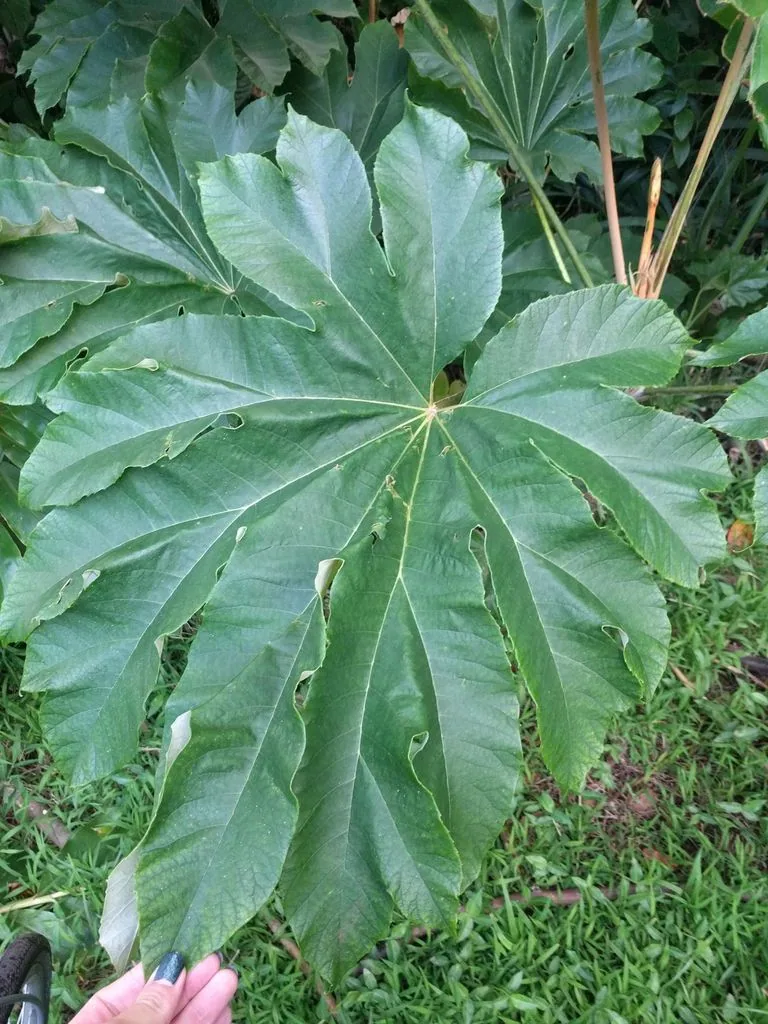
How to Grow and Care for Rice Paper Plant
Tetrapanax papyrifer
Written by Emilio Marruso · last checked
At a glance
Tetrapanax is a bold plant that can reach 4 to 12 feet tall and 3 to 8 feet wide. It is happy in full sun, partial shade or dappled light, likes well-drained soil that stays moist, and grows in containers too. Its stems are even used to make rice paper, which can wrap food and be eaten with it.
- Sun
Full sun, partial shade or dappled light
What the sources say (1)
Light: Full sun, partial shade or dappled sunlight
Light: Dappled Sunlight (Shade through upper canopy all day) Full sun (6 or more hours of direct sunlight a day) Partial Shade
— Tetrapanax papyrifer (Rice Paper Plant) | North Carolina Extension Gardener Plant Toolbox [1] - Cold
Survives winters down to 10 °F (−12.2 °C)
Hardy in cold winters · USDA 8a · RHS H5 · Z8
What the sources say (2)
Hardiness, coldest zone: 8a [winter low −12.2 to −9.4 °C (10 to 15 °F)]
USDA Plant Hardiness Zone: 8a, 8b, 9a, 9b, 10a, 10b, 11a, 11b
— Tetrapanax papyrifer (Rice Paper Plant) | North Carolina Extension Gardener Plant Toolbox [1] Hardiness, warmest zone: 11b [winter low 7.2 to 10 °C (45 to 50 °F)]
USDA Plant Hardiness Zone: 8a, 8b, 9a, 9b, 10a, 10b, 11a, 11b
— Tetrapanax papyrifer (Rice Paper Plant) | North Carolina Extension Gardener Plant Toolbox [1] - Soil
Well-drained soil that stays moist; it can take being wet now and then
What the sources say (1)
Watering notes: Soil drainage listed as good drainage, moist, occasionally wet
Soil Drainage: Good Drainage Moist Occasionally Wet
— Tetrapanax papyrifer (Rice Paper Plant) | North Carolina Extension Gardener Plant Toolbox [1] - Harvest
Its stems are used to make rice paper, which can wrap food and be eaten with it
- Pests
Watch out for mealybugs
What the sources say (1)
Pests: mealybugs
Problems : Spreads by suckers, leaves can be damaged by a strong wind, mealy-bugs only known insect problem
— Tetrapanax papyrifer (Rice Paper Plant) | North Carolina Extension Gardener Plant Toolbox [1] - Size
4 to 12 ft tall and 3 to 8 ft wide
What the sources say (2)
Mature height: 121.92-365.76 cm (4 to 12 feet)
Height: 4 ft. 0 in. - 12 ft. 0 in.
— Tetrapanax papyrifer (Rice Paper Plant) | North Carolina Extension Gardener Plant Toolbox [1] Mature width: 91.44-243.84 cm (3 to 8 feet)
Width: 3 ft. 0 in. - 8 ft. 0 in.
— Tetrapanax papyrifer (Rice Paper Plant) | North Carolina Extension Gardener Plant Toolbox [1] - Propagation
Divide the plant, take root cuttings or sow seeds
What the sources say (1)
Propagation: Division, root cutting, seed
Recommended Propagation Strategy: Division Root Cutting Seed
— Tetrapanax papyrifer (Rice Paper Plant) | North Carolina Extension Gardener Plant Toolbox [1] - Containers
Grows in containers too
What the sources say (1)
In containers: Yes
Landscape Location: Coastal Container Naturalized Area Patio
— Tetrapanax papyrifer (Rice Paper Plant) | North Carolina Extension Gardener Plant Toolbox [1]
Overview
Rice paper plant is a sub-tropical evergreen large shrub or small tree used as an ornamental shrub in Asia. [1] It spreads by underground rhizomes that need to be cut and removed to limit its spread. [1]
This record is incomplete: the sources we read do not cover every field yet.
Not yet covered by our sources: Watering, Pruning
Rice Paper Plant care
How to water Rice Paper Plant
Watering
Not stated in the sources we read.
Watering notes
Soil drainage listed as good drainage, moist, occasionally wet
What the sources say (1)
Soil Drainage:
Good Drainage
Moist
Occasionally WetHow much light Rice Paper Plant needs
Full sun, partial shade or dappled sunlight
What the sources say (1)
Light:
Dappled Sunlight (Shade through upper canopy all day)
Full sun (6 or more hours of direct sunlight a day)
Partial ShadeHow much cold Rice Paper Plant can take
Hardiness, coldest zone
8a [winter low −12.2 to −9.4 °C (10 to 15 °F)]
What the sources say (1)
USDA Plant Hardiness Zone:
8a, 8b, 9a, 9b, 10a, 10b, 11a, 11bHardiness, warmest zone
11b [winter low 7.2 to 10 °C (45 to 50 °F)]
What the sources say (1)
USDA Plant Hardiness Zone:
8a, 8b, 9a, 9b, 10a, 10b, 11a, 11bWhere to grow Rice Paper Plant
Yes
What the sources say (1)
Landscape Location:
Coastal
Container
Naturalized Area
PatioHow to propagate Rice Paper Plant
Division, root cutting, seed
What the sources say (1)
Recommended Propagation Strategy:
Division
Root Cutting
SeedHow to grow Rice Paper Plant
The plant
Family
Araliaceae
What the sources say (1)
Genus:
Tetrapanax
Species:
papyrifer
Family:
Araliaceae
Uses (Ethnobotany):
Historically used to make rice paper veneer sheets, artificial paper flowers, and in traditional Chinese pharmacology for the medicine "tong cao".
Life Cycle:
WoodyMature height
121.92-365.76 cm (4 to 12 feet)
What the sources say (1)
Height: 4 ft. 0 in. - 12 ft. 0 in.Mature width
91.44-243.84 cm (3 to 8 feet)
What the sources say (1)
Width: 3 ft. 0 in. - 8 ft. 0 in.Pests and diseases
Pests
mealybugs
What the sources say (1)
Problems : Spreads by suckers, leaves can be damaged by a strong wind, mealy-bugs only known insect problemRemedies
Each remedy shows what official sources say about it; traditional remedies without an official source are marked as such. Harmful ones are listed so you know to avoid them.
First aid
First aid: not a substitute for a doctor
skin rash from foliage
cool wet cloth Official source, not independently tested
See your health care provider if: - The rash is so itchy that you can't sleep or go about your day - The rash is severe or widespread
— mayoclinic.org [2] How: soothe the irritated skin with a cool, wet cloth
You can try soothing your skin with a cool, wet cloth and other self-care steps.
— mayoclinic.org [2]
Getting rid of it
invasive spread
dig out whole plant and roots Not verified
Traditional remedy, not verified by an official source.
How: hand pull or dig out the entire plant and make sure all root material is removed to prevent regrowth
suckers
remove new shoots repeatedly Not verified
Traditional remedy, not verified by an official source.
How: look for and remove new shoots as often as needed; new plants can grow 2 m from the parent through underground suckers
regrowth
shade cover of native trees or shrubs Not verified
Traditional remedy, not verified by an official source.
How: monitor the site, treat any regrowth and plant a cover of native trees or shrubs to produce shade
Calendar
Pruning
Not stated in the sources we read.
Months as given by the sources, which are mostly from the United States (northern hemisphere). In the southern hemisphere they shift by about six months.
Edibility
Reported by the source, quoted verbatim. Do not eat a plant on the basis of this page alone: identification mistakes can be dangerous.
Stems are used to make rice paper. Rice paper can be used to wrap foods and can be eaten with the food.
[1]
Similar plants
- American ginseng Panax quinquefolius
- American Water-Pennywort Hydrocotyle americana
- Angelica Tree Aralia elata
- Balfour Aralia Polyscias balfouriana
- Castor aralia Kalopanax pictus
- Devil's Walking Stick Aralia spinosa
- Dollarweed Hydrocotyle umbellata
- Dwarf Umbrella Tree Heptapleurum arboricola
Sources
Every value above is quoted from these documents. Links lead to the original publisher.
- Tetrapanax papyrifer (Rice Paper Plant) | North Carolina Extension Gardener Plant Toolbox · plants.ces.ncsu.edu, consulted
- mayoclinic.org · mayoclinic.org
Written by Emilio Marruso · last checked