How to Grow and Care for Castor aralia
Kalopanax pictus
Written by Emilio Marruso · last checked
At a glance
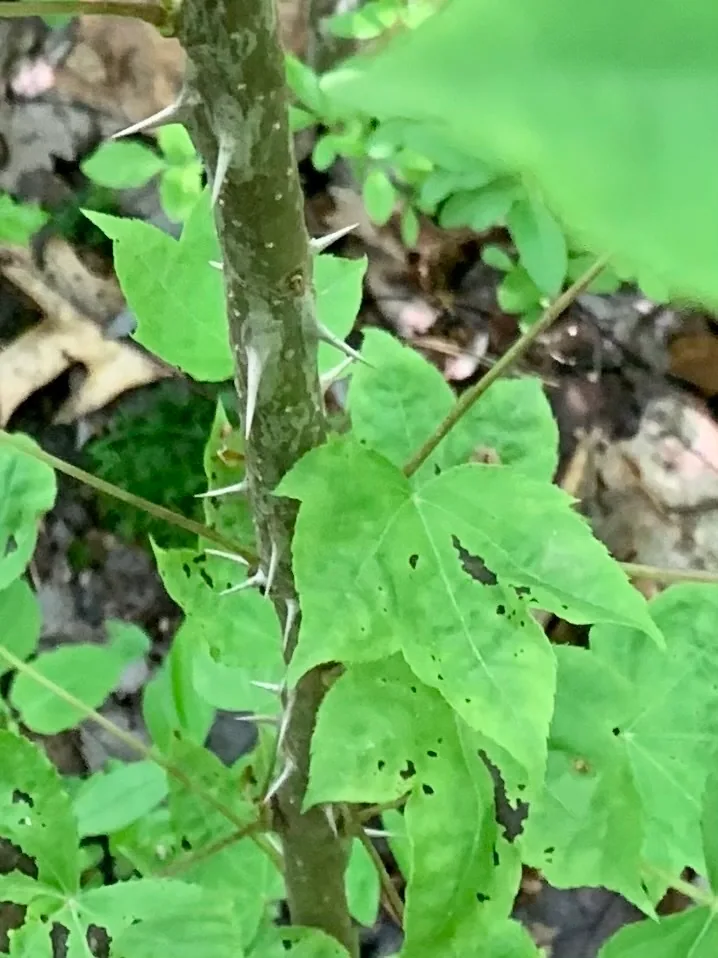
Kalopanax is an impressive tree for gardeners with room to spare, reaching 40–60 ft tall. Give it full sun or light shade and deep, moist, fertile soil that drains well, and it will grow year after year. Its branches carry thorns, but they tend to disappear from the trunk and larger branches as the tree matures.
- Sun
Full sun to light shade
What the sources say (2)
Light: Full sun to light shade
It will tolerate light shade and drought, but is generally intolerant of hot and humid summers
— Kalopanax pictus (Castor aralia, Tree aralia) | North Carolina Extension Gardener Plant Toolbox [1] Light: Full sun (6 or more hours of direct sunlight a day)
— Kalopanax pictus (Castor aralia, Tree aralia) | North Carolina Extension Gardener Plant Toolbox [1] - Water
Handles drought, but does poorly in dry soil: keep the soil moist
What the sources say (2)
Watering notes: Deep, moist, fertile, well-drained soils; tolerates drought but will not do well in dry soils
Castor aralia does best in deep, moist, fertile, well-drained soils in full sun.
— Kalopanax pictus (Castor aralia, Tree aralia) | North Carolina Extension Gardener Plant Toolbox [1] It will tolerate light shade and drought, but is generally intolerant of hot and humid summers like those found in the deep South. It will not do well in dry soils.
— Kalopanax pictus (Castor aralia, Tree aralia) | North Carolina Extension Gardener Plant Toolbox [1] - Cold
Survives winters down to −30 °F (−34.4 °C)
Very hardy · USDA 4a · RHS H7 · Z4
What the sources say (2)
Hardiness, coldest zone: 4a [winter low −34.4 to −31.7 °C (−30 to −25 °F)]
USDA Plant Hardiness Zone: 4a, 4b, 5a, 5b, 6a, 6b, 7a, 7b, 8a
— Kalopanax pictus (Castor aralia, Tree aralia) | North Carolina Extension Gardener Plant Toolbox [1] Hardiness, warmest zone: 8a [winter low −12.2 to −9.4 °C (10 to 15 °F)]
USDA Plant Hardiness Zone: 4a, 4b, 5a, 5b, 6a, 6b, 7a, 7b, 8a
— Kalopanax pictus (Castor aralia, Tree aralia) | North Carolina Extension Gardener Plant Toolbox [1] - Soil
Deep, moist, fertile soil that drains well
What the sources say (2)
Watering notes: Deep, moist, fertile, well-drained soils; tolerates drought but will not do well in dry soils
Castor aralia does best in deep, moist, fertile, well-drained soils in full sun.
— Kalopanax pictus (Castor aralia, Tree aralia) | North Carolina Extension Gardener Plant Toolbox [1] It will tolerate light shade and drought, but is generally intolerant of hot and humid summers like those found in the deep South. It will not do well in dry soils.
— Kalopanax pictus (Castor aralia, Tree aralia) | North Carolina Extension Gardener Plant Toolbox [1] - Watch out
Thorny branches; dislikes hot, humid summers
- Size
40–60 ft tall
What the sources say (2)
Mature height: 1219.2-1828.8 cm (40-60 ft)
Dimensions: Height: 40 ft. 0 in. - 60 ft. 0 in. Width: 3 ft. 0 in. - 5 ft. 0 in.
— Kalopanax pictus (Castor aralia, Tree aralia) | North Carolina Extension Gardener Plant Toolbox [1] Dimensions: Height: 40 ft. 0 in. - 60 ft. 0 in. Width: 40 ft. 0 in. - 60 ft. 0 in.
— Kalopanax septemlobus (Castor Aralia, Tree Aralia) | North Carolina Extension Gardener Plant Toolbox [2]
Overview
Castor aralia is a large flowering tree that can reach 60 feet [18.3 m] in cultivation and is the only large tree in the ginseng family. [1] It does best in deep, moist, fertile, well-drained soils in full sun and is intolerant of hot and humid summers. [1] The trunk, branches and younger stems are armed with spines. [1]
This record is incomplete: the sources we read do not cover every field yet.
Not yet covered by our sources: Watering, Pruning, Propagation
Castor aralia care
Measurements in square brackets are our conversion into the other unit system; the quoted text is unchanged.
How to water Castor aralia
Watering
Not stated in the sources we read.
Watering notes
Deep, moist, fertile, well-drained soils; tolerates drought but will not do well in dry soils
What the sources say (2)
Castor aralia does best in deep, moist, fertile, well-drained soils in full sun.It will tolerate light shade and drought, but is generally intolerant of hot and humid summers like those found in the deep South. It will not do well in dry soils.How much light Castor aralia needs
Full sun to light shade
What the sources say (2)
It will tolerate light shade and drought, but is generally intolerant of hot and humid summersLight:
Full sun (6 or more hours of direct sunlight a day)How much cold Castor aralia can take
Hardiness, coldest zone
4a [winter low −34.4 to −31.7 °C (−30 to −25 °F)]
What the sources say (1)
USDA Plant Hardiness Zone:
4a, 4b, 5a, 5b, 6a, 6b, 7a, 7b, 8aHardiness, warmest zone
8a [winter low −12.2 to −9.4 °C (10 to 15 °F)]
What the sources say (1)
USDA Plant Hardiness Zone:
4a, 4b, 5a, 5b, 6a, 6b, 7a, 7b, 8aHow to propagate Castor aralia
Not stated in the sources we read.
How to grow Castor aralia
The plant
Life cycle
perennial (woody)
What the sources say (1)
Genus:
Kalopanax
Species:
pictus
Family:
Araliaceae
Life Cycle:
Perennial
WoodyFamily
Araliaceae
What the sources say (1)
Genus:
Kalopanax
Species:
pictus
Family:
Araliaceae
Life Cycle:
Perennial
WoodyMature height
1219.2-1828.8 cm (40-60 ft)
What the sources say (2)
Dimensions:
Height: 40 ft. 0 in. - 60 ft. 0 in.
Width: 3 ft. 0 in. - 5 ft. 0 in.Dimensions:
Height: 40 ft. 0 in. - 60 ft. 0 in.
Width: 40 ft. 0 in. - 60 ft. 0 in.Castor aralia pests and problems
Spines and thorns
Symptom: Thorns on branches may be a problem
What to do: Spines tend to disappear from the trunk and larger branches as the tree matures
What the sources say (2)
No known insect or disease problems. Thorns on branches may be a problem.
— Kalopanax pictus (Castor aralia, Tree aralia) | North Carolina Extension Gardener Plant Toolbox [1] The trunk, branches and the younger stems are armed with spines that tend to disappear from the trunk and larger branches as the tree matures.
— Kalopanax pictus (Castor aralia, Tree aralia) | North Carolina Extension Gardener Plant Toolbox [1] Hot humid summers
Symptom: Generally intolerant of hot and humid summers like those in the deep South
What to do: Will not do well in dry soils; grow in deep, moist, fertile, well-drained soil
What the sources say (1)
but is generally intolerant of hot and humid summers like those found in the deep South. It will not do well in dry soils.
— Kalopanax pictus (Castor aralia, Tree aralia) | North Carolina Extension Gardener Plant Toolbox [1]
Remedies
Each remedy shows what official sources say about it; traditional remedies without an official source are marked as such. Harmful ones are listed so you know to avoid them.
Getting rid of it
invasive spread
physical removal of the whole plant Works
How: Control it by physical removal; the source notes the tree is known to re-sprout from cut-backs.
You should be able to control it by physical removal, but if need be because of difficulty working around the spruce, you can paint
— ask.extension.org [4] What the evidence says You should be able to control it by physical removal, but if need be because of difficulty working around the spruce, you can paint
— ask.extension.org [4] repeated cutting back of all growth Works
How: Repeated cutting back of all growth will eventually starve out the root system, avoiding herbicides.
If you wish to avoid herbicides, repeated cutting back of all growth will eventually starve-out its root system.
— ask.extension.org [4] What the evidence says If you wish to avoid herbicides, repeated cutting back of all growth will eventually starve-out its root system.
— ask.extension.org [4]
Calendar
Pruning
Not stated in the sources we read.
Months as given by the sources, which are mostly from the United States (northern hemisphere). In the southern hemisphere they shift by about six months.
Indicative values
Values from a secondary source, not checked word for word like the rest of this page. Use them as a starting point.
- Hours of sun
- 8-10 hoursIndicative value, adapt it to your climate · Secondary source
- Watering
- AverageIndicative value, adapt it to your climate · Secondary source
- Drought tolerant
- yesIndicative value, adapt it to your climate · Secondary source
- Soil pH
- 5.5-7.5Indicative value, adapt it to your climate · Secondary source
- Care level
- HighIndicative value, adapt it to your climate · Secondary source
- Growth rate
- LowIndicative value, adapt it to your climate · Secondary source
- Pruning
- February, March, April, MayIndicative value, adapt it to your climate · Secondary source
- Propagation
- Air Layering Propagation, Stem Propagation, Root Cutting, Grafting Propagation, DivisionIndicative value, adapt it to your climate · Secondary source
Similar plants
- Angelica Tree Aralia elata
- Balfour Aralia Polyscias balfouriana
- Devil's Walking Stick Aralia spinosa
- Dollarweed Hydrocotyle umbellata
- Dwarf Umbrella Tree Heptapleurum arboricola
- Fatsia Fatsia japonica
- Five-fingered Aralia Eleutherococcus sieboldianus
- Rice Paper Plant Tetrapanax papyrifer
Sources
Every value above is quoted from these documents. Links lead to the original publisher.
- Kalopanax pictus (Castor aralia, Tree aralia) | North Carolina Extension Gardener Plant Toolbox · plants.ces.ncsu.edu, consulted
- Kalopanax septemlobus (Castor Aralia, Tree Aralia) | North Carolina Extension Gardener Plant Toolbox · plants.ces.ncsu.edu, consulted
- Castor Aralia - Kalopanax septemlobus | North Carolina Extension Gardener Plant Toolbox · plants.ces.ncsu.edu, consulted
- ask.extension.org · ask.extension.org
Written by Emilio Marruso · last checked