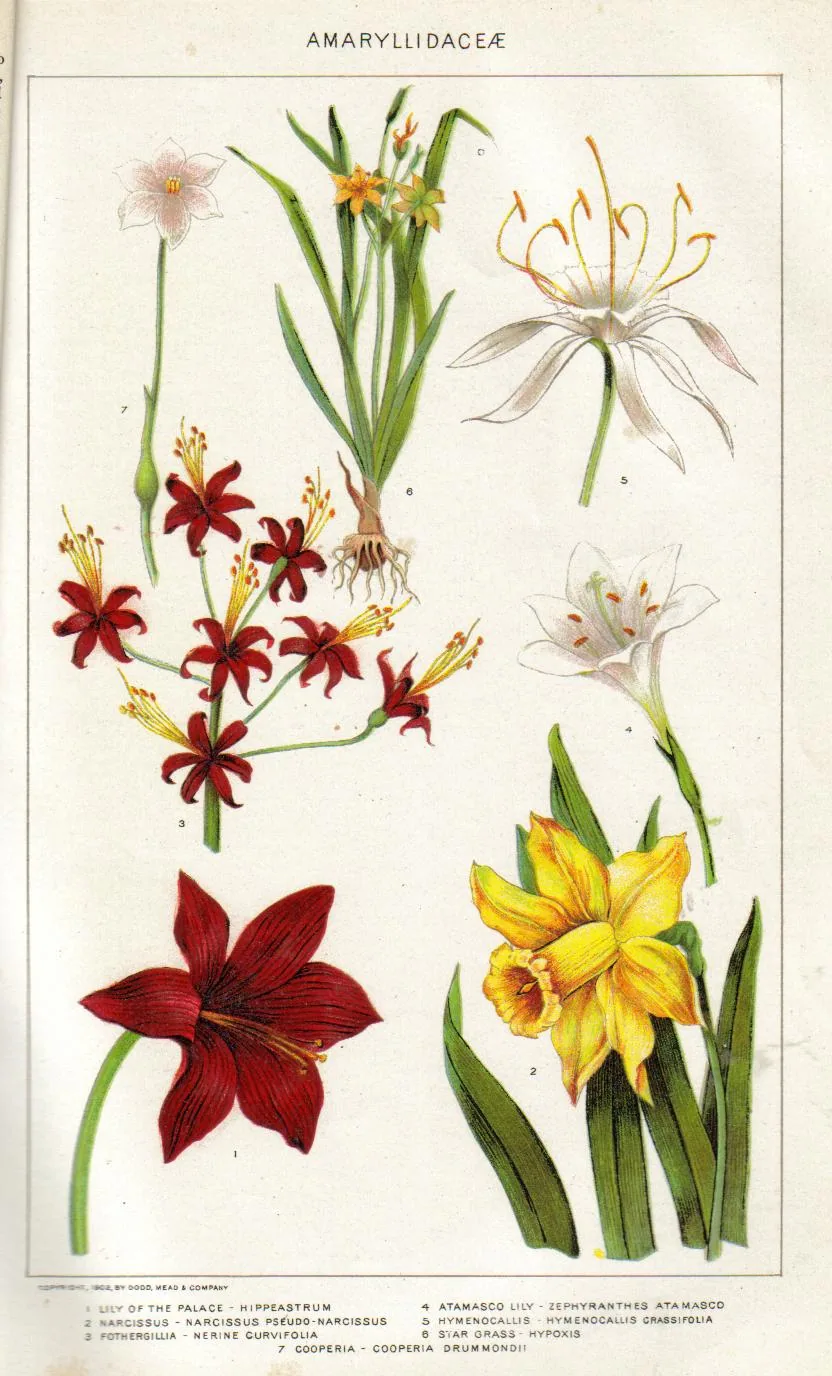


How to Grow and Care for Coastal Spiderlily
Hymenocallis crassifolia
Written by Emilio Marruso · last checked
Toxic to: People · Why
At a glance
This perennial spider lily is a happy choice for wet spots: it loves soil that stays moist and even grows in up to 6 inches of standing water, shrugging off occasional flooding. Give it full sun to partial shade and it grows 2 to 4 feet tall. It also does well in containers, and you can share it by dividing the plant.
- Sun
Full sun to partial shade
What the sources say (1)
Light: Full sun to partial shade
Light: Full sun (6 or more hours of direct sunlight a day) Partial Shade (Direct sunlight only part of the day, 2-6 hours)
— Hymenocallis crassifolia (Coastal Spiderlily, Spider Lily) | North Carolina Extension Gardener Plant Toolbox [1] - Water
Keep the soil always moist; it handles up to 6 inches of standing water
What the sources say (3)
Watering: Consistently moist soil; do not let the soil dry out between waterings
requires consistently moist soil and 4 to 6 hours of sun daily for best blooms. Do not let the soil dry out between waterings.
— Hymenocallis crassifolia (Coastal Spiderlily, Spider Lily) | North Carolina Extension Gardener Plant Toolbox [1] Watering notes: Grows in moist soil with up to 6 inches [15 cm] of standing water; tolerates occasional flooding
grows in moist soil with up to 6 inches of standing water in tidal marshes
— Hymenocallis crassifolia (Coastal Spiderlily, Spider Lily) | North Carolina Extension Gardener Plant Toolbox [1] Soil Drainage: Moist Occasional Flooding Occasionally Wet
— Hymenocallis crassifolia (Coastal Spiderlily, Spider Lily) | North Carolina Extension Gardener Plant Toolbox [1] - Cold
Survives winters down to 0 °F (−17.8 °C)
Hardy in very cold winters · USDA 7a · RHS H6 · Z7
What the sources say (2)
Hardiness, coldest zone: 7a [winter low −17.8 to −15 °C (0 to 5 °F)]
USDA Plant Hardiness Zone: 7a, 8a, 8b, 9a, 9b
— Hymenocallis crassifolia (Coastal Spiderlily, Spider Lily) | North Carolina Extension Gardener Plant Toolbox [1] Hardiness, warmest zone: 9b [winter low −3.9 to −1.1 °C (25 to 30 °F)]
USDA Plant Hardiness Zone: 7a, 8a, 8b, 9a, 9b
— Hymenocallis crassifolia (Coastal Spiderlily, Spider Lily) | North Carolina Extension Gardener Plant Toolbox [1] - Pests
Snails, slugs, mealybugs, thrips and spider mites; can get root and crown rot or leaf spot
What the sources say (2)
Pests: snails, slugs, mealybugs, thrips, spider mites
Watch for snails and slugs, mealybugs, thirps and spidermites.
— Hymenocallis crassifolia (Coastal Spiderlily, Spider Lily) | North Carolina Extension Gardener Plant Toolbox [1] Diseases: root and crown rot, fungal leaf spot
Potential diseases are root and crown rot and fungal leaf spot.
— Hymenocallis crassifolia (Coastal Spiderlily, Spider Lily) | North Carolina Extension Gardener Plant Toolbox [1] - Size
2 to 4 ft tall
What the sources say (1)
Mature height: 60.96-121.92 cm (2-4 ft)
Coastal spiderlily grows 2 to 4 feet tall and requires consistently moist soil and 4 to 6 hours of sun daily for best blooms.
— Hymenocallis crassifolia (Coastal Spiderlily, Spider Lily) | North Carolina Extension Gardener Plant Toolbox [1] - Propagation
Divide the plant or grow it from seed
What the sources say (1)
Propagation: Division or seed
Propagation is by division or seed.
— Hymenocallis crassifolia (Coastal Spiderlily, Spider Lily) | North Carolina Extension Gardener Plant Toolbox [1] - Containers
Grows in containers too
What the sources say (1)
In containers: Yes
Use in a nighttime garden or in a container with no drainage holes.
— Hymenocallis crassifolia (Coastal Spiderlily, Spider Lily) | North Carolina Extension Gardener Plant Toolbox [1] - Safety
Mildly poisonous to people if eaten
Overview
Coastal spiderlily is a herbaceous perennial bulb that grows in moist soil, including up to 6 inches [15 cm] of standing water in tidal marshes. [1] It needs consistently moist soil and 4 to 6 hours of sun daily for best blooms, and is propagated by division or seed. [1] It is listed as poisonous to humans, with low severity. [1]
This record is incomplete: the sources we read do not cover every field yet.
Not yet covered by our sources: Pruning
Coastal Spiderlily care
Measurements in square brackets are our conversion into the other unit system; the quoted text is unchanged.
How to water Coastal Spiderlily
Watering
Consistently moist soil; do not let the soil dry out between waterings
What the sources say (1)
requires consistently moist soil and 4 to 6 hours of sun daily for best blooms. Do not let the soil dry out between waterings.Watering notes
Grows in moist soil with up to 6 inches [15 cm] of standing water; tolerates occasional flooding
What the sources say (2)
grows in moist soil with up to 6 inches of standing water in tidal marshesSoil Drainage:
Moist
Occasional Flooding
Occasionally WetHow much light Coastal Spiderlily needs
Full sun to partial shade
What the sources say (1)
Light:
Full sun (6 or more hours of direct sunlight a day)
Partial Shade (Direct sunlight only part of the day, 2-6 hours)How much cold Coastal Spiderlily can take
Hardiness, coldest zone
7a [winter low −17.8 to −15 °C (0 to 5 °F)]
What the sources say (1)
USDA Plant Hardiness Zone:
7a, 8a, 8b, 9a, 9bHardiness, warmest zone
9b [winter low −3.9 to −1.1 °C (25 to 30 °F)]
What the sources say (1)
USDA Plant Hardiness Zone:
7a, 8a, 8b, 9a, 9bWhere to grow Coastal Spiderlily
Yes
What the sources say (1)
Use in a nighttime garden or in a container with no drainage holes.How to propagate Coastal Spiderlily
Division or seed
What the sources say (1)
Propagation is by division or seed.How to grow Coastal Spiderlily
The plant
Life cycle
perennial
What the sources say (1)
It is a herbaceous perennial bulb that grows in moist soil with up to 6 inches of standing water in tidal marshesFamily
Amaryllidaceae
What the sources say (1)
Coastal spiderlily, in the amaryllis family (Amaryllidaceae), is native to the southern coastal counties of NC and south to Florida.Mature height
60.96-121.92 cm (2-4 ft)
What the sources say (1)
Coastal spiderlily grows 2 to 4 feet tall and requires consistently moist soil and 4 to 6 hours of sun daily for best blooms.Pests and diseases
Pests
snails, slugs, mealybugs, thrips, spider mites
What the sources say (1)
Watch for snails and slugs, mealybugs, thirps and spidermites.Diseases
root and crown rot, fungal leaf spot
What the sources say (1)
Potential diseases are root and crown rot and fungal leaf spot.Coastal Spiderlily pests and problems
Pests
Symptom: Snails, slugs, mealybugs, thrips and spider mites may appear; moth and butterfly caterpillars feed on the leaves
What to do: Watch for them; no further management given
What the sources say (1)
Watch for snails and slugs, mealybugs, thirps and spidermites.
— Hymenocallis crassifolia (Coastal Spiderlily, Spider Lily) | North Carolina Extension Gardener Plant Toolbox [1] Root and crown rot, fungal leaf spot
Symptom: Potential diseases listed
What to do: No management given
What the sources say (1)
Potential diseases are root and crown rot and fungal leaf spot.
— Hymenocallis crassifolia (Coastal Spiderlily, Spider Lily) | North Carolina Extension Gardener Plant Toolbox [1]
Remedies
Each remedy shows what official sources say about it; traditional remedies without an official source are marked as such. Harmful ones are listed so you know to avoid them.
Treating the plant
slugs
copper strips Official source, not independently tested
How: Copper strips that extend an inch or more below and above the soil line keep out slugs.
Copper strips that extend an inch or more below and above the soil line will keep out slugs.
— hyg.ipm.illinois.edu [3] beer in shallow dishes Official source, not independently tested
How: Beer is set out in shallow dishes to catch slugs.
Beer in shallow dishes is effective sometimes, although my experience is that this method allows the harvest of slugs but doesn't actually control them.
— hyg.ipm.illinois.edu [3]
Is Coastal Spiderlily poisonous?
Reported by the source, quoted verbatim. This is not medical or veterinary advice: if a person or an animal may have eaten this plant, contact a poison control centre or a veterinarian.
Problems: Poisonous to Humans - Poisonous to Humans: Poison Severity: Low
[1]
Calendar
Pruning
Not stated in the sources we read.
Months as given by the sources, which are mostly from the United States (northern hemisphere). In the southern hemisphere they shift by about six months.
Similar plants
- Spider Lily Hymenocallis occidentalis
- African Blood Lily Scadoxus multiflorus
- African Blue Lily Agapanthus praecox
- Allium triquetrum Allium triquetrum
- Amazon Lily Urceolina amazonica
- Aztec Lily Zephyranthes formosissima
- Blue Globe Onion Allium caeruleum
- Broadleaf wild leek Allium ampeloprasum
Sources
Every value above is quoted from these documents. Links lead to the original publisher.
- Hymenocallis crassifolia (Coastal Spiderlily, Spider Lily) | North Carolina Extension Gardener Plant Toolbox · plants.ces.ncsu.edu, consulted
- Spider Lily - Hymenocallis | North Carolina Extension Gardener Plant Toolbox · plants.ces.ncsu.edu, consulted
- hyg.ipm.illinois.edu · hyg.ipm.illinois.edu
Written by Emilio Marruso · last checked