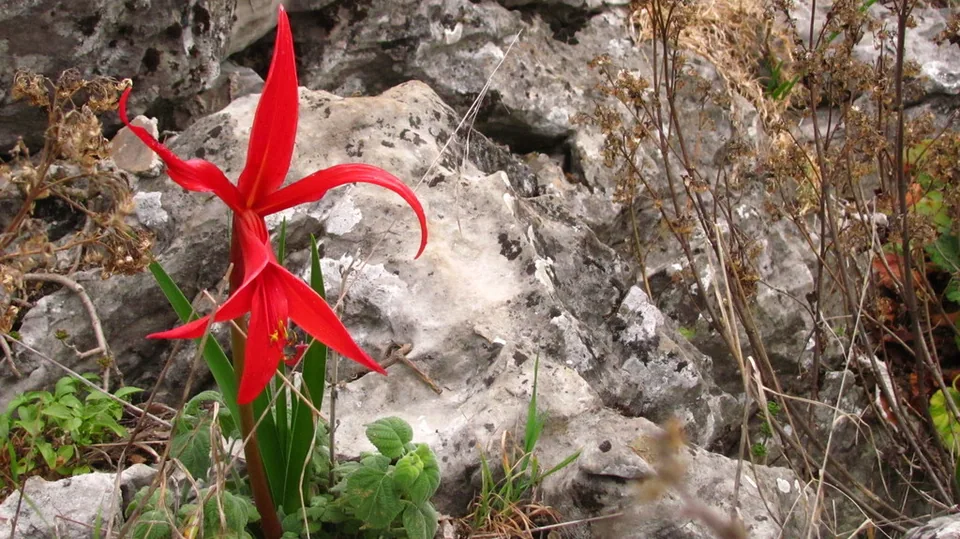
How to Grow and Care for Aztec Lily
Zephyranthes formosissima
Written by Emilio Marruso · last checked
At a glance
Aztec lily is a perennial bulb that loves full sun and grows happily in the garden, in containers or even indoors. Plant it in spring once the soil has warmed and frost has passed, water it while it grows and blooms, then let it rest dry. It makes little offset bulbs you can split off to grow even more plants.
- Sun
Full sun; in hot climates it also takes partial shade
What the sources say (2)
Light: Full sun; tolerates partial shade in hot climates
Aztec lily needs full sun to thrive , although they will tolerate partial shade in hot climates.
— Aztec Lily, Zephyranthes (= Sprekelia) formosissima – Wisconsin Horticulture [3] Full sun (6 or more hours of direct sunlight a day) Soil Texture: High Organic Matter Loam (Silt) Soil Drainage:
— Zephyranthes formosissima (Aztec Lily, Jacobean Lily, St. James Lily) | North Carolina Extension Gardener Plant Toolbox [1] - Water
Water while it grows and blooms; keep dry while resting, as soggy soil rots the bulbs
What the sources say (2)
Watering: Water during growth and flowering; stop watering and keep dry while dormant
When leaves begin to die back, stop watering and keep plants dry while dormant. Resume watering once new growth begins to show and during flowering.
— Aztec Lily, Zephyranthes (= Sprekelia) formosissima – Wisconsin Horticulture [3] Watering notes: Excessive soil moisture may cause the bulbs to rot or not flower
Excessive soil moisture may cause the bulbs to rot or not flower.
— Aztec Lily, Zephyranthes (= Sprekelia) formosissima – Wisconsin Horticulture [3] - Cold
Survives winters down to 10 °F (−12.2 °C)
Hardy in cold winters · USDA 8a · RHS H5 · Z8
What the sources say (2)
Hardiness, coldest zone: 8a [winter low −12.2 to −9.4 °C (10 to 15 °F)]
Native to rocky hillsides of southern Mexico and Guatemala, Aztec lily is hardy only to zone 8a and higher.
— Aztec Lily, Zephyranthes (= Sprekelia) formosissima – Wisconsin Horticulture [3] This tender bulb, native to southern Mexico and Guatemala, is hardy only to zone 8 and higher.
— Zephyranthes formosissima (Aztec Lily, Jacobean Lily, St. James Lily) | North Carolina Extension Gardener Plant Toolbox [1] - Planting
Plant in spring, once the soil is warm and all danger of frost has passed
What the sources say (2)
Planting: Spring, once the soil has warmed and all danger of frost is past
Once ready for planting in the spring, they should be planted at a depth of 2 inches
— Zephyranthes formosissima (Aztec Lily, Jacobean Lily, St. James Lily) | North Carolina Extension Gardener Plant Toolbox [1] wait until the soil has warmed and all danger of frost is past to plant the bulbs in free-draining soil
— Aztec Lily, Zephyranthes (= Sprekelia) formosissima – Wisconsin Horticulture [3] - Pests
Few pests, but mealybugs can hide where leaves leave the bulb; wet soil causes bulb rot
What the sources say (2)
Pests: mealybugs
Aztec lily has few pests, but may become infested with mealybugs, which hide in the crevices where the leaves emerge from the bulb.
— Zephyranthes formosissima (Aztec Lily, Jacobean Lily, St. James Lily) | North Carolina Extension Gardener Plant Toolbox [1] Diseases: bulb rot
Excessive soil moisture may cause the bulbs to rot or not flower.
— Aztec Lily, Zephyranthes (= Sprekelia) formosissima – Wisconsin Horticulture [3] - Watch out
In fall you can dig up the bulbs and store them dry and frost-free at 41–55 °F (5–13 °C)
What the sources say (2)
Storage: Dig up the bulbs in fall and store them in a dry, frost-free location, for example in peat or vermiculite at 5-13 °C (41-55 °F)
The bulbs can be harvested, then stored in peat or vermiculite at 41 to 55 degrees F.
— Zephyranthes formosissima (Aztec Lily, Jacobean Lily, St. James Lily) | North Carolina Extension Gardener Plant Toolbox [1] The bulbs must be dug up in the fall, and then stored in a dry, frost-free location for the winter.
— Aztec Lily, Zephyranthes (= Sprekelia) formosissima – Wisconsin Horticulture [3] - Propagation
Divide the clumps or remove the small offset bulbs
What the sources say (2)
Propagation: Division; removal of offset bulblets
Recommended Propagation Strategy: Division Country Or Region Of Origin:
— Zephyranthes formosissima (Aztec Lily, Jacobean Lily, St. James Lily) | North Carolina Extension Gardener Plant Toolbox [1] is more rapidly propagated by removing the readily produced offset bulblets from the parent plant.
— Aztec Lily, Zephyranthes (= Sprekelia) formosissima – Wisconsin Horticulture [3] - Sowing
Collect the flat black seeds when the pod splits open on the plant
What the sources say (1)
Saving seeds: Let the fruit capsule mature on the plant and harvest the flat, black winged seeds when the 3-valved pod splits open
allow the fruit capsule to mature on the plant, and harvest the flat, black winged seeds when the 3-valved pod splits open.
— Aztec Lily, Zephyranthes (= Sprekelia) formosissima – Wisconsin Horticulture [3] - Containers
Grows well in containers and even indoors
What the sources say (3)
In containers: Yes
Aztec lily is often planted outside in warm climates or raised in pots in colder climates.
— Zephyranthes formosissima (Aztec Lily, Jacobean Lily, St. James Lily) | North Carolina Extension Gardener Plant Toolbox [1] Indoors: Yes
The entire container can be moved indoors for the winter, or kept as a houseplant year-round as long as it receives at least 4 hours of sunlight a day.
— Aztec Lily, Zephyranthes (= Sprekelia) formosissima – Wisconsin Horticulture [3] Aztec lily can be grown as a houseplant in cold climates.
— Aztec Lily, Zephyranthes (= Sprekelia) formosissima – Wisconsin Horticulture [3]
Overview
Aztec lily is a tender herbaceous perennial bulb with showy red flowers. [1] It needs full sun and well-drained soil, and can be grown in pots or as a houseplant. [3][1] Bulbs are propagated by division of offset bulblets. [3]
This record is incomplete: the sources we read do not cover every field yet.
Not yet covered by our sources: Hardiness, warmest zone, Pruning
Aztec Lily care
How to water Aztec Lily
Watering
Water during growth and flowering; stop watering and keep dry while dormant
What the sources say (1)
When leaves begin to die back, stop watering and keep plants dry while dormant. Resume watering once new growth begins to show and during flowering.Watering notes
Excessive soil moisture may cause the bulbs to rot or not flower
What the sources say (1)
Excessive soil moisture may cause the bulbs to rot or not flower.How much light Aztec Lily needs
Full sun; tolerates partial shade in hot climates
What the sources say (2)
Aztec lily needs full sun to thrive , although they will tolerate partial shade in hot climates.Full sun (6 or more hours of direct sunlight a day)
Soil Texture:
High Organic Matter
Loam (Silt)
Soil Drainage:How much cold Aztec Lily can take
Hardiness, coldest zone
8a [winter low −12.2 to −9.4 °C (10 to 15 °F)]
What the sources say (2)
Native to rocky hillsides of southern Mexico and Guatemala, Aztec lily is hardy only to zone 8a and higher.This tender bulb, native to southern Mexico and Guatemala, is hardy only to zone 8 and higher.Hardiness, warmest zone
Not stated in the sources we read.
Where to grow Aztec Lily
Indoors
Yes
What the sources say (2)
The entire container can be moved indoors for the winter, or kept as a houseplant year-round as long as it receives at least 4 hours of sunlight a day.Aztec lily can be grown as a houseplant in cold climates.In containers
Yes
What the sources say (1)
Aztec lily is often planted outside in warm climates or raised in pots in colder climates.Spacing
The sources give different values depending on region, zone or growing conditions.
What each source says
According to NC State Extension: 30.5-40.6 cm (12-16 in)
In the ground: 20.3-30.5 cm (8-12 in)
In containers: about 10.2 cm (4 in)
What the sources say (3)
According to NC State Extension: they should be planted at a depth of 2 inches and spaced 12 to 16 inches apart.In the ground: When planting bulbs in the ground, space them 8 to 12 inches apart and 4 inches deepIn containers: In containers, use a 6 inch container for each bulb, or place several in larger containers, spaced about 4 inches apart.How to propagate Aztec Lily
Division; removal of offset bulblets
What the sources say (2)
Recommended Propagation Strategy:
Division
Country Or Region Of Origin:is more rapidly propagated by removing the readily produced offset bulblets from the parent plant.How to grow Aztec Lily
The plant
Life cycle
perennial
What the sources say (1)
Aztec lily is an herbaceous perennial bulb in the amaryllis family (Amaryllidaceae).Family
Amaryllidaceae
What the sources say (1)
Genus:
Zephyranthes
Species:
formosissima
Family:
Amaryllidaceae
Life Cycle:
BulbSowing and growth
Harvest and storage
Storage
Dig up the bulbs in fall and store them in a dry, frost-free location, for example in peat or vermiculite at 5-13 °C (41-55 °F)
What the sources say (2)
The bulbs can be harvested, then stored in peat or vermiculite at 41 to 55 degrees F.The bulbs must be dug up in the fall, and then stored in a dry, frost-free location for the winter.Saving seeds
Let the fruit capsule mature on the plant and harvest the flat, black winged seeds when the 3-valved pod splits open
What the sources say (1)
allow the fruit capsule to mature on the plant, and harvest the flat, black winged seeds when the 3-valved pod splits open.Pests and diseases
Pests
mealybugs
What the sources say (1)
Aztec lily has few pests, but may become infested with mealybugs, which hide in the crevices where the leaves emerge from the bulb.Diseases
bulb rot
What the sources say (1)
Excessive soil moisture may cause the bulbs to rot or not flower.Fertilizing
When
The sources give different values depending on region, zone or growing conditions.
What each source says
in containers: Only while the bulbs are in active growth
What the sources say (1)
in containers: spaced about 4 inches apart. Fertilize container-grown bulbs lightly only when growing.Mineral fertilizers
The sources give different values depending on region, zone or growing conditions.
What each source says
in containers: Light feeding
What the sources say (1)
in containers: spaced about 4 inches apart. Fertilize container-grown bulbs lightly only when growing.Aztec Lily pests and problems
Mealybugs
Symptom: Aztec lily has few pests but may become infested with mealybugs hiding where the leaves emerge from the bulb
What to do: No management given in the source
What the sources say (1)
Aztec lily has few pests but may become infested with mealybugs which hide in the crevices where the leaves emerge from the bulb.
— Aztec Lily, Zephyranthes (= Sprekelia) formosissima – Wisconsin Horticulture [3]
Remedies
Each remedy shows what official sources say about it; traditional remedies without an official source are marked as such. Harmful ones are listed so you know to avoid them.
Treating the plant
mealybugs
dabbing with a cotton swab dipped in household alcohol Works
Be careful not to get the alcohol on the leaves of the plants as they may be damaged.
— extension.umd.edu [4] Make sure to test the soap and alcohol mixtures on a small portion of the plant prior to full application because some plants may be sensitive to soap or alcohol.
— planttalk.colostate.edu [5] How: Dip a cotton swab in household alcohol and dab it on the individual mealybugs to control light infestations.
Dipping a cotton swab in household alcohol and dabbing it on the individual mealybugs can control light infestations.
— extension.umd.edu [4] What the evidence says Dipping a cotton swab in household alcohol and dabbing it on the individual mealybugs can control light infestations.
— extension.umd.edu [4] insecticidal soap spray Works
Make sure to test the soap and alcohol mixtures on a small portion of the plant prior to full application because some plants may be sensitive to soap or alcohol.
— planttalk.colostate.edu [5] How: For heavy infestations, spray the plants thoroughly with insecticidal soap for indoor plants.
For heavy infestations, spray the plants thoroughly with insecticidal soap for indoor plants or a registered houseplant spray.
— extension.umd.edu [4] What the evidence says These pests may also be controlled with insecticidal soap.
— planttalk.colostate.edu [5]
bulb rot
planting in free-draining soil Official source, not independently tested
How: Plant the bulbs in free-draining soil, such as in a rock garden; excessive soil moisture may cause the bulbs to rot.
plant the bulbs in free-draining soil, such as in a rock garden. Excessive soil moisture may cause the bulbs to rot or not flower.
— Aztec Lily, Zephyranthes (= Sprekelia) formosissima – Wisconsin Horticulture [3]
Calendar
Planting
Spring, once the soil has warmed and all danger of frost is past
What the sources say (2)
Once ready for planting in the spring, they should be planted at a depth of 2 incheswait until the soil has warmed and all danger of frost is past to plant the bulbs in free-draining soilPruning
Not stated in the sources we read.
Months as given by the sources, which are mostly from the United States (northern hemisphere). In the southern hemisphere they shift by about six months.
Relative to frost
Less precise estimate: there is no weather station within 300 km.
Find frost dates by ZIP code or city
Plant: around the last frost
wait until the soil has warmed and all danger of frost is past to plant the bulbs in free-draining soil, such as in a rock garden.
— Aztec Lily, Zephyranthes (= Sprekelia) formosissima – Wisconsin Horticulture [3]
Count from the average frost dates where you live.
Indicative values
Values from a secondary source, not checked word for word like the rest of this page. Use them as a starting point.
- Mature height
- 22.9-30.5 cm (0.75-1 ft)Indicative value, adapt it to your climate · Secondary source
- Hours of sun
- 1-2 hoursIndicative value, adapt it to your climate · Secondary source
- Drought tolerant
- yesIndicative value, adapt it to your climate · Secondary source
- Soil pH
- 6-7Indicative value, adapt it to your climate · Secondary source
- Growth rate
- LowIndicative value, adapt it to your climate · Secondary source
- Pruning
- March, AprilIndicative value, adapt it to your climate · Secondary source
Similar plants
- Rain Lily Zephyranthes atamasco
- Rain Lily Zephyranthes candida
- Rain Lily Zephyranthes drummondii
- African Blood Lily Scadoxus multiflorus
- African Blue Lily Agapanthus praecox
- Allium triquetrum Allium triquetrum
- Amazon Lily Urceolina amazonica
- Blue Globe Onion Allium caeruleum
Sources
Every value above is quoted from these documents. Links lead to the original publisher.
- Zephyranthes formosissima (Aztec Lily, Jacobean Lily, St. James Lily) | North Carolina Extension Gardener Plant Toolbox · plants.ces.ncsu.edu, consulted
- Zephyranthes (Atamasco Lily, Fairy Lily, Rainflower, Rain Lily, Zephyr Lily) | North Carolina Extension Gardener Plant Toolbox · plants.ces.ncsu.edu, consulted
- Aztec Lily, Zephyranthes (= Sprekelia) formosissima – Wisconsin Horticulture · hort.extension.wisc.edu, consulted
- extension.umd.edu · extension.umd.edu
- planttalk.colostate.edu · planttalk.colostate.edu
Written by Emilio Marruso · last checked