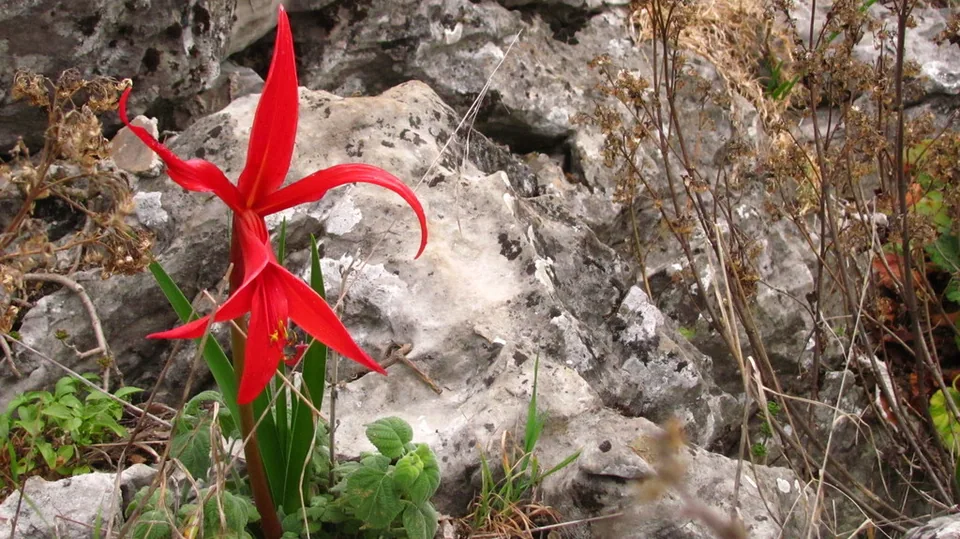
Cómo cultivar y cuidar Aztec Lily
Zephyranthes formosissima
Escrito por Emilio Marruso · última revisión
De un vistazo
El lirio azteca es un bulbo perenne que adora el sol pleno y crece feliz en el jardín, en maceta o incluso en interior. Plántalo en primavera, cuando la tierra se haya templado y ya no haya riesgo de heladas; riégalo mientras crece y florece, y déjalo descansar en seco. Forma bulbillos que puedes separar para tener aún más plantas.
- Sol
Sol pleno; en climas cálidos también tolera semisombra
Qué dicen las fuentes (2)
Luz: Pleno sol; tolera semisombra en climas cálidos.
Aztec lily needs full sun to thrive , although they will tolerate partial shade in hot climates.
— Aztec Lily, Zephyranthes (= Sprekelia) formosissima – Wisconsin Horticulture [3] Full sun (6 or more hours of direct sunlight a day) Soil Texture: High Organic Matter Loam (Silt) Soil Drainage:
— Zephyranthes formosissima (Aztec Lily, Jacobean Lily, St. James Lily) | North Carolina Extension Gardener Plant Toolbox [1] - Riego
Riega mientras crece y florece; en reposo, mantenla seca: el exceso de humedad pudre los bulbos
Qué dicen las fuentes (2)
Riego: Riega durante el crecimiento y la floración; deja de regar y mantenlo seco mientras está en reposo.
When leaves begin to die back, stop watering and keep plants dry while dormant. Resume watering once new growth begins to show and during flowering.
— Aztec Lily, Zephyranthes (= Sprekelia) formosissima – Wisconsin Horticulture [3] Notas sobre el riego: El exceso de humedad del suelo puede hacer que los bulbos se pudran o no florezcan.
Excessive soil moisture may cause the bulbs to rot or not flower.
— Aztec Lily, Zephyranthes (= Sprekelia) formosissima – Wisconsin Horticulture [3] - Frío
Aguanta inviernos de hasta −12,2 °C (10 °F)
Rústica en inviernos fríos · USDA 8a · RHS H5 · Z8
Qué dicen las fuentes (2)
Rusticidad, zona más fría: 8a [mínima invernal de −12,2 a −9,4 °C (de 10 a 15 °F)]
Native to rocky hillsides of southern Mexico and Guatemala, Aztec lily is hardy only to zone 8a and higher.
— Aztec Lily, Zephyranthes (= Sprekelia) formosissima – Wisconsin Horticulture [3] This tender bulb, native to southern Mexico and Guatemala, is hardy only to zone 8 and higher.
— Zephyranthes formosissima (Aztec Lily, Jacobean Lily, St. James Lily) | North Carolina Extension Gardener Plant Toolbox [1] - Plantación
Planta en primavera, cuando la tierra esté templada y ya no haya riesgo de heladas
Qué dicen las fuentes (2)
Plantación: Primavera, una vez que el suelo se ha calentado y todo peligro de heladas ha pasado
Once ready for planting in the spring, they should be planted at a depth of 2 inches
— Zephyranthes formosissima (Aztec Lily, Jacobean Lily, St. James Lily) | North Carolina Extension Gardener Plant Toolbox [1] wait until the soil has warmed and all danger of frost is past to plant the bulbs in free-draining soil
— Aztec Lily, Zephyranthes (= Sprekelia) formosissima – Wisconsin Horticulture [3] - Plagas
Pocas plagas, pero la cochinilla algodonosa se esconde en la base de las hojas; el exceso de agua pudre el bulbo
Qué dicen las fuentes (2)
Plagas: cochinillas harinosas
Aztec lily has few pests, but may become infested with mealybugs, which hide in the crevices where the leaves emerge from the bulb.
— Zephyranthes formosissima (Aztec Lily, Jacobean Lily, St. James Lily) | North Carolina Extension Gardener Plant Toolbox [1] Enfermedades: pudrición del bulbo
Excessive soil moisture may cause the bulbs to rot or not flower.
— Aztec Lily, Zephyranthes (= Sprekelia) formosissima – Wisconsin Horticulture [3] - Atención
En otoño puedes desenterrar los bulbos y guardarlos en un lugar seco y sin heladas, a 5–13 °C
Qué dicen las fuentes (2)
Conservación: Desentierra los bulbos en otoño y guárdalos en un lugar seco y sin heladas, por ejemplo en turba o vermiculita a 5-13 °C (41-55 °F)
The bulbs can be harvested, then stored in peat or vermiculite at 41 to 55 degrees F.
— Zephyranthes formosissima (Aztec Lily, Jacobean Lily, St. James Lily) | North Carolina Extension Gardener Plant Toolbox [1] The bulbs must be dug up in the fall, and then stored in a dry, frost-free location for the winter.
— Aztec Lily, Zephyranthes (= Sprekelia) formosissima – Wisconsin Horticulture [3] - Multiplicación
Divide las matas o separa los bulbillos laterales
Qué dicen las fuentes (2)
Propagación: División; eliminación de bulbillos laterales
Recommended Propagation Strategy: Division Country Or Region Of Origin:
— Zephyranthes formosissima (Aztec Lily, Jacobean Lily, St. James Lily) | North Carolina Extension Gardener Plant Toolbox [1] is more rapidly propagated by removing the readily produced offset bulblets from the parent plant.
— Aztec Lily, Zephyranthes (= Sprekelia) formosissima – Wisconsin Horticulture [3] - Siembra
Recoge las semillas negras y planas cuando la cápsula se abra en la planta
Qué dicen las fuentes (1)
Guardar semillas: Deja que la cápsula del fruto madure en la planta y cosecha las semillas planas, negras y aladas cuando la vaina de 3 válvulas se abra
allow the fruit capsule to mature on the plant, and harvest the flat, black winged seeds when the 3-valved pod splits open.
— Aztec Lily, Zephyranthes (= Sprekelia) formosissima – Wisconsin Horticulture [3] - Maceta
Crece bien en maceta e incluso en interior
Qué dicen las fuentes (3)
En maceta: Sí
Aztec lily is often planted outside in warm climates or raised in pots in colder climates.
— Zephyranthes formosissima (Aztec Lily, Jacobean Lily, St. James Lily) | North Carolina Extension Gardener Plant Toolbox [1] En interior: Sí
The entire container can be moved indoors for the winter, or kept as a houseplant year-round as long as it receives at least 4 hours of sunlight a day.
— Aztec Lily, Zephyranthes (= Sprekelia) formosissima – Wisconsin Horticulture [3] Aztec lily can be grown as a houseplant in cold climates.
— Aztec Lily, Zephyranthes (= Sprekelia) formosissima – Wisconsin Horticulture [3]
Resumen
El lirio azteca es un bulbo perenne herbáceo tierno con llamativas flores rojas. [1] Necesita pleno sol y suelo bien drenado, y se puede cultivar en macetas o como planta de interior. [3][1] Los bulbos se propagan por división de los bulbillos laterales. [3]
Citado en inglés, como en la fuente.
Esta ficha está incompleta: las fuentes consultadas aún no cubren todos los campos.
Aún no cubierto por nuestras fuentes: Rusticidad, zona más cálida, Poda
Cuidados
Riego
Riego
Riega durante el crecimiento y la floración; deja de regar y mantenlo seco mientras está en reposo.
Qué dicen las fuentes (1)
When leaves begin to die back, stop watering and keep plants dry while dormant. Resume watering once new growth begins to show and during flowering.Notas sobre el riego
El exceso de humedad del suelo puede hacer que los bulbos se pudran o no florezcan.
Qué dicen las fuentes (1)
Excessive soil moisture may cause the bulbs to rot or not flower.Luz
Pleno sol; tolera semisombra en climas cálidos.
Qué dicen las fuentes (2)
Aztec lily needs full sun to thrive , although they will tolerate partial shade in hot climates.Full sun (6 or more hours of direct sunlight a day)
Soil Texture:
High Organic Matter
Loam (Silt)
Soil Drainage:Clima y frío
Rusticidad, zona más fría
8a [mínima invernal de −12,2 a −9,4 °C (de 10 a 15 °F)]
Qué dicen las fuentes (2)
Native to rocky hillsides of southern Mexico and Guatemala, Aztec lily is hardy only to zone 8a and higher.This tender bulb, native to southern Mexico and Guatemala, is hardy only to zone 8 and higher.Rusticidad, zona más cálida
No figura en las fuentes consultadas.
Dónde cultivarla
En interior
Sí
Qué dicen las fuentes (2)
The entire container can be moved indoors for the winter, or kept as a houseplant year-round as long as it receives at least 4 hours of sunlight a day.Aztec lily can be grown as a houseplant in cold climates.En maceta
Sí
Qué dicen las fuentes (1)
Aztec lily is often planted outside in warm climates or raised in pots in colder climates.Distancia de plantación
Las fuentes dan valores distintos según la región, la zona o las condiciones de cultivo.
Lo que dice cada fuente
Según NC State Extension: 30.5-40.6 cm (12-16 pulgadas)
En el suelo: 20.3-30.5 cm (8-12 pulgadas)
En contenedores: aproximadamente 10.2 cm (4 in)
Qué dicen las fuentes (3)
Según NC State Extension: they should be planted at a depth of 2 inches and spaced 12 to 16 inches apart.En el suelo: When planting bulbs in the ground, space them 8 to 12 inches apart and 4 inches deepEn contenedores: In containers, use a 6 inch container for each bulb, or place several in larger containers, spaced about 4 inches apart.Propagación
División; eliminación de bulbillos laterales
Qué dicen las fuentes (2)
Recommended Propagation Strategy:
Division
Country Or Region Of Origin:is more rapidly propagated by removing the readily produced offset bulblets from the parent plant.Cultivo
La planta
Ciclo de vida
perenne
Qué dicen las fuentes (1)
Aztec lily is an herbaceous perennial bulb in the amaryllis family (Amaryllidaceae).Familia
Amaryllidaceae
Qué dicen las fuentes (1)
Genus:
Zephyranthes
Species:
formosissima
Family:
Amaryllidaceae
Life Cycle:
BulbSiembra y crecimiento
Cosecha y conservación
Conservación
Desentierra los bulbos en otoño y guárdalos en un lugar seco y sin heladas, por ejemplo en turba o vermiculita a 5-13 °C (41-55 °F)
Qué dicen las fuentes (2)
The bulbs can be harvested, then stored in peat or vermiculite at 41 to 55 degrees F.The bulbs must be dug up in the fall, and then stored in a dry, frost-free location for the winter.Guardar semillas
Deja que la cápsula del fruto madure en la planta y cosecha las semillas planas, negras y aladas cuando la vaina de 3 válvulas se abra
Qué dicen las fuentes (1)
allow the fruit capsule to mature on the plant, and harvest the flat, black winged seeds when the 3-valved pod splits open.Plagas y enfermedades
Plagas
cochinillas harinosas
Qué dicen las fuentes (1)
Aztec lily has few pests, but may become infested with mealybugs, which hide in the crevices where the leaves emerge from the bulb.Enfermedades
pudrición del bulbo
Qué dicen las fuentes (1)
Excessive soil moisture may cause the bulbs to rot or not flower.Abonado
Cuándo
Las fuentes dan valores distintos según la región, la zona o las condiciones de cultivo.
Lo que dice cada fuente
en contenedores: Solo mientras los bulbos estén en crecimiento activo
Qué dicen las fuentes (1)
en contenedores: spaced about 4 inches apart. Fertilize container-grown bulbs lightly only when growing.Abonos minerales
Las fuentes dan valores distintos según la región, la zona o las condiciones de cultivo.
Lo que dice cada fuente
en contenedores: Alimentación ligera
Qué dicen las fuentes (1)
en contenedores: spaced about 4 inches apart. Fertilize container-grown bulbs lightly only when growing.Problemas
Cochinillas
Síntoma: El lirio azteca tiene pocas plagas, pero puede infestarse de cochinillas que se esconden donde las hojas emergen del bulbo
Qué hacer: No se indica manejo en la fuente
Qué dicen las fuentes (1)
Aztec lily has few pests but may become infested with mealybugs which hide in the crevices where the leaves emerge from the bulb.
— Aztec Lily, Zephyranthes (= Sprekelia) formosissima – Wisconsin Horticulture [3]
Remedios
Cada remedio indica qué dicen las fuentes oficiales; los remedios tradicionales sin fuente oficial aparecen marcados. Los perjudiciales están para que sepas evitarlos.
Cuidar la planta
cochinillas harinosas
Aplica con un hisopo de algodón empapado en alcohol doméstico. Funciona
Be careful not to get the alcohol on the leaves of the plants as they may be damaged.
— extension.umd.edu [4] Make sure to test the soap and alcohol mixtures on a small portion of the plant prior to full application because some plants may be sensitive to soap or alcohol.
— planttalk.colostate.edu [5] Cómo: Moja un hisopo de algodón en alcohol doméstico y aplícalo sobre las cochinillas harinosas individuales para controlar infestaciones leves.
Dipping a cotton swab in household alcohol and dabbing it on the individual mealybugs can control light infestations.
— extension.umd.edu [4] Qué dicen las pruebas Dipping a cotton swab in household alcohol and dabbing it on the individual mealybugs can control light infestations.
— extension.umd.edu [4] spray de jabón insecticida Funciona
Make sure to test the soap and alcohol mixtures on a small portion of the plant prior to full application because some plants may be sensitive to soap or alcohol.
— planttalk.colostate.edu [5] Cómo: Para infestaciones graves, rocía las plantas a fondo con jabón insecticida para plantas de interior.
For heavy infestations, spray the plants thoroughly with insecticidal soap for indoor plants or a registered houseplant spray.
— extension.umd.edu [4] Qué dicen las pruebas These pests may also be controlled with insecticidal soap.
— planttalk.colostate.edu [5]
pudrición del bulbo
plantación en suelo de drenaje libre Fuente oficial, sin prueba independiente
Cómo: Planta los bulbos en suelo de drenaje libre, como en un jardín de rocas; la humedad excesiva del suelo puede hacer que los bulbos se pudran.
plant the bulbs in free-draining soil, such as in a rock garden. Excessive soil moisture may cause the bulbs to rot or not flower.
— Aztec Lily, Zephyranthes (= Sprekelia) formosissima – Wisconsin Horticulture [3]
Calendario
Plantación
Primavera, una vez que el suelo se ha calentado y todo peligro de heladas ha pasado
Qué dicen las fuentes (2)
Once ready for planting in the spring, they should be planted at a depth of 2 incheswait until the soil has warmed and all danger of frost is past to plant the bulbs in free-draining soilPoda
No figura en las fuentes consultadas.
Meses tal como los dan las fuentes, en su mayoría de Estados Unidos (hemisferio norte). En el hemisferio sur se desplazan unos seis meses.
Respecto a las heladas
Estimación menos precisa: no hay ninguna estación meteorológica a menos de 300 km.
Busca las fechas de heladas por código postal o ciudad
Plantación: hacia la última helada
wait until the soil has warmed and all danger of frost is past to plant the bulbs in free-draining soil, such as in a rock garden.
— Aztec Lily, Zephyranthes (= Sprekelia) formosissima – Wisconsin Horticulture [3]
Cuenta desde las fechas medias de las heladas de tu zona.
Valores orientativos
Valores de una fuente secundaria, no comprobados palabra por palabra como el resto de esta página. Úselos como punto de partida.
- Altura adulta
- 22.9-30.5 cm (0.75-1 pie)Valor orientativo, adáptalo a tu clima · Fuente secundaria
- Horas de sol
- 1-2 horasValor orientativo, adáptalo a tu clima · Fuente secundaria
- Resiste la sequía
- SíValor orientativo, adáptalo a tu clima · Fuente secundaria
- pH del suelo
- 6-7Valor orientativo, adáptalo a tu clima · Fuente secundaria
- Crecimiento
- BajoValor orientativo, adáptalo a tu clima · Fuente secundaria
- Poda
- Marzo, abrilValor orientativo, adáptalo a tu clima · Fuente secundaria
Plantas similares
- Rain Lily Zephyranthes atamasco
- Azucenita de río Zephyranthes candida
- Rain Lily Zephyranthes drummondii
- African Blood Lily Scadoxus multiflorus
- Agapanto Agapanthus praecox
- Allium triquetrum Allium triquetrum
- Amazon Lily Urceolina amazonica
- Blue Globe Onion Allium caeruleum
Fuentes
Cada valor anterior se cita de estos documentos. Los enlaces llevan al editor original.
- Zephyranthes formosissima (Aztec Lily, Jacobean Lily, St. James Lily) | North Carolina Extension Gardener Plant Toolbox · plants.ces.ncsu.edu, consultado
- Zephyranthes (Atamasco Lily, Fairy Lily, Rainflower, Rain Lily, Zephyr Lily) | North Carolina Extension Gardener Plant Toolbox · plants.ces.ncsu.edu, consultado
- Aztec Lily, Zephyranthes (= Sprekelia) formosissima – Wisconsin Horticulture · hort.extension.wisc.edu, consultado
- extension.umd.edu · extension.umd.edu
- planttalk.colostate.edu · planttalk.colostate.edu
Escrito por Emilio Marruso · última revisión