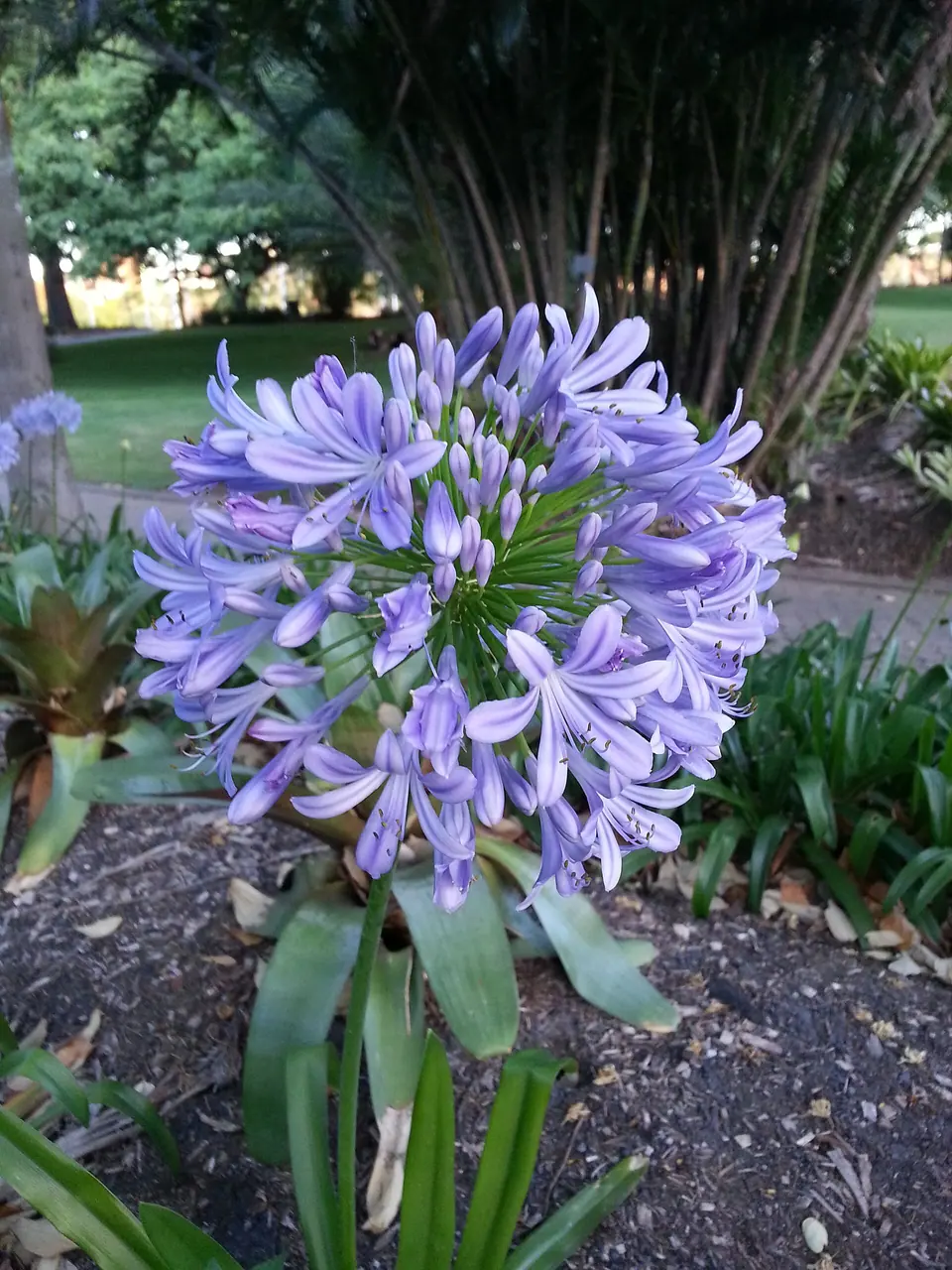
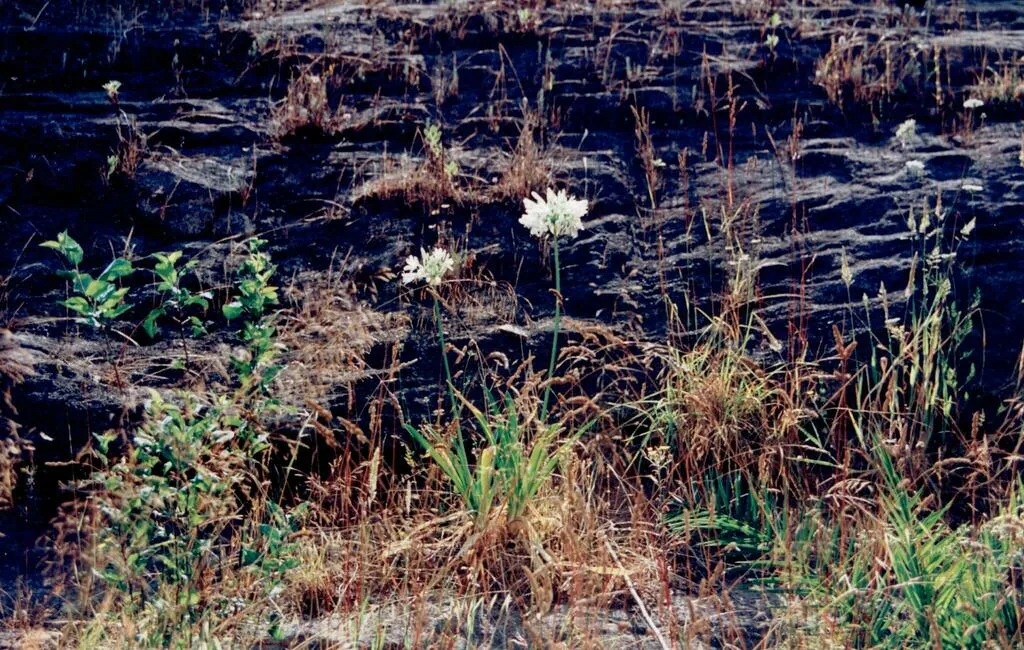

Cómo cultivar y cuidar Agapanto
Agapanthus praecox
Escrito por Emilio Marruso · última revisión
Tóxica para: Personas · Por qué
De un vistazo
El agapanto es una planta perenne que pide poco: sol pleno y un suelo fértil, húmedo y bien drenado. Se queda compacto, de 30 a 60 cm de alto y de ancho, así que vive feliz en maceta, y puedes dividirlo para tener plantas nuevas. No te pases con el abono y usa guantes al manipularlo, porque su savia irrita la piel.
- Sol
Sol pleno
Qué dicen las fuentes (1)
Luz: Pleno sol
Plant rhizomes in well-drained fertile moist soils in full sun for best flowering. Plants will lean towards the sun, so south-facing is best.
— Agapanthus praecox (African Blue Lily, African Lily, Agapanthus, Blue Lily, Lilyof the Nile) | North Carolina Extension Gardener Plant Toolbox [1] - Frío
Aguanta inviernos de hasta −9,4 °C (15 °F)
Rústica en inviernos normales · USDA 8b · RHS H4 · Z8
Qué dicen las fuentes (6)
Rusticidad, zona más fría: 8b [mínima invernal de −9,4 a −6,7 °C (de 15 a 20 °F)]
Según NC State Extension (Agapanthus praecox page): USDA Plant Hardiness Zone: 8b, 9a, 9b
— Agapanthus praecox (African Blue Lily, African Lily, Agapanthus, Blue Lily, Lilyof the Nile) | North Carolina Extension Gardener Plant Toolbox [1] Según NC State Extension (genus Agapanthus page): USDA Plant Hardiness Zone: 8a, 8b, 9a
— Agapanthus (African Lily, Lily of the Nile) | North Carolina Extension Gardener Plant Toolbox [2] Cultivares híbridos (Wisconsin Extension): numerous hybrid cultivars with a range of characteristics and sizes, hardy in zones 7a to 11b unless noted otherwise.
— Agapanthus – Wisconsin Horticulture [3] Colección Galaxy (Wisconsin Extension): collection varieties are hardy to zone 6a.
— Agapanthus – Wisconsin Horticulture [3] USDA Plant Hardiness Zone: 8b, 9a, 9b, 10a, 10b, 11a, 11b
— Agapanthus praecox (African Blue Lily, African Lily, Agapanthus, Blue Lily, Lilyof the Nile) | North Carolina Extension Gardener Plant Toolbox [1] Rusticidad, zona más cálida: 11b [mínima invernal de 7,2 a 10 °C (de 45 a 50 °F)]
USDA Plant Hardiness Zone: 8b, 9a, 9b, 10a, 10b, 11a, 11b
— Agapanthus praecox (African Blue Lily, African Lily, Agapanthus, Blue Lily, Lilyof the Nile) | North Carolina Extension Gardener Plant Toolbox [1] - Suelo
Suelo fértil, húmedo y bien drenado
Qué dicen las fuentes (1)
Notas sobre el riego: Planta en suelo bien drenado, fértil y húmedo
Plant rhizomes in well-drained fertile moist soils in full sun for best flowering.
— Agapanthus praecox (African Blue Lily, African Lily, Agapanthus, Blue Lily, Lilyof the Nile) | North Carolina Extension Gardener Plant Toolbox [1] - Abonado
Abona con moderación: el exceso de abono la hace crecer larguirucha
Qué dicen las fuentes (2)
Evitar: Exceso de fertilización, que causa crecimiento débil y largo
During the growing season, containers can be fertilized lightly; overfertilization will result in lanky growth.
— Agapanthus – Wisconsin Horticulture [3] Signos de exceso: Crecimiento largo y débil
During the growing season, containers can be fertilized lightly; overfertilization will result in lanky growth.
— Agapanthus – Wisconsin Horticulture [3] - Plagas
Pulgones, cochinillas, araña roja, cochinilla algodonosa y caracoles; también podredumbres y oídio
Qué dicen las fuentes (2)
Plagas: pulgones, cochinillas, arañitas rojas, cochinillas harinosas, caracoles
Diseases include Botrytis rot, root rot, powdery mildew, Verticillium wilt and Macrophoma agapanthii. Pests include aphids, scales, spider mites, mealy bugs and snails.
— Agapanthus praecox (African Blue Lily, African Lily, Agapanthus, Blue Lily, Lilyof the Nile) | North Carolina Extension Gardener Plant Toolbox [1] Enfermedades: Podredumbre botritis, podredumbre de raíz, mildiu polvoriento, marchitez por Verticillium, Macrophoma agapanthii
Diseases include Botrytis rot, root rot, powdery mildew, Verticillium wilt and Macrophoma agapanthii. Pests include aphids, scales, spider mites, mealy bugs and snails.
— Agapanthus praecox (African Blue Lily, African Lily, Agapanthus, Blue Lily, Lilyof the Nile) | North Carolina Extension Gardener Plant Toolbox [1] - Tamaño
De 30 a 60 cm de alto y de ancho
Qué dicen las fuentes (2)
Altura adulta: 30.5-61 cm (1 pie - 2 pies)
Dimensions: Height: 1 ft. 0 in. - 2 ft. 0 in. Width: 1 ft. 0 in. - 2 ft. 0 in.
— Agapanthus praecox (African Blue Lily, African Lily, Agapanthus, Blue Lily, Lilyof the Nile) | North Carolina Extension Gardener Plant Toolbox [1] Anchura adulta: 30.5-61 cm (1 pie - 2 pies)
Dimensions: Height: 1 ft. 0 in. - 2 ft. 0 in. Width: 1 ft. 0 in. - 2 ft. 0 in.
— Agapanthus praecox (African Blue Lily, African Lily, Agapanthus, Blue Lily, Lilyof the Nile) | North Carolina Extension Gardener Plant Toolbox [1] - Multiplicación
Consigue plantas nuevas dividiendo la mata
Qué dicen las fuentes (2)
Propagación: División.
Plants will lean towards the sun, so south-facing is best. Propagate by division as needed.
— Agapanthus praecox (African Blue Lily, African Lily, Agapanthus, Blue Lily, Lilyof the Nile) | North Carolina Extension Gardener Plant Toolbox [1] Recommended Propagation Strategy: Division Country Or Region Of Origin: South Africa
— Agapanthus praecox (African Blue Lily, African Lily, Agapanthus, Blue Lily, Lilyof the Nile) | North Carolina Extension Gardener Plant Toolbox [1] - Maceta
Crece también en maceta
Qué dicen las fuentes (2)
En maceta: Sí
This plant is best grown in a pot and brought in the house or greenhouse in the winter in zones north of 8.
— Agapanthus praecox (African Blue Lily, African Lily, Agapanthus, Blue Lily, Lilyof the Nile) | North Carolina Extension Gardener Plant Toolbox [1] They can also be grown in a large pot for the patio.
— Agapanthus praecox (African Blue Lily, African Lily, Agapanthus, Blue Lily, Lilyof the Nile) | North Carolina Extension Gardener Plant Toolbox [1] - Seguridad
Es tóxica si se ingiere; la savia irrita la piel y los ojos, usa guantes
Resumen
El lirio azul africano es una perenne de hoja perenne que forma matas, nativa del sur de Sudáfrica, cultivada por sus flores de verano azules y blancas. [1] Le va mejor en suelo fértil, húmedo y bien drenado a pleno sol y se propaga por división. [1]
Citado en inglés, como en la fuente.
Esta ficha está incompleta: las fuentes consultadas aún no cubren todos los campos.
Aún no cubierto por nuestras fuentes: Riego, Poda
Cuidados
Riego
Riego
Las fuentes dan valores distintos según la región, la zona o las condiciones de cultivo.
Lo que dice cada fuente
Según Wisconsin Extension (Agapanthus genus): Mantén un buen riego mientras crece; deja que se seque en invierno
Qué dicen las fuentes (1)
Según Wisconsin Extension (Agapanthus genus): Keep well watered when growing, but allow it to dry out in winter.Notas sobre el riego
Planta en suelo bien drenado, fértil y húmedo
Qué dicen las fuentes (1)
Plant rhizomes in well-drained fertile moist soils in full sun for best flowering.Luz
Pleno sol
Qué dicen las fuentes (1)
Plant rhizomes in well-drained fertile moist soils in full sun for best flowering. Plants will lean towards the sun, so south-facing is best.Clima y frío
Rusticidad, zona más fría
8b [mínima invernal de −9,4 a −6,7 °C (de 15 a 20 °F)]
Lo que dice cada fuente
Según NC State Extension (Agapanthus praecox page): 8b [mínima invernal de −9,4 a −6,7 °C (de 15 a 20 °F)]
Según NC State Extension (genus Agapanthus page): 8a [mínima invernal de −12,2 a −9,4 °C (de 10 a 15 °F)]
Cultivares híbridos (Wisconsin Extension): 7a [mínima invernal de −17,8 a −15 °C (de 0 a 5 °F)]
Colección Galaxy (Wisconsin Extension): 6a [mínima invernal de −23,3 a −20,6 °C (de −10 a −5 °F)]
Qué dicen las fuentes (5)
Según NC State Extension (Agapanthus praecox page): USDA Plant Hardiness Zone:
8b, 9a, 9bSegún NC State Extension (genus Agapanthus page): USDA Plant Hardiness Zone:
8a, 8b, 9aCultivares híbridos (Wisconsin Extension): numerous hybrid cultivars with a range of characteristics and sizes, hardy in zones 7a to 11b unless noted otherwise.Colección Galaxy (Wisconsin Extension): collection varieties are hardy to zone 6a.USDA Plant Hardiness Zone:
8b, 9a, 9b, 10a, 10b, 11a, 11bRusticidad, zona más cálida
11b [mínima invernal de 7,2 a 10 °C (de 45 a 50 °F)]
Qué dicen las fuentes (1)
USDA Plant Hardiness Zone:
8b, 9a, 9b, 10a, 10b, 11a, 11bDónde cultivarla
En maceta
Sí
Qué dicen las fuentes (2)
This plant is best grown in a pot and brought in the house or greenhouse in the winter in zones north of 8.They can also be grown in a large pot for the patio.Distancia de plantación
Las fuentes dan valores distintos según la región, la zona o las condiciones de cultivo.
Lo que dice cada fuente
Según NC State Extension (genus Agapanthus page): 20.3 cm (8 in)
Según Wisconsin Extension (Agapanthus genus): 20.3 cm (8 in)
Qué dicen las fuentes (2)
Según NC State Extension (genus Agapanthus page): The rhizomes should be planted 1 inch deep and 8 inches apart.Según Wisconsin Extension (Agapanthus genus): Plant Agapanthus just deep enough to cover the roots, spacing them about 8 inches apart.Propagación
División.
Qué dicen las fuentes (2)
Plants will lean towards the sun, so south-facing is best. Propagate by division as needed.Recommended Propagation Strategy:
Division
Country Or Region Of Origin:
South AfricaCultivo
La planta
Ciclo de vida
perenne
Qué dicen las fuentes (1)
African Blue Lily is a clump-forming, evergreen perennial in the amaryllis family (Amaryllidaceae) native to southern South Africa.Familia
Amaryllidaceae
Qué dicen las fuentes (1)
African Blue Lily is a clump-forming, evergreen perennial in the amaryllis family (Amaryllidaceae) native to southern South Africa.Altura adulta
30.5-61 cm (1 pie - 2 pies)
Qué dicen las fuentes (1)
Dimensions: Height: 1 ft. 0 in. - 2 ft. 0 in. Width: 1 ft. 0 in. - 2 ft. 0 in.Anchura adulta
30.5-61 cm (1 pie - 2 pies)
Qué dicen las fuentes (1)
Dimensions: Height: 1 ft. 0 in. - 2 ft. 0 in. Width: 1 ft. 0 in. - 2 ft. 0 in.Plagas y enfermedades
Plagas
pulgones, cochinillas, arañitas rojas, cochinillas harinosas, caracoles
Qué dicen las fuentes (1)
Diseases include Botrytis rot, root rot, powdery mildew, Verticillium wilt and Macrophoma agapanthii. Pests include aphids, scales, spider mites, mealy bugs and snails.Enfermedades
Podredumbre botritis, podredumbre de raíz, mildiu polvoriento, marchitez por Verticillium, Macrophoma agapanthii
Qué dicen las fuentes (1)
Diseases include Botrytis rot, root rot, powdery mildew, Verticillium wilt and Macrophoma agapanthii. Pests include aphids, scales, spider mites, mealy bugs and snails.Abonado
Cuándo
Las fuentes dan valores distintos según la región, la zona o las condiciones de cultivo.
Lo que dice cada fuente
en contenedores: Ligeramente durante la temporada de crecimiento
Qué dicen las fuentes (1)
en contenedores: During the growing season, containers can be fertilized lightly; overfertilization will result in lanky growth.Evitar
Exceso de fertilización, que causa crecimiento débil y largo
Qué dicen las fuentes (1)
During the growing season, containers can be fertilized lightly; overfertilization will result in lanky growth.Signos de exceso
Crecimiento largo y débil
Qué dicen las fuentes (1)
During the growing season, containers can be fertilized lightly; overfertilization will result in lanky growth.Problemas
Enfermedades y plagas.
Síntoma: Podredumbre por Botrytis, podredumbre de raíces, mildiu polvoriento, marchitez por Verticillium y Macrophoma agapanthii; pulgones, cochinillas, arañitas rojas, cochinillas harinosas y caracoles.
Qué hacer: No se indica ninguna medida de control en el documento de la especie.
Qué dicen las fuentes (1)
Diseases include Botrytis rot, root rot, powdery mildew, Verticillium wilt and Macrophoma agapanthii. Pests include aphids, scales, spider mites, mealy bugs and snails.
— Agapanthus praecox (African Blue Lily, African Lily, Agapanthus, Blue Lily, Lilyof the Nile) | North Carolina Extension Gardener Plant Toolbox [1]
Remedios
Cada remedio indica qué dicen las fuentes oficiales; los remedios tradicionales sin fuente oficial aparecen marcados. Los perjudiciales están para que sepas evitarlos.
Primeros auxilios
Primeros auxilios: no sustituyen al médico
irritación de la piel por la savia
enjuaga la piel con agua tibia Fuente oficial, sin prueba independiente
Seek medical attention for all ingestions.
— poisonsinfo.health.qld.gov.au [5] Cómo: si entras en contacto con un irritante, enjuaga la piel afectada con agua tibia y un emoliente lo antes posible
if you come into contact with an allergen or irritant, rinse the affected skin with warm water and an emollient as soon as possible
— nhs.uk [4]
Cuidar la planta
babosas y caracoles
recolección manual nocturna No verificado
Remedio tradicional, no verificado por una fuente oficial.
Cómo: usa una luz por la noche para encontrar las babosas y caracoles y retíralos
trampa de cerveza No verificado
Remedio tradicional, no verificado por una fuente oficial.
Cómo: coloca un recipiente con cerveza con el borde a nivel del suelo
tierra de diatomeas o cáscaras de huevo trituradas No verificado
Remedio tradicional, no verificado por una fuente oficial.
Cómo: esparce alrededor de las plantas
cinta de cobre No verificado
Remedio tradicional, no verificado por una fuente oficial.
Cómo: alambre de cobre o cinta alrededor de las plantas
mosquito de las agallas del agapanto
mantillo de paja No verificado
Remedio tradicional, no verificado por una fuente oficial.
Cómo: aplica un mantillo de paja
Cómo eliminarla
propagación invasiva
Desentierra los rizomas. No verificado
Remedio tradicional, no verificado por una fuente oficial.
However, all of the rhizome must be removed and destroyed off-site, as any rhizome left in the ground will regrow.
— weeds.org.au [6] Cómo: excava o arranca las plantas, retira todo el rizoma y destrúyelo fuera del sitio
Toxicidad
Según la fuente, citada textualmente. No es un consejo médico ni veterinario: si una persona o un animal pudo haber ingerido esta planta, contacta con un centro de toxicología o con un veterinario.
Poison Symptoms: Poisonous through ingestion and dermatitis. Symptoms may include irritation of skin and eyes from cell sap. Irritation and ulceration of mouth if ingested.
[1]
Calendario
Siembra
Las fuentes dan valores distintos según la región, la zona o las condiciones de cultivo.
Lo que dice cada fuente
Según Wisconsin Extension (Agapanthus genus): Primavera
Qué dicen las fuentes (1)
Según Wisconsin Extension (Agapanthus genus): Sow seed in spring.Poda
No figura en las fuentes consultadas.
Meses tal como los dan las fuentes, en su mayoría de Estados Unidos (hemisferio norte). En el hemisferio sur se desplazan unos seis meses.
Plantas similares
- Tuberosa azul Agapanthus africanus
- African Blood Lily Scadoxus multiflorus
- Allium triquetrum Allium triquetrum
- Aztec Lily Zephyranthes formosissima
- Blue Globe Onion Allium caeruleum
- Ajoporro Allium ampeloprasum
- Coastal Spiderlily Hymenocallis crassifolia
- Ajo salvaje Allium vineale
Fuentes
Cada valor anterior se cita de estos documentos. Los enlaces llevan al editor original.
- Agapanthus praecox (African Blue Lily, African Lily, Agapanthus, Blue Lily, Lilyof the Nile) | North Carolina Extension Gardener Plant Toolbox · plants.ces.ncsu.edu, consultado
- Agapanthus (African Lily, Lily of the Nile) | North Carolina Extension Gardener Plant Toolbox · plants.ces.ncsu.edu, consultado
- Agapanthus – Wisconsin Horticulture · hort.extension.wisc.edu, consultado
- nhs.uk · nhs.uk
- poisonsinfo.health.qld.gov.au · poisonsinfo.health.qld.gov.au
- weeds.org.au · weeds.org.au
Escrito por Emilio Marruso · última revisión