
How to Grow and Care for Squash
Cucurbita maxima
Written by Emilio Marruso · last checked
Not toxic to cats and dogs, according to the sources · Sources
At a glance
This squash is an easy annual to grow from seed: plant it after the last frost, give it full sun and moderately moist soil, and it ripens in fall. The fruits have a mild flavor you can fry, bake or add to soups and pasta, and even the summer flowers are edible. Best of all, it's non-toxic to cats, dogs and horses.
- Sun
Full sun
What the sources say (1)
Light: Full sun
Light: Full sun (6 or more hours of direct sunlight a day)
— Cucurbita maxima (Autumn Squash, Buttercup Squash, Hubbard Squash, Marrow, Pumpkin, Squash, Turban Gourd, Winter Squash) | North Carolina Extension Gardener Plant Toolbox [1] - Water
Keep the soil moderately moist; try not to wet the leaves
What the sources say (2)
Watering: Prefers moderately moist soil
cultivar Anna Swartz Hubbard (fonte: UNH Extension): Plant in rich organic soil kept moist at all times. Avoid wetting the foliage, as this can cause disease.
— How to grow Anna Swartz hubbard (Cucurbita maxima) | Extension [5] Winter squash is an aggressive grower and prefers moderately moist soil with full access to sunlight.
— Cucurbita maxima (Autumn Squash, Buttercup Squash, Hubbard Squash, Marrow, Pumpkin, Squash, Turban Gourd, Winter Squash) | North Carolina Extension Gardener Plant Toolbox [1] - Cold
Survives winters down to −40 °F (−40 °C)
Very hardy · USDA 3a · RHS H7 · Z3
What the sources say (2)
Hardiness, coldest zone: 3a [winter low −40 to −37.2 °C (−40 to −35 °F)]
USDA Plant Hardiness Zone: 3a, 3b, 4a, 4b, 5a, 5b, 6a, 6b, 7a, 7b, 8a, 8b, 9a, 9b, 10a, 10b, 11a, 11b
— Cucurbita maxima (Autumn Squash, Buttercup Squash, Hubbard Squash, Marrow, Pumpkin, Squash, Turban Gourd, Winter Squash) | North Carolina Extension Gardener Plant Toolbox [1] Hardiness, warmest zone: 11b [winter low 7.2 to 10 °C (45 to 50 °F)]
USDA Plant Hardiness Zone: 3a, 3b, 4a, 4b, 5a, 5b, 6a, 6b, 7a, 7b, 8a, 8b, 9a, 9b, 10a, 10b, 11a, 11b
— Cucurbita maxima (Autumn Squash, Buttercup Squash, Hubbard Squash, Marrow, Pumpkin, Squash, Turban Gourd, Winter Squash) | North Carolina Extension Gardener Plant Toolbox [1] - Soil
Soil with a pH of 6.0–8.0
What the sources say (2)
Soil pH, minimum: 6.0
Soil Texture: High Organic Matter Loam (Silt) Soil pH: Neutral (6.0-8.0) Soil Drainage: Good Drainage Moist
— Cucurbita maxima (Autumn Squash, Buttercup Squash, Hubbard Squash, Marrow, Pumpkin, Squash, Turban Gourd, Winter Squash) | North Carolina Extension Gardener Plant Toolbox [1] Soil pH, maximum: 8.0
Soil Texture: High Organic Matter Loam (Silt) Soil pH: Neutral (6.0-8.0) Soil Drainage: Good Drainage Moist
— Cucurbita maxima (Autumn Squash, Buttercup Squash, Hubbard Squash, Marrow, Pumpkin, Squash, Turban Gourd, Winter Squash) | North Carolina Extension Gardener Plant Toolbox [1] - Planting
Plant out after the last frost, in late spring or early summer
What the sources say (3)
Planting: Late spring, early summer, or after the last frost (transplants)
summer squash (fonte: Illinois Extension): Plant anytime after the danger of frost has passed, from early spring until midsummer.
— Summer Squash (Cucurbita pepo and Cucurbita maxima)-Hort Answers - University of Illinois Extension [3] transplants (fonte: NC State Extension): Transplant in late spring, early summer, or after the last frost.
— Cucurbita maxima (Autumn Squash, Buttercup Squash, Hubbard Squash, Marrow, Pumpkin, Squash, Turban Gourd, Winter Squash) | North Carolina Extension Gardener Plant Toolbox [1] Transplant in late spring, early summer, or after the last frost.
— Cucurbita maxima (Autumn Squash, Buttercup Squash, Hubbard Squash, Marrow, Pumpkin, Squash, Turban Gourd, Winter Squash) | North Carolina Extension Gardener Plant Toolbox [1] - Feeding
Mix compost or well-rotted manure into the soil before planting
What the sources say (7)
When: Before planting; a starter solution at transplanting
farm production (pumpkins): Sidedress at 3 and 6 weeks after seeding with 20 to 30 pounds of nitrogen and 60 to 100 pounds of potassium (approximately 1 pint of 13-0-44 per 100 feet of row).
— [9] commercial production (Mid-Atlantic): 25-50 150 100 50 02 200 150 100 02 Broadcast and disk-in 25-50 0 0 0 0 0 0 0 0 Sidedress when vines start to run
— [10] For best yields, incorporate compost or wellrotted manure before planting. Fertilize the garden by broadcasting 2 pounds of 101010 fertilizer per 100 square feet of garden and incorporate into the soil.
— [11] If transplants are used, apply a transplant fertilizer starter at the time of planting. Mix one tablespoon of a soluble fertilizer high in phosphorus (i.e., 102010) into a gallon of water, and apply one cup of solution per plant.
— [11] Natural fertilizers: Compost or well-rotted manure worked into the soil (or into the hills) before planting
no-till pumpkins, commercial production: Hairy vetch will normally supply all the N requirements for pumpkins. However, if N deficiency symptoms appear before fruit production, topdress with 20-30 lb N/A.
— [10] For best yields, incorporate compost or wellrotted manure before planting. Fertilize the garden by broadcasting 2 pounds of 101010 fertilizer per 100 square feet of garden and incorporate into the soil.
— [11] If you are planting on a hill system-the easiest for organic growers since the compost and animal manure only needs to be worked into the hills
— [9] - Harvest
Pick in fall, when your fingernail can't dent the skin; the flowers are edible too
What the sources say (5)
Harvest: Fall
According to NC State Extension: Soft or hard-shelled berries called pepos come in a variety of colors, shapes, and sizes and are harvested in the fall.
— Cucurbita maxima (Autumn Squash, Buttercup Squash, Hubbard Squash, Marrow, Pumpkin, Squash, Turban Gourd, Winter Squash) | North Carolina Extension Gardener Plant Toolbox [1] cultivar Baby Blue Hubbard (fonte: UNH Extension): Harvest when fruits are full size and the rinds cannot be easily dented with a fingernail.
— How to grow baby blue hubbard (Cucurbita maxima) | Extension [2] cultivar Anna Swartz Hubbard (fonte: UNH Extension): 90-100 days. When ripe the stem begins to dry and the skin becomes too hard to pierce with a fingernail.
— How to grow Anna Swartz hubbard (Cucurbita maxima) | Extension [5] summer squash (fonte: Illinois Extension): Squash grow rapidly; especially in hot weather and are usually ready to pick within 4 to 8 days after flowering.
— Summer Squash (Cucurbita pepo and Cucurbita maxima)-Hort Answers - University of Illinois Extension [3] Soft or hard-shelled berries called pepos come in a variety of colors, shapes, and sizes and are harvested in the fall.
— Cucurbita maxima (Autumn Squash, Buttercup Squash, Hubbard Squash, Marrow, Pumpkin, Squash, Turban Gourd, Winter Squash) | North Carolina Extension Gardener Plant Toolbox [1] - Pests
Watch for slugs, aphids and beetles
What the sources say (1)
Pests: slugs, aphids, beetles
Insects, Diseases, and Other Plant Problems: Slugs, aphids, and beetles
— Cucurbita maxima (Autumn Squash, Buttercup Squash, Hubbard Squash, Marrow, Pumpkin, Squash, Turban Gourd, Winter Squash) | North Carolina Extension Gardener Plant Toolbox [1] - Propagation
Grows from seed
What the sources say (1)
Propagation: Seed
It is easily sown from seed, especially when soils are warm.
— Cucurbita maxima (Autumn Squash, Buttercup Squash, Hubbard Squash, Marrow, Pumpkin, Squash, Turban Gourd, Winter Squash) | North Carolina Extension Gardener Plant Toolbox [1] - Safety
Non-toxic to cats, dogs and horses
Overview
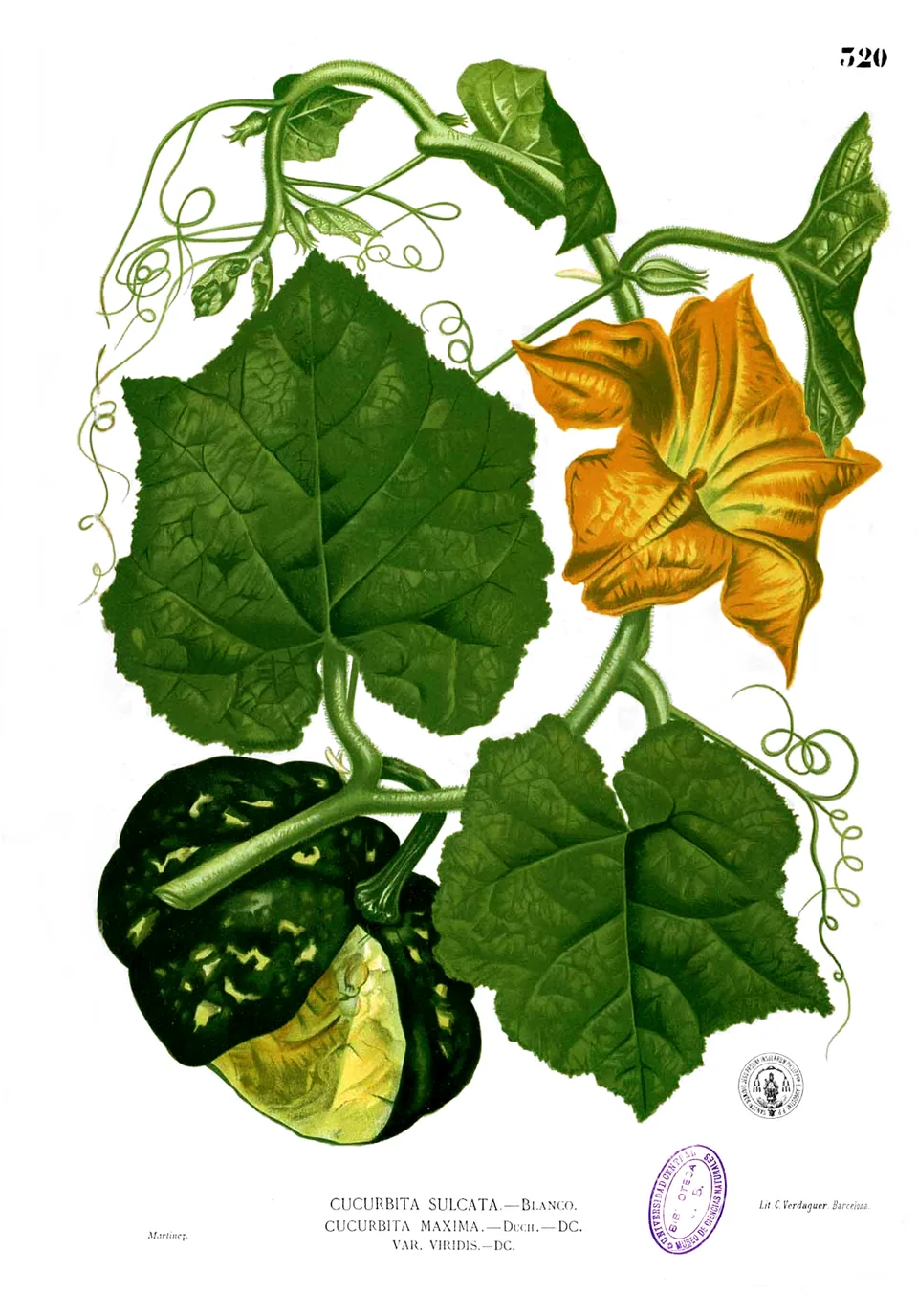
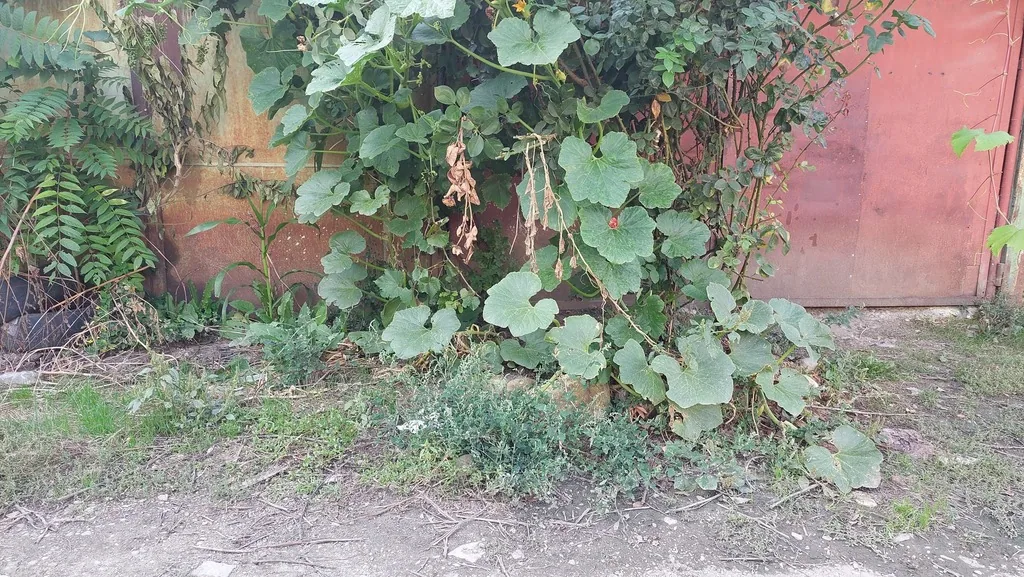
Winter squash or pumpkin is a warm-season annual vine in the Cucurbitaceae family native to South America. [1] The vine is an aggressive grower that prefers moderately moist soil with full access to sunlight. [1] The fruits have a mild flavor and can be fried, baked, added to pasta, or used in soups. [1]
Squash care
How to water Squash
Prefers moderately moist soil
What each source says
cultivar Anna Swartz Hubbard (fonte: UNH Extension): Rich organic soil kept moist at all times; avoid wetting the foliage
What the sources say (2)
cultivar Anna Swartz Hubbard (fonte: UNH Extension): Plant in rich organic soil kept moist at all times. Avoid wetting the foliage, as this can cause disease.Winter squash is an aggressive grower and prefers moderately moist soil with full access to sunlight.How much light Squash needs
Full sun
What the sources say (1)
Light:
Full sun (6 or more hours of direct sunlight a day)How much cold Squash can take
Hardiness, coldest zone
3a [winter low −40 to −37.2 °C (−40 to −35 °F)]
What the sources say (1)
USDA Plant Hardiness Zone:
3a, 3b, 4a, 4b, 5a, 5b, 6a, 6b, 7a, 7b, 8a, 8b, 9a, 9b, 10a, 10b, 11a, 11bHardiness, warmest zone
11b [winter low 7.2 to 10 °C (45 to 50 °F)]
What the sources say (1)
USDA Plant Hardiness Zone:
3a, 3b, 4a, 4b, 5a, 5b, 6a, 6b, 7a, 7b, 8a, 8b, 9a, 9b, 10a, 10b, 11a, 11bBest soil for Squash
Soil pH, minimum
6.0
What the sources say (1)
Soil Texture:
High Organic Matter
Loam (Silt)
Soil pH:
Neutral (6.0-8.0)
Soil Drainage:
Good Drainage
MoistSoil pH, maximum
8.0
What the sources say (1)
Soil Texture:
High Organic Matter
Loam (Silt)
Soil pH:
Neutral (6.0-8.0)
Soil Drainage:
Good Drainage
MoistWhere to grow Squash
The sources give different values depending on region, zone or growing conditions.
What each source says
cultivar Baby Blue Hubbard (fonte: UNH Extension): 91.4-152.4 cm (3-5 ft)
cultivar Anna Swartz Hubbard (fonte: UNH Extension): 91.4-121.9 cm (3-4 ft)
summer squash, single-plant production (fonte: Illinois Extension): 61.0-91.4 cm (24-36 in)
summer squash, hills (fonte: Illinois Extension): 121.9 cm (48 in)
What the sources say (4)
cultivar Baby Blue Hubbard (fonte: UNH Extension): Plant Spacing : 3-5 feet
Row Spacing : 5 feetcultivar Anna Swartz Hubbard (fonte: UNH Extension): Plant Spacing : 3-4 feet
Row Spacing : 8-10 feetsummer squash, single-plant production (fonte: Illinois Extension): Sow two or three seeds 24 to 36 inches apart for single-plant production, or four or five seeds in hills 48 inches apart.summer squash, hills (fonte: Illinois Extension): Sow two or three seeds 24 to 36 inches apart for single-plant production, or four or five seeds in hills 48 inches apart.How to propagate Squash
Seed
What the sources say (1)
It is easily sown from seed, especially when soils are warm.How to grow Squash
The plant
Life cycle
annual
What the sources say (1)
Winter squash or pumpkin is a warm-season annual vine in the Cucurbitaceae (cucumber) family native to South America.Family
Cucurbitaceae
What the sources say (1)
Genus: Cucurbita Species: maxima Family: Cucurbitaceae Life Cycle: Annual Recommended Propagation Strategy: SeedSowing and growth
Days to germination
The sources give different values depending on region, zone or growing conditions.
What each source says
cultivar 'Baby Blue Hubbard':
cultivar 'Anna Swartz Hubbard':
What the sources say (2)
cultivar 'Baby Blue Hubbard': Planting Depth : ½-1 inch Soil Temperature : 70℉ Germination : 7-14 days Plant Spacing : 3-5 feet Row Spacing : 5 feet Maturity : 90-120 dayscultivar 'Anna Swartz Hubbard': Planting Depth : 3/4-1 inch Soil Temperature : 60-70˚F for germination Germination : 8-12 days Plant Spacing : 3-4 feet Row Spacing : 8-10 feet Maturity : 90-100 daysSowing depth
The sources give different values depending on region, zone or growing conditions.
What each source says
cultivar 'Baby Blue Hubbard':
cultivar 'Anna Swartz Hubbard':
What the sources say (2)
cultivar 'Baby Blue Hubbard': Planting Depth : ½-1 inch Soil Temperature : 70℉ Germination : 7-14 days Plant Spacing : 3-5 feet Row Spacing : 5 feet Maturity : 90-120 dayscultivar 'Anna Swartz Hubbard': Planting Depth : 3/4-1 inch Soil Temperature : 60-70˚F for germination Germination : 8-12 days Plant Spacing : 3-4 feet Row Spacing : 8-10 feet Maturity : 90-100 daysRow spacing
The sources give different values depending on region, zone or growing conditions.
What each source says
cultivar 'Baby Blue Hubbard':
cultivar 'Anna Swartz Hubbard':
What the sources say (2)
cultivar 'Baby Blue Hubbard': Planting Depth : ½-1 inch Soil Temperature : 70℉ Germination : 7-14 days Plant Spacing : 3-5 feet Row Spacing : 5 feet Maturity : 90-120 dayscultivar 'Anna Swartz Hubbard': Planting Depth : 3/4-1 inch Soil Temperature : 60-70˚F for germination Germination : 8-12 days Plant Spacing : 3-4 feet Row Spacing : 8-10 feet Maturity : 90-100 daysDays to maturity
The sources give different values depending on region, zone or growing conditions.
What each source says
cultivar 'Baby Blue Hubbard':
cultivar 'Anna Swartz Hubbard':
What the sources say (2)
cultivar 'Baby Blue Hubbard': Planting Depth : ½-1 inch Soil Temperature : 70℉ Germination : 7-14 days Plant Spacing : 3-5 feet Row Spacing : 5 feet Maturity : 90-120 dayscultivar 'Anna Swartz Hubbard': Planting Depth : 3/4-1 inch Soil Temperature : 60-70˚F for germination Germination : 8-12 days Plant Spacing : 3-4 feet Row Spacing : 8-10 feet Maturity : 90-100 daysHarvest and storage
How to harvest
The sources give different values depending on region, zone or growing conditions.
What each source says
cultivar 'Baby Blue Hubbard':
cultivar 'Anna Swartz Hubbard':
What the sources say (2)
cultivar 'Baby Blue Hubbard': Harvest when fruits are full size and the rinds cannot be easily dented with a fingernail.cultivar 'Anna Swartz Hubbard': 90-100 days. When ripe the stem begins to dry and the skin becomes too hard to pierce with a fingernail. Cut the stem with a sharp knife, at a length of 2-3".Storage
The sources give different values depending on region, zone or growing conditions.
What each source says
cultivar 'Baby Blue Hubbard':
What the sources say (1)
cultivar 'Baby Blue Hubbard': Store at 50-55℉. Winter squash can be stored for many months, and are great in stews and baked goods.Pests and diseases
Pests
slugs, aphids, beetles
What the sources say (1)
Insects, Diseases, and Other Plant Problems: Slugs, aphids, and beetlesFertilizing
When
Before planting; a starter solution at transplanting
What each source says
farm production (pumpkins): before planting, then side-dress 3 and 6 weeks after seeding
commercial production (Mid-Atlantic): part broadcast and disked in before planting, the rest of the nitrogen side-dressed when vines start to run
What the sources say (4)
farm production (pumpkins): Sidedress at 3 and 6 weeks after seeding with 20 to 30 pounds of nitrogen and 60 to 100 pounds of potassium (approximately 1 pint of 13-0-44 per 100 feet of row).commercial production (Mid-Atlantic): 25-50 150 100 50 02 200 150 100 02 Broadcast and disk-in 25-50 0 0 0 0 0 0 0 0 Sidedress when vines start to runFor best yields, incorporate compost or wellrotted manure before planting. Fertilize the garden by broadcasting 2 pounds of 101010 fertilizer per 100 square feet of garden and incorporate into the soil.If transplants are used, apply a transplant fertilizer starter at the time of planting. Mix one tablespoon of a soluble fertilizer high in phosphorus (i.e., 102010) into a gallon of water, and apply one cup of solution per plant.How often
The sources give different values depending on region, zone or growing conditions.
What each source says
farm production (pumpkins): two side-dressings, 3 and 6 weeks after seeding
What the sources say (1)
farm production (pumpkins): Sidedress at 3 and 6 weeks after seeding with 20 to 30 pounds of nitrogen and 60 to 100 pounds of potassium (approximately 1 pint of 13-0-44 per 100 feet of row).Natural fertilizers
Compost or well-rotted manure worked into the soil (or into the hills) before planting
What each source says
no-till pumpkins, commercial production: hairy vetch cover crop to supply the nitrogen
What the sources say (3)
no-till pumpkins, commercial production: Hairy vetch will normally supply all the N requirements for pumpkins. However, if N deficiency symptoms appear before fruit production, topdress with 20-30 lb N/A.For best yields, incorporate compost or wellrotted manure before planting. Fertilize the garden by broadcasting 2 pounds of 101010 fertilizer per 100 square feet of garden and incorporate into the soil.If you are planting on a hill system-the easiest for organic growers since the compost and animal manure only needs to be worked into the hillsMineral fertilizers
Balanced fertilizer (1-1-1 ratio) broadcast at 97.6 g/m² and worked in before planting; for transplants, a soluble high-phosphorus starter (1-2-1 ratio), 14.8 mL in 3.79 L [1 gal] of water, 237 mL of solution per plant
What each source says
farm production (pumpkins): 5-10-10 at 560-1120 kg [1,234.6–2,469.2 lb]/ha broadcast before planting; side-dress with 22.4-33.6 kg [49.4–74 lb]/ha nitrogen and 67.3-112 kg [148.4–246.9 lb]/ha potassium
commercial production (Mid-Atlantic): 56-112 kg [123.5–246.9 lb]/ha nitrogen in total; P₂O₅ (0-168 kg [0–370.4 lb]/ha) and K₂O (0-224 kg [0–493.8 lb]/ha) by soil test level
no-till pumpkins, commercial production: if nitrogen deficiency symptoms appear before fruit production, top-dress with 22.4-33.6 kg [49.4–74 lb]/ha nitrogen
What the sources say (5)
farm production (pumpkins): Otherwise, if commercial fertilizers are used, broadcast 500 to 1,000 pounds of 5-10-10 per acre before planting.commercial production (Mid-Atlantic): N (lb/A) P2O5 (lb/A) K2O (lb/A) Nutrient Timing and Method 50-100 150 100 50 02 200 150 100 02 Total nutrient recommendedno-till pumpkins, commercial production: Hairy vetch will normally supply all the N requirements for pumpkins. However, if N deficiency symptoms appear before fruit production, topdress with 20-30 lb N/A.For best yields, incorporate compost or wellrotted manure before planting. Fertilize the garden by broadcasting 2 pounds of 101010 fertilizer per 100 square feet of garden and incorporate into the soil.If transplants are used, apply a transplant fertilizer starter at the time of planting. Mix one tablespoon of a soluble fertilizer high in phosphorus (i.e., 102010) into a gallon of water, and apply one cup of solution per plant.Micronutrients
Boron when misshapen fruits develop (1.12 kg [2.5 lb]/ha of actual boron); risk of deficiency on sandy soils
What each source says
commercial production (Mid-Atlantic): sulfur at 22.4-33.6 kg [49.4–74 lb]/ha on most soils
What the sources say (3)
commercial production (Mid-Atlantic): Apply 20-30 lb/A of sulfur (S) for most soils.Pumpkins require ample amounts of potassium for good dry-matter production. If misshaped pumpkins develop, check the boron level or add 1 pound of actual boronIf misshaped pumpkins develop, check the boron level or add 1 pound of actual boron (5 pounds of Solubor) per acre to your fertility program. Boron deficiency is likely to occur on sandy soils.Signs of deficiency
Misshapen fruits (boron); blossom end rot (calcium deficiency or irregular moisture)
What the sources say (2)
If misshaped pumpkins develop, check the boron level or add 1 pound of actual boron (5 pounds of Solubor) per acre to your fertility program. Boron deficiency is likely to occur on sandy soils.cultural – blossom end rot (irregular moisture or calcium deficiency)Squash pests and problems
Slugs, aphids and beetles
Symptom: Listed as pests of the plant
What the sources say (1)
Insects, Diseases, and Other Plant Problems: Slugs, aphids, and beetles
— Cucurbita maxima (Autumn Squash, Buttercup Squash, Hubbard Squash, Marrow, Pumpkin, Squash, Turban Gourd, Winter Squash) | North Carolina Extension Gardener Plant Toolbox [1]
Remedies
Each remedy shows what official sources say about it; traditional remedies without an official source are marked as such. Harmful ones are listed so you know to avoid them.
First aid
First aid: not a substitute for a doctor
bitter squash ingestion
spit out the bitter piece and stay hydrated Official source, not independently tested
Seek medical attention if you cannot tolerate oral fluids because of vomiting, or if symptoms are severe, consist of more than just gastrointestinal symptoms, or last more than a day.
— poison.org [12] Do not cook, boil, or bake bitter-tasting squash. The toxin is not inactivated by heat.
— poison.org [12] How: If you take a small taste, spit it out and discard the rest; if gastrointestinal symptoms follow, stay hydrated.
If you take a small taste, spit it out. Discard the rest of it. If you ate it and are experiencing gastrointestinal symptoms, make sure you stay hydrated.
— poison.org [12]
Treating the plant
squash bugs
hand-picking squash bug eggs Works
How: Check the undersides of leaves, crush the eggs when found; egg surveys at least once a week during June.
In small plantings, hand-picking can be very effective. Attention should be given to the eggs which are easily detected in garden surveys and can be crushed when detected.
— extension.colostate.edu [13] What the evidence says In small plantings, hand-picking can be very effective. Attention should be given to the eggs which are easily detected in garden surveys and can be crushed when detected.
— extension.colostate.edu [13] trapping adults under a board Partly works
How: Place a wooden board or heavy cardboard on the ground; the bugs gather under it overnight; remove the board or kill the bugs early in the morning.
Scouting – place a wooden board or heavy cardboard on the ground to attract nymphs and adults who will congregate under the board overnight.
— extension.colostate.edu [13] What the evidence says Picking up and removing the board or killing the bugs early in the morning can help reduce squash bug populations.
— extension.colostate.edu [13] duct tape for eggs and nymphs Not verified
Traditional remedy, not verified by an official source.
How: Make a roll of duct tape sticky side out, press it on the eggs (and adults or nymphs) under the leaves, then throw the tape away; check every two days.
aphids
insecticidal soap spray Works
Most dish soaps are not naturally occurring substances nor are they biodegradable.
— ucanr.edu [16] How: Use insecticidal soap on the aphids.
They leave behind sticky excrement called honeydew which can turn into a black sooty mold. Use insecticidal soap.
— harvesttotable.com [14] What the evidence says For example, insecticidal soap is a safe, effective organic insecticide with minimal environmental impact.
— extension.psu.edu [15]
squash vine borer
yellow water trap with dish soap Official source, not independently tested
How: In mid-June place a yellow container filled with water and a drop of dish soap in the garden; the moths fly in and are trapped.
In mid-June, place a yellow-colored container filled with water and a drop of dish soap in your garden.
— extension.psu.edu [17] aluminum foil collar on the stem Not verified
Traditional remedy, not verified by an official source.
How: Wrap the stem of young plants with aluminum foil, plastic cups or another barrier to block access to the base of the plant.
slitting the vine to remove the borer Not verified
Traditional remedy, not verified by an official source.
How: Slit the vine with a knife and remove the borer; bury the runner at that point to re-root.
cutworms
paper collar and wood ash Not verified
Traditional remedy, not verified by an official source.
How: Place a 3-inch paper collar around the stem; keep the garden free of weeds and sprinkle wood ash around the base of plants.
powdery mildew
milk and water spray Not verified
Traditional remedy, not verified by an official source.
How: Use a 40% solution of cow milk and water; drench the leaves on a warm sunny day and repeat every 10 days.
Is Squash poisonous?
Reported by the source, quoted verbatim. This is not medical or veterinary advice: if a person or an animal may have eaten this plant, contact a poison control centre or a veterinarian.
#non-toxic for cats #non-toxic for horses #non-toxic for dogs
[1]The source flags the risk for this animal but does not explain why.
Calendar
Sowing
The sources give different values depending on region, zone or growing conditions.
What each source says
cultivar Baby Blue Hubbard (fonte: UNH Extension): When the soil temperature has reached 70F; seeds can be started indoors 3-4 weeks ahead of the last frost
cultivar Anna Swartz Hubbard (fonte: UNH Extension): When the soil temperature is between 60-70F and the chance of frost has passed
What the sources say (3)
cultivar Baby Blue Hubbard (fonte: UNH Extension): when the soil temperature has reached 70℉. Seeds can be started indoors 3-4 weeks ahead of the last frost, and then transplanted into the garden.cultivar Anna Swartz Hubbard (fonte: UNH Extension): when the soil temperature is between 60-70℉ and the chance of frost has past.It is easily sown from seed, especially when soils are warm.Planting
Late spring, early summer, or after the last frost (transplants)
What each source says
summer squash (fonte: Illinois Extension): Anytime after the danger of frost has passed, from early spring until midsummer
transplants (fonte: NC State Extension): Late spring, early summer, or after the last frost
What the sources say (3)
summer squash (fonte: Illinois Extension): Plant anytime after the danger of frost has passed, from early spring until midsummer.transplants (fonte: NC State Extension): Transplant in late spring, early summer, or after the last frost.Transplant in late spring, early summer, or after the last frost.Harvest
Fall
What each source says
According to NC State Extension: Fall
cultivar Baby Blue Hubbard (fonte: UNH Extension): Maturity in 90-120 days; when fruits are full size and the rinds cannot be easily dented with a fingernail
cultivar Anna Swartz Hubbard (fonte: UNH Extension): 90-100 days; when the stem begins to dry and the skin is too hard to pierce with a fingernail
summer squash (fonte: Illinois Extension): When small and tender, usually 4 to 8 days after flowering
What the sources say (5)
According to NC State Extension: Soft or hard-shelled berries called pepos come in a variety of colors, shapes, and sizes and are harvested in the fall.cultivar Baby Blue Hubbard (fonte: UNH Extension): Harvest when fruits are full size and the rinds cannot be easily dented with a fingernail.cultivar Anna Swartz Hubbard (fonte: UNH Extension): 90-100 days. When ripe the stem begins to dry and the skin becomes too hard to pierce with a fingernail.summer squash (fonte: Illinois Extension): Squash grow rapidly; especially in hot weather and are usually ready to pick within 4 to 8 days after flowering.Soft or hard-shelled berries called pepos come in a variety of colors, shapes, and sizes and are harvested in the fall.Months as given by the sources, which are mostly from the United States (northern hemisphere). In the southern hemisphere they shift by about six months.
Relative to frost
Less precise estimate: there is no weather station within 300 km.
Find frost dates by ZIP code or city
Transplant: around the last frost
Transplant in late spring, early summer, or after the last frost.
— Cucurbita maxima (Autumn Squash, Buttercup Squash, Hubbard Squash, Marrow, Pumpkin, Squash, Turban Gourd, Winter Squash) | North Carolina Extension Gardener Plant Toolbox [1]
Count from the average frost dates where you live.
Edibility
Reported by the source, quoted verbatim. Do not eat a plant on the basis of this page alone: identification mistakes can be dangerous.
Indicative values
Values from a secondary source, not checked word for word like the rest of this page. Use them as a starting point.
- Mature height
- 22.9-45.7 cm (0.75-1.5 ft)Indicative value, adapt it to your climate · Secondary source
- Hours of sun
- 8-10 hoursIndicative value, adapt it to your climate · Secondary source
- Soil
- Humus rich, Well-drainedIndicative value, adapt it to your climate · Secondary source
- Care level
- MediumIndicative value, adapt it to your climate · Secondary source
- Growth rate
- HighIndicative value, adapt it to your climate · Secondary source
- Pruning
- December, January, February, May, May, MayIndicative value, adapt it to your climate · Secondary source
Similar plants
- Field pumpkin Cucurbita pepo
- Figleaf Gourd Cucurbita ficifolia
- Winter Squash Cucurbita argyrosperma
- Squash Cucurbita moschata
- Arabian Cucumber Cucumis dipsaceus
- Bitter Melon Momordica charantia
- Bottle gourd Lagenaria siceraria
- Cantaloupe Cucumis melo
Sources
Every value above is quoted from these documents. Links lead to the original publisher.
- Cucurbita maxima (Autumn Squash, Buttercup Squash, Hubbard Squash, Marrow, Pumpkin, Squash, Turban Gourd, Winter Squash) | North Carolina Extension Gardener Plant Toolbox · plants.ces.ncsu.edu, consulted
- How to grow baby blue hubbard (Cucurbita maxima) | Extension · extension.unh.edu, consulted
- Summer Squash (Cucurbita pepo and Cucurbita maxima)-Hort Answers - University of Illinois Extension · web.extension.illinois.edu, consulted
- Pumpkin - Cucurbita maxima | North Carolina Extension Gardener Plant Toolbox · plants.ces.ncsu.edu, consulted
- How to grow Anna Swartz hubbard (Cucurbita maxima) | Extension · extension.unh.edu, consulted
- Squash - Cucurbita maxima | North Carolina Extension Gardener Plant Toolbox · plants.ces.ncsu.edu, consulted
- Marrow - Cucurbita maxima | North Carolina Extension Gardener Plant Toolbox · plants.ces.ncsu.edu, consulted
- Hubbard Squash - Cucurbita maxima | North Carolina Extension Gardener Plant Toolbox · plants.ces.ncsu.edu, consulted
- ucanr.edu · ucanr.edu
- extension.umd.edu · extension.umd.edu
- uaex.uada.edu · uaex.uada.edu
- poison.org · poison.org
- extension.colostate.edu · extension.colostate.edu
- harvesttotable.com · harvesttotable.com
- extension.psu.edu · extension.psu.edu
- ucanr.edu · ucanr.edu
- extension.psu.edu · extension.psu.edu
Written by Emilio Marruso · last checked