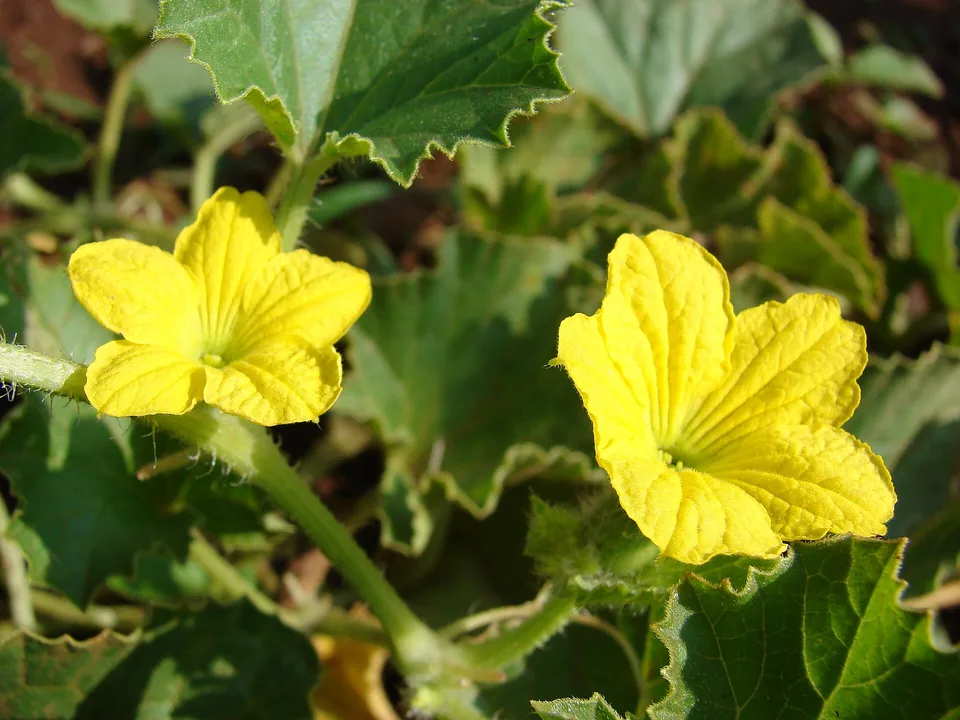
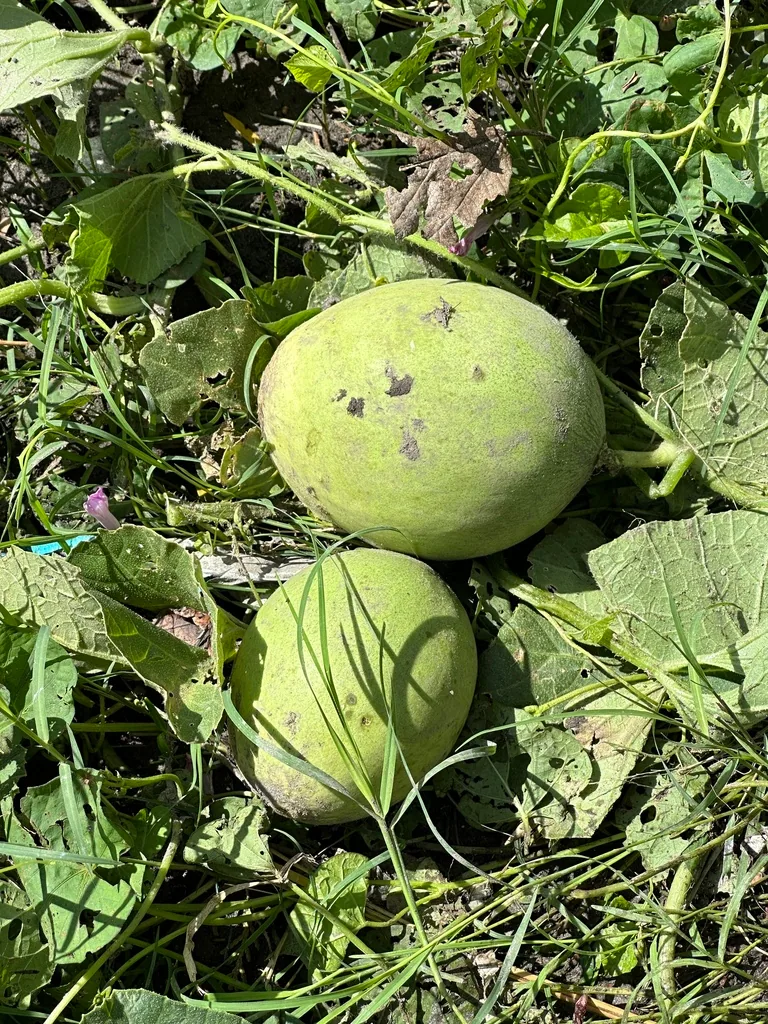

How to Grow and Care for Cantaloupe
Cucumis melo
Written by Emilio Marruso · last checked
Toxic to: People · Why
At a glance
Cantaloupe turns a sunny summer into a delicate, fresh dessert. Sow it outdoors after the last frost, give it full sun and deep watering at the base, and the melons ripen 35–45 days after the flowers are pollinated. You'll know it's time when the skin is netted and yellow and the fruit comes away easily from the stem.
- Sun
Full sun: 6 or more hours a day
What the sources say (1)
Light: Full sun (6 or more hours of direct sunlight a day)
Full sun (6 or more hours of direct sunlight a day)
— Cucumis melo (Armenian Cucumber, Cantaloupe, Casaba Melon, Honeydew, Honeydew Melon, Melon, Muskmelon, Musk Melon, Rockmelon, Spanspek, Sweet Melon) | North Carolina Extension Gardener Plant Toolbox [1] - Water
Water 6 in deep when the soil is dry, at the base; water less as the fruit ripens
What the sources say (3)
Watering: Water when the soil is dry; water at the base of the plants, keeping the leaves dry; water to a depth of 6 inches [15 cm]
As the plants grow, water when the soil is dry. Always water at the base of the plants, keeping the leaves dry to minimize disease. Water to a depth of 6 inches to promote good root growth.
— Cantaloupe in the Garden and the Kitchen [8] Watering notes: Keep the soil slightly moist when starting seeds, as overwatering may cause seeds to rot; reduce watering as the fruit approaches maturity to improve flavor and prevent splitting
When starting seeds, keep the soil slightly moist. Overwatering may cause the seeds to rot.
— Cantaloupe in the Garden and the Kitchen [8] As the fruit approaches maturity, reduce watering to improve the flavor and keep the fruit from splitting.
— Cantaloupe in the Garden and the Kitchen [8] - Cold
Survives winters down to −50 °F (−45.6 °C)
Very hardy · USDA 2a · RHS H7 · Z2
What the sources say (2)
Hardiness, coldest zone: 2a [winter low −45.6 to −42.8 °C (−50 to −45 °F)]
2a, 2b, 3a, 3b, 4a, 4b, 5a, 5b, 6a, 6b, 7a, 7b, 8a, 8b, 9a, 9b, 10a, 10b, 11a, 11b
— Cucumis melo (Armenian Cucumber, Cantaloupe, Casaba Melon, Honeydew, Honeydew Melon, Melon, Muskmelon, Musk Melon, Rockmelon, Spanspek, Sweet Melon) | North Carolina Extension Gardener Plant Toolbox [1] Hardiness, warmest zone: 11b [winter low 7.2 to 10 °C (45 to 50 °F)]
2a, 2b, 3a, 3b, 4a, 4b, 5a, 5b, 6a, 6b, 7a, 7b, 8a, 8b, 9a, 9b, 10a, 10b, 11a, 11b
— Cucumis melo (Armenian Cucumber, Cantaloupe, Casaba Melon, Honeydew, Honeydew Melon, Melon, Muskmelon, Musk Melon, Rockmelon, Spanspek, Sweet Melon) | North Carolina Extension Gardener Plant Toolbox [1] - Spacing
12–18 in between plants, 4–6 ft between rows
What the sources say (4)
Spacing: 30.5-45.7 cm (12 to 18 inches) apart, in rows 121.9-182.9 cm (4 to 6 feet) apart
Alabama (Armenian cucumber and carosello): Spacing | 12 to 18 inches apart, in rows 4 to 6 feet apart
— Growing Cucumis melo in Alabama - Alabama Cooperative Extension System [7] Noir des Carmes (fonte: University of New Hampshire Extension): Direct sow 3 seeds 1/4-1/2” deep in mounds 12-18" apart, keeping rows 5-6' apart.
— How to grow Noir des Carmes Melon (Cucumis melo) | Extension [2] According to Penn State Extension (cantaloupe): Seeds may be sown 3 inches apart in groups of four to six and with the groups spaced 4 to 6 feet apart.
— Cantaloupe in the Garden and the Kitchen [8] Spacing | 12 to 18 inches apart, in rows 4 to 6 feet apart
— Growing Cucumis melo in Alabama - Alabama Cooperative Extension System [7] - Planting
Plant out in late spring to early summer, once nights stay above 50 °F (10 °C)
What the sources say (4)
Planting: Late spring to early summer (after last frost); transplants outdoors when nighttime low temperatures are above 50°F [10 °C]
Alabama: Planting Time | Late spring to early summer (after last frost)
— Growing Cucumis melo in Alabama - Alabama Cooperative Extension System [7] According to Penn State Extension: Plant them outdoors when the nighttime low temperatures are above 50°F, and they have two to three mature true leaves and an established root system.
— Cantaloupe in the Garden and the Kitchen [8] Planting Time | Late spring to early summer (after last frost)
— Growing Cucumis melo in Alabama - Alabama Cooperative Extension System [7] Plant them outdoors when the nighttime low temperatures are above 50°F, and they have two to three mature true leaves and an established root system.
— Cantaloupe in the Garden and the Kitchen [8] - Harvest
35–45 days after pollination, when the skin is netted, yellow and slips off the stem
What the sources say (6)
Harvest: Typically 35 to 45 days after the flower has been pollinated
According to Penn State Extension (cantaloupe): cantaloupes are typically ready to harvest 35 to 45 days after the flower has been pollinated.
— Cantaloupe in the Garden and the Kitchen [8] According to Virginia Tech Extension: Forty days after flowering, the melon fruit is considered fully mature.
— Basic melon (Cucumis melo L.) physiology and morphology | VCE Publications | Virginia Tech [5] Noir des Carmes (fonte: University of New Hampshire Extension): 75-90 days to harvest.
— How to grow Noir des Carmes Melon (Cucumis melo) | Extension [2] Alabama (Armenian cucumber and carosello): Harvesting | Harvest immature fruits when 10 to 15 inches long
— Growing Cucumis melo in Alabama - Alabama Cooperative Extension System [7] cantaloupes are typically ready to harvest 35 to 45 days after the flower has been pollinated.
— Cantaloupe in the Garden and the Kitchen [8] How to harvest: Harvest when the fruit surface is netted and has turned from green to yellow; at full slip the melon comes away easily from the stem. Check and harvest daily near full ripeness.
Look for the outside surface of the fruit to be netted and to turn from green to yellow. They are at peak flavor when they reach what is called full slip. At this stage, the melon slips or comes away easily from the stem.
— Cantaloupe in the Garden and the Kitchen [8] - Pollination
Remove row covers once it starts to bloom so the flowers can be pollinated
- Pests
Cucumber beetles spread bacterial wilt, which kills it; aphids too
What the sources say (2)
Pests: spotted cucumber beetles, striped cucumber beetles, aphids
The most common insect pests that affect cantaloupe are spotted and striped cucumber beetles and aphids.
— Cantaloupe in the Garden and the Kitchen [8] Diseases: bacterial wilt
These beetles can infect plants with the bacteria ( Erwinia tracheiphila ) responsible for bacterial wilt, a disease fatal for cantaloupe.
— Cantaloupe in the Garden and the Kitchen [8] - Size
6–9 ft tall and 1–3 ft wide
What the sources say (3)
Mature height: 183-274 cm (6 to 9 feet)
Height: 6 ft. 0 in. - 9 ft. 0 in.
— Cucumis melo (Armenian Cucumber, Cantaloupe, Casaba Melon, Honeydew, Honeydew Melon, Melon, Muskmelon, Musk Melon, Rockmelon, Spanspek, Sweet Melon) | North Carolina Extension Gardener Plant Toolbox [1] They can grow from 6 to 9 feet in length, so growing them vertically can help save space in the garden.
— Cantaloupe in the Garden and the Kitchen [8] Mature width: 30-91 cm (1 to 3 feet)
Width: 1 ft. 0 in. - 3 ft. 0 in.
— Cucumis melo (Armenian Cucumber, Cantaloupe, Casaba Melon, Honeydew, Honeydew Melon, Melon, Muskmelon, Musk Melon, Rockmelon, Spanspek, Sweet Melon) | North Carolina Extension Gardener Plant Toolbox [1] - Propagation
Grows from seed
What the sources say (1)
Propagation: Seed
Propagate by seed. Plant seed outdoors after the last frost or start seed indoors four to six weeks prior to the average last frost date.
— Cucumis melo (Armenian Cucumber, Cantaloupe, Casaba Melon, Honeydew, Honeydew Melon, Melon, Muskmelon, Musk Melon, Rockmelon, Spanspek, Sweet Melon) | North Carolina Extension Gardener Plant Toolbox [1] - Sowing
Sow outdoors after the last frost, or indoors 4–6 weeks before; keep seeds slightly moist
What the sources say (3)
Sowing: Outdoors after the last frost, or indoors four to six weeks before the average last frost date
Plant seed outdoors after the last frost or start seed indoors four to six weeks prior to the average last frost date.
— Cucumis melo (Armenian Cucumber, Cantaloupe, Casaba Melon, Honeydew, Honeydew Melon, Melon, Muskmelon, Musk Melon, Rockmelon, Spanspek, Sweet Melon) | North Carolina Extension Gardener Plant Toolbox [1] Watering notes: Keep the soil slightly moist when starting seeds, as overwatering may cause seeds to rot; reduce watering as the fruit approaches maturity to improve flavor and prevent splitting
When starting seeds, keep the soil slightly moist. Overwatering may cause the seeds to rot.
— Cantaloupe in the Garden and the Kitchen [8] As the fruit approaches maturity, reduce watering to improve the flavor and keep the fruit from splitting.
— Cantaloupe in the Garden and the Kitchen [8] - Safety
Safe for cats, dogs and horses; people should avoid eating the seeds
Overview
Cucumis melo is a warm-season annual climbing vine that needs full sun and well-drained soil. [1] It is propagated by seed, sown outdoors after the last frost or started indoors four to six weeks before it. [1] Plants in the cucumber family are susceptible to cucumber beetles, wilt and several mildew and blight diseases. [1]
Cantaloupe care
Measurements in square brackets are our conversion into the other unit system; the quoted text is unchanged.
How to water Cantaloupe
Watering
Water when the soil is dry; water at the base of the plants, keeping the leaves dry; water to a depth of 6 inches [15 cm]
What the sources say (1)
As the plants grow, water when the soil is dry. Always water at the base of the plants, keeping the leaves dry to minimize disease. Water to a depth of 6 inches to promote good root growth.Watering notes
Keep the soil slightly moist when starting seeds, as overwatering may cause seeds to rot; reduce watering as the fruit approaches maturity to improve flavor and prevent splitting
What the sources say (2)
When starting seeds, keep the soil slightly moist. Overwatering may cause the seeds to rot.As the fruit approaches maturity, reduce watering to improve the flavor and keep the fruit from splitting.How much light Cantaloupe needs
Full sun (6 or more hours of direct sunlight a day)
What the sources say (1)
Full sun (6 or more hours of direct sunlight a day)How much cold Cantaloupe can take
Hardiness, coldest zone
2a [winter low −45.6 to −42.8 °C (−50 to −45 °F)]
What the sources say (1)
2a, 2b, 3a, 3b, 4a, 4b, 5a, 5b, 6a, 6b, 7a, 7b, 8a, 8b, 9a, 9b, 10a, 10b, 11a, 11bHardiness, warmest zone
11b [winter low 7.2 to 10 °C (45 to 50 °F)]
What the sources say (1)
2a, 2b, 3a, 3b, 4a, 4b, 5a, 5b, 6a, 6b, 7a, 7b, 8a, 8b, 9a, 9b, 10a, 10b, 11a, 11bBest soil for Cantaloupe
Soil pH, minimum
Under review: our second check questioned this value.
Soil pH, maximum
Under review: our second check questioned this value.
Where to grow Cantaloupe
30.5-45.7 cm (12 to 18 inches) apart, in rows 121.9-182.9 cm (4 to 6 feet) apart
What each source says
Alabama (Armenian cucumber and carosello): 30.5-45.7 cm (12 to 18 inches) apart, in rows 121.9-182.9 cm (4 to 6 feet) apart
Noir des Carmes (fonte: University of New Hampshire Extension): Mounds 30.5-45.7 cm (12-18 in) apart, rows 152.4-182.9 cm (5-6 ft) apart
According to Penn State Extension (cantaloupe): Seeds 7.6 cm (3 in) apart in groups of four to six, groups 121.9-182.9 cm (4 to 6 feet) apart
What the sources say (4)
Alabama (Armenian cucumber and carosello): Spacing | 12 to 18 inches apart, in rows 4 to 6 feet apartNoir des Carmes (fonte: University of New Hampshire Extension): Direct sow 3 seeds 1/4-1/2” deep in mounds 12-18" apart, keeping rows 5-6' apart.According to Penn State Extension (cantaloupe): Seeds may be sown 3 inches apart in groups of four to six and with the groups spaced 4 to 6 feet apart.Spacing | 12 to 18 inches apart, in rows 4 to 6 feet apartHow to propagate Cantaloupe
Seed
What the sources say (1)
Propagate by seed. Plant seed outdoors after the last frost or start seed indoors four to six weeks prior to the average last frost date.How to grow Cantaloupe
The plant
Life cycle
annual
What the sources say (2)
Cantaloupe is a warm season, annual climber in the cucumber family (Cucurbitaceae).Melons ( Cucumis melo L.) are an important annual diploid plant belonging to the Cucurbitaceae family.Family
Cucurbitaceae
What the sources say (2)
Cantaloupe is a warm season, annual climber in the cucumber family (Cucurbitaceae).Melons ( Cucumis melo L.) are an important annual diploid plant belonging to the Cucurbitaceae family.Mature height
183-274 cm (6 to 9 feet)
What the sources say (2)
Height: 6 ft. 0 in. - 9 ft. 0 in.They can grow from 6 to 9 feet in length, so growing them vertically can help save space in the garden.Mature width
30-91 cm (1 to 3 feet)
What the sources say (1)
Width: 1 ft. 0 in. - 3 ft. 0 in.Sowing and growth
Days to germination
The sources give different values depending on region, zone or growing conditions.
What each source says
cultivar 'Noir des Carmes': 4-10 days
What the sources say (1)
cultivar 'Noir des Carmes': Germination 4-10 daysSowing depth
The sources give different values depending on region, zone or growing conditions.
What each source says
cultivar 'Noir des Carmes': 0.6-1.3 cm (1/4-1/2 inch)
What the sources say (1)
cultivar 'Noir des Carmes': Direct sow 3 seeds 1/4-1/2” deep in mounds 12-18" apart, keeping rows 5-6' apart.Row spacing
The sources give different values depending on region, zone or growing conditions.
What each source says
cultivar 'Noir des Carmes': 152-183 cm (5-6 feet)
What the sources say (1)
cultivar 'Noir des Carmes': Direct sow 3 seeds 1/4-1/2” deep in mounds 12-18" apart, keeping rows 5-6' apart.Days to maturity
35-45 days after the flower is pollinated
What each source says
cultivar 'Noir des Carmes': 75-90 days to harvest
What the sources say (2)
cultivar 'Noir des Carmes': 75-90 days to harvest. Mid-season, the fruit is nearly black, lobed, and glossy.Depending on the variety and the summer temperature, cantaloupes are typically ready to harvest 35 to 45 days after the flower has been pollinated.Harvest and storage
How to harvest
Harvest when the fruit surface is netted and has turned from green to yellow; at full slip the melon comes away easily from the stem. Check and harvest daily near full ripeness.
What the sources say (1)
Look for the outside surface of the fruit to be netted and to turn from green to yellow. They are at peak flavor when they reach what is called full slip. At this stage, the melon slips or comes away easily from the stem.Storage
Refrigerate uncut melons soon after harvest, preferably in a crisper drawer with higher humidity; they keep 5 to 15 days.
What the sources say (1)
it is better to refrigerate cantaloupes immediately after harvest to maintain top quality, preferably in a crisper drawer with higher humidity. There, they will keep for 5 to 15 days, depending on variety and growing conditions.Pests and diseases
Pests
spotted cucumber beetles, striped cucumber beetles, aphids
What the sources say (1)
The most common insect pests that affect cantaloupe are spotted and striped cucumber beetles and aphids.Diseases
bacterial wilt
What the sources say (1)
These beetles can infect plants with the bacteria ( Erwinia tracheiphila ) responsible for bacterial wilt, a disease fatal for cantaloupe.Cantaloupe pests and problems
Cucumber beetles and bacterial wilt
Symptom: Cucumber beetles can infect plants with the bacteria responsible for bacterial wilt, a disease fatal for cantaloupe.
What to do: Once infected there is no treatment; monitor the garden and use row covers, removing them when plants begin to bloom to allow pollination.
What the sources say (2)
These beetles can infect plants with the bacteria ( Erwinia tracheiphila ) responsible for bacterial wilt, a disease fatal for cantaloupe.
— Cantaloupe in the Garden and the Kitchen [8] Row covers or similar barriers can keep beetles from accessing your plants, but they must be removed when the plants begin to bloom to allow for pollination.
— Cantaloupe in the Garden and the Kitchen [8] Aphids
Symptom: Tiny soft-bodied insects feed on the underside of leaves and leave a shiny, sticky substance.
What to do: Control by spraying plants with insecticidal soap.
What the sources say (2)
Aphids are tiny green or black, soft-bodied insects that feed on the underside of leaves and leave behind a shiny, sticky substance known as honeydew.
— Cantaloupe in the Garden and the Kitchen [8] They can be controlled by spraying plants with insecticidal soap.
— Cantaloupe in the Garden and the Kitchen [8]
Remedies
Each remedy shows what official sources say about it; traditional remedies without an official source are marked as such. Harmful ones are listed so you know to avoid them.
Treating the plant
cucumber beetles
handpicking Works
How: Handpick the beetles off the plants.
Handpicking to remove the beetles is time-consuming but effective.
— hgic.clemson.edu [9] What the evidence says Handpicking to remove the beetles is time-consuming but effective.
— hgic.clemson.edu [9] fabric row covers Works
Remember to remove the covers during flowering to ensure pollination.
— hgic.clemson.edu [9] How: Cover young plants with fabric row covers such as spun-bonded polyester; remove the covers during flowering to ensure pollination.
In a home vegetable garden, control measures include the use of fabric row covers, such as spun-bonded polyester.
— hgic.clemson.edu [9] What the evidence says These covers provide an effective barrier between the insect and young plants.
— hgic.clemson.edu [9]
aphids
soapy water spray then rinse Works
How: Spray leaves with soapy water, then rinse with clear water.
In addition to natural enemies, you can spray leaves with soapy water, then rinse with clear water.
— hgic.clemson.edu [9] What the evidence says In addition to natural enemies, you can spray leaves with soapy water, then rinse with clear water. Spraying with insecticidal soap, planting in aluminum foil-covered beds, and filling yellow pans with water to trap the aphids are also effective control measures.
— hgic.clemson.edu [9] strong water stream Works
How: Use a strong water stream to dislodge insects.
Use insecticidal soaps or strong water stream to dislodge insects.
— extension.usu.edu [10] What the evidence says Use insecticidal soaps or strong water stream to dislodge insects.
— extension.usu.edu [10] aluminum foil covered beds Works
How: Plant in aluminum foil-covered beds.
Spraying with insecticidal soap, planting in aluminum foil-covered beds, and filling yellow pans with water to trap the aphids are also effective control measures.
— hgic.clemson.edu [9] What the evidence says Spraying with insecticidal soap, planting in aluminum foil-covered beds, and filling yellow pans with water to trap the aphids are also effective control measures.
— hgic.clemson.edu [9] yellow pans filled with water Works
How: Fill yellow pans with water to trap the aphids.
Spraying with insecticidal soap, planting in aluminum foil-covered beds, and filling yellow pans with water to trap the aphids are also effective control measures.
— hgic.clemson.edu [9] What the evidence says Spraying with insecticidal soap, planting in aluminum foil-covered beds, and filling yellow pans with water to trap the aphids are also effective control measures.
— hgic.clemson.edu [9] removing infested leaves and encouraging ladybugs Not verified
Traditional remedy, not verified by an official source.
How: Remove heavily infested leaves and encourage natural predators like ladybugs.
squash bugs
shingle or cardboard trap Official source, not independently tested
How: Place a small, square piece of old shingle or heavy cardboard under each plant; lift the trap and smash the bugs that congregate under it.
Place a small, square piece of old shingle or heavy cardboard under each squash plant. As bugs congregate under it for protection, simply lift the trap and smash them with your hoe (or shoe).
— hgic.clemson.edu [9] removing eggs and nymphs by hand Official source, not independently tested
How: Remove eggs and nymphs by hand.
Other control methods include early planting and removing eggs and nymphs by hand.
— hgic.clemson.edu [9]
beetles and pill bugs
elevating fruit on cradles or a trellis Not verified
Traditional remedy, not verified by an official source.
How: Use melon support cradles to elevate the fruit or grow cantaloupes vertically on a trellis.
insect pests
dish soap spray Partly works
Be sure to water your plants after you spray because it can harm the cantaloupe leaves if it’s too concentrated.
— bugwiz.com [11] Always test a small portion on a single leaf first.
— bugwiz.com [11] For example, spraying home remedies that contain dish detergent on plants on a sunny day can injure the plant, essentially burning it.
— extension.psu.edu [12] How: Mix 1-2 tablespoons of dish soap per quart of water in a sprayer and spray the plant; water the plants after spraying; apply in the morning or after sunset.
All you need is 1-2 tablespoons per quart of water. Mix them. Then pour the solution into a sprayer and spray your muskmelon.
— bugwiz.com [11] What the evidence says For example, spraying home remedies that contain dish detergent on plants on a sunny day can injure the plant, essentially burning it.
— extension.psu.edu [12] diatomaceous earth ring Not verified
Traditional remedy, not verified by an official source.
How: Sprinkle food-grade diatomaceous earth in a ring around the stem so bugs must crawl across it; reapply after rain, water or wind.
diluted essential oil spray Not verified
Traditional remedy, not verified by an official source.
Be careful with using these oils because they can harm and burn the plant if it’s too concentrated.
— bugwiz.com [11] Some people and pets are sensitive to these oils, so read the labels and do some research before you use any.
— bugwiz.com [11] How: Add a few drops of essential oil to a quart of water and spray the plant.
Is Cantaloupe poisonous?
Reported by the source, quoted verbatim. This is not medical or veterinary advice: if a person or an animal may have eaten this plant, contact a poison control centre or a veterinarian.
Animals
#non-toxic for cats #non-toxic for horses #non-toxic for dogs #warm season vegetable
[1]The source flags the risk for this animal but does not explain why.
People
Calendar
Sowing
Outdoors after the last frost, or indoors four to six weeks before the average last frost date
What the sources say (1)
Plant seed outdoors after the last frost or start seed indoors four to six weeks prior to the average last frost date.Planting
Late spring to early summer (after last frost); transplants outdoors when nighttime low temperatures are above 50°F [10 °C]
What each source says
Alabama: Late spring to early summer (after last frost)
According to Penn State Extension: Transplants outdoors when nighttime lows are above 50°F [10 °C] and plants have two to three mature true leaves
What the sources say (4)
Alabama: Planting Time | Late spring to early summer (after last frost)According to Penn State Extension: Plant them outdoors when the nighttime low temperatures are above 50°F, and they have two to three mature true leaves and an established root system.Planting Time | Late spring to early summer (after last frost)Plant them outdoors when the nighttime low temperatures are above 50°F, and they have two to three mature true leaves and an established root system.Harvest
Typically 35 to 45 days after the flower has been pollinated
What each source says
According to Penn State Extension (cantaloupe): 35 to 45 days after the flower has been pollinated
According to Virginia Tech Extension: Fully mature forty days after flowering
Noir des Carmes (fonte: University of New Hampshire Extension): 75-90 days to harvest
Alabama (Armenian cucumber and carosello): Immature fruits when 25.4-38.1 cm (10 to 15 inches) long
What the sources say (5)
According to Penn State Extension (cantaloupe): cantaloupes are typically ready to harvest 35 to 45 days after the flower has been pollinated.According to Virginia Tech Extension: Forty days after flowering, the melon fruit is considered fully mature.Noir des Carmes (fonte: University of New Hampshire Extension): 75-90 days to harvest.Alabama (Armenian cucumber and carosello): Harvesting | Harvest immature fruits when 10 to 15 inches longcantaloupes are typically ready to harvest 35 to 45 days after the flower has been pollinated.Months as given by the sources, which are mostly from the United States (northern hemisphere). In the southern hemisphere they shift by about six months.
Relative to frost
Less precise estimate: there is no weather station within 300 km.
Find frost dates by ZIP code or city
Sow indoors: 4 to 6 weeks before the last frost
Sow seeds four to six weeks prior to your last average frost date in a loose starting mix.
— Cantaloupe in the Garden and the Kitchen [8] Sow outdoors: around the last frost
Cantaloupe seeds can be directly sown in the garden once the soil has warmed and the danger of frost has passed.
— Cantaloupe in the Garden and the Kitchen [8]
Count from the average frost dates where you live.
Edibility
Reported by the source, quoted verbatim. Do not eat a plant on the basis of this page alone: identification mistakes can be dangerous.
Indicative values
Values from a secondary source, not checked word for word like the rest of this page. Use them as a starting point.
- Hours of sun
- 8-10 hoursIndicative value, adapt it to your climate · Secondary source · Data for the variety Cucumis melo var. flexuosus
- Care level
- MediumIndicative value, adapt it to your climate · Secondary source · Data for the variety Cucumis melo var. flexuosus
- Growth rate
- HighIndicative value, adapt it to your climate · Secondary source · Data for the variety Cucumis melo var. flexuosus
Similar plants
- Arabian Cucumber Cucumis dipsaceus
- Garden cucumber Cucumis sativus
- Maroon Cucumber Cucumis anguria
- Bitter Melon Momordica charantia
- Bottle gourd Lagenaria siceraria
- Creeping Cucumber Melothria pendula
- Field pumpkin Cucurbita pepo
- Figleaf Gourd Cucurbita ficifolia
Sources
Every value above is quoted from these documents. Links lead to the original publisher.
- Cucumis melo (Armenian Cucumber, Cantaloupe, Casaba Melon, Honeydew, Honeydew Melon, Melon, Muskmelon, Musk Melon, Rockmelon, Spanspek, Sweet Melon) | North Carolina Extension Gardener Plant Toolbox · plants.ces.ncsu.edu, consulted
- How to grow Noir des Carmes Melon (Cucumis melo) | Extension · extension.unh.edu, consulted
- Sweet Melon - Cucumis melo | North Carolina Extension Gardener Plant Toolbox · plants.ces.ncsu.edu, consulted
- Melon - Cucumis melo | North Carolina Extension Gardener Plant Toolbox · plants.ces.ncsu.edu, consulted
- Basic melon (Cucumis melo L.) physiology and morphology | VCE Publications | Virginia Tech · pubs.ext.vt.edu, consulted
- Spanspek - Cucumis melo | North Carolina Extension Gardener Plant Toolbox · plants.ces.ncsu.edu, consulted
- Growing Cucumis melo in Alabama - Alabama Cooperative Extension System · aces.edu, consulted
- Cantaloupe in the Garden and the Kitchen · extension.psu.edu, consulted
- hgic.clemson.edu · hgic.clemson.edu
- extension.usu.edu · extension.usu.edu
- bugwiz.com · bugwiz.com
- extension.psu.edu · extension.psu.edu
Written by Emilio Marruso · last checked