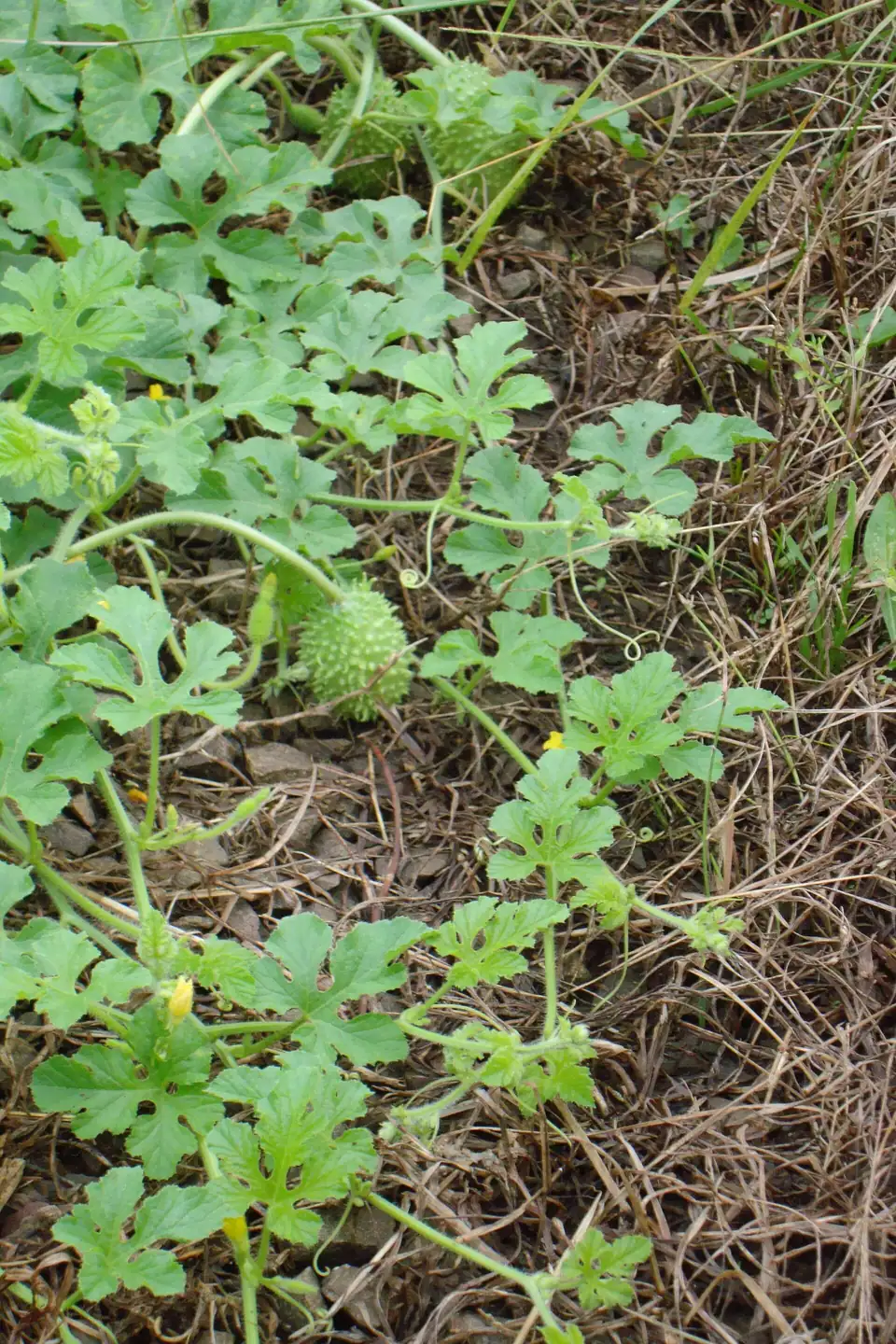


How to Grow and Care for Maroon Cucumber
Cucumis anguria
Written by Emilio Marruso · last checked
Toxic to: People · Why
At a glance
West Indian gherkins have a pleasant cucumber flavor with no bitterness at all, perfect in salads or soaked in vinegar for pickles. Give them full sun and steady moisture, sow after the last frost, and pick the fruits green at the size you like. The more often you harvest, the more fruit the vines will make for you.
- Sun
Full sun
What the sources say (1)
Light: Full sun
The plant grows best in full sun and moist, rich, well-drained soil.
— Cucumis anguria (Bur Gourd, Bur Gourds, Gherkin, Goareberry Gourd, Goareberry Gourds, Gooseberry Gourd, Gooseberry Gourds, Maroon Cucumber, Maroon Cucumbers, West Indian Gherkin, West Indian Gherkins, West Indian Gourd, West Indian Gourds) | North Carolina Extension Gardener Plant Toolbox [1] - Water
Needs lots of water: keep the soil moist but well drained, and keep the leaves dry
What the sources say (2)
Watering: High water needs; consistent moisture with good drainage
It has high water needs and requires consistent moisture for proper growth, but good drainage is also important.
— Cucumis anguria (Bur Gourd, Bur Gourds, Gherkin, Goareberry Gourd, Goareberry Gourds, Gooseberry Gourd, Gooseberry Gourds, Maroon Cucumber, Maroon Cucumbers, West Indian Gherkin, West Indian Gherkins, West Indian Gourd, West Indian Gourds) | North Carolina Extension Gardener Plant Toolbox [1] Watering notes: Keep the leaves dry while watering to prevent fungal diseases; vertically grown plants lose moisture more easily
Keep the leaves dry while watering to prevent fungal diseases. Note that vertically grown cucumber plants lose moisture more easily.
— Cucumis anguria (Bur Gourd, Bur Gourds, Gherkin, Goareberry Gourd, Goareberry Gourds, Gooseberry Gourd, Gooseberry Gourds, Maroon Cucumber, Maroon Cucumbers, West Indian Gherkin, West Indian Gherkins, West Indian Gourd, West Indian Gourds) | North Carolina Extension Gardener Plant Toolbox [1] - Cold
Survives winters down to 20 °F (−6.7 °C)
Hardy in average winters · USDA 9a · RHS H4 · Z9
What the sources say (2)
Hardiness, coldest zone: 9a [winter low −6.7 to −3.9 °C (20 to 25 °F)]
USDA Plant Hardiness Zone: 9a, 9b, 10a, 10b, 11a, 11b
— Cucumis anguria (Bur Gourd, Bur Gourds, Gherkin, Goareberry Gourd, Goareberry Gourds, Gooseberry Gourd, Gooseberry Gourds, Maroon Cucumber, Maroon Cucumbers, West Indian Gherkin, West Indian Gherkins, West Indian Gourd, West Indian Gourds) | North Carolina Extension Gardener Plant Toolbox [1] Hardiness, warmest zone: 11b [winter low 7.2 to 10 °C (45 to 50 °F)]
USDA Plant Hardiness Zone: 9a, 9b, 10a, 10b, 11a, 11b
— Cucumis anguria (Bur Gourd, Bur Gourds, Gherkin, Goareberry Gourd, Goareberry Gourds, Gooseberry Gourd, Gooseberry Gourds, Maroon Cucumber, Maroon Cucumbers, West Indian Gherkin, West Indian Gherkins, West Indian Gourd, West Indian Gourds) | North Carolina Extension Gardener Plant Toolbox [1] - Harvest
Cut fruits while green, at the size you like; yellow ones are too tough. They keep a week in the fridge
What the sources say (5)
Harvest: When green and at preferred size; harvest often to spur further fruit production
Cucumbers can be harvested green when they reach their preferred size; however, cucumbers that have turned yellow are over ripe and will be tough and difficult to eat.
— Cucumis anguria (Bur Gourd, Bur Gourds, Gherkin, Goareberry Gourd, Goareberry Gourds, Gooseberry Gourd, Gooseberry Gourds, Maroon Cucumber, Maroon Cucumbers, West Indian Gherkin, West Indian Gherkins, West Indian Gourd, West Indian Gourds) | North Carolina Extension Gardener Plant Toolbox [1] To pick, cut the stem attaching the fruit to the vine with a sharp, clean knife or clippers. Harvest often to spur further fruit production.
— Cucumis anguria (Bur Gourd, Bur Gourds, Gherkin, Goareberry Gourd, Goareberry Gourds, Gooseberry Gourd, Gooseberry Gourds, Maroon Cucumber, Maroon Cucumbers, West Indian Gherkin, West Indian Gherkins, West Indian Gourd, West Indian Gourds) | North Carolina Extension Gardener Plant Toolbox [1] How to harvest: Cut the stem attaching the fruit to the vine with a sharp, clean knife or clippers; harvest often to spur further fruit production. Pick green when they reach the preferred size: yellow fruits are over ripe, tough and difficult to eat.
To pick, cut the stem attaching the fruit to the vine with a sharp, clean knife or clippers. Harvest often to spur further fruit production.
— Cucumis anguria (Bur Gourd, Bur Gourds, Gherkin, Goareberry Gourd, Goareberry Gourds, Gooseberry Gourd, Gooseberry Gourds, Maroon Cucumber, Maroon Cucumbers, West Indian Gherkin, West Indian Gherkins, West Indian Gourd, West Indian Gourds) | North Carolina Extension Gardener Plant Toolbox [1] Cucumbers can be harvested green when they reach their preferred size; however, cucumbers that have turned yellow are over ripe and will be tough and difficult to eat.
— Cucumis anguria (Bur Gourd, Bur Gourds, Gherkin, Goareberry Gourd, Goareberry Gourds, Gooseberry Gourd, Gooseberry Gourds, Maroon Cucumber, Maroon Cucumbers, West Indian Gherkin, West Indian Gherkins, West Indian Gourd, West Indian Gourds) | North Carolina Extension Gardener Plant Toolbox [1] Storage: Fresh fruits keep in the fridge for about a week
Fresh cucumbers last in the fridge for about a week.
— Cucumis anguria (Bur Gourd, Bur Gourds, Gherkin, Goareberry Gourd, Goareberry Gourds, Gooseberry Gourd, Gooseberry Gourds, Maroon Cucumber, Maroon Cucumbers, West Indian Gherkin, West Indian Gherkins, West Indian Gourd, West Indian Gourds) | North Carolina Extension Gardener Plant Toolbox [1] - Pollination
Poor pollination gives misshapen fruit
- Pests
Watch for cucumber beetles and aphids
What the sources say (1)
Pests: cucumber beetles, aphids
There are pest and disease problems, such as cucumber beetles and aphids, that can generally be managed through good cultural practices.
— Cucumis anguria (Bur Gourd, Bur Gourds, Gherkin, Goareberry Gourd, Goareberry Gourds, Gooseberry Gourd, Gooseberry Gourds, Maroon Cucumber, Maroon Cucumbers, West Indian Gherkin, West Indian Gherkins, West Indian Gourd, West Indian Gourds) | North Carolina Extension Gardener Plant Toolbox [1] - Propagation
Grows from seed
What the sources say (1)
Propagation: Seed
Recommended Propagation Strategy: Seed
— Cucumis anguria (Bur Gourd, Bur Gourds, Gherkin, Goareberry Gourd, Goareberry Gourds, Gooseberry Gourd, Gooseberry Gourds, Maroon Cucumber, Maroon Cucumbers, West Indian Gherkin, West Indian Gherkins, West Indian Gourd, West Indian Gourds) | North Carolina Extension Gardener Plant Toolbox [1] - Sowing
Sow outdoors after the last frost, or indoors 3–6 weeks before transplanting
What the sources say (1)
Sowing: Directly sown after the last frost, or started indoors three to six weeks before transplanting
Seeds can be directly sown after the last frost or started indoors three to six weeks before transplanting, or less than four weeks before the last frost date.
— Cucumis anguria (Bur Gourd, Bur Gourds, Gherkin, Goareberry Gourd, Goareberry Gourds, Gooseberry Gourd, Gooseberry Gourds, Maroon Cucumber, Maroon Cucumbers, West Indian Gherkin, West Indian Gherkins, West Indian Gourd, West Indian Gourds) | North Carolina Extension Gardener Plant Toolbox [1] - Containers
Grows in containers too
What the sources say (1)
In containers: Yes
It can also be grown in a container of a minimum size of 1 gallon and 8 inches depth.
— Cucumis anguria (Bur Gourd, Bur Gourds, Gherkin, Goareberry Gourd, Goareberry Gourds, Gooseberry Gourd, Gooseberry Gourds, Maroon Cucumber, Maroon Cucumbers, West Indian Gherkin, West Indian Gherkins, West Indian Gourd, West Indian Gourds) | North Carolina Extension Gardener Plant Toolbox [1] - Safety
Safe for cats, dogs and horses; sprouting seeds contain a toxic substance
Overview
Maroon cucumber is a frost-sensitive, climbing annual vine grown for its edible fruit. [1] It needs full sun, consistent moisture and well-drained soil. [1] The fruits have a cucumber flavor and are eaten in salads or pickled. [1]
This record is incomplete: the sources we read do not cover every field yet.
Not yet covered by our sources: Spacing
Maroon Cucumber care
How to water Maroon Cucumber
Watering
High water needs; consistent moisture with good drainage
What the sources say (1)
It has high water needs and requires consistent moisture for proper growth, but good drainage is also important.Watering notes
Keep the leaves dry while watering to prevent fungal diseases; vertically grown plants lose moisture more easily
What the sources say (1)
Keep the leaves dry while watering to prevent fungal diseases. Note that vertically grown cucumber plants lose moisture more easily.How much light Maroon Cucumber needs
Full sun
What the sources say (1)
The plant grows best in full sun and moist, rich, well-drained soil.How much cold Maroon Cucumber can take
Hardiness, coldest zone
9a [winter low −6.7 to −3.9 °C (20 to 25 °F)]
What the sources say (1)
USDA Plant Hardiness Zone:
9a, 9b, 10a, 10b, 11a, 11bHardiness, warmest zone
11b [winter low 7.2 to 10 °C (45 to 50 °F)]
What the sources say (1)
USDA Plant Hardiness Zone:
9a, 9b, 10a, 10b, 11a, 11bWhere to grow Maroon Cucumber
In containers
Yes
What the sources say (1)
It can also be grown in a container of a minimum size of 1 gallon and 8 inches depth.Spacing
Not stated in the sources we read.
How to propagate Maroon Cucumber
Seed
What the sources say (1)
Recommended Propagation Strategy: SeedHow to grow Maroon Cucumber
The plant
Life cycle
annual
What the sources say (1)
Life Cycle: Annual Recommended Propagation Strategy: SeedFamily
Cucurbitaceae
What the sources say (1)
Genus: Cucumis Species: anguria Family: CucurbitaceaeHarvest and storage
How to harvest
Cut the stem attaching the fruit to the vine with a sharp, clean knife or clippers; harvest often to spur further fruit production. Pick green when they reach the preferred size: yellow fruits are over ripe, tough and difficult to eat.
What the sources say (2)
To pick, cut the stem attaching the fruit to the vine with a sharp, clean knife or clippers. Harvest often to spur further fruit production.Cucumbers can be harvested green when they reach their preferred size; however, cucumbers that have turned yellow are over ripe and will be tough and difficult to eat.Storage
Fresh fruits keep in the fridge for about a week
What the sources say (1)
Fresh cucumbers last in the fridge for about a week.Pests and diseases
Pests
cucumber beetles, aphids
What the sources say (1)
There are pest and disease problems, such as cucumber beetles and aphids, that can generally be managed through good cultural practices.Maroon Cucumber pests and problems
Cucumber beetles and aphids
Symptom: Insect pest infestation
What to do: Generally managed through good cultural practices
What the sources say (1)
There are pest and disease problems, such as cucumber beetles and aphids, that can generally be managed through good cultural practices.
— Cucumis anguria (Bur Gourd, Bur Gourds, Gherkin, Goareberry Gourd, Goareberry Gourds, Gooseberry Gourd, Gooseberry Gourds, Maroon Cucumber, Maroon Cucumbers, West Indian Gherkin, West Indian Gherkins, West Indian Gourd, West Indian Gourds) | North Carolina Extension Gardener Plant Toolbox [1] Misshapen fruit
Symptom: Misshapen fruit from poor pollination
What to do: Not specified in the documents
What the sources say (1)
Poor pollination may lead to misshapen fruit. To pick, cut the stem attaching the fruit to the vine with a sharp, clean knife or clippers.
— Cucumis anguria (Bur Gourd, Bur Gourds, Gherkin, Goareberry Gourd, Goareberry Gourds, Gooseberry Gourd, Gooseberry Gourds, Maroon Cucumber, Maroon Cucumbers, West Indian Gherkin, West Indian Gherkins, West Indian Gourd, West Indian Gourds) | North Carolina Extension Gardener Plant Toolbox [1]
Remedies
Each remedy shows what official sources say about it; traditional remedies without an official source are marked as such. Harmful ones are listed so you know to avoid them.
Treating the plant
aphids
gentle water spray Works
How: Spray aphids off with a gentle water spray when the infestation is light.
Inspect plants 2-3 x /week and if there is a light infestation with aphids spray them off with a gentle water spray.
— ask.extension.org [2] What the evidence says Home gardeners can wash aphids from plants with a strong stream of water.
— pnwhandbooks.org [3] insecticidal soap spray Works
Dish soap solution may have caused foliage burn that you see.
— ask.extension.org [2] How: If water fails, use insecticidal soap bought at a nursery or hardware store rather than made at home.
If that fails, then use insecticidal soap, but purchase it at a nursery or hardware store rather than make it at home.
— ask.extension.org [2] What the evidence says For example, insecticidal soap is a safe, effective organic insecticide with minimal environmental impact.
— extension.psu.edu [4] neem oil Partly works
How: Consider prophylaxis against aphids with neem oil when the new plants are about 4-6 inches tall.
in height, consider prophylaxis against aphids with neem oil.
— ask.extension.org [2] What the evidence says azadirachtin-See label for rates. Acts slowly. Apply early. Thorough coverage and repeat applications are necessary.
— pnwhandbooks.org [3]
cucumber beetles
hand-picking Works
How: Hand-pick the beetles early in the morning.
Hand-picking is most effective if done early in the morning.
— extension.umaine.edu [5] What the evidence says Hand-picking is most effective if done early in the morning.
— extension.umaine.edu [5] row covers Works
How: Protect plants with row covers such as spunbonded polyester remay or cheesecloth; remove by midsummer so pollinators can reach the flowers.
Barriers of row covers such as spunbonded polyester remay, cheesecloth, etc. (which may have to be suspended over crops with wire hoops to prevent foliar abrasion during windy locations) can protect your plants
— extension.umaine.edu [5] What the evidence says Barriers of row covers such as spunbonded polyester remay, cheesecloth, etc. (which may have to be suspended over crops with wire hoops to prevent foliar abrasion during windy locations) can protect your plants
— extension.umaine.edu [5]
Is Maroon Cucumber poisonous?
Reported by the source, quoted verbatim. This is not medical or veterinary advice: if a person or an animal may have eaten this plant, contact a poison control centre or a veterinarian.
Animals
#non-toxic for cats #non-toxic for horses #non-toxic for dogs
[1]The source flags the risk for this animal but does not explain why.
People
Calendar
Sowing
Directly sown after the last frost, or started indoors three to six weeks before transplanting
What the sources say (1)
Seeds can be directly sown after the last frost or started indoors three to six weeks before transplanting, or less than four weeks before the last frost date.Harvest
When green and at preferred size; harvest often to spur further fruit production
What the sources say (2)
Cucumbers can be harvested green when they reach their preferred size; however, cucumbers that have turned yellow are over ripe and will be tough and difficult to eat.To pick, cut the stem attaching the fruit to the vine with a sharp, clean knife or clippers. Harvest often to spur further fruit production.Months as given by the sources, which are mostly from the United States (northern hemisphere). In the southern hemisphere they shift by about six months.
Relative to frost
Less precise estimate: there is no weather station within 300 km.
Find frost dates by ZIP code or city
Sow outdoors: around the last frost
Seeds can be directly sown after the last frost or started indoors three to six weeks before transplanting
— Cucumis anguria (Bur Gourd, Bur Gourds, Gherkin, Goareberry Gourd, Goareberry Gourds, Gooseberry Gourd, Gooseberry Gourds, Maroon Cucumber, Maroon Cucumbers, West Indian Gherkin, West Indian Gherkins, West Indian Gourd, West Indian Gourds) | North Carolina Extension Gardener Plant Toolbox [1]
Count from the average frost dates where you live.
Edibility
Reported by the source, quoted verbatim. Do not eat a plant on the basis of this page alone: identification mistakes can be dangerous.
Similar plants
- Arabian Cucumber Cucumis dipsaceus
- Cantaloupe Cucumis melo
- Garden cucumber Cucumis sativus
- Bitter Melon Momordica charantia
- Bottle gourd Lagenaria siceraria
- Field pumpkin Cucurbita pepo
- Figleaf Gourd Cucurbita ficifolia
- Loofah Luffa aegyptiaca
Sources
Every value above is quoted from these documents. Links lead to the original publisher.
- Cucumis anguria (Bur Gourd, Bur Gourds, Gherkin, Goareberry Gourd, Goareberry Gourds, Gooseberry Gourd, Gooseberry Gourds, Maroon Cucumber, Maroon Cucumbers, West Indian Gherkin, West Indian Gherkins, West Indian Gourd, West Indian Gourds) | North Carolina Extension Gardener Plant Toolbox · plants.ces.ncsu.edu, consulted
- ask.extension.org · ask.extension.org
- pnwhandbooks.org · pnwhandbooks.org
- extension.psu.edu · extension.psu.edu
- extension.umaine.edu · extension.umaine.edu
Written by Emilio Marruso · last checked