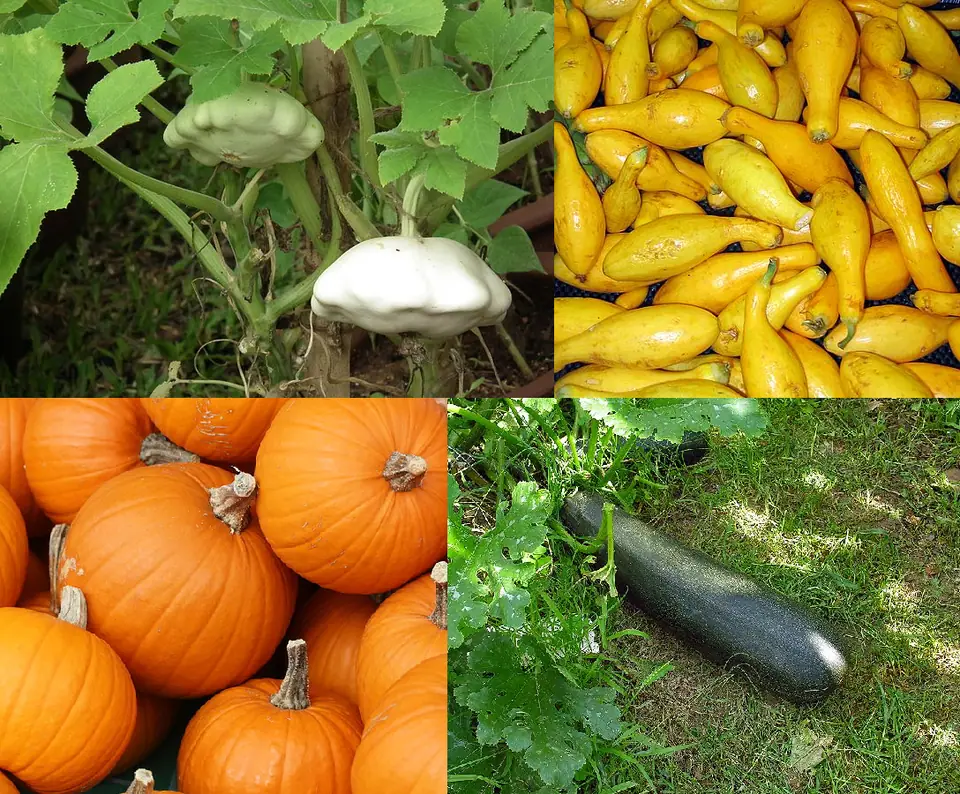
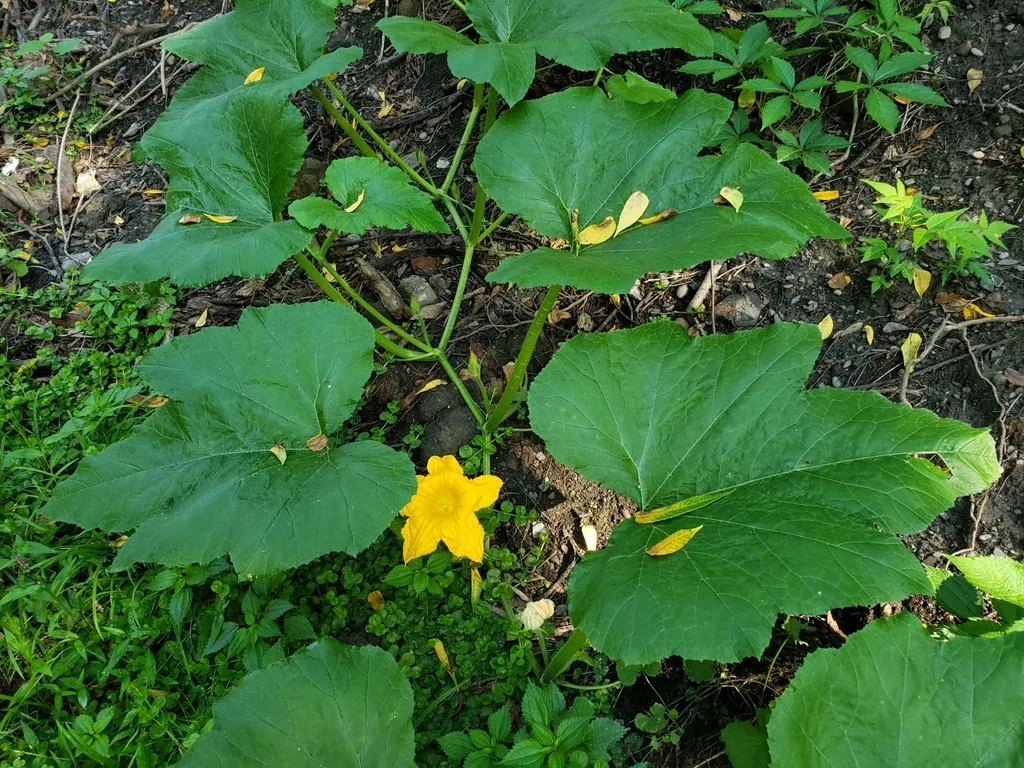

How to Grow and Care for Field pumpkin
Cucurbita pepo
Written by Emilio Marruso · last checked
Not toxic to cats and dogs, according to the sources · Sources
At a glance
Pumpkins are a joyful crop to grow: sow the seeds 1 inch deep once the danger of frost has passed and the soil has warmed. Give them full sun and moderately moist soil, and the vines will ramble across the garden. In late September or early October, cut your hard-skinned, deep orange pumpkins, and save the seeds: they are edible too.
- Sun
Full sun
What the sources say (2)
Light: Full sun
Full sun (6 or more hours of direct sunlight a day)
— Cucurbita pepo (Acorn Squash, Courgette, Ornamental Gourd, Patty Pan Squash, Pumpkin, Spaghetti Squash, Squash, Summer Squash, Winter Squash, Zucchini) | North Carolina Extension Gardener Plant Toolbox [1] It should have a rich garden soil and at least six hours of direct sunlight a day.
— Cucurbita pepo var. pepo Spaghetti Squash [7] - Water
Keep the soil moderately moist; water in long dry spells; mulch helps hold moisture
What the sources say (3)
Watering: Moderately moist soil; irrigate if an extended dry period occurs
is an aggressive grower and prefers moderately moist soil with full access to sunlight
— Cucurbita pepo (Acorn Squash, Courgette, Ornamental Gourd, Patty Pan Squash, Pumpkin, Spaghetti Squash, Squash, Summer Squash, Winter Squash, Zucchini) | North Carolina Extension Gardener Plant Toolbox [1] Irrigate if an extended dry period occurs in early summer. Pumpkins tolerate short periods of hot, dry weather pretty well.
— Growing Pumpkins | Pumpkins | Illinois Extension | Illinois [8] Watering notes: Mulching around the plants helps retain moisture and reduce competition
Mulching around the squash aids with retaining moisture and reducing competition.
— Cucurbita pepo (Acorn Squash, Courgette, Ornamental Gourd, Patty Pan Squash, Pumpkin, Spaghetti Squash, Squash, Summer Squash, Winter Squash, Zucchini) | North Carolina Extension Gardener Plant Toolbox [1] - Cold
Survives winters down to −40 °F (−40 °C)
Very hardy · USDA 3a · RHS H7 · Z3
What the sources say (2)
Hardiness, coldest zone: 3a [winter low −40 to −37.2 °C (−40 to −35 °F)]
3a, 3b, 4a, 4b, 5a, 5b, 6a, 6b, 7a, 7b, 8a, 8b, 9a, 9b, 10a, 10b, 11a, 11b
— Cucurbita pepo (Acorn Squash, Courgette, Ornamental Gourd, Patty Pan Squash, Pumpkin, Spaghetti Squash, Squash, Summer Squash, Winter Squash, Zucchini) | North Carolina Extension Gardener Plant Toolbox [1] Hardiness, warmest zone: 11b [winter low 7.2 to 10 °C (45 to 50 °F)]
3a, 3b, 4a, 4b, 5a, 5b, 6a, 6b, 7a, 7b, 8a, 8b, 9a, 9b, 10a, 10b, 11a, 11b
— Cucurbita pepo (Acorn Squash, Courgette, Ornamental Gourd, Patty Pan Squash, Pumpkin, Spaghetti Squash, Squash, Summer Squash, Winter Squash, Zucchini) | North Carolina Extension Gardener Plant Toolbox [1] - Soil
Soil with a pH of 6.0–8.0
What the sources say (2)
Soil pH, minimum: 6.0
Soil Texture: High Organic Matter Loam (Silt) Soil pH: Neutral (6.0-8.0)
— Cucurbita pepo (Acorn Squash, Courgette, Ornamental Gourd, Patty Pan Squash, Pumpkin, Spaghetti Squash, Squash, Summer Squash, Winter Squash, Zucchini) | North Carolina Extension Gardener Plant Toolbox [1] Soil pH, maximum: 8.0
Soil Texture: High Organic Matter Loam (Silt) Soil pH: Neutral (6.0-8.0)
— Cucurbita pepo (Acorn Squash, Courgette, Ornamental Gourd, Patty Pan Squash, Pumpkin, Spaghetti Squash, Squash, Summer Squash, Winter Squash, Zucchini) | North Carolina Extension Gardener Plant Toolbox [1] - Spacing
Vining pumpkins: hills 5–6 ft apart, rows 10–15 ft apart
What the sources say (9)
Spacing: Summer squash: seeds 61-91 cm (24-36 in) apart, or in hills 122 cm (48 in) apart; vining pumpkin: hills 152-183 cm (5-6 ft) apart in rows 305-457 cm (10-15 ft) apart; spaghetti squash: 183 cm (6 ft) centers
Summer squash: Sow two or three seeds 24 to 36 inches apart for single-plant production, or four or five seeds in hills 48 inches apart.
— Summer Squash (Cucurbita pepo and Cucurbita maxima)-Hort Answers - University of Illinois Extension [2] Vining pumpkin: Allow 5 to 6 feet between hills, spaced in rows 10 to 15 feet apart.
— Growing Pumpkins | Pumpkins | Illinois Extension | Illinois [8] Semi-bush pumpkin: Allow 4 feet between hills and 8 feet between rows.
— Growing Pumpkins | Pumpkins | Illinois Extension | Illinois [8] Miniature pumpkin: Plant miniature varieties one inch deep, with two or three seeds every 2 feet in the row.
— Growing Pumpkins | Pumpkins | Illinois Extension | Illinois [8] Bush pumpkin: Plant bush varieties one inch deep (1 or 2 seeds per foot of row) and thin to a single plant every 3 feet.
— Growing Pumpkins | Pumpkins | Illinois Extension | Illinois [8] Spaghetti squash: Plants should be planted on 6-foot centers.
— Cucurbita pepo var. pepo Spaghetti Squash [7] Sow two or three seeds 24 to 36 inches apart for single-plant production, or four or five seeds in hills 48 inches apart.
— Summer Squash (Cucurbita pepo and Cucurbita maxima)-Hort Answers - University of Illinois Extension [2] Allow 5 to 6 feet between hills, spaced in rows 10 to 15 feet apart.
— Growing Pumpkins | Pumpkins | Illinois Extension | Illinois [8] by squash bugs and powdery mildew. Plants should be planted on 6-foot centers.
— Cucurbita pepo var. pepo Spaghetti Squash [7] - Planting
Transplant in late spring or early summer, after the last frost
What the sources say (1)
Planting: Transplant in late spring, early summer, or after the last frost
Cucurbita pepo should be transplanted in late spring, early summer, or after the last frost.
— Cucurbita pepo (Acorn Squash, Courgette, Ornamental Gourd, Patty Pan Squash, Pumpkin, Spaghetti Squash, Squash, Summer Squash, Winter Squash, Zucchini) | North Carolina Extension Gardener Plant Toolbox [1] - Feeding
Feed before planting, then add nitrogen when the vines start to run; add compost in late fall
What the sources say (4)
When: Phosphorus, potassium and 70% of the nitrogen before planting; the rest of the nitrogen when plants start to vine
Apply recommended amounts of phosphorus and potassium fertilizers before planting. Apply 60-100 pounds of nitrogen per acre.
— Pumpkin (Cucurbita pepo; C. maxima; C. moschata; C. mixta)-Hort Answers - University of Illinois Extension [3] Apply about 70% of the recommended amounts of nitrogen pre-plant and the rest as sidedressing or through drip irrigation when plants start to vine.
— Pumpkin (Cucurbita pepo; C. maxima; C. moschata; C. mixta)-Hort Answers - University of Illinois Extension [3] How often: Twice for nitrogen: before planting and when plants start to vine
Apply about 70% of the recommended amounts of nitrogen pre-plant and the rest as sidedressing or through drip irrigation when plants start to vine.
— Pumpkin (Cucurbita pepo; C. maxima; C. moschata; C. mixta)-Hort Answers - University of Illinois Extension [3] Natural fertilizers: Compost worked into the surrounding soil in late fall
To maximize growth add compost material to the surrounding soil in late fall.
— Cucurbita pepo (Acorn Squash, Courgette, Ornamental Gourd, Patty Pan Squash, Pumpkin, Spaghetti Squash, Squash, Summer Squash, Winter Squash, Zucchini) | North Carolina Extension Gardener Plant Toolbox [1] - Harvest
Late September–early October, when a fingernail can't dent the rind; leave 3–4 in of stem
What the sources say (12)
Harvest: Summer squash: 4 to 8 days after flowering; spaghetti squash: 90-100 days from seeding to first harvest; pumpkin: late September or early October, before heavy frosts
Summer squash: Squash grow rapidly; especially in hot weather and are usually ready to pick within 4 to 8 days after flowering.
— Summer Squash (Cucurbita pepo and Cucurbita maxima)-Hort Answers - University of Illinois Extension [2] Spaghetti squash: From seeding to first harvest is usually around 90-100 days.
— Cucurbita pepo var. pepo Spaghetti Squash [7] Pumpkin: If vines remain healthy, harvest in late September or early October, before heavy frosts.
— Growing Pumpkins | Pumpkins | Illinois Extension | Illinois [8] Squash grow rapidly; especially in hot weather and are usually ready to pick within 4 to 8 days after flowering.
— Summer Squash (Cucurbita pepo and Cucurbita maxima)-Hort Answers - University of Illinois Extension [2] From seeding to first harvest is usually around 90-100 days.
— Cucurbita pepo var. pepo Spaghetti Squash [7] If vines remain healthy, harvest in late September or early October, before heavy frosts.
— Growing Pumpkins | Pumpkins | Illinois Extension | Illinois [8] How to harvest: Summer squash: pick when small and tender, going over the plants every 1 or 2 days; elongated varieties when 5 cm (2 in) or less in diameter and 15-20 cm (6-8 in) long, Patty Pan types when 7.6-10 cm (3-4 in) in diameter; usually ready to pick within 4 to 8 days after flowering. Pumpkin: harvest when the rind is hard and cannot be poked by a fingernail and the fruit is a deep solid color (orange for most varieties); cut from the vine with pruning shears or a sharp knife leaving 7.6-10 cm (3-4 in) of stem attached.
Most elongated varieties are picked when they are 2 inches or less in diameter and 6 to 8 inches long. Patty Pan types are harvested when they are 3 to 4 inches in diameter.
— Summer Squash (Cucurbita pepo and Cucurbita maxima)-Hort Answers - University of Illinois Extension [2] Go over the plants every 1 or 2 days.
— Summer Squash (Cucurbita pepo and Cucurbita maxima)-Hort Answers - University of Illinois Extension [2] Squash grow rapidly; especially in hot weather and are usually ready to pick within 4 to 8 days after flowering.
— Summer Squash (Cucurbita pepo and Cucurbita maxima)-Hort Answers - University of Illinois Extension [2] Harvest pumpkin fruits when the rind is hard and cannot be poked by finger-nail, and the fruit is orange in color.
— Pumpkin (Cucurbita pepo; C. maxima; C. moschata; C. mixta)-Hort Answers - University of Illinois Extension [3] Pumpkins can be harvested whenever they are a deep, solid color (orange for most varieties) and the rind is hard.
— Growing Pumpkins | Pumpkins | Illinois Extension | Illinois [8] Cut pumpkins from the vines carefully, using pruning shears or a sharp knife and leave 3 to 4 inches of stem attached.
— Growing Pumpkins | Pumpkins | Illinois Extension | Illinois [8] - Pollination
Bees carry the pollen; varieties cross, so saved seeds may not match the parent
What the sources say (3)
Saving seeds: Varieties within the same species (C. pepo) cross-pollinate, and crosses show up only if seeds from these fruits are saved and grown the following year; bees carry pollen for a mile [1.6 km] or more, so fruits must be bagged and pollinated by hand if pure seed of non-hybrid varieties is desired.
The varieties within a botanical species (which may be referred to as pumpkins, squash or gourd) can cross-pollinate. Varieties from different species do not.
— Growing Pumpkins | Pumpkins | Illinois Extension | Illinois [8] Crosses show up only if seeds from these fruits are saved and grown the following year.
— Growing Pumpkins | Pumpkins | Illinois Extension | Illinois [8] Because bees carry pollen for distances of a mile or more, in suburban areas where many gardens are in close proximity, fruits must be bagged and pollinated by hand if pure seed of non-hybrid varieties is desired.
— Growing Pumpkins | Pumpkins | Illinois Extension | Illinois [8] - Pests
Cucumber beetles, squash bugs, aphids and slugs; powdery mildew on the leaves
What the sources say (9)
Pests: aphids, cucumber beetles, squash bug, squash vine borer, western corn rootworm, twospotted spider mite, seed corn maggots, leafhoppers, thrips, slugs
Aphids [Vegetables] ( Aphididae ) - Cucumber Beetles ( Acalymma vittatum and Diabrotica undecimpunctata howardi ) - Squash Bug ( Anasa tristis ) - Squash Vine Borer ( Melittia cucurbitae ) - Western Corn Rootworm
— Summer Squash (Cucurbita pepo and Cucurbita maxima)-Hort Answers - University of Illinois Extension [2] Insect Relative Damage - Twospotted Spidermite [Vegetables] ( Tetranychus urticae )
— Summer Squash (Cucurbita pepo and Cucurbita maxima)-Hort Answers - University of Illinois Extension [2] Insects and insect relatives: - Aphids - Seed corn maggots - Leafhoppers - Thrips
— Summer Squash (Cucurbita pepo and Cucurbita maxima)-Hort Answers - University of Illinois Extension [2] Insects, Diseases, and Other Plant Problems: Slugs, aphids, and beetles
— Cucurbita pepo (Acorn Squash, Courgette, Ornamental Gourd, Patty Pan Squash, Pumpkin, Spaghetti Squash, Squash, Summer Squash, Winter Squash, Zucchini) | North Carolina Extension Gardener Plant Toolbox [1] Diseases: angular leaf spot, bacterial wilt, anthracnose, downy mildew, early blight, gummy stem blight, phytophthora blight, powdery mildew, scab, fusarium crown and fruit rot, fusarium wilt, plectosporium blight, root knot nematode, cucumber mosaic virus, papaya ringspot virus, squash mosaic virus, watermelon mosaic virus, zucchini yellow mosaic virus
Bacterial Disease - Angular Leaf Spot of Cucurbits ( Pseudomonas syringae pv. lachrymans ) - Bacterial Wilt of Cucurbits ( Erwinia tracheiphila )
— Summer Squash (Cucurbita pepo and Cucurbita maxima)-Hort Answers - University of Illinois Extension [2] Fungal Disease - Anthracnose [Vegetables] ( Colletotrichum spp. ) - Downy Mildew [Vegetables] ( Bremia, Peronospora, and Pseudoperonospora spp. ) - Early Blight or Alternaria Leaf Spot ( Alternaria spp. )
— Summer Squash (Cucurbita pepo and Cucurbita maxima)-Hort Answers - University of Illinois Extension [2] Gummy Stem Blight or Black Rot of Cucurbits ( Didymella bryonia ) - Phytophthora Blight [Vegetables] ( Phytophthora spp. [water molds] ) - Powdery Mildew [Vegetables] ( Erysiphe spp. ) - Scab of Cucurbits ( Cladosporium cucumerinum )
— Summer Squash (Cucurbita pepo and Cucurbita maxima)-Hort Answers - University of Illinois Extension [2] Fusarium crown and fruit rot ( Fusarium solani f.sp. cucurbitae ) - Fusarium wilt ( Fusarium oxysporum ) - Plectosporium blight ( Plectosporium tabacinum ) - Root knot nematode ( Meloidogyne spp.)
— Summer Squash (Cucurbita pepo and Cucurbita maxima)-Hort Answers - University of Illinois Extension [2] Viral diseases: cucumber mosaic, Papaya ringspot, Squash mosaic, Watermelon mosaic, and Zucchini yello mosaic
— Summer Squash (Cucurbita pepo and Cucurbita maxima)-Hort Answers - University of Illinois Extension [2] - Size
1–3 ft tall, spreading 2 to 25 ft wide
What the sources say (2)
Mature height: 30.5-91.4 cm (1-3 ft)
Height: 1 ft. 0 in. - 3 ft. 0 in.
— Cucurbita pepo (Acorn Squash, Courgette, Ornamental Gourd, Patty Pan Squash, Pumpkin, Spaghetti Squash, Squash, Summer Squash, Winter Squash, Zucchini) | North Carolina Extension Gardener Plant Toolbox [1] Mature width: 61-762 cm (2-25 ft)
Width: 2 ft. 0 in. - 25 ft. 0 in.
— Cucurbita pepo (Acorn Squash, Courgette, Ornamental Gourd, Patty Pan Squash, Pumpkin, Spaghetti Squash, Squash, Summer Squash, Winter Squash, Zucchini) | North Carolina Extension Gardener Plant Toolbox [1] - Propagation
Grows from seed
What the sources say (1)
Propagation: Seed
It is easily sown from seed, especially when soils are warm.
— Cucurbita pepo (Acorn Squash, Courgette, Ornamental Gourd, Patty Pan Squash, Pumpkin, Spaghetti Squash, Squash, Summer Squash, Winter Squash, Zucchini) | North Carolina Extension Gardener Plant Toolbox [1] - Sowing
Sow 1 in deep after frost, once the soil reaches 58–60 °F (14–16 °C)
What the sources say (8)
Sowing: After danger of frost has passed, from early spring until midsummer; pumpkin seed when soil temperature is 58 to 60 degrees F [14–16 °C]
Summer squash: Plant anytime after the danger of frost has passed, from early spring until midsummer.
— Summer Squash (Cucurbita pepo and Cucurbita maxima)-Hort Answers - University of Illinois Extension [2] Pumpkin: Plant treated seeds when soil temperature is 58 to 60 degrees Farenheit.
— Pumpkin (Cucurbita pepo; C. maxima; C. moschata; C. mixta)-Hort Answers - University of Illinois Extension [3] Pumpkins for Halloween: Plant pumpkins for Halloween from late May in northern locations to early July in extremely southern sites.
— Growing Pumpkins | Pumpkins | Illinois Extension | Illinois [8] Spaghetti squash: Seed planting should be delayed until the soil has warmed completely with plantings as late as early July possible.
— Cucurbita pepo var. pepo Spaghetti Squash [7] Plant anytime after the danger of frost has passed, from early spring until midsummer.
— Summer Squash (Cucurbita pepo and Cucurbita maxima)-Hort Answers - University of Illinois Extension [2] Plant treated seeds when soil temperature is 58 to 60 degrees Farenheit.
— Pumpkin (Cucurbita pepo; C. maxima; C. moschata; C. mixta)-Hort Answers - University of Illinois Extension [3] Sowing depth: 2.5 cm (1 in)
Sow two or three seeds 24 to 36 inches apart for single-plant production, or four or five seeds in hills 48 inches apart. Cover one inch deep.
— Summer Squash (Cucurbita pepo and Cucurbita maxima)-Hort Answers - University of Illinois Extension [2] Vining pumpkins require a minimum of 50 to 100 square feet per hill. Plant seeds one inch deep (four or five seeds per hill).
— Growing Pumpkins | Pumpkins | Illinois Extension | Illinois [8] - Safety
Not toxic to cats, dogs or horses
Overview
Cucurbita pepo covers summer squash, winter squash and pumpkins, which are tender warm-season vegetables. [2][3] Plants need full sun and moist, well-drained soil, and are sown or transplanted after danger of frost. [1][3] The plants are prone to powdery mildew, cucumber beetles and squash bugs. [8][7]
Field pumpkin care
Measurements in square brackets are our conversion into the other unit system; the quoted text is unchanged.
How to water Field pumpkin
Watering
Moderately moist soil; irrigate if an extended dry period occurs
What the sources say (2)
is an aggressive grower and prefers moderately moist soil with full access to sunlightIrrigate if an extended dry period occurs in early summer. Pumpkins tolerate short periods of hot, dry weather pretty well.Watering notes
Mulching around the plants helps retain moisture and reduce competition
What the sources say (1)
Mulching around the squash aids with retaining moisture and reducing competition.How much light Field pumpkin needs
Full sun
What the sources say (2)
Full sun (6 or more hours of direct sunlight a day)It should
have a rich garden soil and at least six hours of direct sunlight a day.How much cold Field pumpkin can take
Hardiness, coldest zone
3a [winter low −40 to −37.2 °C (−40 to −35 °F)]
What the sources say (1)
3a, 3b, 4a, 4b, 5a, 5b, 6a, 6b, 7a, 7b, 8a, 8b, 9a, 9b, 10a, 10b, 11a, 11bHardiness, warmest zone
11b [winter low 7.2 to 10 °C (45 to 50 °F)]
What the sources say (1)
3a, 3b, 4a, 4b, 5a, 5b, 6a, 6b, 7a, 7b, 8a, 8b, 9a, 9b, 10a, 10b, 11a, 11bBest soil for Field pumpkin
Soil pH, minimum
6.0
What the sources say (1)
Soil Texture:
High Organic Matter
Loam (Silt)
Soil pH:
Neutral (6.0-8.0)Soil pH, maximum
8.0
What the sources say (1)
Soil Texture:
High Organic Matter
Loam (Silt)
Soil pH:
Neutral (6.0-8.0)Where to grow Field pumpkin
Summer squash: seeds 61-91 cm (24-36 in) apart, or in hills 122 cm (48 in) apart; vining pumpkin: hills 152-183 cm (5-6 ft) apart in rows 305-457 cm (10-15 ft) apart; spaghetti squash: 183 cm (6 ft) centers
What each source says
Summer squash: 61.0-91.4 cm (24-36 in) apart for single-plant production, or in hills 121.9 cm (48 in) apart
Vining pumpkin: Hills 152.4-182.9 cm (5-6 ft) apart, in rows 304.8-457.2 cm (10-15 ft) apart
Semi-bush pumpkin: Hills 121.9 cm (4 ft) apart, rows 243.8 cm (8 ft) apart
Miniature pumpkin: 61.0 cm (2 ft) in the row, rows 182.9-243.8 cm (6-8 ft) apart
Bush pumpkin: 91.4 cm (3 ft) in the row, rows 121.9-182.9 cm (4-6 ft) apart
Spaghetti squash: 182.9 cm (6 ft) centers
What the sources say (9)
Summer squash: Sow two or three seeds 24 to 36 inches apart for single-plant production, or four or five seeds in hills 48 inches apart.Vining pumpkin: Allow 5 to 6 feet between hills, spaced in rows 10 to 15 feet apart.Semi-bush pumpkin: Allow 4 feet between hills and 8 feet between rows.Miniature pumpkin: Plant miniature varieties one inch deep, with two or three seeds every 2 feet in the row.Bush pumpkin: Plant bush varieties one inch deep (1 or 2 seeds per foot of row) and thin to a single plant every 3 feet.Spaghetti squash: Plants should be planted on 6-foot centers.Sow two or three seeds 24 to 36 inches apart for single-plant production, or four or five seeds in hills 48 inches apart.Allow 5 to 6 feet between hills, spaced in rows 10 to 15 feet apart.by squash bugs and powdery mildew. Plants should be planted on 6-foot centers.How to propagate Field pumpkin
Seed
What the sources say (1)
It is easily sown from seed, especially when soils are warm.How to grow Field pumpkin
The plant
Life cycle
annual
What the sources say (1)
Like all cucurbits, spaghetti squash is a large, fast-growing annual with stout stems and large, three-lobed leaves.Family
Cucurbitaceae
What the sources say (1)
Pumpkins and squash belong to the Cucurbitaceae family. Generally pumpkins belong to the Cucurbita pepo , C. maxima , and C. moschata species.Mature height
30.5-91.4 cm (1-3 ft)
What the sources say (1)
Height: 1 ft. 0 in. - 3 ft. 0 in.Mature width
61-762 cm (2-25 ft)
What the sources say (1)
Width: 2 ft. 0 in. - 25 ft. 0 in.Sowing and growth
Sowing depth
2.5 cm (1 in)
What the sources say (2)
Sow two or three seeds 24 to 36 inches apart for single-plant production, or four or five seeds in hills 48 inches apart. Cover one inch deep.Vining pumpkins require a minimum of 50 to 100 square feet per hill. Plant seeds one inch deep (four or five seeds per hill).Row spacing
The sources give different values depending on region, zone or growing conditions.
What each source says
:
:
:
:
What the sources say (4)
: Allow 5 to 6 feet between hills, spaced in rows 10 to 15 feet apart.: Plant semi-bush varieties one inch deep (four or five seeds per hill) and thin to the best two plants per hill. Allow 4 feet between hills and 8 feet between rows.: Plant miniature varieties one inch deep, with two or three seeds every 2 feet in the row. Rows should be 6 to 8 feet apart: Plant bush varieties one inch deep (1 or 2 seeds per foot of row) and thin to a single plant every 3 feet. Allow 4 to 6 feet between rows.Days to maturity
90-100 days from seeding to first harvest (spaghetti squash)
What each source says
:
What the sources say (2)
: Squash grow rapidly; especially in hot weather and are usually ready to pick within 4 to 8 days after flowering.From seeding to first harvest is usually around 90-100 days.Harvest and storage
How to harvest
Summer squash: pick when small and tender, going over the plants every 1 or 2 days; elongated varieties when 5 cm (2 in) or less in diameter and 15-20 cm (6-8 in) long, Patty Pan types when 7.6-10 cm (3-4 in) in diameter; usually ready to pick within 4 to 8 days after flowering. Pumpkin: harvest when the rind is hard and cannot be poked by a fingernail and the fruit is a deep solid color (orange for most varieties); cut from the vine with pruning shears or a sharp knife leaving 7.6-10 cm (3-4 in) of stem attached.
What the sources say (6)
Most elongated varieties are picked when they are 2 inches or less in diameter and 6 to 8 inches long. Patty Pan types are harvested when they are 3 to 4 inches in diameter.Go over the plants every 1 or 2 days.Squash grow rapidly; especially in hot weather and are usually ready to pick within 4 to 8 days after flowering.Harvest pumpkin fruits when the rind is hard and cannot be poked by finger-nail, and the fruit is orange in color.Pumpkins can be harvested whenever they are a deep, solid color (orange for most varieties) and the rind is hard.Cut pumpkins from the vines carefully, using pruning shears or a sharp knife and leave 3 to 4 inches of stem attached.Storage
Pumpkins: store in a dry building where the temperature is between 10 and 12.8 °C (50 and 55 °F); fruits that are not fully mature, or that have been injured or subjected to heavy frost, do not keep; pumpkins without stems usually do not keep well.
What the sources say (2)
Fruits that are not fully mature or that have been injured or subjected to heavy frost do not keep. Store in a dry building where the temperature is between 50 and 55°F.Pumpkins without stems usually do not keep well.Saving seeds
Varieties within the same species (C. pepo) cross-pollinate, and crosses show up only if seeds from these fruits are saved and grown the following year; bees carry pollen for a mile [1.6 km] or more, so fruits must be bagged and pollinated by hand if pure seed of non-hybrid varieties is desired.
What the sources say (3)
The varieties within a botanical species (which may be referred to as pumpkins, squash or gourd) can cross-pollinate. Varieties from different species do not.Crosses show up only if seeds from these fruits are saved and grown the following year.Because bees carry pollen for distances of a mile or more, in suburban areas where many gardens are in close proximity, fruits must be bagged and pollinated by hand if pure seed of non-hybrid varieties is desired.Pests and diseases
Pests
aphids, cucumber beetles, squash bug, squash vine borer, western corn rootworm, twospotted spider mite, seed corn maggots, leafhoppers, thrips, slugs
What the sources say (4)
Aphids [Vegetables] ( Aphididae ) - Cucumber Beetles ( Acalymma vittatum and Diabrotica undecimpunctata howardi ) - Squash Bug ( Anasa tristis ) - Squash Vine Borer ( Melittia cucurbitae ) - Western Corn RootwormInsect Relative Damage - Twospotted Spidermite [Vegetables] ( Tetranychus urticae )Insects and insect relatives: - Aphids - Seed corn maggots - Leafhoppers - ThripsInsects, Diseases, and Other Plant Problems: Slugs, aphids, and beetlesDiseases
angular leaf spot, bacterial wilt, anthracnose, downy mildew, early blight, gummy stem blight, phytophthora blight, powdery mildew, scab, fusarium crown and fruit rot, fusarium wilt, plectosporium blight, root knot nematode, cucumber mosaic virus, papaya ringspot virus, squash mosaic virus, watermelon mosaic virus, zucchini yellow mosaic virus
What the sources say (5)
Bacterial Disease - Angular Leaf Spot of Cucurbits ( Pseudomonas syringae pv. lachrymans ) - Bacterial Wilt of Cucurbits ( Erwinia tracheiphila )Fungal Disease - Anthracnose [Vegetables] ( Colletotrichum spp. ) - Downy Mildew [Vegetables] ( Bremia, Peronospora, and Pseudoperonospora spp. ) - Early Blight or Alternaria Leaf Spot ( Alternaria spp. )Gummy Stem Blight or Black Rot of Cucurbits ( Didymella bryonia ) - Phytophthora Blight [Vegetables] ( Phytophthora spp. [water molds] ) - Powdery Mildew [Vegetables] ( Erysiphe spp. ) - Scab of Cucurbits ( Cladosporium cucumerinum )Fusarium crown and fruit rot ( Fusarium solani f.sp. cucurbitae ) - Fusarium wilt ( Fusarium oxysporum ) - Plectosporium blight ( Plectosporium tabacinum ) - Root knot nematode ( Meloidogyne spp.)Viral diseases: cucumber mosaic, Papaya ringspot, Squash mosaic, Watermelon mosaic, and Zucchini yello mosaicFertilizing
When
Phosphorus, potassium and 70% of the nitrogen before planting; the rest of the nitrogen when plants start to vine
What the sources say (2)
Apply recommended amounts of phosphorus and potassium fertilizers before planting. Apply 60-100 pounds of nitrogen per acre.Apply about 70% of the recommended amounts of nitrogen pre-plant and the rest as sidedressing or through drip irrigation when plants start to vine.How often
Twice for nitrogen: before planting and when plants start to vine
What the sources say (1)
Apply about 70% of the recommended amounts of nitrogen pre-plant and the rest as sidedressing or through drip irrigation when plants start to vine.Natural fertilizers
Compost worked into the surrounding soil in late fall
What the sources say (1)
To maximize growth add compost material to the surrounding soil in late fall.Mineral fertilizers
Phosphorus and potassium fertilizers at soil-test rates before planting; nitrogen 6.73-11.2 g/m² per season, 70% before planting and the rest as side-dressing or through drip irrigation
What the sources say (3)
Test the soil and apply recommended amounts of nutrients. Apply recommended amounts of phosphorus and potassium fertilizers before planting.Apply recommended amounts of phosphorus and potassium fertilizers before planting. Apply 60-100 pounds of nitrogen per acre.Apply about 70% of the recommended amounts of nitrogen pre-plant and the rest as sidedressing or through drip irrigation when plants start to vine.Field pumpkin pests and problems
Powdery mildew
Symptom: White, powdery mold growth on the upper surfaces of the leaves; can kill leaves prematurely and interfere with ripening.
What to do: Not stated in the source.
What the sources say (1)
Powdery mildew causes a white, powdery mold growth on the upper surfaces of the leaves.
— Growing Pumpkins | Pumpkins | Illinois Extension | Illinois [8] Cucumber beetles and squash bugs
Symptom: Attack seedlings, vines and both immature and mature fruits; populations build in late summer.
What to do: Not stated in the source.
What the sources say (1)
Cucumber beetles and squash bugs attack seedlings, vines and both immature and mature fruits.
— Growing Pumpkins | Pumpkins | Illinois Extension | Illinois [8] Slugs, aphids and beetles
Symptom: Listed as insects and pests of the plant.
What to do: Not stated in the source.
What the sources say (1)
Insects, Diseases, and Other Plant Problems: Slugs, aphids, and beetles
— Cucurbita pepo (Acorn Squash, Courgette, Ornamental Gourd, Patty Pan Squash, Pumpkin, Spaghetti Squash, Squash, Summer Squash, Winter Squash, Zucchini) | North Carolina Extension Gardener Plant Toolbox [1]
Remedies
Each remedy shows what official sources say about it; traditional remedies without an official source are marked as such. Harmful ones are listed so you know to avoid them.
Treating the plant
squash bugs
hand-picking adults and crushing eggs Works
How: In small plantings, pick the bugs by hand; check for eggs at least once a week during June and crush them when detected.
In small plantings, hand-picking can be very effective. Attention should be given to the eggs which are easily detected in garden surveys and can be crushed when detected.
— extension.colostate.edu [9] What the evidence says In small plantings, hand-picking can be very effective.
— extension.colostate.edu [9] board trap Partly works
How: Place a wooden board or heavy cardboard on the ground; nymphs and adults congregate under it overnight; pick up the board or kill the bugs early in the morning.
Scouting – place a wooden board or heavy cardboard on the ground to attract nymphs and adults who will congregate under the board overnight.
— extension.colostate.edu [9] What the evidence says Picking up and removing the board or killing the bugs early in the morning can help reduce squash bug populations.
— extension.colostate.edu [9] soapy water bucket Official source, not independently tested
How: Drown the nymphs in soapy water.
Nymphs can be hand crushed, drowned in soapy water, or removed using the sticky side of duct tape to trap them.
— extension.psu.edu [10] duct tape Not verified
Traditional remedy, not verified by an official source.
How: Make a little roll of duct tape sticky side out and stick all the eggs to it.
diatomaceous earth Partly works
Just make sure to use food grade diatomaceous earth in your garden.
— homestead-acres.com [11] There are versions sold for garden use but they often contain other chemicals and even insect attractants.
— homestead-acres.com [11] How: Sprinkle diatomaceous earth around the base of the squash plants.
If you are using this method sprinkle diatomaceous earth around the base of the squash plants.
— homestead-acres.com [11] What the evidence says Diatomaceous earth/pyrethrins applications around the base of the plant can be an effective method to control squash bug and is a treatment allowed in Certified Organic vegetable production.
— extension.colostate.edu [9] nasturtium trap crop Not verified
Traditional remedy, not verified by an official source.
How: Plant trap crops on the edge of the main crop and keep an eye on them; handpick the bugs found on them.
neem oil spray Not verified
Traditional remedy, not verified by an official source.
How: Use a diluted neem oil spray according to package instructions, focusing on the undersides of leaves where squash bugs like to hide.
cucumber beetles
wood ash dusting Not verified
Traditional remedy, not verified by an official source.
How: Dust the plants with wood ashes.
aphids
insecticidal soap spray Works
How: Use insecticidal soap.
They leave behind sticky excrement called honeydew which can turn into a black sooty mold. Use insecticidal soap.
— harvesttotable.com [12] What the evidence says For example, insecticidal soap is a safe, effective organic insecticide with minimal environmental impact.
— extension.psu.edu [13] homemade liquid soap spray Harmful
For example, spraying home remedies that contain dish detergent on plants on a sunny day can injure the plant, essentially burning it.
— extension.psu.edu [15] How: Mix 1 tablespoon of liquid soap with 1 gallon of water, pour it into a spray bottle and spray on leaves and stems; reapply after it rains.
MAKE YOUR OWN INSECTICIDE: To make your own effective, DIY insecticide, simply mix 1 tablespoon of liquid soap with 1 gallon of water.
— motherearthliving.com [14] What the evidence says For example, spraying home remedies that contain dish detergent on plants on a sunny day can injure the plant, essentially burning it.
— extension.psu.edu [15] neem oil Not verified
Traditional remedy, not verified by an official source.
How: Neem oil applied according to product instructions.
powdery mildew
neem oil Not verified
Traditional remedy, not verified by an official source.
How: Apply horticultural oil like neem oil.
slugs
beer trap Not verified
Traditional remedy, not verified by an official source.
How: Put out stale beer in a shallow dish or container.
squash vine borer
yellow water trap Official source, not independently tested
How: In mid-June, place a yellow-colored container filled with water and a drop of dish soap in the garden; the moths fly into it and are trapped.
In mid-June, place a yellow-colored container filled with water and a drop of dish soap in your garden.
— extension.psu.edu [10] slitting the vine to remove the borer Not verified
Traditional remedy, not verified by an official source.
How: Slit the vine with a knife and remove the borer; bury the runner at that point to re-root.
Is Field pumpkin poisonous?
Reported by the source, quoted verbatim. This is not medical or veterinary advice: if a person or an animal may have eaten this plant, contact a poison control centre or a veterinarian.
#non-toxic for cats #non-toxic for horses #non-toxic for dogs
[1]The source flags the risk for this animal but does not explain why.
Calendar
Sowing
After danger of frost has passed, from early spring until midsummer; pumpkin seed when soil temperature is 58 to 60 degrees F [14–16 °C]
What each source says
Summer squash: After danger of frost has passed, from early spring until midsummer
Pumpkin: When soil temperature is 58 to 60 degrees F [14–16 °C]
Pumpkins for Halloween: From late May in northern locations to early July in extremely southern sites
Spaghetti squash: After the soil has warmed completely, as late as early July possible
What the sources say (6)
Summer squash: Plant anytime after the danger of frost has passed, from early spring until midsummer.Pumpkin: Plant treated seeds when soil temperature is 58 to 60 degrees Farenheit.Pumpkins for Halloween: Plant pumpkins for Halloween from late May in northern locations to early July in extremely southern sites.Spaghetti squash: Seed planting
should be delayed until the soil has warmed completely with plantings as late as early
July possible.Plant anytime after the danger of frost has passed, from early spring until midsummer.Plant treated seeds when soil temperature is 58 to 60 degrees Farenheit.Planting
Transplant in late spring, early summer, or after the last frost
What the sources say (1)
Cucurbita pepo should be transplanted in late spring, early summer, or after the last frost.Harvest
Summer squash: 4 to 8 days after flowering; spaghetti squash: 90-100 days from seeding to first harvest; pumpkin: late September or early October, before heavy frosts
What each source says
Summer squash: 4 to 8 days after flowering
Spaghetti squash: Around 90-100 days from seeding to first harvest
Pumpkin: Late September or early October, before heavy frosts
What the sources say (6)
Summer squash: Squash grow rapidly; especially in hot weather and are usually ready to pick within 4 to 8 days after flowering.Spaghetti squash: From seeding to first harvest is usually around 90-100
days.Pumpkin: If vines remain healthy, harvest in late September or early October, before heavy frosts.Squash grow rapidly; especially in hot weather and are usually ready to pick within 4 to 8 days after flowering.From seeding to first harvest is usually around 90-100
days.If vines remain healthy, harvest in late September or early October, before heavy frosts.Months as given by the sources, which are mostly from the United States (northern hemisphere). In the southern hemisphere they shift by about six months.
Relative to frost
Less precise estimate: there is no weather station within 300 km.
Find frost dates by ZIP code or city
Plant: around the last frost
Plant anytime after the danger of frost has passed, from early spring until midsummer.
— Summer Squash (Cucurbita pepo and Cucurbita maxima)-Hort Answers - University of Illinois Extension [2] Transplant: around the last frost
Cucurbita pepo should be transplanted in late spring, early summer, or after the last frost.
— Cucurbita pepo (Acorn Squash, Courgette, Ornamental Gourd, Patty Pan Squash, Pumpkin, Spaghetti Squash, Squash, Summer Squash, Winter Squash, Zucchini) | North Carolina Extension Gardener Plant Toolbox [1]
Count from the average frost dates where you live.
Edibility
Reported by the source, quoted verbatim. Do not eat a plant on the basis of this page alone: identification mistakes can be dangerous.
Indicative values
Values from a secondary source, not checked word for word like the rest of this page. Use them as a starting point.
- Hours of sun
- 6-8 hoursIndicative value, adapt it to your climate · Secondary source
- Soil
- Well-drainedIndicative value, adapt it to your climate · Secondary source
- Care level
- MediumIndicative value, adapt it to your climate · Secondary source
- Growth rate
- HighIndicative value, adapt it to your climate · Secondary source
- Pruning
- June, July, August, June, July, August, March, April, May, June, July, August, SeptemberIndicative value, adapt it to your climate · Secondary source
Similar plants
- Figleaf Gourd Cucurbita ficifolia
- Squash Cucurbita maxima
- Winter Squash Cucurbita argyrosperma
- Squash Cucurbita moschata
- Arabian Cucumber Cucumis dipsaceus
- Bitter Melon Momordica charantia
- Bottle gourd Lagenaria siceraria
- Cantaloupe Cucumis melo
Sources
Every value above is quoted from these documents. Links lead to the original publisher.
- Cucurbita pepo (Acorn Squash, Courgette, Ornamental Gourd, Patty Pan Squash, Pumpkin, Spaghetti Squash, Squash, Summer Squash, Winter Squash, Zucchini) | North Carolina Extension Gardener Plant Toolbox · plants.ces.ncsu.edu, consulted
- Summer Squash (Cucurbita pepo and Cucurbita maxima)-Hort Answers - University of Illinois Extension · web.extension.illinois.edu, consulted
- Pumpkin (Cucurbita pepo; C. maxima; C. moschata; C. mixta)-Hort Answers - University of Illinois Extension · web.extension.illinois.edu, consulted
- Winter Squash - Cucurbita pepo | North Carolina Extension Gardener Plant Toolbox · plants.ces.ncsu.edu, consulted
- Spaghetti Squash - Cucurbita pepo | North Carolina Extension Gardener Plant Toolbox · plants.ces.ncsu.edu, consulted
- Patty Pan Squash - Cucurbita pepo | North Carolina Extension Gardener Plant Toolbox · plants.ces.ncsu.edu, consulted
- Cucurbita pepo var. pepo Spaghetti Squash · uaex.uada.edu, consulted
- Growing Pumpkins | Pumpkins | Illinois Extension | Illinois · extension.illinois.edu, consulted
- extension.colostate.edu · extension.colostate.edu
- extension.psu.edu · extension.psu.edu
- homestead-acres.com · homestead-acres.com
- harvesttotable.com · harvesttotable.com
- extension.psu.edu · extension.psu.edu
- motherearthliving.com · motherearthliving.com
- extension.psu.edu · extension.psu.edu
Written by Emilio Marruso · last checked