
How to Grow and Care for Squash
Cucurbita moschata
Written by Emilio Marruso · last checked
Not toxic to cats and dogs, according to the sources · Sources
At a glance
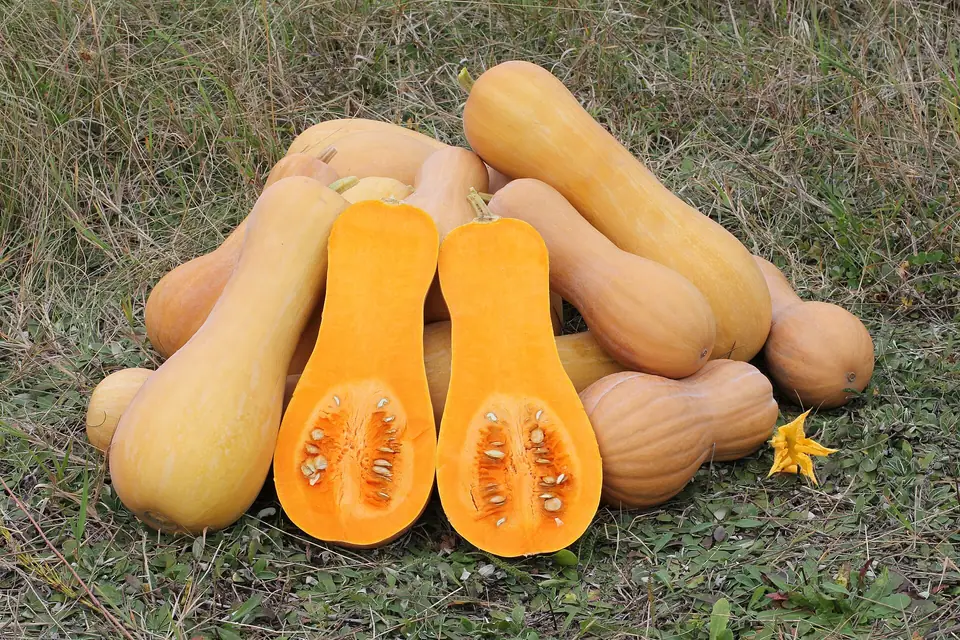
This squash is a generous plant: sow the seeds in warm soil, plant out after the last frost, and give it full sun and moderately moist, well-drained soil. The fruits ripen from late summer to fall. The fruits, the seeds and even the flowers are edible, and the mild-tasting fruit is great fried, baked, added to pasta or in soups.
- Sun
Full sun
What the sources say (1)
Light: Full sun
Light: Full sun (6 or more hours of direct sunlight a day) Soil Texture: High Organic Matter
— Cucurbita moschata (Butternut Squash, Calabasa, Calabaza, Crookneck Squash, Squash, Winter Squash) | North Carolina Extension Gardener Plant Toolbox [1] - Water
Keep the soil moderately moist, with good drainage
What the sources say (2)
Watering: Prefers moderately moist soil
Native to Central and South America, winter squash is an aggressive grower and prefers moderately moist soil with full access to sunlight.
— Cucurbita moschata (Butternut Squash, Calabasa, Calabaza, Crookneck Squash, Squash, Winter Squash) | North Carolina Extension Gardener Plant Toolbox [1] Watering notes: Good drainage and moist soil
Soil Drainage: Good Drainage Moist Available Space To Plant: 12 inches-3 feet
— Cucurbita moschata (Butternut Squash, Calabasa, Calabaza, Crookneck Squash, Squash, Winter Squash) | North Carolina Extension Gardener Plant Toolbox [1] - Cold
Survives winters down to −40 °F (−40 °C)
Very hardy · USDA 3a · RHS H7 · Z3
What the sources say (2)
Hardiness, coldest zone: 3a [winter low −40 to −37.2 °C (−40 to −35 °F)]
USDA Plant Hardiness Zone: 3a, 3b, 4a, 4b, 5a, 5b, 6a, 6b, 7a, 7b, 8a, 8b, 9a, 9b, 10a, 10b, 11a, 11b
— Cucurbita moschata (Butternut Squash, Calabasa, Calabaza, Crookneck Squash, Squash, Winter Squash) | North Carolina Extension Gardener Plant Toolbox [1] Hardiness, warmest zone: 11b [winter low 7.2 to 10 °C (45 to 50 °F)]
USDA Plant Hardiness Zone: 3a, 3b, 4a, 4b, 5a, 5b, 6a, 6b, 7a, 7b, 8a, 8b, 9a, 9b, 10a, 10b, 11a, 11b
— Cucurbita moschata (Butternut Squash, Calabasa, Calabaza, Crookneck Squash, Squash, Winter Squash) | North Carolina Extension Gardener Plant Toolbox [1] - Soil
Well-drained soil, pH 6.0–8.0
What the sources say (2)
Soil pH, minimum: 6.0
Soil pH: Neutral (6.0-8.0) Soil Drainage: Good Drainage Moist
— Cucurbita moschata (Butternut Squash, Calabasa, Calabaza, Crookneck Squash, Squash, Winter Squash) | North Carolina Extension Gardener Plant Toolbox [1] Soil pH, maximum: 8.0
Soil pH: Neutral (6.0-8.0) Soil Drainage: Good Drainage Moist
— Cucurbita moschata (Butternut Squash, Calabasa, Calabaza, Crookneck Squash, Squash, Winter Squash) | North Carolina Extension Gardener Plant Toolbox [1] - Planting
Plant out in late spring or early summer, after the last frost
What the sources say (3)
Planting: Transplant in late spring, early summer, or after the last frost
According to NC State Extension: Transplant it in late spring, early summer, or after the last frost.
— Cucurbita moschata (Butternut Squash, Calabasa, Calabaza, Crookneck Squash, Squash, Winter Squash) | North Carolina Extension Gardener Plant Toolbox [1] pumpkin in general (fonte: Illinois Extension): Pumpkin is a warm season vegetable that is planted after the danger of frost is gone, and the soil is warm enough for the seed to germinate.
— Pumpkin (Cucurbita pepo; C. maxima; C. moschata; C. mixta)-Hort Answers - University of Illinois Extension [4] It is easily sown from seed, especially when soils are warm. Transplant it in late spring, early summer, or after the last frost.
— Cucurbita moschata (Butternut Squash, Calabasa, Calabaza, Crookneck Squash, Squash, Winter Squash) | North Carolina Extension Gardener Plant Toolbox [1] - Feeding
Feed before planting, then add nitrogen again when the plants start to vine
What the sources say (3)
When: Phosphorus, potassium and 70% of the nitrogen before planting; the rest of the nitrogen when plants start to vine
Apply recommended amounts of phosphorus and potassium fertilizers before planting. Apply 60-100 pounds of nitrogen per acre.
— Pumpkin (Cucurbita pepo; C. maxima; C. moschata; C. mixta)-Hort Answers - University of Illinois Extension [4] Apply about 70% of the recommended amounts of nitrogen pre-plant and the rest as sidedressing or through drip irrigation when plants start to vine.
— Pumpkin (Cucurbita pepo; C. maxima; C. moschata; C. mixta)-Hort Answers - University of Illinois Extension [4] How often: Twice for nitrogen: before planting and when plants start to vine
Apply about 70% of the recommended amounts of nitrogen pre-plant and the rest as sidedressing or through drip irrigation when plants start to vine.
— Pumpkin (Cucurbita pepo; C. maxima; C. moschata; C. mixta)-Hort Answers - University of Illinois Extension [4] - Harvest
Pick in late summer to fall, when the rind is too hard to dent with a fingernail
What the sources say (4)
Harvest: Fall (fruits mature late summer to fall)
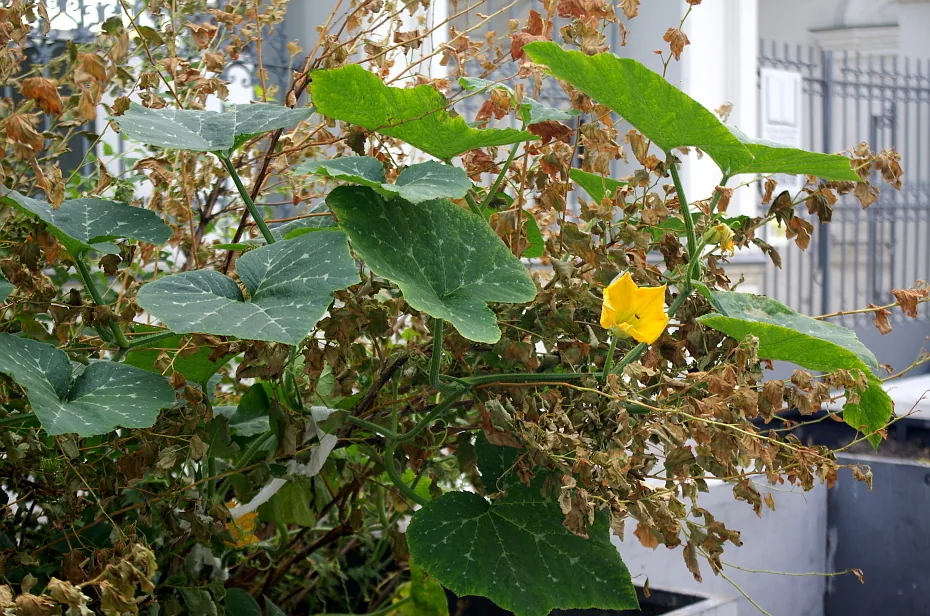
According to NC State Extension: It has yellow fruit-bearing flowers that are produced during the summer and fruits maturing late summer to fall.
— Cucurbita moschata (Butternut Squash, Calabasa, Calabaza, Crookneck Squash, Squash, Winter Squash) | North Carolina Extension Gardener Plant Toolbox [1] pumpkin in general (fonte: Illinois Extension): Harvest pumpkin fruits when the rind is hard and cannot be poked by finger-nail, and the fruit is orange in color.
— Pumpkin (Cucurbita pepo; C. maxima; C. moschata; C. mixta)-Hort Answers - University of Illinois Extension [4] Fruit Value To Gardener: Edible Long-lasting Showy Display/Harvest Time: Fall
— Cucurbita moschata (Butternut Squash, Calabasa, Calabaza, Crookneck Squash, Squash, Winter Squash) | North Carolina Extension Gardener Plant Toolbox [1] It has yellow fruit-bearing flowers that are produced during the summer and fruits maturing late summer to fall.
— Cucurbita moschata (Butternut Squash, Calabasa, Calabaza, Crookneck Squash, Squash, Winter Squash) | North Carolina Extension Gardener Plant Toolbox [1] - Pests
Watch out for slugs, aphids and beetles
- Propagation
Grows from seed
What the sources say (1)
Propagation: Seed
Life Cycle: Annual Recommended Propagation Strategy: Seed Country Or Region Of Origin:
— Cucurbita moschata (Butternut Squash, Calabasa, Calabaza, Crookneck Squash, Squash, Winter Squash) | North Carolina Extension Gardener Plant Toolbox [1] - Sowing
Easy from seed once the soil reaches 58–60 °F (14–16 °C)
What the sources say (3)
Sowing: Easily sown from seed, especially when soils are warm
According to NC State Extension: It is easily sown from seed, especially when soils are warm.
— Cucurbita moschata (Butternut Squash, Calabasa, Calabaza, Crookneck Squash, Squash, Winter Squash) | North Carolina Extension Gardener Plant Toolbox [1] pumpkin and squash in general (fonte: Illinois Extension): Plant treated seeds when soil temperature is 58 to 60 degrees Farenheit.
— Pumpkin (Cucurbita pepo; C. maxima; C. moschata; C. mixta)-Hort Answers - University of Illinois Extension [4] It is easily sown from seed, especially when soils are warm. Transplant it in late spring, early summer, or after the last frost.
— Cucurbita moschata (Butternut Squash, Calabasa, Calabaza, Crookneck Squash, Squash, Winter Squash) | North Carolina Extension Gardener Plant Toolbox [1] - Safety
Safe for cats, dogs and horses
Overview
Butternut squash (Cucurbita moschata) is a warm-season annual vegetable vine that trails along the ground or climbs with tendrils. [1] It prefers moderately moist soil with full access to sunlight and is easily sown from seed when soils are warm. [1] The fruits have a mild flavor and can be fried, baked, added to pasta and used in soups. [1]
This record is incomplete: the sources we read do not cover every field yet.
Not yet covered by our sources: Spacing
Squash care
How to water Squash
Watering
Prefers moderately moist soil
What the sources say (1)
Native to Central and South America, winter squash is an aggressive grower and prefers moderately moist soil with full access to sunlight.Watering notes
Good drainage and moist soil
What the sources say (1)
Soil Drainage:
Good Drainage
Moist
Available Space To Plant:
12 inches-3 feetHow much light Squash needs
Full sun
What the sources say (1)
Light:
Full sun (6 or more hours of direct sunlight a day)
Soil Texture:
High Organic MatterHow much cold Squash can take
Hardiness, coldest zone
3a [winter low −40 to −37.2 °C (−40 to −35 °F)]
What the sources say (1)
USDA Plant Hardiness Zone:
3a, 3b, 4a, 4b, 5a, 5b, 6a, 6b, 7a, 7b, 8a, 8b, 9a, 9b, 10a, 10b, 11a, 11bHardiness, warmest zone
11b [winter low 7.2 to 10 °C (45 to 50 °F)]
What the sources say (1)
USDA Plant Hardiness Zone:
3a, 3b, 4a, 4b, 5a, 5b, 6a, 6b, 7a, 7b, 8a, 8b, 9a, 9b, 10a, 10b, 11a, 11bBest soil for Squash
Soil pH, minimum
6.0
What the sources say (1)
Soil pH:
Neutral (6.0-8.0)
Soil Drainage:
Good Drainage
MoistSoil pH, maximum
8.0
What the sources say (1)
Soil pH:
Neutral (6.0-8.0)
Soil Drainage:
Good Drainage
MoistWhere to grow Squash
Not stated in the sources we read.
How to propagate Squash
Seed
What the sources say (1)
Life Cycle:
Annual
Recommended Propagation Strategy:
Seed
Country Or Region Of Origin:How to grow Squash
Fertilizing
When
Phosphorus, potassium and 70% of the nitrogen before planting; the rest of the nitrogen when plants start to vine
What the sources say (2)
Apply recommended amounts of phosphorus and potassium fertilizers before planting. Apply 60-100 pounds of nitrogen per acre.Apply about 70% of the recommended amounts of nitrogen pre-plant and the rest as sidedressing or through drip irrigation when plants start to vine.How often
Twice for nitrogen: before planting and when plants start to vine
What the sources say (1)
Apply about 70% of the recommended amounts of nitrogen pre-plant and the rest as sidedressing or through drip irrigation when plants start to vine.Mineral fertilizers
Phosphorus and potassium fertilizers at soil-test rates before planting; nitrogen 6.73-11.2 g/m² per season, 70% before planting and the rest as side-dressing or through drip irrigation
What the sources say (3)
Test the soil and apply recommended amounts of nutrients. Apply recommended amounts of phosphorus and potassium fertilizers before planting.Apply recommended amounts of phosphorus and potassium fertilizers before planting. Apply 60-100 pounds of nitrogen per acre.Apply about 70% of the recommended amounts of nitrogen pre-plant and the rest as sidedressing or through drip irrigation when plants start to vine.Squash pests and problems
Slugs, aphids and beetles
Symptom: Slugs, aphids, and beetles can be problems.
What to do: No control measure is given in the source.
What the sources say (1)
Insects, diseases, and Other Plant Problems: Slugs, aphids, and beetles can be problems.
— Cucurbita moschata (Butternut Squash, Calabasa, Calabaza, Crookneck Squash, Squash, Winter Squash) | North Carolina Extension Gardener Plant Toolbox [1]
Remedies
Each remedy shows what official sources say about it; traditional remedies without an official source are marked as such. Harmful ones are listed so you know to avoid them.
First aid
First aid: not a substitute for a doctor
toxic squash syndrome (bitter fruit)
staying hydrated after eating bitter squash Official source, not independently tested
Seek medical attention if you cannot tolerate oral fluids because of vomiting, or if symptoms are severe, consist of more than just gastrointestinal symptoms, or last more than a day.
— poison.org [5] use the web POISON CONTROL online tool to get help, or call your poison center at 1-800-222-1222
— poison.org [5] How: If you take a small taste, spit it out and discard the rest; if you ate it and have gastrointestinal symptoms, make sure you stay hydrated.
If you ate it and are experiencing gastrointestinal symptoms, make sure you stay hydrated.
— poison.org [5]
Treating the plant
squash bugs
hand-picking adults and crushing eggs Works
How: In small plantings, pick the bugs by hand; check for eggs at least once a week during June and crush them when detected.
In small plantings, hand-picking can be very effective. Attention should be given to the eggs which are easily detected in garden surveys and can be crushed when detected.
— extension.colostate.edu [6] What the evidence says In small plantings, hand-picking can be very effective.
— extension.colostate.edu [6] board trap Partly works
How: Place a wooden board or heavy cardboard on the ground; nymphs and adults congregate under it overnight; pick up the board or kill the bugs early in the morning.
Scouting – place a wooden board or heavy cardboard on the ground to attract nymphs and adults who will congregate under the board overnight.
— extension.colostate.edu [6] What the evidence says Picking up and removing the board or killing the bugs early in the morning can help reduce squash bug populations.
— extension.colostate.edu [6] duct tape for eggs and nymphs Partly works
How: Look under all the leaves every two days for eggs; stick eggs, nymphs and nearby adults to a roll of duct tape with the sticky side out, then throw the tape away.
You make a little roll sticky side out and then stick all the eggs to it.
— theseasonalhomestead.com [7] What the evidence says Nymphs can be hand crushed, drowned in soapy water, or removed using the sticky side of duct tape to trap them.
— extension.psu.edu [8] floating row covers Partly works
Row covers may be used as a preventative measure from planting until bloom, but must be removed when the plants begin to bloom to allow for pollination.
— extension.psu.edu [8] How: Cover young plants until they start to bloom; remove the cover at bloom so pollinators can reach the flowers.
Place floating row covers over young squash plants until they start to bloom. This will exclude attacking insects until plants are strong enough to withstand pest damage.
— harvesttotable.com [9] What the evidence says Use row cover over plants until they begin to bloom. Remove egg clusters by hand.
— extension.umd.edu [10] diatomaceous earth Works
Be careful NOT to get any diatomaceous earth inside your squash flowers as this can injure and kill beneficial pollinators.
— youshouldgrow.com [11] How: Dust the base and leaves of the plants; it only affects young nymphs and must be reapplied if it gets wet.
Dusting the base and leaves of your plants with diatomaceous earth is helpful to cut down on the numbers of squash bugs. But it will only affect the young nymphs and must be reapplied if it gets wet.
— youshouldgrow.com [11] What the evidence says Diatomaceous earth/pyrethrins applications around the base of the plant can be an effective method to control squash bug
— extension.colostate.edu [6] blue hubbard trap crop Not verified
Traditional remedy, not verified by an official source.
How: Plant a few Blue Hubbard squash along the edge of the garden at least two weeks before the squash you want to keep; squash bugs prefer it.
cucumber beetles
yellow container with soapy water Official source, not independently tested
How: In mid-June place a yellow-colored container filled with water and a drop of dish soap in the garden; flying insects are attracted to the yellow and trapped.
In mid-June, place a yellow-colored container filled with water and a drop of dish soap in your garden.
— extension.psu.edu [8]
squash vine borer
wrapping the stem with foil Not verified
Traditional remedy, not verified by an official source.
How: Wrap the stem of young plants with aluminum foil, plastic cups or another barrier to block access to the base of the plant.
slitting the vine to remove the borer Not verified
Traditional remedy, not verified by an official source.
How: Look for entrance holes where frass may accumulate; slit the vine with a knife, remove the borer, and bury the runner at that point to re-root.
aphids
insecticidal soap Works
spraying home remedies that contain dish detergent on plants on a sunny day can injure the plant, essentially burning it.
— extension.psu.edu [13] How: Use insecticidal soap on aphids; coat the undersides of leaves and spray in the evening.
They leave behind sticky excrement called honeydew which can turn into a black sooty mold. Use insecticidal soap.
— harvesttotable.com [9] What the evidence says insecticidal soap is a safe, effective organic insecticide with minimal environmental impact.
— extension.psu.edu [12]
powdery mildew
milk and water spray Not verified
Traditional remedy, not verified by an official source.
How: A spray of 1 part milk and 6 parts water applied every two weeks during the second half of summer.
neem oil Partly works
Just like synthetic pesticides, organic pesticides are formulated to kill.
— extension.unh.edu [14] How: Neem oil treatments can help treat mild and early powdery mildew infections.
Neem oil treatments can also help treat mild and early powdery mildew infections.
— youshouldgrow.com [11] What the evidence says However, neem oil is not effective against every insect and disease, and often must be frequently reapplied to reach the desired outcome.
— extension.unh.edu [14]
cutworms
paper collar around the stem Not verified
Traditional remedy, not verified by an official source.
How: Place a 3-inch paper collar around the stem of the plant and keep the garden free of weeds.
overwintering squash pests
removing plant debris Works
How: Remove all plant debris at the end of the growing season and rotate crops.
Many insects winter over in leaf and plant litter, so removing all plant debris at the end of the growing season is vital.
— extension.psu.edu [8] What the evidence says Many insects winter over in leaf and plant litter, so removing all plant debris at the end of the growing season is vital.
— extension.psu.edu [8]
seeds fail to germinate
soaking seeds in tepid water Not verified
Traditional remedy, not verified by an official source.
How: Soak the seed in tepid water for 24 hours before sowing, then dry the seed on a paper towel before planting.
Is Squash poisonous?
Reported by the source, quoted verbatim. This is not medical or veterinary advice: if a person or an animal may have eaten this plant, contact a poison control centre or a veterinarian.
#fall interest #large leaves #non-toxic for cats #non-toxic for horses #non-toxic for dogs #early childhood #annual
[1]The source flags the risk for this animal but does not explain why.
Calendar
Sowing
Easily sown from seed, especially when soils are warm
What each source says
According to NC State Extension: Easily sown from seed, especially when soils are warm
pumpkin and squash in general (fonte: Illinois Extension): When soil temperature is 58 to 60 F
What the sources say (3)
According to NC State Extension: It is easily sown from seed, especially when soils are warm.pumpkin and squash in general (fonte: Illinois Extension): Plant treated seeds when soil temperature is 58 to 60 degrees Farenheit.It is easily sown from seed, especially when soils are warm. Transplant it in late spring, early summer, or after the last frost.Planting
Transplant in late spring, early summer, or after the last frost
What each source says
According to NC State Extension: Late spring, early summer, or after the last frost
pumpkin in general (fonte: Illinois Extension): After the danger of frost is gone, when the soil is warm enough for germination
What the sources say (3)
According to NC State Extension: Transplant it in late spring, early summer, or after the last frost.pumpkin in general (fonte: Illinois Extension): Pumpkin is a warm season vegetable that is planted after the danger of frost is gone, and the soil is warm enough for the seed to germinate.It is easily sown from seed, especially when soils are warm. Transplant it in late spring, early summer, or after the last frost.Harvest
Fall (fruits mature late summer to fall)
What each source says
According to NC State Extension: Late summer to fall
pumpkin in general (fonte: Illinois Extension): When the rind is hard and cannot be poked by finger-nail
What the sources say (4)
According to NC State Extension: It has yellow fruit-bearing flowers that are produced during the summer and fruits maturing late summer to fall.pumpkin in general (fonte: Illinois Extension): Harvest pumpkin fruits when the rind is hard and cannot be poked by finger-nail, and the fruit is orange in color.Fruit Value To Gardener:
Edible
Long-lasting
Showy
Display/Harvest Time:
FallIt has yellow fruit-bearing flowers that are produced during the summer and fruits maturing late summer to fall.Months as given by the sources, which are mostly from the United States (northern hemisphere). In the southern hemisphere they shift by about six months.
Relative to frost
Less precise estimate: there is no weather station within 300 km.
Find frost dates by ZIP code or city
Transplant: around the last frost
Transplant it in late spring, early summer, or after the last frost.
— Cucurbita moschata (Butternut Squash, Calabasa, Calabaza, Crookneck Squash, Squash, Winter Squash) | North Carolina Extension Gardener Plant Toolbox [1] Plant: around the last frost
Pumpkin is a warm season vegetable that is planted after the danger of frost is gone
— Pumpkin (Cucurbita pepo; C. maxima; C. moschata; C. mixta)-Hort Answers - University of Illinois Extension [4]
Count from the average frost dates where you live.
Edibility
Reported by the source, quoted verbatim. Do not eat a plant on the basis of this page alone: identification mistakes can be dangerous.
The fruits have a mild flavor and can be fried, baked, added to pasta, used in soups, and more.
[1]Fruits may be long or round, large or small, smooth or warty. Comes in a variety of colors, shapes, and sizes. Fruits and seeds are both edible.
[1]Flower Inflorescence: Solitary Flower Value To Gardener: Edible Showy
[1]
Indicative values
Values from a secondary source, not checked word for word like the rest of this page. Use them as a starting point.
- Life cycle
- AnnualIndicative value, adapt it to your climate · Secondary source
- Mature height
- 22.9-45.7 cm (0.75-1.5 ft)Indicative value, adapt it to your climate · Secondary source
- Hours of sun
- 8-10 hoursIndicative value, adapt it to your climate · Secondary source
- Care level
- MediumIndicative value, adapt it to your climate · Secondary source
- Growth rate
- LowIndicative value, adapt it to your climate · Secondary source
- Pruning
- December, January, February, June, July, December, January, FebruaryIndicative value, adapt it to your climate · Secondary source
Similar plants
- Field pumpkin Cucurbita pepo
- Figleaf Gourd Cucurbita ficifolia
- Squash Cucurbita maxima
- Winter Squash Cucurbita argyrosperma
- Abyssinian banana Ensete ventricosum
- Agretti Soda inermis
- Alexanders Smyrnium olusatrum
- Allium triquetrum Allium triquetrum
Sources
Every value above is quoted from these documents. Links lead to the original publisher.
- Cucurbita moschata (Butternut Squash, Calabasa, Calabaza, Crookneck Squash, Squash, Winter Squash) | North Carolina Extension Gardener Plant Toolbox · plants.ces.ncsu.edu, consulted
- Butternut Squash - Cucurbita moschata | North Carolina Extension Gardener Plant Toolbox · plants.ces.ncsu.edu, consulted
- Crookneck Squash - Cucurbita moschata | North Carolina Extension Gardener Plant Toolbox · plants.ces.ncsu.edu, consulted
- Pumpkin (Cucurbita pepo; C. maxima; C. moschata; C. mixta)-Hort Answers - University of Illinois Extension · web.extension.illinois.edu, consulted
- poison.org · poison.org
- extension.colostate.edu · extension.colostate.edu
- theseasonalhomestead.com · theseasonalhomestead.com
- extension.psu.edu · extension.psu.edu
- harvesttotable.com · harvesttotable.com
- extension.umd.edu · extension.umd.edu
- youshouldgrow.com · youshouldgrow.com
- extension.psu.edu · extension.psu.edu
- extension.psu.edu · extension.psu.edu
- extension.unh.edu · extension.unh.edu
Written by Emilio Marruso · last checked