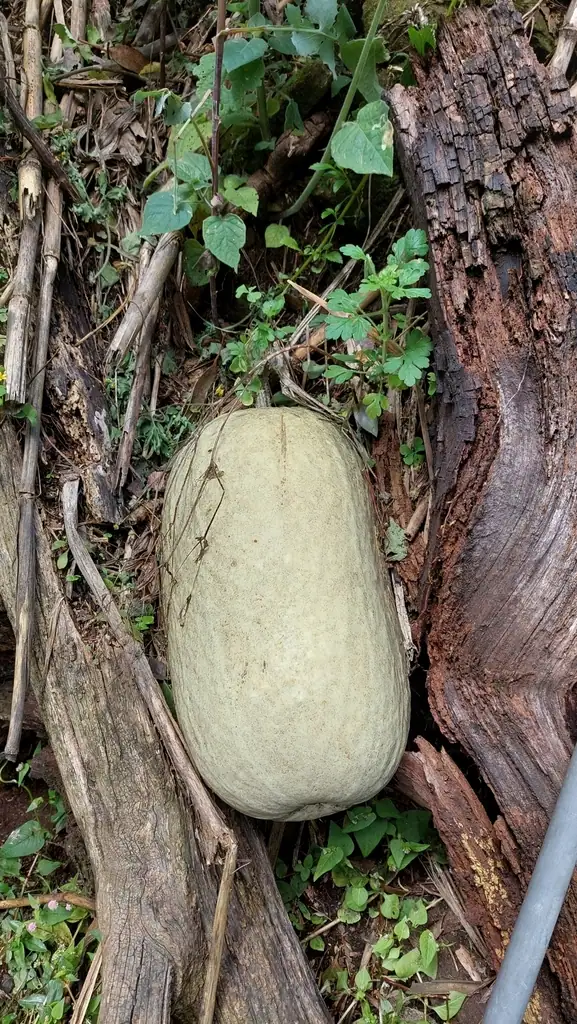
How to Grow and Care for Figleaf Gourd
Cucurbita ficifolia
Written by Emilio Marruso · last checked
Not toxic to cats and dogs, according to the sources · Sources
At a glance
Fig-leaf gourd is a vigorous plant with a tendency to climb, happy in full sun or partial shade and in moist soil. In fall it gives fruit you can cook or turn into jam, and its leaves and stems are edible too. Best of all, the mature fruit keeps for 2 years or more and grows sweeter over time.
- Sun
Full sun to partial shade
What the sources say (1)
Light: Full sun to partial shade
Figleaf Gourd can grow in poor soil (clay or sandy), in full sun or partial shade.
— Cucurbita ficifolia (Alcayota, Chilacayote, Fig Leaf Gourd, Figleaf Gourd, Fig Leaf Squash, Malabar Gourd, Seven Year Melon, Shark Fin Melon) | North Carolina Extension Gardener Plant Toolbox [1] - Water
Likes moist to wet soil: don't let it dry out
What the sources say (1)
Watering: Prefers moist to wet soil conditions
It does prefer moist to wet soil conditions, but is not cold tolerant.
— Cucurbita ficifolia (Alcayota, Chilacayote, Fig Leaf Gourd, Figleaf Gourd, Fig Leaf Squash, Malabar Gourd, Seven Year Melon, Shark Fin Melon) | North Carolina Extension Gardener Plant Toolbox [1] - Cold
Survives winters down to 20 °F (−6.7 °C)
Hardy in average winters · USDA 9a · RHS H4 · Z9
What the sources say (2)
Hardiness, coldest zone: 9a [winter low −6.7 to −3.9 °C (20 to 25 °F)]
USDA Plant Hardiness Zone: 9a, 9b, 10a, 10b, 11a, 11b
— Cucurbita ficifolia (Alcayota, Chilacayote, Fig Leaf Gourd, Figleaf Gourd, Fig Leaf Squash, Malabar Gourd, Seven Year Melon, Shark Fin Melon) | North Carolina Extension Gardener Plant Toolbox [1] Hardiness, warmest zone: 11b [winter low 7.2 to 10 °C (45 to 50 °F)]
USDA Plant Hardiness Zone: 9a, 9b, 10a, 10b, 11a, 11b
— Cucurbita ficifolia (Alcayota, Chilacayote, Fig Leaf Gourd, Figleaf Gourd, Fig Leaf Squash, Malabar Gourd, Seven Year Melon, Shark Fin Melon) | North Carolina Extension Gardener Plant Toolbox [1] - Harvest
Harvest in fall; cook the fruit or make jam. It keeps 2 years or more and gets sweeter
What the sources say (2)
Harvest: Fall
Fruit Value To Gardener: Edible Long-lasting Display/Harvest Time: Fall
— Cucurbita ficifolia (Alcayota, Chilacayote, Fig Leaf Gourd, Figleaf Gourd, Fig Leaf Squash, Malabar Gourd, Seven Year Melon, Shark Fin Melon) | North Carolina Extension Gardener Plant Toolbox [1] Storage: mature fruit can be stored for 2 years or more and becomes sweeter over time
The mature fruit, rounded and resembling a watermelon, can be stored for 2 years or more and becomes sweeter over time.
— Cucurbita ficifolia (Alcayota, Chilacayote, Fig Leaf Gourd, Figleaf Gourd, Fig Leaf Squash, Malabar Gourd, Seven Year Melon, Shark Fin Melon) | North Carolina Extension Gardener Plant Toolbox [1] - Watch out
A vigorous plant that likes to climb: give it room and support
- Propagation
Grows from seed
What the sources say (1)
Propagation: Seed
Recommended Propagation Strategy: Seed Country Or Region Of Origin:
— Cucurbita ficifolia (Alcayota, Chilacayote, Fig Leaf Gourd, Figleaf Gourd, Fig Leaf Squash, Malabar Gourd, Seven Year Melon, Shark Fin Melon) | North Carolina Extension Gardener Plant Toolbox [1] - Safety
Not toxic to cats, dogs or horses
Overview
Figleaf gourd is an annual, vining squash native to South America, grown for its edible fruits with black seeds. [1] It grows in poor soil in full sun or partial shade, prefers moist to wet soil, and is not cold tolerant. [1] The mature fruit can be stored for 2 years or more and becomes sweeter over time. [1]
This record is incomplete: the sources we read do not cover every field yet.
Not yet covered by our sources: Sowing / Planting, Spacing
Figleaf Gourd care
How to water Figleaf Gourd
Prefers moist to wet soil conditions
What the sources say (1)
It does prefer moist to wet soil conditions, but is not cold tolerant.How much light Figleaf Gourd needs
Full sun to partial shade
What the sources say (1)
Figleaf Gourd can grow in poor soil (clay or sandy), in full sun or partial shade.How much cold Figleaf Gourd can take
Hardiness, coldest zone
9a [winter low −6.7 to −3.9 °C (20 to 25 °F)]
What the sources say (1)
USDA Plant Hardiness Zone:
9a, 9b, 10a, 10b, 11a, 11bHardiness, warmest zone
11b [winter low 7.2 to 10 °C (45 to 50 °F)]
What the sources say (1)
USDA Plant Hardiness Zone:
9a, 9b, 10a, 10b, 11a, 11bWhere to grow Figleaf Gourd
Not stated in the sources we read.
How to propagate Figleaf Gourd
Seed
What the sources say (1)
Recommended Propagation Strategy:
Seed
Country Or Region Of Origin:How to grow Figleaf Gourd
The plant
Life cycle
annual
What the sources say (1)
Figleaf Gourd is an annual, vining, squash in the cucumber family and native to South AmericaFamily
Cucurbitaceae
What the sources say (1)
Genus:
Cucurbita
Species:
ficifolia
Family:
Cucurbitaceae
Uses (Ethnobotany):Harvest and storage
Storage
mature fruit can be stored for 2 years or more and becomes sweeter over time
What the sources say (1)
The mature fruit, rounded and resembling a watermelon, can be stored for 2 years or more and becomes sweeter over time.Remedies
The sources we checked give no remedies for this plant.
Is Figleaf Gourd poisonous?
Reported by the source, quoted verbatim. This is not medical or veterinary advice: if a person or an animal may have eaten this plant, contact a poison control centre or a veterinarian.
#non-toxic for cats #non-toxic for horses #non-toxic for dogs
[1]The source flags the risk for this animal but does not explain why.
Calendar
Sowing
Not stated in the sources we read.
Planting
Not stated in the sources we read.
Harvest
Fall
What the sources say (1)
Fruit Value To Gardener:
Edible
Long-lasting
Display/Harvest Time:
FallMonths as given by the sources, which are mostly from the United States (northern hemisphere). In the southern hemisphere they shift by about six months.
Edibility
Reported by the source, quoted verbatim. Do not eat a plant on the basis of this page alone: identification mistakes can be dangerous.
Similar plants
- Field pumpkin Cucurbita pepo
- Squash Cucurbita maxima
- Winter Squash Cucurbita argyrosperma
- Squash Cucurbita moschata
- Arabian Cucumber Cucumis dipsaceus
- Bitter Melon Momordica charantia
- Bottle gourd Lagenaria siceraria
- Cantaloupe Cucumis melo
Sources
Every value above is quoted from these documents. Links lead to the original publisher.
- Cucurbita ficifolia (Alcayota, Chilacayote, Fig Leaf Gourd, Figleaf Gourd, Fig Leaf Squash, Malabar Gourd, Seven Year Melon, Shark Fin Melon) | North Carolina Extension Gardener Plant Toolbox · plants.ces.ncsu.edu, consulted
- Fig Leaf Squash - Cucurbita ficifolia | North Carolina Extension Gardener Plant Toolbox · plants.ces.ncsu.edu, consulted
- Figleaf Gourd - Cucurbita ficifolia | North Carolina Extension Gardener Plant Toolbox · plants.ces.ncsu.edu, consulted
- Malabar Gourd - Cucurbita ficifolia | North Carolina Extension Gardener Plant Toolbox · plants.ces.ncsu.edu, consulted
- Cucurbita (Courgette, Gourd, Ornamental Gourd, Ornamental Pumpkin, Pumpkin, Squash, Summer Squash, Winter Squash, Zucchini) | North Carolina Extension Gardener Plant Toolbox · plants.ces.ncsu.edu, consulted
Written by Emilio Marruso · last checked