
How to Grow and Care for Alexanders
Smyrnium olusatrum
Written by Emilio Marruso · last checked
Toxic to: People · Why
At a glance
Alexanders is a plant you can eat from top to bottom: young leaves raw in salads, cooked roots with a flavor a bit like celery, and dried seeds used as a spice, a bit like black pepper. Sow it outdoors in autumn or in spring, give it sun and moderate water, and pick tender shoots from February until it flowers.
- Sun
Full sun; light shade is fine too
What the sources say (2)
Light: Full sun (light shade tolerated)
Light full sun Shade tolerance light shade Water moderate Hardiness Zone 6+ Soil textures sandy, loamy, clay Soil pH acid, neutral, alkaline Drainage well drained Tolerances high wind Wind Yes Tolerates Nutritionally Poor Soil No Drought intolerant
— Alexanders (Smyrnium olusatrum) — Practical Plants [5] Light: Full sun Soil: Average, moist, well-drained Care: Low mintenance
— Plant Profile: Alexanders (Smyrnium olusatrum) – KarensGardenTips.com [8] - Water
Moderate water; it does not handle drought
What the sources say (1)
Watering: Moderate water; drought intolerant
Light full sun Shade tolerance light shade Water moderate Hardiness Zone 6+ Soil textures sandy, loamy, clay Soil pH acid, neutral, alkaline Drainage well drained Tolerances high wind Wind Yes Tolerates Nutritionally Poor Soil No Drought intolerant
— Alexanders (Smyrnium olusatrum) — Practical Plants [5] - Soil
Well-drained soil that still holds some moisture
What the sources say (2)
Watering notes: Prefers a well-drained, moisture-retentive soil
Succeeds in most soils but prefers an open sunny position in a well-drained moisture retentive soil
— Smyrnium olusatrum - Useful Temperate Plants [4] Light: Full sun Soil: Average, moist, well-drained Care: Low mintenance
— Plant Profile: Alexanders (Smyrnium olusatrum) – KarensGardenTips.com [8] - Planting
Move autumn seedlings to their final spot in late spring
What the sources say (1)
Planting: Late spring (into its permanent position, from an autumn seedbed)
Seed - best sown in an outdoor seedbed in autumn and planted into its permanent position in late spring
— Alexanders (Smyrnium olusatrum) — Practical Plants [5] - Harvest
Shoots from February until flowering, then flower buds; young leaves all year; roots cooked
What the sources say (2)
Harvest: Shoots from February until they start to flower; flowers and flower buds once shoots turn tough; young leaves at any time of year
but the most reliable time to collect them is from February until they start to flower, when they become tough and woody.
— Alexanders - Wild Food UK [7] The leaves can be collected when they are young and fresh at any
— Alexanders - Wild Food UK [7] - Propagation
Grows from seed
What the sources say (1)
Propagation: Seed
Pests and Diseases: None of significance Propagation: Seed
— Plant Profile: Alexanders (Smyrnium olusatrum) – KarensGardenTips.com [8] - Sowing
Sow in an outdoor seedbed in autumn, or right where it will grow in spring
What the sources say (1)
Sowing: Autumn in an outdoor seedbed; also in situ in spring
Seed - best sown in an outdoor seedbed in autumn and planted into its permanent position in late spring
— Alexanders (Smyrnium olusatrum) — Practical Plants [5] - Safety
No known hazards
Overview
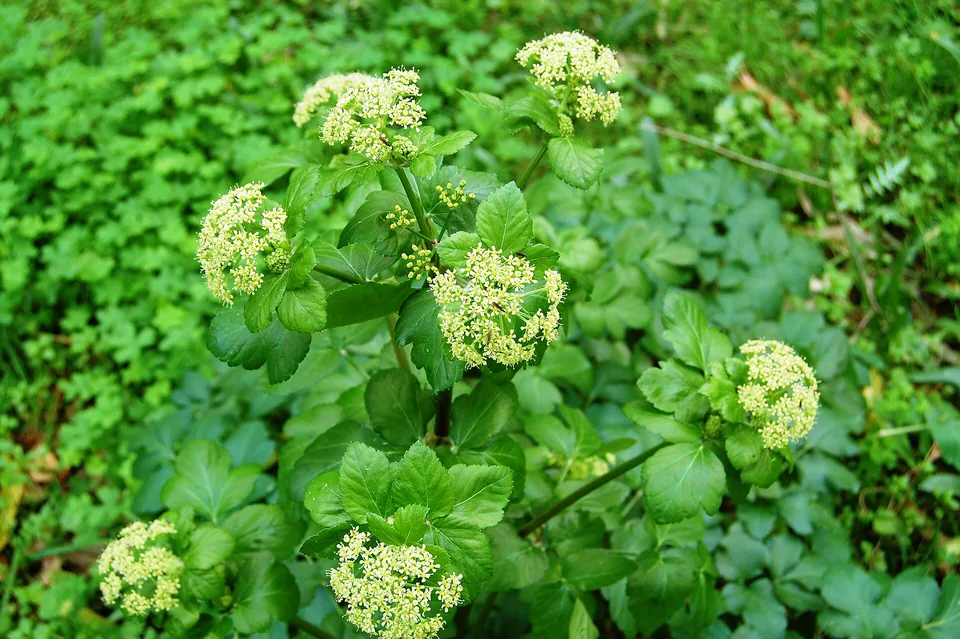
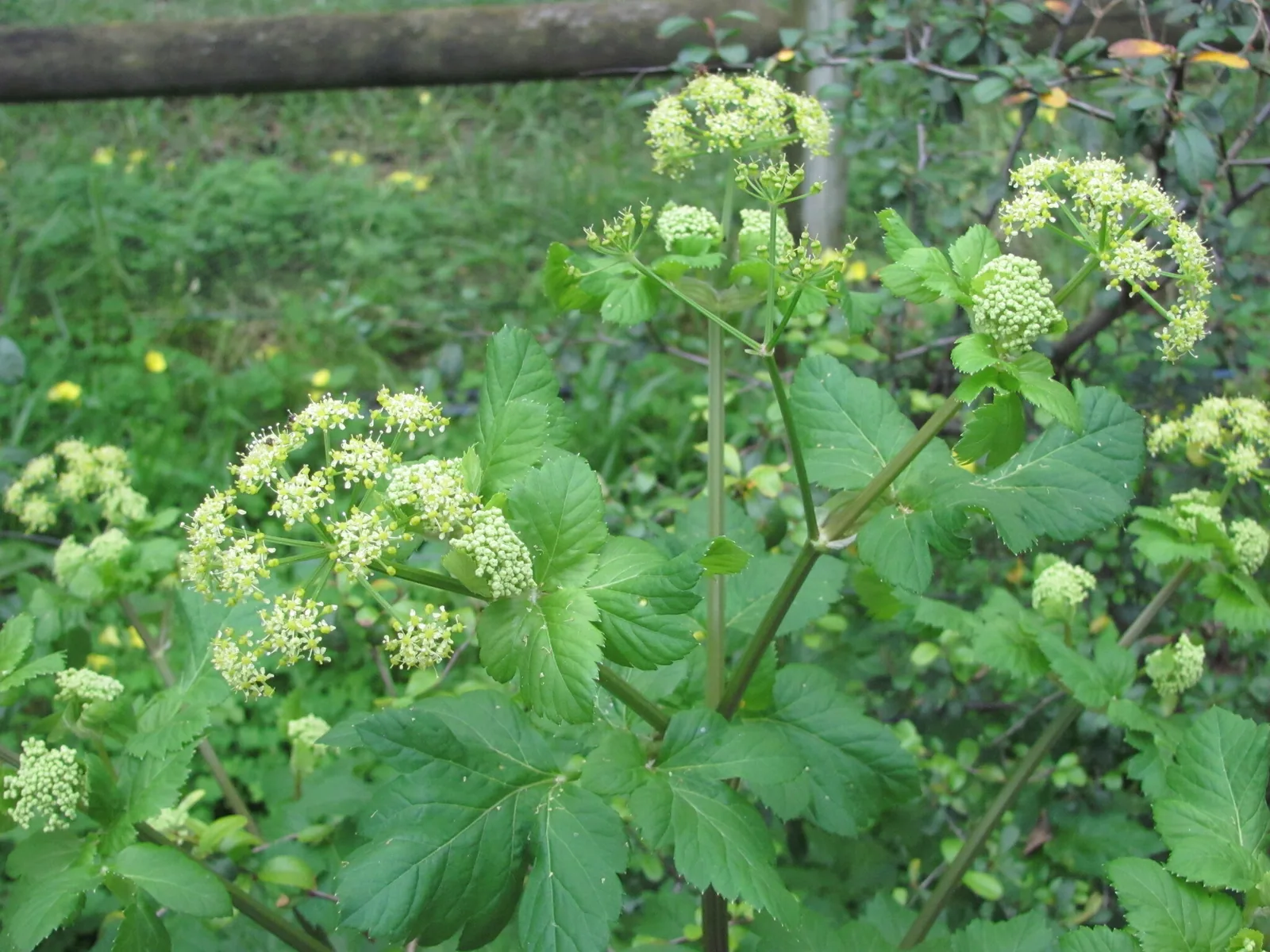
Alexanders is a biennial or perennial of the Apiaceae, naturalised in hedgerows, road margins, waste places and cliffs near the sea in Britain. [1][3] All parts are edible: it was a green vegetable and root crop, and its seeds are used as a pepper substitute. [3][5] It is sown from seed in autumn and prefers an open sunny position in a well-drained moisture-retentive soil. [5][4]
This record is incomplete: the sources we read do not cover every field yet.
Not yet covered by our sources: Spacing
Alexanders care
How to water Alexanders
Watering
Moderate water; drought intolerant
What the sources say (1)
Light
full sun
Shade tolerance
light shade
Water
moderate
Hardiness
Zone 6+
Soil textures
sandy, loamy, clay
Soil pH
acid, neutral, alkaline
Drainage
well drained
Tolerances
high wind
Wind
Yes
Tolerates Nutritionally Poor Soil
No
Drought
intolerantWatering notes
Prefers a well-drained, moisture-retentive soil
What the sources say (2)
Succeeds in most soils but prefers an open sunny position in a well-drained moisture retentive soilLight: Full sun
Soil: Average, moist, well-drained
Care: Low mintenanceHow much light Alexanders needs
Full sun (light shade tolerated)
What the sources say (2)
Light
full sun
Shade tolerance
light shade
Water
moderate
Hardiness
Zone 6+
Soil textures
sandy, loamy, clay
Soil pH
acid, neutral, alkaline
Drainage
well drained
Tolerances
high wind
Wind
Yes
Tolerates Nutritionally Poor Soil
No
Drought
intolerantLight: Full sun
Soil: Average, moist, well-drained
Care: Low mintenanceHow much cold Alexanders can take
Hardiness, coldest zone
The sources give different values depending on region, zone or growing conditions.
What each source says
According to Practical Plants: 6 [winter low −23.3 to −17.8 °C (−10 to 0 °F)]
According to Karen's Garden Tips: 5 [winter low −28.9 to −23.3 °C (−20 to −10 °F)]
What the sources say (2)
According to Practical Plants: Shade tolerance
light shade
Water
moderate
Hardiness
Zone 6+According to Karen's Garden Tips: Care: Low mintenance
Hardiness: Zones 5-9
Pests and DiseasesHardiness, warmest zone
9 [winter low −6.7 to −1.1 °C (20 to 30 °F)]
What the sources say (1)
Care: Low mintenance
Hardiness: Zones 5-9
Pests and DiseasesWhere to grow Alexanders
Not stated in the sources we read.
How to propagate Alexanders
Seed
What the sources say (1)
Pests and Diseases: None of significance
Propagation: SeedHow to grow Alexanders
The plant
Life cycle
biennial or perennial
What the sources say (1)
It is a biennial or perennial and grows primarily in the temperate biome.Family
Apiaceae
What the sources say (1)
(Apiaceae) Alexanders Carrot and hemlock summarise the contrasting nature of the family ApiaceaeRemedies
Each remedy shows what official sources say about it; traditional remedies without an official source are marked as such. Harmful ones are listed so you know to avoid them.
Getting rid of it
invasive spread
repeated cutting Works
How: Cut the plants every six weeks from May to September, then reseed with a grass and wildflower mix.
Targeted cutting of these species helps because repeatedly cutting them weakens the plant and prevents it producing seed.
— environmentagency.blog.gov.uk [9] What the evidence says Targeted cutting of these species helps because repeatedly cutting them weakens the plant and prevents it producing seed.
— environmentagency.blog.gov.uk [9] reseeding with grass and wildflower mix Official source, not independently tested
How: After cutting, reseed the areas with a grass and wildflower seed mix.
reseed the areas with a grass and wildflower seed mix to encourage pollinators, increase the local biodiversity and reduce flood risk.
— environmentagency.blog.gov.uk [9]
Is Alexanders poisonous?
Reported by the source, quoted verbatim. This is not medical or veterinary advice: if a person or an animal may have eaten this plant, contact a poison control centre or a veterinarian.
Known Hazards None known ## Botanical References 17 Title
[4]
Calendar
Sowing
Autumn in an outdoor seedbed; also in situ in spring
What the sources say (1)
Seed - best sown in an outdoor seedbed in autumn and planted into its permanent position in late springPlanting
Late spring (into its permanent position, from an autumn seedbed)
What the sources say (1)
Seed - best sown in an outdoor seedbed in autumn and planted into its permanent position in late springHarvest
Shoots from February until they start to flower; flowers and flower buds once shoots turn tough; young leaves at any time of year
Months as given by the sources, which are mostly from the United States (northern hemisphere). In the southern hemisphere they shift by about six months.
Edibility
Reported by the source, quoted verbatim. Do not eat a plant on the basis of this page alone: identification mistakes can be dangerous.
All parts of Smyrnium olusatrum are edible, and it was highly regarded as a green vegetable and root crop.
[3]Leaves and young shoots - raw in salads or cooked in soups, stews etc
[5]Root - cooked. Boiled and used in soups, its flavour is somewhat like celery.
[5]The seeds can be dried and used as a spice, a bit like black pepper.
[7]
Similar plants
- Angelica Angelica archangelica
- Anise burnet saxifrage Pimpinella anisum
- Caraway Carum carvi
- Coriander Coriandrum sativum
- Cumin Cuminum cyminum
- Echinophora spinosa Echinophora spinosa
- Fennel Foeniculum vulgare
- Garden lovage Levisticum officinale
Sources
Every value above is quoted from these documents. Links lead to the original publisher.
- Smyrnium olusatrum L. | Plants of the World Online | Kew Science · powo.science.kew.org, consulted
- STAZIONE SPERIMENTALE PER LE PIANTE OFFICINALI · ortobotaniconapoli.it, consulted
- Oxford University Plants 400: Smyrnium olusatrum · herbaria.plants.ox.ac.uk, consulted
- Smyrnium olusatrum - Useful Temperate Plants · temperate.theferns.info, consulted
- Alexanders (Smyrnium olusatrum) — Practical Plants · practicalplants.org, consulted
- Alexanders - Plantlife · plantlife.org.uk, consulted
- Alexanders - Wild Food UK · wildfooduk.com, consulted
- Plant Profile: Alexanders (Smyrnium olusatrum) – KarensGardenTips.com · karensgardentips.com, consulted
- environmentagency.blog.gov.uk · environmentagency.blog.gov.uk
Written by Emilio Marruso · last checked