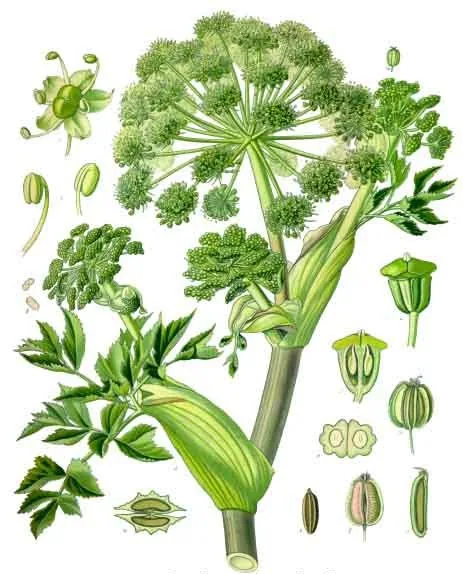


How to Grow and Care for Angelica
Angelica archangelica
Written by Emilio Marruso · last checked
Toxic to: People · Why
At a glance
Angelica is a biennial herb with a licorice flavor in its roots, leaves, seeds and young stems. Peel the young stalks and use them like celery or candy them, toss the leaves into salads, or brew leaves and roots into tea. It loves growing near running water, so keep the soil moist and look forward to its flowers in the second year.
- Sun
Full sun to part shade; part shade suits it best in mild, cool climates
What the sources say (5)
Light: Full sun to part shade
moderately cool climate: Garden Angelica thrives in a moderately cool climate in part shade
— Angelica archangelica (Angelica, Archangel, Garden Angelica, Ground Ash, Masterwort, Norwegian Angelica, Wild Celery) | North Carolina Extension Gardener Plant Toolbox [1] more northern climates: part shade or the full sun of more northern climates
— Angelica archangelica (Angelica, Archangel, Garden Angelica, Ground Ash, Masterwort, Norwegian Angelica, Wild Celery) | North Carolina Extension Gardener Plant Toolbox [1] According to UNH Extension: Sun : Full sun to part shade
— How to grow angelica (Angelica archangelica) | Extension [2] Grows best in rich, moist soils in full sun to part shade.
— How to grow angelica (Angelica archangelica) | Extension [2] Garden Angelica thrives in a moderately cool climate in part shade or the full sun of more northern climates and loves to grow near running water.
— Angelica archangelica (Angelica, Archangel, Garden Angelica, Ground Ash, Masterwort, Norwegian Angelica, Wild Celery) | North Carolina Extension Gardener Plant Toolbox [1] - Water
Keep the soil moist all the time; it loves growing near running water
What the sources say (2)
Watering: Keep consistently moist; do not let it dry out between waterings
The plant requires consistently moist soil; do not let it dry out between watering.
— Angelica archangelica (Angelica, Archangel, Garden Angelica, Ground Ash, Masterwort, Norwegian Angelica, Wild Celery) | North Carolina Extension Gardener Plant Toolbox [1] Watering notes: Loves to grow near running water
Garden Angelica thrives in a moderately cool climate in part shade or the full sun of more northern climates and loves to grow near running water.
— Angelica archangelica (Angelica, Archangel, Garden Angelica, Ground Ash, Masterwort, Norwegian Angelica, Wild Celery) | North Carolina Extension Gardener Plant Toolbox [1] - Cold
Survives winters down to −20 °F (−28.9 °C)
Very hardy · USDA 5a · RHS H7 · Z5
What the sources say (2)
Hardiness, coldest zone: 5a [winter low −28.9 to −26.1 °C (−20 to −15 °F)]
5a, 5b, 6a, 6b, 7a, 7b, 8a, 8b
— Angelica archangelica (Angelica, Archangel, Garden Angelica, Ground Ash, Masterwort, Norwegian Angelica, Wild Celery) | North Carolina Extension Gardener Plant Toolbox [1] Hardiness, warmest zone: 8b [winter low −9.4 to −6.7 °C (15 to 20 °F)]
5a, 5b, 6a, 6b, 7a, 7b, 8a, 8b
— Angelica archangelica (Angelica, Archangel, Garden Angelica, Ground Ash, Masterwort, Norwegian Angelica, Wild Celery) | North Carolina Extension Gardener Plant Toolbox [1] - Spacing
12–24 in between plants, 3 ft between rows
What the sources say (2)
Spacing: 30.5-61.0 cm (12-24 in) between plants, rows 91.4 cm (36 in) apart
Plant Spacing : 12-24 inches Row Spacing : 36 inches Maturity : 80-90 days (flowers in second year)
— How to grow angelica (Angelica archangelica) | Extension [2] Row spacing: 91 cm (36 inches)
Plant Spacing : 12-24 inches Row Spacing : 36 inches Maturity : 80-90 days (flowers in second year)
— How to grow angelica (Angelica archangelica) | Extension [2] - Planting
Plant in early spring
What the sources say (1)
Planting: Early spring
This plant is a biennial, which means it will die after producing seed in the second year. Early spring plantings are most successful.
— How to grow angelica (Angelica archangelica) | Extension [2] - Harvest
Pick leaves and stalks young and tender; collect seeds in late summer or early fall
What the sources say (2)
Harvest: Leaves and stalks when young and tender; seeds in late summer or early fall when ripe
Leaves and stalks are best used when they are young and tender. Seeds should be collected in late summer or early fall when ripe.
— How to grow angelica (Angelica archangelica) | Extension [2] How to harvest: Use leaves and stalks when young and tender.
Leaves and stalks are best used when they are young and tender. Seeds should be collected in late summer or early fall when ripe.
— How to grow angelica (Angelica archangelica) | Extension [2] - Size
2 to 4 ft wide
What the sources say (1)
Mature width: 61-122 cm (2 ft - 4 ft)
Dimensions: Height: 3 ft. 0 in. - 6 ft. 0 in. Width: 2 ft. 0 in. - 4 ft. 0 in.
— Angelica archangelica (Angelica, Archangel, Garden Angelica, Ground Ash, Masterwort, Norwegian Angelica, Wild Celery) | North Carolina Extension Gardener Plant Toolbox [1] - Propagation
From seed or root cuttings
What the sources say (1)
Propagation: Seed; root cuttings
Propagation can be done by seed or root cuttings in the second year.
— Angelica archangelica (Angelica, Archangel, Garden Angelica, Ground Ash, Masterwort, Norwegian Angelica, Wild Celery) | North Carolina Extension Gardener Plant Toolbox [1] - Sowing
Sow 1/4 inch deep; seeds take 30 days to sprout
What the sources say (2)
Sowing depth: 0.6 cm (1/4 inch)
Refrigerate for four to six weeks, then sow seeds ¼” deep, 10 seeds per foot. Thin seedlings to 12-24 inches apart in each direction.
— How to grow angelica (Angelica archangelica) | Extension [2] Days to germination: 30 days
Planting Depth: ¼ inch Soil Temperature: 50-60℉ Germination : 30 days Plant Spacing : 12-24 inches
— How to grow angelica (Angelica archangelica) | Extension [2] - Safety
Touching it can irritate skin and make it more sensitive to sunlight
Overview
Garden angelica is a robust biennial or short-lived perennial herb from the carrot family. [1] It requires consistently moist soil, grows in full sun to part shade, and is propagated by seed or root cuttings. [1][2]
Angelica care
How to water Angelica
Watering
Keep consistently moist; do not let it dry out between waterings
What the sources say (1)
The plant requires consistently moist soil; do not let it dry out between watering.Watering notes
Loves to grow near running water
What the sources say (1)
Garden Angelica thrives in a moderately cool climate in part shade or the full sun of more northern climates and loves to grow near running water.How much light Angelica needs
Full sun to part shade
What each source says
moderately cool climate: Part shade
more northern climates: Full sun
According to UNH Extension: Full sun to part shade
What the sources say (5)
moderately cool climate: Garden Angelica thrives in a moderately cool climate in part shademore northern climates: part shade or the full sun of more northern climatesAccording to UNH Extension: Sun : Full sun to part shadeGrows best in rich, moist soils in full sun to part shade.Garden Angelica thrives in a moderately cool climate in part shade or the full sun of more northern climates and loves to grow near running water.How much cold Angelica can take
Hardiness, coldest zone
5a [winter low −28.9 to −26.1 °C (−20 to −15 °F)]
What the sources say (1)
5a, 5b, 6a, 6b, 7a, 7b, 8a, 8bHardiness, warmest zone
8b [winter low −9.4 to −6.7 °C (15 to 20 °F)]
What the sources say (1)
5a, 5b, 6a, 6b, 7a, 7b, 8a, 8bWhere to grow Angelica
30.5-61.0 cm (12-24 in) between plants, rows 91.4 cm (36 in) apart
What the sources say (1)
Plant Spacing : 12-24 inches
Row Spacing : 36 inches
Maturity : 80-90 days (flowers in second year)How to propagate Angelica
Seed; root cuttings
What the sources say (1)
Propagation can be done by seed or root cuttings in the second year.How to grow Angelica
The plant
Life cycle
biennial
What the sources say (2)
Garden Angelica produces foliage in the first year and flowers in the second year then the plant dies after the seed ripens.This plant is a biennial, which means it will die after producing seed in the second year.Family
Apiaceae
What the sources say (1)
Attributes:
Genus:
Angelica
Species:
archangelica
Family:
Apiaceae
Uses (Ethnobotany):Mature height
Mature width
61-122 cm (2 ft - 4 ft)
What the sources say (1)
Dimensions:
Height: 3 ft. 0 in. - 6 ft. 0 in.
Width: 2 ft. 0 in. - 4 ft. 0 in.Sowing and growth
Days to germination
30 days
What the sources say (1)
Planting Depth: ¼ inch
Soil Temperature: 50-60℉
Germination : 30 days
Plant Spacing : 12-24 inchesSowing depth
0.6 cm (1/4 inch)
What the sources say (1)
Refrigerate for four to six weeks, then sow seeds ¼” deep, 10 seeds per foot. Thin seedlings to 12-24 inches apart in each direction.Row spacing
91 cm (36 inches)
What the sources say (1)
Plant Spacing : 12-24 inches
Row Spacing : 36 inches
Maturity : 80-90 days (flowers in second year)Days to maturity
80-90 days (flowers in second year)
What the sources say (1)
Plant Spacing : 12-24 inches
Row Spacing : 36 inches
Maturity : 80-90 days (flowers in second year)Harvest and storage
How to harvest
Use leaves and stalks when young and tender.
What the sources say (1)
Leaves and stalks are best used when they are young and tender. Seeds should be collected in late summer or early fall when ripe.Saving seeds
Collect seeds in late summer or early fall when ripe.
What the sources say (1)
Leaves and stalks are best used when they are young and tender. Seeds should be collected in late summer or early fall when ripe.Remedies
Each remedy shows what official sources say about it; traditional remedies without an official source are marked as such. Harmful ones are listed so you know to avoid them.
Treating the plant
aphids
insecticidal soap spray Works
For example, spraying home remedies that contain dish detergent on plants on a sunny day can injure the plant, essentially burning it.
— extension.psu.edu [9] How: Weed regularly to reduce the risk of aphid infestation; spray a homemade insecticidal soap made with water and a few drops of dish soap.
Weed regularly to reduce the risk of aphid infestation. You can eradicate these pests with diatomaceous earth , or a homemade insecticidal soap made with water and a few drops of dish soap.
— gardenerspath.com [7] What the evidence says For example, insecticidal soap is a safe, effective organic insecticide with minimal environmental impact.
— extension.psu.edu [8]
slugs
slug pub trap Not verified
Traditional remedy, not verified by an official source.
How: Slugs are best managed with traps or slug pubs.
leaf miners
neem oil Partly works
Despite these being biological pesticides, it is important to read the directions on the label and wear safety equipment.
— extension.illinois.edu [11] How: Applying neem oil will disrupt the miners life cycle and reduce infestations.
Applying neem oil will disrupt the miners’ life cycle and reduce infestations.
— gardenerspath.com [7] What the evidence says However, neem oil is not effective against every insect and disease, and often must be frequently reapplied to reach the desired outcome.
— extension.unh.edu [10]
spider mites
insecticidal soap with neem oil Partly works
Despite these being biological pesticides, it is important to read the directions on the label and wear safety equipment.
— extension.illinois.edu [11] For example, spraying home remedies that contain dish detergent on plants on a sunny day can injure the plant, essentially burning it.
— extension.psu.edu [9] How: Apply a homemade insecticidal soap mixed with neem oil.
Try applying a homemade insecticidal soap mixed with neem oil to get rid of them.
— gardenerspath.com [7] What the evidence says However, neem oil is not effective against every insect and disease, and often must be frequently reapplied to reach the desired outcome.
— extension.unh.edu [10]
Is Angelica poisonous?
Reported by the source, quoted verbatim. This is not medical or veterinary advice: if a person or an animal may have eaten this plant, contact a poison control centre or a veterinarian.
Calendar
Planting
Early spring
What the sources say (1)
This plant is a biennial, which means it will die after producing seed in the second year. Early spring plantings are most successful.Harvest
Leaves and stalks when young and tender; seeds in late summer or early fall when ripe
What the sources say (1)
Leaves and stalks are best used when they are young and tender. Seeds should be collected in late summer or early fall when ripe.Months as given by the sources, which are mostly from the United States (northern hemisphere). In the southern hemisphere they shift by about six months.
Edibility
Reported by the source, quoted verbatim. Do not eat a plant on the basis of this page alone: identification mistakes can be dangerous.
Roots, leaves, seeds, and young stems have a flavor similar to licorice.
[1]Leaves may be used in salads, young stalks may be peeled and used like celery or candied, leaves and roots can be used for making tea.
[1]Seeds and distilled oils are widely used to flavor liqueurs and occasionally foods.
[1]
Indicative values
Values from a secondary source, not checked word for word like the rest of this page. Use them as a starting point.
- Hours of sun
- 6-8 hoursIndicative value, adapt it to your climate · Secondary source
- Soil pH
- 6-7Indicative value, adapt it to your climate · Secondary source
- Care level
- MediumIndicative value, adapt it to your climate · Secondary source
- Growth rate
- LowIndicative value, adapt it to your climate · Secondary source
- Pruning
- May, June, JulyIndicative value, adapt it to your climate · Secondary source
Similar plants
- Appalachian Angelica Angelica triquinata
- Ranger's Buttons Angelica capitellata
- Angelica gigas Angelica gigas
- Great angelica Angelica atropurpurea
- Wild angelica Angelica sylvestris
- Alexanders Smyrnium olusatrum
- Amethyst eryngo Eryngium amethystinum
- Anise burnet saxifrage Pimpinella anisum
Sources
Every value above is quoted from these documents. Links lead to the original publisher.
- Angelica archangelica (Angelica, Archangel, Garden Angelica, Ground Ash, Masterwort, Norwegian Angelica, Wild Celery) | North Carolina Extension Gardener Plant Toolbox · plants.ces.ncsu.edu, consulted
- How to grow angelica (Angelica archangelica) | Extension · extension.unh.edu, consulted
- Angelica - Angelica archangelica | North Carolina Extension Gardener Plant Toolbox · plants.ces.ncsu.edu, consulted
- Garden Angelica - Angelica archangelica | North Carolina Extension Gardener Plant Toolbox · plants.ces.ncsu.edu, consulted
- Wild Celery - Angelica archangelica | North Carolina Extension Gardener Plant Toolbox · plants.ces.ncsu.edu, consulted
- Norwegian Angelica - Angelica archangelica | North Carolina Extension Gardener Plant Toolbox · plants.ces.ncsu.edu, consulted
- gardenerspath.com · gardenerspath.com
- extension.psu.edu · extension.psu.edu
- extension.psu.edu · extension.psu.edu
- extension.unh.edu · extension.unh.edu
- extension.illinois.edu · extension.illinois.edu
Written by Emilio Marruso · last checked