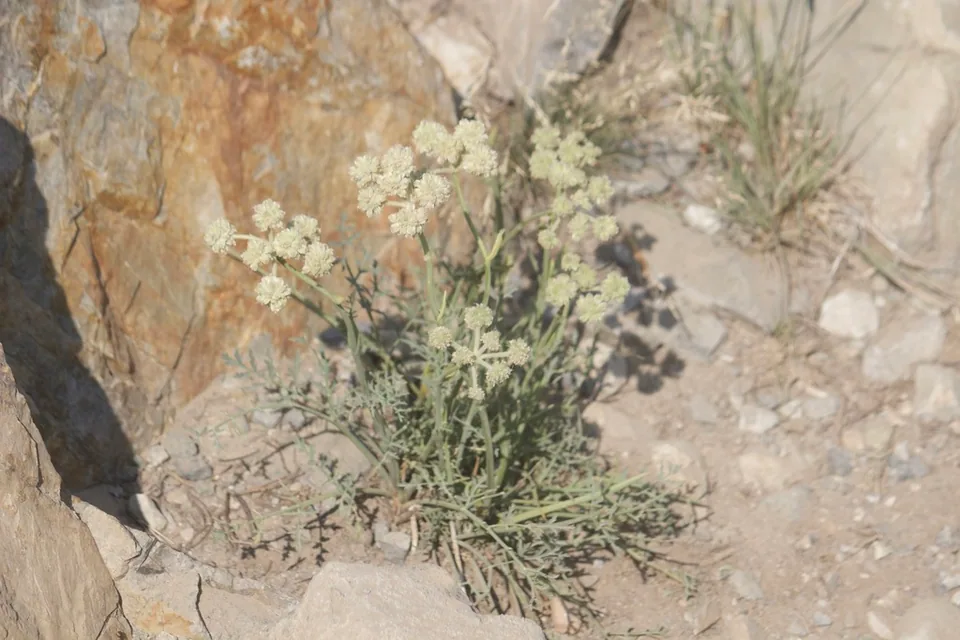
How to Grow and Care for Ranger's Buttons
Angelica capitellata
Written by Emilio Marruso · last checked
Toxic to: Cats, Dogs, Horses, Livestock, People · Why
At a glance
This angelica is a perennial that grows from seed into a tall, striking plant, 3 to 6 feet high and 1 to 2 feet wide. It is happy in full sun or partial shade, so it fits many corners of the garden. Just keep in mind that it is mildly toxic to people and a problem for dogs, cats and horses.
- Sun
Full sun to partial shade
What the sources say (1)
Light: Full sun to partial shade
Plant in the full sun to partial shade in average moist soils.
— Angelica capitellata (Button Parsley, Grayswamp Whiteheads, Ranger's Buttons, Swamp White Heads, White Heads, Woollyhead Parsnip) | North Carolina Extension Gardener Plant Toolbox [1] - Cold
Survives winters down to −20 °F (−28.9 °C)
Very hardy · USDA 5a · RHS H7 · Z5
What the sources say (2)
Hardiness, coldest zone: 5a [winter low −28.9 to −26.1 °C (−20 to −15 °F)]
USDA Plant Hardiness Zone: 5a, 5b, 6a, 6b, 8a, 8b, 9a, 9b
— Angelica capitellata (Button Parsley, Grayswamp Whiteheads, Ranger's Buttons, Swamp White Heads, White Heads, Woollyhead Parsnip) | North Carolina Extension Gardener Plant Toolbox [1] Hardiness, warmest zone: 9b [winter low −3.9 to −1.1 °C (25 to 30 °F)]
USDA Plant Hardiness Zone: 5a, 5b, 6a, 6b, 8a, 8b, 9a, 9b
— Angelica capitellata (Button Parsley, Grayswamp Whiteheads, Ranger's Buttons, Swamp White Heads, White Heads, Woollyhead Parsnip) | North Carolina Extension Gardener Plant Toolbox [1] - Size
3 to 6 ft tall and 1 to 2 ft wide
What the sources say (2)
Mature height: 91.44-182.88 cm (3-6 ft)
Height: 3 ft. 0 in. - 6 ft. 0 in.
— Angelica capitellata (Button Parsley, Grayswamp Whiteheads, Ranger's Buttons, Swamp White Heads, White Heads, Woollyhead Parsnip) | North Carolina Extension Gardener Plant Toolbox [1] Mature width: 30.48-60.96 cm (1-2 ft)
Width: 1 ft. 0 in. - 2 ft. 0 in.
— Angelica capitellata (Button Parsley, Grayswamp Whiteheads, Ranger's Buttons, Swamp White Heads, White Heads, Woollyhead Parsnip) | North Carolina Extension Gardener Plant Toolbox [1] - Propagation
Grows from seed
What the sources say (1)
Propagation: Seed
Recommended Propagation Strategy: Seed
— Angelica capitellata (Button Parsley, Grayswamp Whiteheads, Ranger's Buttons, Swamp White Heads, White Heads, Woollyhead Parsnip) | North Carolina Extension Gardener Plant Toolbox [1] - Safety
Mildly toxic to people; harmful to dogs, cats, horses and other livestock
Overview
It is a perennial of western North American wet meadows and stream banks with showy white umbels. [1] It grows in full sun to partial shade in average moist soils. [1] It is toxic to livestock and can cause photosensitivity. [1]
This record is incomplete: the sources we read do not cover every field yet.
Not yet covered by our sources: Watering, Pruning
Ranger's Buttons care
How to water Ranger's Buttons
Not stated in the sources we read.
How much light Ranger's Buttons needs
Full sun to partial shade
What the sources say (1)
Plant in the full sun to partial shade in average moist soils.How much cold Ranger's Buttons can take
Hardiness, coldest zone
5a [winter low −28.9 to −26.1 °C (−20 to −15 °F)]
What the sources say (1)
USDA Plant Hardiness Zone:
5a, 5b, 6a, 6b, 8a, 8b, 9a, 9bHardiness, warmest zone
9b [winter low −3.9 to −1.1 °C (25 to 30 °F)]
What the sources say (1)
USDA Plant Hardiness Zone:
5a, 5b, 6a, 6b, 8a, 8b, 9a, 9bHow to propagate Ranger's Buttons
Seed
What the sources say (1)
Recommended Propagation Strategy:
SeedHow to grow Ranger's Buttons
The plant
Life cycle
perennial
What the sources say (1)
is a perennial plant in the carrot family native to California, Idaho, Nevada, and OregonFamily
Apiaceae
What the sources say (1)
Genus:
Angelica
Species:
capitellata
Family:
ApiaceaeMature height
91.44-182.88 cm (3-6 ft)
What the sources say (1)
Height: 3 ft. 0 in. - 6 ft. 0 in.Mature width
30.48-60.96 cm (1-2 ft)
What the sources say (1)
Width: 1 ft. 0 in. - 2 ft. 0 in.Remedies
Each remedy shows what official sources say about it; traditional remedies without an official source are marked as such. Harmful ones are listed so you know to avoid them.
First aid
First aid: not a substitute for a doctor
phytophotodermatitis from sap contact
washing the skin with water Official source, not independently tested
use the web POISON CONTROL online tool or call 1-800-222-1222
— poison.org [2] How: Washing affected areas with water within 1-2 hours of an exposure to furocoumarins can reduce the absorption of these agents through the skin.
Washing affected areas with water within 1-2 hours of an exposure to furocoumarins can reduce the absorption of these agents through the skin.
— poison.org [2] cool compresses and avoiding further sunlight Official source, not independently tested
How: Avoid additional sunlight on the exposed areas; cool compresses can be used for pain relief.
The treatment of phytophotodermatitis involves avoidance of additional sunlight in exposed areas. Cool compresses can be used for pain relief.
— poison.org [2]
Is Ranger's Buttons toxic to pets?
Reported by the source, quoted verbatim. This is not medical or veterinary advice: if a person or an animal may have eaten this plant, contact a poison control centre or a veterinarian.
Animals
It is considered toxic to all livestock but is rarely eaten and can cause photosensitivity if brushed up against.
[1]- Symptoms
can cause photosensitivity if brushed up against
[1]
#problem for dogs
[1]The source flags the risk for this animal but does not explain why.
#problem for cats
[1]The source flags the risk for this animal but does not explain why.
#problem for horses
[1]The source flags the risk for this animal but does not explain why.
People
Calendar
Pruning
Not stated in the sources we read.
Months as given by the sources, which are mostly from the United States (northern hemisphere). In the southern hemisphere they shift by about six months.
Similar plants
- Angelica Angelica archangelica
- Appalachian Angelica Angelica triquinata
- Angelica gigas Angelica gigas
- Great angelica Angelica atropurpurea
- Wild angelica Angelica sylvestris
- Amethyst eryngo Eryngium amethystinum
- Asiatic pennywort Centella asiatica
- Bishop's Weed Ammi majus
Sources
Every value above is quoted from these documents. Links lead to the original publisher.
- Angelica capitellata (Button Parsley, Grayswamp Whiteheads, Ranger's Buttons, Swamp White Heads, White Heads, Woollyhead Parsnip) | North Carolina Extension Gardener Plant Toolbox · plants.ces.ncsu.edu, consulted
- poison.org · poison.org
Written by Emilio Marruso · last checked