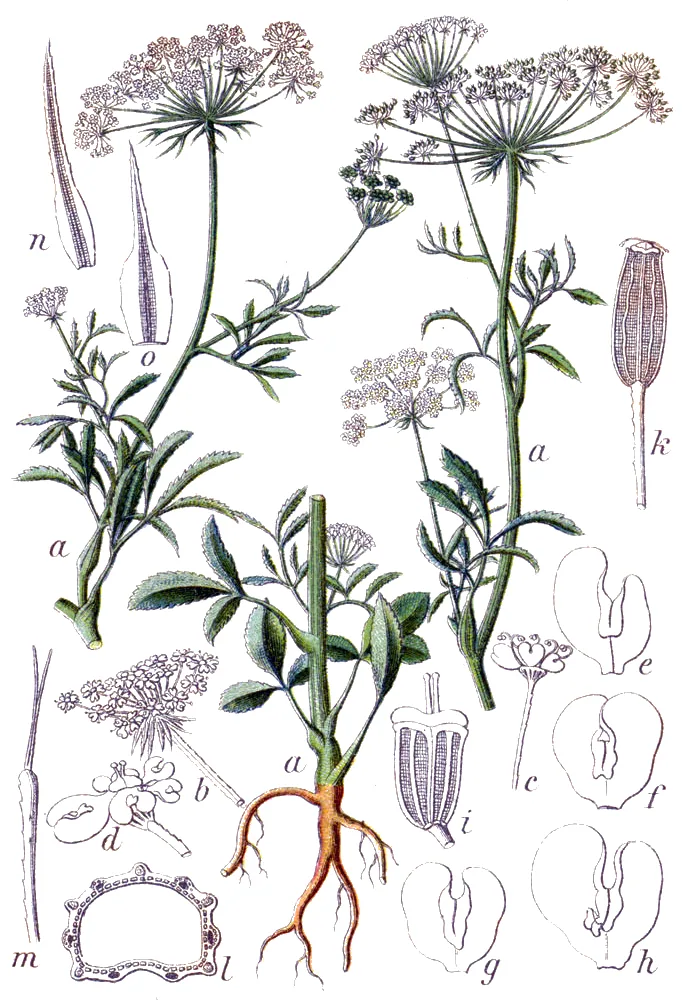


How to Grow and Care for Bishop's Weed
Ammi majus
Written by Emilio Marruso · last checked
Toxic to: Cats, Dogs, Horses, People · Why
At a glance
Bishop's flower is an easy annual grown from seed: sow it in spring, once all danger of frost has passed, right where you want it to bloom. It grows 3 to 6 feet tall in full sun or part shade, and it is happy in containers too. After flowering, birds enjoy its dried seeds in fall and winter.
- Sun
Full sun or part shade
What the sources say (1)
Light: Full sun or part shade
Plant in full sun or part shade in well-drained, moist soils.
— Ammi majus (Bishop's Weed, False Queen Anne's Lace, Greater Ammi) | North Carolina Extension Gardener Plant Toolbox [1] - Water
Keep the soil moist but well drained
What the sources say (1)
Watering: Well-drained, moist soil
Plant in full sun or part shade in well-drained, moist soils.
— Ammi majus (Bishop's Weed, False Queen Anne's Lace, Greater Ammi) | North Carolina Extension Gardener Plant Toolbox [1] - Spacing
18 in between plants
What the sources say (1)
Spacing: 45.7 cm (18 in)
Allow 18 inches between the upright plant which reaches 3 to 4 feet tall.
— Ammi majus (Bishop's Weed, False Queen Anne's Lace, Greater Ammi) | North Carolina Extension Gardener Plant Toolbox [1] - Pruning
Cut back after flowering to limit self-seeding
What the sources say (1)
Pruning: After flowering
It does not transplant easily. Prune after flowering to minimize self-seeding.
— Ammi majus (Bishop's Weed, False Queen Anne's Lace, Greater Ammi) | North Carolina Extension Gardener Plant Toolbox [1] - Watch out
It self-seeds, and in some regions it has escaped gardens and become invasive
- Size
3 to 6 ft tall and 15 to 18 in wide
What the sources say (2)
Mature height: 91-183 cm (3 ft - 6 ft)
Dimensions: Height: 3 ft. 0 in. - 6 ft. 0 in. Width: 1 ft. 3 in. - 1 ft. 6 in.
— Ammi majus (Bishop's Weed, False Queen Anne's Lace, Greater Ammi) | North Carolina Extension Gardener Plant Toolbox [1] Mature width: 38-46 cm (1 ft 3 in - 1 ft 6 in)
Dimensions: Height: 3 ft. 0 in. - 6 ft. 0 in. Width: 1 ft. 3 in. - 1 ft. 6 in.
— Ammi majus (Bishop's Weed, False Queen Anne's Lace, Greater Ammi) | North Carolina Extension Gardener Plant Toolbox [1] - Propagation
From seed; it does not transplant well, so sow it where it will grow
What the sources say (1)
Propagation: Seed
Propagate with seeds sown in spring after all danger of frost has
— Ammi majus (Bishop's Weed, False Queen Anne's Lace, Greater Ammi) | North Carolina Extension Gardener Plant Toolbox [1] - Sowing
Sow in spring, after all danger of frost has passed
What the sources say (1)
Sowing: Spring, after all danger of frost has passed
Propagate with seeds sown in spring after all danger of frost has passed.
— Ammi majus (Bishop's Weed, False Queen Anne's Lace, Greater Ammi) | North Carolina Extension Gardener Plant Toolbox [1] - Containers
Grows in containers too
What the sources say (1)
In containers: Yes
Landscape Location: Container Meadow Landscape Theme: Cottage Garden Cutting Garden Pollinator Garden
— Ammi majus (Bishop's Weed, False Queen Anne's Lace, Greater Ammi) | North Carolina Extension Gardener Plant Toolbox [1] - Safety
Toxic to dogs, cats and horses; in people it can make skin burn in the sun
Overview
Bishop's weed is a hardy annual grown in full sun or part shade in well-drained, moist soil. [1] Seeds are sown in spring after all danger of frost has passed, and plants are spaced 18 inches [46 cm] apart. [1] The listing records toxicity to dogs, cats and horses. [1]
This record is incomplete: the sources we read do not cover every field yet.
Not yet covered by our sources: Hardiness, coldest zone, Hardiness, warmest zone
Bishop's Weed care
Measurements in square brackets are our conversion into the other unit system; the quoted text is unchanged.
How to water Bishop's Weed
Well-drained, moist soil
What the sources say (1)
Plant in full sun or part shade in well-drained, moist soils.How much light Bishop's Weed needs
Full sun or part shade
What the sources say (1)
Plant in full sun or part shade in well-drained, moist soils.How much cold Bishop's Weed can take
Hardiness, coldest zone
Not stated in the sources we read.
Hardiness, warmest zone
Not stated in the sources we read.
Where to grow Bishop's Weed
In containers
Yes
What the sources say (1)
Landscape Location:
Container
Meadow
Landscape Theme:
Cottage Garden
Cutting Garden
Pollinator GardenSpacing
45.7 cm (18 in)
What the sources say (1)
Allow 18 inches between the upright plant which reaches 3 to 4 feet tall.How to propagate Bishop's Weed
Seed
What the sources say (1)
Propagate with seeds sown in spring after all danger of frost hasHow to grow Bishop's Weed
The plant
Life cycle
annual
What the sources say (1)
is a hardy annual in the carrot family (Apiaceae). Native to warm and dry areas in the Nile DeltaFamily
Apiaceae
What the sources say (1)
Genus:
Ammi
Species:
majus
Family:
Apiaceae
Uses (Ethnobotany):Mature height
91-183 cm (3 ft - 6 ft)
What the sources say (1)
Dimensions:
Height: 3 ft. 0 in. - 6 ft. 0 in.
Width: 1 ft. 3 in. - 1 ft. 6 in.Mature width
38-46 cm (1 ft 3 in - 1 ft 6 in)
What the sources say (1)
Dimensions:
Height: 3 ft. 0 in. - 6 ft. 0 in.
Width: 1 ft. 3 in. - 1 ft. 6 in.Bishop's Weed pests and problems
Self-seeding
Symptom: Self-seeds after flowering
What to do: Prune after flowering to minimize self-seeding
What the sources say (1)
It does not transplant easily. Prune after flowering to minimize self-seeding.
— Ammi majus (Bishop's Weed, False Queen Anne's Lace, Greater Ammi) | North Carolina Extension Gardener Plant Toolbox [1] Escape from cultivation
Symptom: In some environments, like Australia, it has escaped cultivation and is considered invasive
What the sources say (1)
In some environments, like Australia, it has escaped cultivation and is considered invasive. Plant in
— Ammi majus (Bishop's Weed, False Queen Anne's Lace, Greater Ammi) | North Carolina Extension Gardener Plant Toolbox [1] Poor transplanting
Symptom: It does not transplant easily
What to do: Sow seed where plants are to grow
What the sources say (1)
It does not transplant easily. Prune after flowering to minimize self-seeding.
— Ammi majus (Bishop's Weed, False Queen Anne's Lace, Greater Ammi) | North Carolina Extension Gardener Plant Toolbox [1]
Remedies
Each remedy shows what official sources say about it; traditional remedies without an official source are marked as such. Harmful ones are listed so you know to avoid them.
First aid
First aid: not a substitute for a doctor
skin reaction from sap and sunlight
cool wet cloth and washing Official source, not independently tested
If it isn’t getting better, is very painful or looks infected (more discoloration, warmth, pus, fever), contact a healthcare provider.
— my.clevelandclinic.org [3] How: Put a cool, wet cloth on the rash for 10 to 15 minutes; wash your skin with mild soap and warm water; keep the area out of sunlight.
Put a cool, wet cloth on the rash for 10 to 15 minutes. This eases pain and swelling.
— my.clevelandclinic.org [3]
Treating the plant
powdery mildew
baking soda spray Not verified
Traditional remedy, not verified by an official source.
Just be aware that baking soda can burn plants, and it can build up in your soil, potentially causing deficiencies in calcium, magnesium, and iron.
— almanac.com [4] How: 1 tablespoon baking soda with 1 tablespoon vegetable oil and 1 teaspoon dish soap in 1 gallon of water; spray early in the day.
milk spray Not verified
Traditional remedy, not verified by an official source.
Test these sprays on a small area first to ensure they do not damage your plants.
— almanac.com [4] How: 1 part milk with 10 parts water.
plain water spray Not verified
Traditional remedy, not verified by an official source.
How: Spraying with plain water weekly; the spores cannot germinate or grow if the leaves are wet.
Is Bishop's Weed toxic to pets?
Reported by the source, quoted verbatim. This is not medical or veterinary advice: if a person or an animal may have eaten this plant, contact a poison control centre or a veterinarian.
Animals
This is toxic to dogs, cats, and horses.
[1]The source flags the risk for this animal but does not explain why.
People
Poison Severity: Low Poison Symptoms: Photosensitization (sunburn, dermatitis) Poison Toxic Principle: Insoluble
[1]
Calendar
Sowing
Spring, after all danger of frost has passed
What the sources say (1)
Propagate with seeds sown in spring after all danger of frost has passed.Pruning
After flowering
What the sources say (1)
It does not transplant easily. Prune after flowering to minimize self-seeding.Months as given by the sources, which are mostly from the United States (northern hemisphere). In the southern hemisphere they shift by about six months.
Relative to frost
Less precise estimate: there is no weather station within 300 km.
Find frost dates by ZIP code or city
Sow outdoors: around the last frost
Propagate with seeds sown in spring after all danger of frost has passed. It does not transplant easily.
— Ammi majus (Bishop's Weed, False Queen Anne's Lace, Greater Ammi) | North Carolina Extension Gardener Plant Toolbox [1]
Count from the average frost dates where you live.
Edibility
Reported by the source, quoted verbatim. Do not eat a plant on the basis of this page alone: identification mistakes can be dangerous.
Birds eat the dried flower seeds in the fall and winter.
[1]
Similar plants
- Amethyst eryngo Eryngium amethystinum
- Angelica Angelica archangelica
- Appalachian Angelica Angelica triquinata
- Asiatic pennywort Centella asiatica
- Common Hedge Parsley Torilis arvensis
- Cow Parsley Anthriscus sylvestris
- Eryngo Eryngium aquaticum
- Fennel Foeniculum vulgare
Sources
Every value above is quoted from these documents. Links lead to the original publisher.
- Ammi majus (Bishop's Weed, False Queen Anne's Lace, Greater Ammi) | North Carolina Extension Gardener Plant Toolbox · plants.ces.ncsu.edu, consulted
- Greater Ammi - Ammi majus | North Carolina Extension Gardener Plant Toolbox · plants.ces.ncsu.edu, consulted
- my.clevelandclinic.org · my.clevelandclinic.org
- almanac.com · almanac.com
Written by Emilio Marruso · last checked