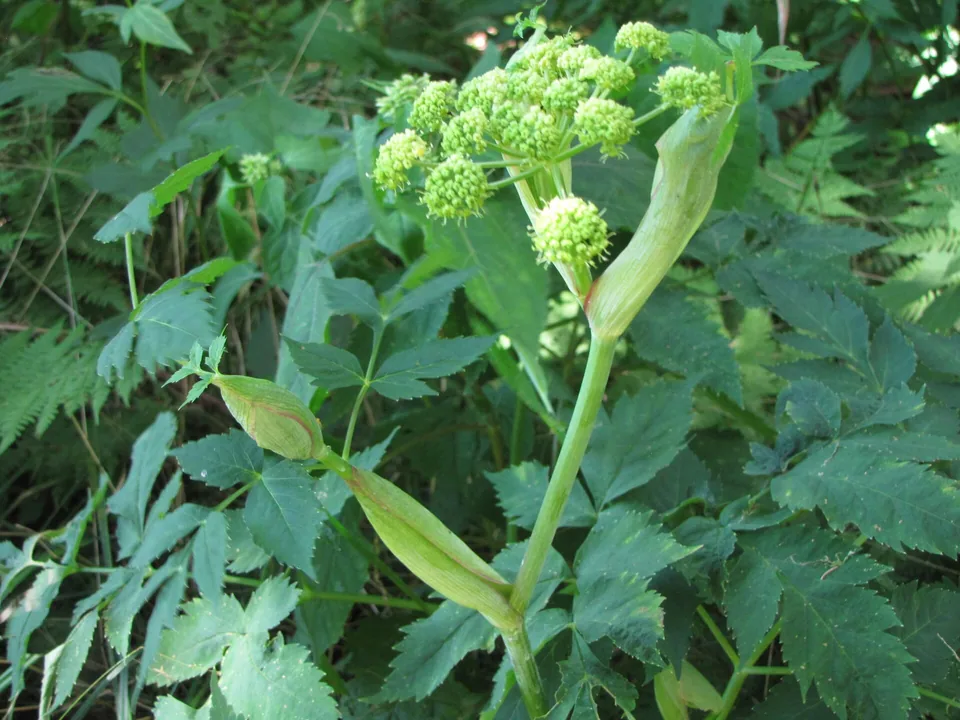


How to Grow and Care for Appalachian Angelica
Angelica triquinata
Written by Emilio Marruso · last checked
Toxic to: Animals, People · Why
At a glance
This angelica is a perennial that comes back year after year and grows into a striking plant 3 to 6 feet tall and 2 to 4 feet wide. It is happy in full sun or partial shade, as long as the soil stays moist but drains well. You can start it from seed, and its nectar has a curious effect: bees and hornets that sip it seem tipsy.
- Sun
Full sun to partial shade
What the sources say (1)
Light: Full sun to partial shade
It prefers full sun to part shade in fertile, moist, well-drained soils.
— Angelica triquinata (Appalachian Angelica, Filmy Angelica, Mountain Angelica) | North Carolina Extension Gardener Plant Toolbox [1] - Water
Keep the soil moist
What the sources say (1)
Watering: Moist, well-drained soil
It prefers full sun to part shade in fertile, moist, well-drained soils.
— Angelica triquinata (Appalachian Angelica, Filmy Angelica, Mountain Angelica) | North Carolina Extension Gardener Plant Toolbox [1] - Cold
Survives winters down to −20 °F (−28.9 °C)
Very hardy · USDA 5a · RHS H7 · Z5
What the sources say (2)
Hardiness, coldest zone: 5a [winter low −28.9 to −26.1 °C (−20 to −15 °F)]
USDA Plant Hardiness Zone: 5a, 5b, 6a, 6b, 7a, 7b, 8a, 8b
— Angelica triquinata (Appalachian Angelica, Filmy Angelica, Mountain Angelica) | North Carolina Extension Gardener Plant Toolbox [1] Hardiness, warmest zone: 8b [winter low −9.4 to −6.7 °C (15 to 20 °F)]
USDA Plant Hardiness Zone: 5a, 5b, 6a, 6b, 7a, 7b, 8a, 8b
— Angelica triquinata (Appalachian Angelica, Filmy Angelica, Mountain Angelica) | North Carolina Extension Gardener Plant Toolbox [1] - Soil
Moist soil that drains well
What the sources say (1)
Watering: Moist, well-drained soil
It prefers full sun to part shade in fertile, moist, well-drained soils.
— Angelica triquinata (Appalachian Angelica, Filmy Angelica, Mountain Angelica) | North Carolina Extension Gardener Plant Toolbox [1] - Size
3 to 6 ft tall and 2 to 4 ft wide
What the sources say (2)
Mature height: 91.44-182.88 cm (3-6 ft)
Filmy Angelica will grow 3 to 6 feet tall and 2 to 4 feet wide.
— Angelica triquinata (Appalachian Angelica, Filmy Angelica, Mountain Angelica) | North Carolina Extension Gardener Plant Toolbox [1] Mature width: 60.96-121.92 cm (2-4 ft)
Filmy Angelica will grow 3 to 6 feet tall and 2 to 4 feet wide.
— Angelica triquinata (Appalachian Angelica, Filmy Angelica, Mountain Angelica) | North Carolina Extension Gardener Plant Toolbox [1] - Propagation
Grows from seed
What the sources say (1)
Propagation: Seed
Recommended Propagation Strategy: Seed
— Angelica triquinata (Appalachian Angelica, Filmy Angelica, Mountain Angelica) | North Carolina Extension Gardener Plant Toolbox [1] - Safety
Mildly poisonous to people; its nectar is poisonous to bees, yellow jackets and hornets
Overview
Appalachian angelica is a herbaceous perennial native to the Appalachian Mountains that grows 3 to 6 feet [0.9–1.8 m] tall. [1] It prefers full sun to part shade in fertile, moist, well-drained soils. [1] It is listed as a low severity poison, and contact may cause dermatitis and sensitivity to sunlight. [1]
This record is incomplete: the sources we read do not cover every field yet.
Not yet covered by our sources: Pruning
Appalachian Angelica care
Measurements in square brackets are our conversion into the other unit system; the quoted text is unchanged.
How to water Appalachian Angelica
Moist, well-drained soil
What the sources say (1)
It prefers full sun to part shade in fertile, moist, well-drained soils.How much light Appalachian Angelica needs
Full sun to partial shade
What the sources say (1)
It prefers full sun to part shade in fertile, moist, well-drained soils.How much cold Appalachian Angelica can take
Hardiness, coldest zone
5a [winter low −28.9 to −26.1 °C (−20 to −15 °F)]
What the sources say (1)
USDA Plant Hardiness Zone:
5a, 5b, 6a, 6b, 7a, 7b, 8a, 8bHardiness, warmest zone
8b [winter low −9.4 to −6.7 °C (15 to 20 °F)]
What the sources say (1)
USDA Plant Hardiness Zone:
5a, 5b, 6a, 6b, 7a, 7b, 8a, 8bHow to propagate Appalachian Angelica
Seed
What the sources say (1)
Recommended Propagation Strategy:
SeedHow to grow Appalachian Angelica
The plant
Life cycle
perennial
What the sources say (1)
Filmy Angelica is a herbaceous perennial native to the Appalachian Mountains in the carrot family (Apiaceae), found in open areas of woods and meadowsFamily
Apiaceae
What the sources say (1)
Filmy Angelica is a herbaceous perennial native to the Appalachian Mountains in the carrot family (Apiaceae), found in open areas of woods and meadowsMature height
91.44-182.88 cm (3-6 ft)
What the sources say (1)
Filmy Angelica will grow 3 to 6 feet tall and 2 to 4 feet wide.Mature width
60.96-121.92 cm (2-4 ft)
What the sources say (1)
Filmy Angelica will grow 3 to 6 feet tall and 2 to 4 feet wide.Remedies
Each remedy shows what official sources say about it; traditional remedies without an official source are marked as such. Harmful ones are listed so you know to avoid them.
First aid
First aid: not a substitute for a doctor
skin reaction to plant sap and sunlight (phytophotodermatitis)
cover the skin and use a high UVA sunscreen Official source, not independently tested
How: Use a sunscreen with high UVA protection and cover the skin to prevent further light exposure, as soon as the accidental exposure is recognised.
The use of a sunscreen with high UVA protection in addition to covering the skin to prevent further light exposure may diminish the severity of the reaction if it is commenced as soon as the accidental exposure is recognised.
— dermnetnz.org [3]
Is Appalachian Angelica toxic to pets?
Reported by the source, quoted verbatim. This is not medical or veterinary advice: if a person or an animal may have eaten this plant, contact a poison control centre or a veterinarian.
Animals
Nectar is poisonous to some insects (bees, yellow jackets, hornets) and causes them to appear intoxicated.
[1]
People
This plant has low severity poison characteristics. See below
[1]- Poisonous parts
Poison Part: Flowers Leaves Roots Sap/Juice Stems
[1]- Toxic principle
Poison Toxic Principle: Furocoumarins
[1]- Symptoms
Poison Symptoms: Nectar is poisonous to some insects (bees, yellow jackets, hornets) and causes them to appear intoxicated. Can cause photosensitivity (sunburn, dermatitis).
[1]- Severity
Poison Severity: Low
[1]
Calendar
Pruning
Not stated in the sources we read.
Months as given by the sources, which are mostly from the United States (northern hemisphere). In the southern hemisphere they shift by about six months.
Similar plants
- Angelica Angelica archangelica
- Ranger's Buttons Angelica capitellata
- Angelica gigas Angelica gigas
- Great angelica Angelica atropurpurea
- Wild angelica Angelica sylvestris
- Amethyst eryngo Eryngium amethystinum
- Asiatic pennywort Centella asiatica
- Bishop's Weed Ammi majus
Sources
Every value above is quoted from these documents. Links lead to the original publisher.
- Angelica triquinata (Appalachian Angelica, Filmy Angelica, Mountain Angelica) | North Carolina Extension Gardener Plant Toolbox · plants.ces.ncsu.edu, consulted
- Filmy Angelica - Angelica triquinata | North Carolina Extension Gardener Plant Toolbox · plants.ces.ncsu.edu, consulted
- dermnetnz.org · dermnetnz.org
Written by Emilio Marruso · last checked