
How to Grow and Care for Asiatic pennywort
Centella asiatica
Written by Emilio Marruso · last checked
Toxic to: People · Why
At a glance
Centella asiatica is a perennial herb with edible leaves you can add to salads or to rice and lentil dishes. It's easygoing about light, from partial shade to full sun, and loves moist to wet soil, as long as it drains well. It grows happily in a container too, and you can start it from seed or root cuttings.
- Sun
Partial shade to full sun
What the sources say (1)
Light: Partial shade to full sun
It grows low to the ground and can spread quickly into a dense ground cover. It needs partial shade to full sun in moist to wet but well-drained soils.
— Centella asiatica (Asiatic pennywort, Gotu kola, Indian Pennywort, Kodavan, Marsh Pennywort, Spadeleaf) | North Carolina Extension Gardener Plant Toolbox [1] - Water
Keep the soil moist to wet, but well drained: soggy soil rots the roots
What the sources say (2)
Watering: Moist to wet but well-drained soil
It grows low to the ground and can spread quickly into a dense ground cover. It needs partial shade to full sun in moist to wet but well-drained soils.
— Centella asiatica (Asiatic pennywort, Gotu kola, Indian Pennywort, Kodavan, Marsh Pennywort, Spadeleaf) | North Carolina Extension Gardener Plant Toolbox [1] Watering notes: Root rot can occur in poorly drained soils
Insects, Diseases, and Other Plant Problems: Weedy. Root rot can occur in poorly drained soils.
— Centella asiatica (Asiatic pennywort, Gotu kola, Indian Pennywort, Kodavan, Marsh Pennywort, Spadeleaf) | North Carolina Extension Gardener Plant Toolbox [1] - Cold
Survives winters down to 30 °F (−1.1 °C)
Half hardy: mild winters or an unheated greenhouse · USDA 10a · RHS H3 · Z10
What the sources say (2)
Hardiness, coldest zone: 10a [winter low −1.1 to 1.7 °C (30 to 35 °F)]
USDA Plant Hardiness Zone: 10a, 10b, 11a, 11b
— Centella asiatica (Asiatic pennywort, Gotu kola, Indian Pennywort, Kodavan, Marsh Pennywort, Spadeleaf) | North Carolina Extension Gardener Plant Toolbox [1] Hardiness, warmest zone: 11b [winter low 7.2 to 10 °C (45 to 50 °F)]
USDA Plant Hardiness Zone: 10a, 10b, 11a, 11b
— Centella asiatica (Asiatic pennywort, Gotu kola, Indian Pennywort, Kodavan, Marsh Pennywort, Spadeleaf) | North Carolina Extension Gardener Plant Toolbox [1] - Feeding
Compost or manure before planting, then feed 4 weeks later and after every harvest; skip extra nitrogen
What the sources say (5)
When: Basal dressing two days before planting, then top dressings 4 weeks after planting and after every harvest
| Time for Apply | Urea kg | TSP kg | MOP kg | Basal – Applied two days prior to planting | 9.0 | 13.5 | 10.0
— [3] Top dressing – 4 weeks after planting | 9.0 | – | – | Top dressing – after every harvesting | 4.5 | – | 1.5 | Top dressing – at every 6 months | – | 6.5
— [3] Natural fertilizers: Organic manure (cattle manure, poultry manure or compost) mixed into the soil before planting, 1 kg [2.2 lb]/m²
Organic manure should be mixed with soil before planting.
— [3] The requirement of fertilizers for 1000 m 2 (1/4 ac) - Organic manure – 1 ton Cattle manuare, poultry manure or compost can be applied.
— [3] Avoid: Unnecessary nitrogen fertilizer (part of leaf spot control)
Provide proper nutrition for cultivation. - Avoid unnecessary application of nitrogenous fertilizers
— [3] - Harvest
Eat the leaves in salads or in rice and lentil dishes
- Pests
Root rot in soil that drains poorly
What the sources say (1)
Diseases: root rot
Root rot can occur in poorly drained soils.
— Centella asiatica (Asiatic pennywort, Gotu kola, Indian Pennywort, Kodavan, Marsh Pennywort, Spadeleaf) | North Carolina Extension Gardener Plant Toolbox [1] - Propagation
Start it from seed or root cuttings
What the sources say (1)
Propagation: Root cutting, seed
Recommended Propagation Strategy: Root Cutting Seed Country Or Region Of Origin:
— Centella asiatica (Asiatic pennywort, Gotu kola, Indian Pennywort, Kodavan, Marsh Pennywort, Spadeleaf) | North Carolina Extension Gardener Plant Toolbox [1] - Containers
Grows in containers too
What the sources say (1)
In containers: Yes
The plant can be used as an annual ground cover in cooler regions or in a container.
— Centella asiatica (Asiatic pennywort, Gotu kola, Indian Pennywort, Kodavan, Marsh Pennywort, Spadeleaf) | North Carolina Extension Gardener Plant Toolbox [1]
Overview
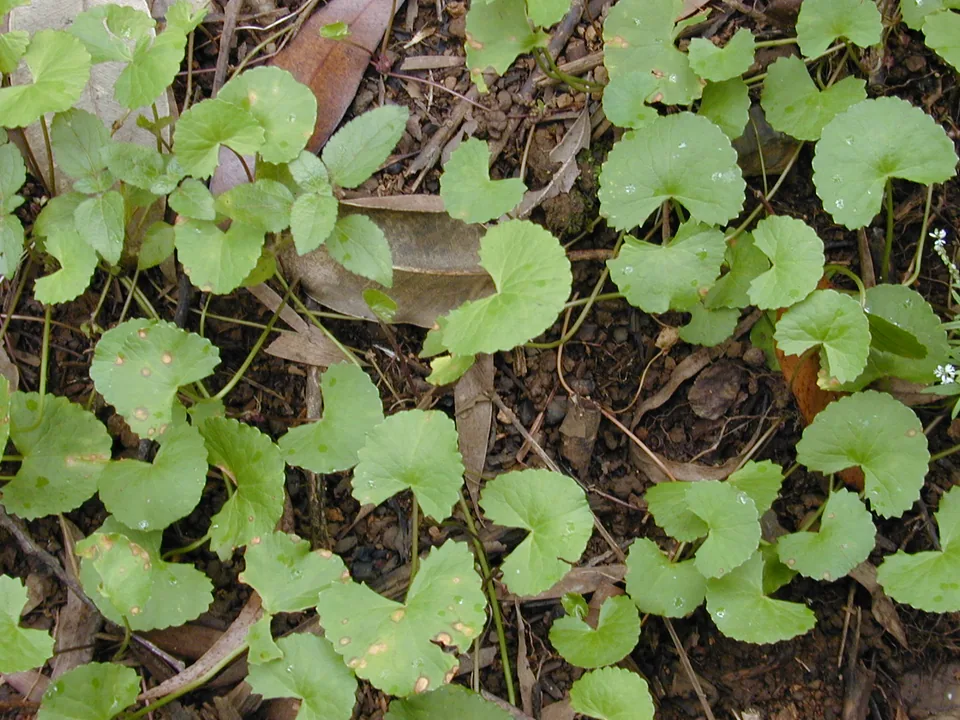
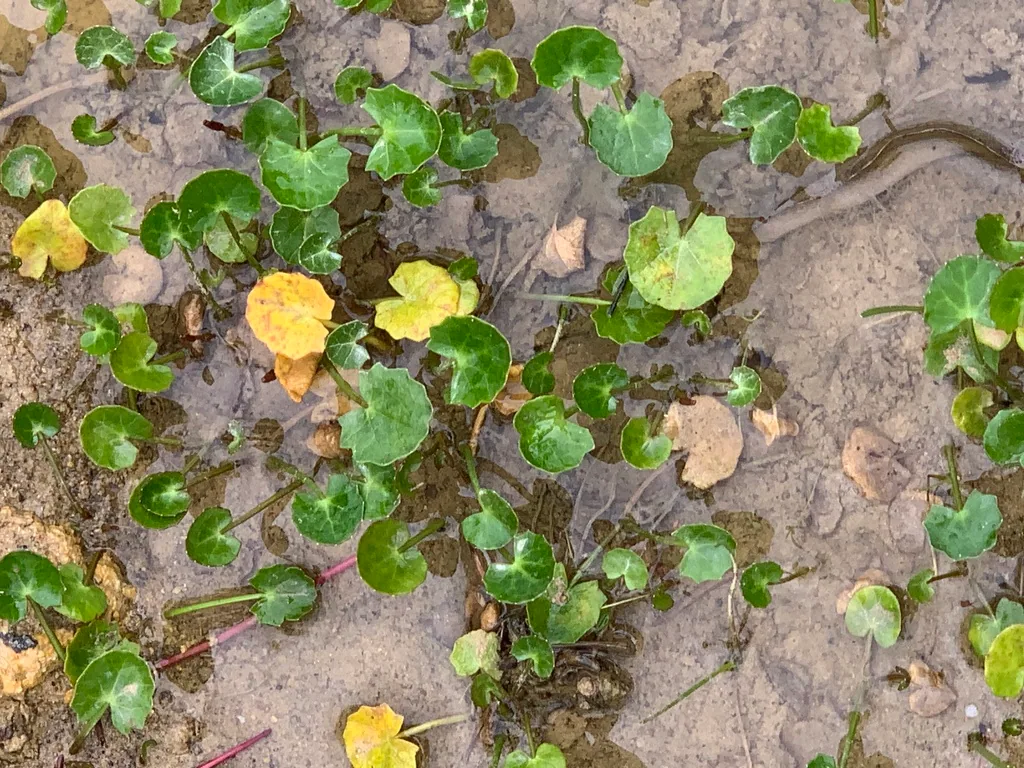
Centella asiatica is a creeping perennial ground cover of moist to wet, well-drained soils. [1] It can be used as an annual ground cover in cooler regions or in a container. [1]
Asiatic pennywort care
How to water Asiatic pennywort
Watering
Moist to wet but well-drained soil
What the sources say (1)
It grows low to the ground and can spread quickly into a dense ground cover. It needs partial shade to full sun in moist to wet but well-drained soils.Watering notes
Root rot can occur in poorly drained soils
What the sources say (1)
Insects, Diseases, and Other Plant Problems: Weedy. Root rot can occur in poorly drained soils.How much light Asiatic pennywort needs
Partial shade to full sun
What the sources say (1)
It grows low to the ground and can spread quickly into a dense ground cover. It needs partial shade to full sun in moist to wet but well-drained soils.How much cold Asiatic pennywort can take
Hardiness, coldest zone
10a [winter low −1.1 to 1.7 °C (30 to 35 °F)]
What the sources say (1)
USDA Plant Hardiness Zone:
10a, 10b, 11a, 11bHardiness, warmest zone
11b [winter low 7.2 to 10 °C (45 to 50 °F)]
What the sources say (1)
USDA Plant Hardiness Zone:
10a, 10b, 11a, 11bWhere to grow Asiatic pennywort
Yes
What the sources say (1)
The plant can be used as an annual ground cover in cooler regions or in a container.How to propagate Asiatic pennywort
Root cutting, seed
What the sources say (1)
Recommended Propagation Strategy:
Root Cutting
Seed
Country Or Region Of Origin:How to grow Asiatic pennywort
The plant
Life cycle
perennial
What the sources say (1)
False pennywort is a rhizomatous perennial plant in the carrot family (Apiaceae) that is native to Asia, India, Africa and Australia.Family
Apiaceae
What the sources say (1)
False pennywort is a rhizomatous perennial plant in the carrot family (Apiaceae) that is native to Asia, India, Africa and Australia.Pests and diseases
Diseases
root rot
What the sources say (1)
Root rot can occur in poorly drained soils.Fertilizing
When
Basal dressing two days before planting, then top dressings 4 weeks after planting and after every harvest
What the sources say (2)
| Time for Apply | Urea kg | TSP kg | MOP kg | Basal – Applied two days prior to planting | 9.0 | 13.5 | 10.0Top dressing – 4 weeks after planting | 9.0 | – | – | Top dressing – after every harvesting | 4.5 | – | 1.5 | Top dressing – at every 6 months | – | 6.5How often
After every harvest for nitrogen and potassium; phosphate every 6 months
Natural fertilizers
Organic manure (cattle manure, poultry manure or compost) mixed into the soil before planting, 1 kg [2.2 lb]/m²
Mineral fertilizers
Urea, triple superphosphate (TSP) and muriate of potash (MOP): 9 g/m² urea + 13.5 g/m² TSP + 10 g/m² MOP two days before planting; 9 g/m² urea 4 weeks after planting; 4.5 g/m² urea + 1.5 g/m² MOP after every harvest; 6.5 g/m² TSP every 6 months
What the sources say (3)
The requirement of fertilizers for 1000 m 2 (1/4 ac) - Organic manure – 1 ton| Time for Apply | Urea kg | TSP kg | MOP kg | Basal – Applied two days prior to planting | 9.0 | 13.5 | 10.0Top dressing – 4 weeks after planting | 9.0 | – | – | Top dressing – after every harvesting | 4.5 | – | 1.5 | Top dressing – at every 6 months | – | 6.5Avoid
Unnecessary nitrogen fertilizer (part of leaf spot control)
What the sources say (1)
Provide proper nutrition for cultivation. - Avoid unnecessary application of nitrogenous fertilizersAsiatic pennywort pests and problems
Root rot
Symptom: Root rot can occur in poorly drained soils
What to do: Not stated in the source
What the sources say (1)
Insects, Diseases, and Other Plant Problems: Weedy. Root rot can occur in poorly drained soils.
— Centella asiatica (Asiatic pennywort, Gotu kola, Indian Pennywort, Kodavan, Marsh Pennywort, Spadeleaf) | North Carolina Extension Gardener Plant Toolbox [1]
Remedies
The sources we checked give no remedies for this plant.
Is Asiatic pennywort poisonous?
Reported by the source, quoted verbatim. This is not medical or veterinary advice: if a person or an animal may have eaten this plant, contact a poison control centre or a veterinarian.
Edibility
Reported by the source, quoted verbatim. Do not eat a plant on the basis of this page alone: identification mistakes can be dangerous.
The leaves are edible and used in salads or rice and lentil dishes.
[1]
Similar plants
- Amethyst eryngo Eryngium amethystinum
- Angelica Angelica archangelica
- Anise burnet saxifrage Pimpinella anisum
- Appalachian Angelica Angelica triquinata
- Bishop's Weed Ammi majus
- Caraway Carum carvi
- Common Hedge Parsley Torilis arvensis
- Coriander Coriandrum sativum
Sources
Every value above is quoted from these documents. Links lead to the original publisher.
- Centella asiatica (Asiatic pennywort, Gotu kola, Indian Pennywort, Kodavan, Marsh Pennywort, Spadeleaf) | North Carolina Extension Gardener Plant Toolbox · plants.ces.ncsu.edu, consulted
- Centella asiatica - MREC - UF/IFAS - University of Florida, Institute of Food and Agricultural Sciences - UF/IFAS · mrec.ifas.ufl.edu, consulted
- doa.gov.lk · doa.gov.lk
Written by Emilio Marruso · last checked