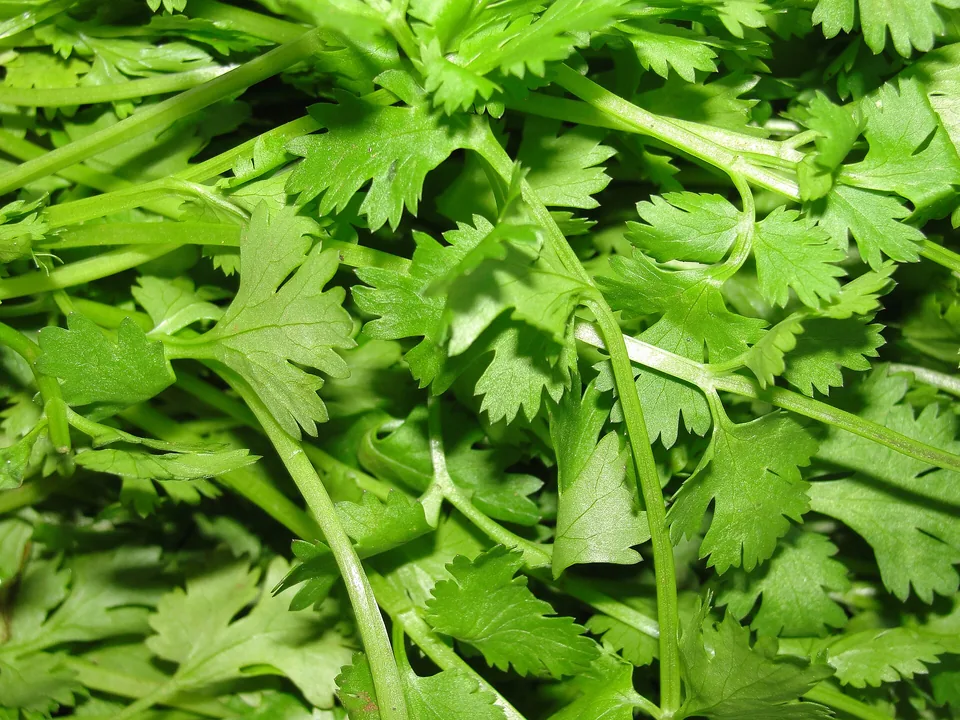
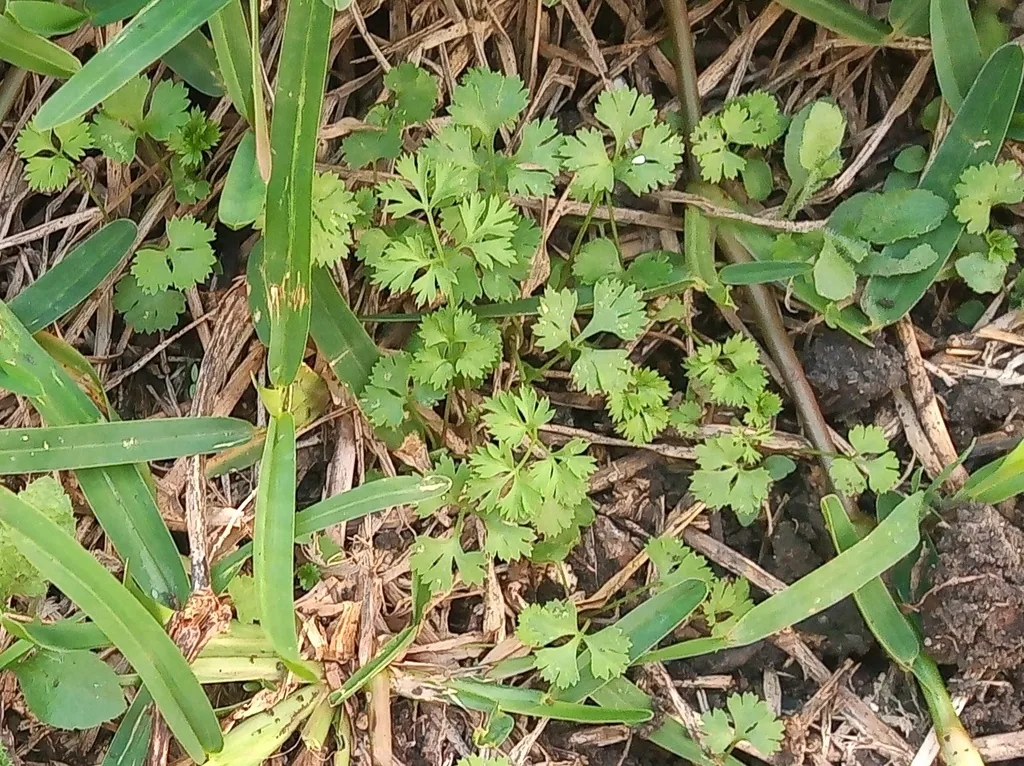

How to Grow and Care for Coriander
Coriandrum sativum
Written by Emilio Marruso · last checked
Not toxic to cats and dogs, according to the sources · Sources
At a glance
Coriander is a cool-season herb that gives you two harvests: fresh leaves for salads and Mexican and Asian dishes, and seeds to use as a spice. Sow it straight into the ground in full sun to light shade, water it regularly while it settles in, and pick the leaves before hot weather arrives. When the seeds turn light brown, cut the stems and hang them to dry.
- Sun
Full sun to light shade
What the sources say (7)
Light: Full sun to light shade
According to NC State Extension: Light: Full sun (6 or more hours of direct sunlight a day) Partial Shade (Direct sunlight only part of the day, 2-6 hours)
— Coriandrum sativum (Chinese Parsley, Cilantro, Coriander, Dhania) | North Carolina Extension Gardener Plant Toolbox [1] According to Wisconsin Horticulture: Cilantro grows best in well-drained soil in full sun, but it will tolerate very light shade.
— Cilantro / Coriander, Coriandrum sativum – Wisconsin Horticulture [3] According to University of Maryland Extension: Plant so that it is shaded by other plants or in a spot where it will receive light, afternoon shade.
— Cilantro/Coriander | University of Maryland Extension [5] warm season: If leafy harvest is the goal, grow cilantro in a cool or semi-shaded location during the warm season.
— How to grow cilantro for leaves — or coriander seeds | OSU Extension Service [7] According to Illinois Extension: Cilantro prefers a full sun location and average, well-drained garden soil.
— Cilantro | Herbs | Illinois Extension | Illinois [8] It prefers medium moist well-drained soil in full sun to light shade.
— Coriandrum sativum (Chinese Parsley, Cilantro, Coriander, Dhania) | North Carolina Extension Gardener Plant Toolbox [1] Cilantro grows best in well-drained soil in full sun, but it will tolerate very light shade.
— Cilantro / Coriander, Coriandrum sativum – Wisconsin Horticulture [3] - Water
Water regularly while it settles in; cut back as the seeds ripen
What the sources say (2)
Watering notes: Regular watering during establishment; reduce irrigation when the seeds are nearing maturity
Cilantro requires regular watering during establishment. Once the plants are established they need little water.
— Cilantro/Coriander in the Garden | USU [6] Keep plants evenly moist throughout the growing season. Reduce irrigation when the seeds are nearing maturity.
— Cilantro / Coriander, Coriandrum sativum – Wisconsin Horticulture [3] - Sowing
Sow seeds ¼–½ inch deep; they sprout in 21 days when the soil is 55–68 °F
What the sources say (4)
Sowing depth: 0.6-1.3 cm [0.2–0.5 in] (¼ to ½ in)
Plant seed ¼ to ½ inch deep in rows about a foot apart. Cilantro does not transplant well because of its long taproot.
— Cilantro / Coriander, Coriandrum sativum – Wisconsin Horticulture [3] Plant cilantro seeds ½ inch deep and space 2 inches apart if you are planning to use the plant for its leaves.
— Cilantro/Coriander in the Garden | USU [6] Germination: Seeds germinate at soil temperatures of 12.8-20 °C [55–68 °F], in 21 days.
Seeds germinate at soil temperatures of 55–68° F, and mature plants tolerate light freezing.
— How to grow cilantro for leaves — or coriander seeds | OSU Extension Service [7] Seeds germinate in about 21 days and grow 1-3 feet tall.
— Cilantro/Coriander in the Garden | USU [6] - Feeding
Feed with nitrogen in early summer, but not too much: it makes the leaves less flavorful
What the sources say (6)
When: During the growing season, with a nitrogen side-dressing in early summer
Fertilize 1-2 times during the growing season by applying ¼ cup of a nitrogen based fertilizer (21-0-0) per 25 square foot of growing area.
— Cilantro/Coriander in the Garden | USU [6] Water sparingly as cilantro/coriander does not do well in damp or humid conditions. Side-dress cilantro with nitrogen in early summer. Over-fertilization decreases plant flavor.
— Cilantro/Coriander in the Garden | USU [6] Avoid: Over-fertilization and too much nitrogen
Be careful of over fertilization, too much nitrogen can make the plant less flavorful.
— Cilantro/Coriander in the Garden | USU [6] Water sparingly as cilantro/coriander does not do well in damp or humid conditions. Side-dress cilantro with nitrogen in early summer. Over-fertilization decreases plant flavor.
— Cilantro/Coriander in the Garden | USU [6] Signs of excess: Less flavorful leaves
Be careful of over fertilization, too much nitrogen can make the plant less flavorful.
— Cilantro/Coriander in the Garden | USU [6] Water sparingly as cilantro/coriander does not do well in damp or humid conditions. Side-dress cilantro with nitrogen in early summer. Over-fertilization decreases plant flavor.
— Cilantro/Coriander in the Garden | USU [6] - Harvest
Pick leaves when the plant is 6 inches tall, before it bolts; harvest seeds when they turn light brown
What the sources say (7)
How to harvest: Leaves: pick fresh leaves once plants are about 15 cm (6 in) tall and before they bolt; removing the older outside leaves encourages new leaves (younger leaves have more intense flavor); whole plants can be cut an inch above the ground and regrow for a second cutting. Seeds: harvest when they turn light brown and the entire plant is dry, usually 2 to 3 weeks after flowering; cut the stems before much shattering, then hang them to dry over a cloth or inside a paper bag.
: Harvest when leaves are about 4-6 inches tall.
— Cilantro/Coriander in the Garden | USU [6] Pick fresh leaves any time after the plants are about 6 inches tall but before they bolt (the leaves may develop a disagreeable flavor at this stage).
— Cilantro / Coriander, Coriandrum sativum – Wisconsin Horticulture [3] Removing the older, outside leaves will encourage the plant to produce new leaves, but the younger leaves have more intense flavor.
— Cilantro / Coriander, Coriandrum sativum – Wisconsin Horticulture [3] Harvest seeds when they turn a light brown and the entire plant is dried, usually 2 to 3 weeks after flowering.
— Cilantro / Coriander, Coriandrum sativum – Wisconsin Horticulture [3] Whole plants can be cut off as a bunch at an inch above the ground , and the plant can regrow for a second cutting.
— Cilantro / Coriander, Coriandrum sativum – Wisconsin Horticulture [3] Cut the stems before much shattering has occurred and hang the plants in a warm, airy place to dry.
— Cilantro / Coriander, Coriandrum sativum – Wisconsin Horticulture [3] When plants begin to turn brown, cut off the seed heads, put them in a paper bag and hang this until the plant dries and seeds fall to the bottom of the bag.
— Cilantro/Coriander in the Garden | USU [6] - Pests
Watch for leafhoppers; it can get bacterial leaf spot, aster yellows, and seedling rot
What the sources say (5)
Pests: leafhoppers
: Cilantro does not have any serious pest problems , although some commercial growers have reported problems with a bacterial leaf spot.
— Cilantro / Coriander, Coriandrum sativum – Wisconsin Horticulture [3] Be on the lookout for leafhoppers and related diseases to protect plant health.
— Cilantro/Coriander in the Garden | USU [6] Diseases: bacterial leaf spot, aster yellows, damping off
Cilantro does not have any serious pest problems , although some commercial growers have reported problems with a bacterial leaf spot.
— Cilantro / Coriander, Coriandrum sativum – Wisconsin Horticulture [3] Aster’s Yellow Disease | The disease is caused by leafhoppers; flowers turn yellow, plant grows tall and spindly, plant eventually becomes sterile.
— Cilantro/Coriander in the Garden | USU [6] Damping Off or Seedling Rot | Death of new seedlings and yellowing of plants. | Crop Rotation.
— Cilantro/Coriander in the Garden | USU [6] - Watch out
It bolts in hot weather: plant early, mulch, and keep it watered
What the sources say (4)
Heat: Cool-season crop: it bolts readily in hot weather and long days, and summer sowings bolt before producing many leaves; slow-bolting cultivars exist, but none hold well under high temperatures.
grown indoors: Try to keep the soil temperature below 75°F, especially if grown near a heat source or a particular window that becomes quite warm
— Cilantro/Coriander in the Garden | USU [6] Cilantro is a cool season crop that tends to bolt (go to seed) in hot weather but will not survive a hard freeze.
— Cilantro / Coriander, Coriandrum sativum – Wisconsin Horticulture [3] Though some cultivars are less susceptible to early bolting, thus are listed as “slow bolting”, none hold well under high temperatures and long days.
— Cilantro / Coriander, Coriandrum sativum – Wisconsin Horticulture [3] Avoid planting during peak summer heat, when plants are likely to bolt before producing many leaves.
— How to grow cilantro for leaves — or coriander seeds | OSU Extension Service [7] - Size
1–2 ft tall and wide
What the sources say (4)
Mature height: 30.5-61 cm (1-2 ft)
: The foliage grows 1 to 1½ feet high, and the flower stems reach 2 to 3 feet.
— Cilantro / Coriander, Coriandrum sativum – Wisconsin Horticulture [3] Height: 1 ft. 0 in. - 2 ft. 0 in.
— Coriandrum sativum (Chinese Parsley, Cilantro, Coriander, Dhania) | North Carolina Extension Gardener Plant Toolbox [1] Cilantro grows one to two feet tall and has finely cut leaves that resemble flat leaf parsley.
— Cilantro | Herbs | Illinois Extension | Illinois [8] Mature width: 30.5-61 cm (1-2 ft)
Width: 1 ft. 0 in. - 2 ft. 0 in.
— Coriandrum sativum (Chinese Parsley, Cilantro, Coriander, Dhania) | North Carolina Extension Gardener Plant Toolbox [1] - Propagation
Grow from seed
What the sources say (1)
Propagation: Seed
Coriander/Cilantro is easily grown from seed in average garden soil.
— Cilantro/Coriander | University of Maryland Extension [5] - Containers
Grows in containers
What the sources say (1)
In containers: Yes
It can also be grown successfully in containers.
— Cilantro / Coriander, Coriandrum sativum – Wisconsin Horticulture [3] - Safety
Non-toxic to cats, dogs, and horses
Overview
Cilantro is a cool-season culinary herb that bolts easily in hotter climates. [1] It prefers well-drained soil in full sun to light shade and can be grown successfully in containers. [1][3] Leaves, stems, flowers and seeds are edible, the leaves as an herb (cilantro) and the seeds as a spice (coriander). [1]
Coriander care
Measurements in square brackets are our conversion into the other unit system; the quoted text is unchanged.
How to water Coriander
Watering
The sources give different values depending on region, zone or growing conditions.
What each source says
According to Wisconsin Horticulture: Keep plants evenly moist throughout the growing season
According to USU Extension: Needs little water once established; avoid damp conditions
What the sources say (2)
According to Wisconsin Horticulture: Keep plants evenly moist throughout the growing season. Reduce irrigation when the seeds are nearing maturity.According to USU Extension: Once the plants are established they need little water. Avoid over-watering as this plant does not do well in damp or humid conditions.Watering notes
Regular watering during establishment; reduce irrigation when the seeds are nearing maturity
What the sources say (2)
Cilantro requires regular watering during establishment. Once the plants are established they need little water.Keep plants evenly moist throughout the growing season. Reduce irrigation when the seeds are nearing maturity.How much light Coriander needs
Full sun to light shade
What each source says
According to NC State Extension: Full sun to partial shade
According to Wisconsin Horticulture: Full sun, tolerates very light shade
According to University of Maryland Extension: Shaded by other plants or light afternoon shade
warm season: Cool or semi-shaded location
According to Illinois Extension: Full sun
What the sources say (7)
According to NC State Extension: Light:
Full sun (6 or more hours of direct sunlight a day)
Partial Shade (Direct sunlight only part of the day, 2-6 hours)According to Wisconsin Horticulture: Cilantro grows best in well-drained soil in full sun, but it will tolerate very light shade.According to University of Maryland Extension: Plant so that it is shaded by other plants or in a spot where it will receive light, afternoon shade.warm season: If leafy harvest is the goal, grow cilantro in a cool or semi-shaded location during the warm season.According to Illinois Extension: Cilantro prefers a full sun location and average, well-drained garden soil.It prefers medium moist well-drained soil in full sun to light shade.Cilantro grows best in well-drained soil in full sun, but it will tolerate very light shade.Where to grow Coriander
Indoors
Yes
What the sources say (1)
Yes, but make sure that the container is deep enough. Be sure to grow it in a place where it will get enough sun.In containers
Yes
What the sources say (1)
It can also be grown successfully in containers.Spacing
The sources give different values depending on region, zone or growing conditions.
What each source says
leaf crop (fonte: Wisconsin Horticulture): 7.6-15.2 cm (3-6 in)
seed production: 30.5 cm (12 in)
plants used for leaves: 5.1 cm (2 in)
coriander seed: 20.3-25.4 cm (8-10 in)
According to University of Maryland Extension: 17.8-25.4 cm (7-10 in)
According to OSU Extension Service: 20.3 cm (8 in)
What the sources say (6)
leaf crop (fonte: Wisconsin Horticulture): Once established, thin seedlings to 3 to 6 inches apartseed production: For seed production, thin plants to 12 inches apart.plants used for leaves: Plant cilantro seeds ½ inch deep and space 2 inches apart if you are planning to use the plant for its leaves.coriander seed: For coriander seed, space the seeds 8-10 inches apart.According to University of Maryland Extension: Thin plants 7 to 10” apart. Can also be successfully grown in containers.According to OSU Extension Service: Thin plants to 8 inches apart with rows spaced 18–24 inches.How to propagate Coriander
Seed
What the sources say (1)
Coriander/Cilantro is easily grown from seed in average garden soil.How to grow Coriander
The plant
Life cycle
annual
What the sources say (2)
Coriandrum sativum is a fast-growing annual with two common names, based on how it is used.Coriander is a dainty annual that grows to about 2 feet tall with finely divided leaves.Family
Apiaceae
What the sources say (1)
This member of the carrot or parsley family (Apiaceae) is native to southern Europe and Asia but has spread to many other parts of the world.Mature height
30.5-61 cm (1-2 ft)
What each source says
:
What the sources say (3)
: The foliage grows 1 to 1½ feet high, and the flower stems reach 2 to 3 feet.Height: 1 ft. 0 in. - 2 ft. 0 in.Cilantro grows one to two feet tall and has finely cut leaves that resemble flat leaf parsley.Mature width
30.5-61 cm (1-2 ft)
What the sources say (1)
Width: 1 ft. 0 in. - 2 ft. 0 in.Sowing and growth
Days to germination
21
What the sources say (1)
Seeds germinate in about 21 days and grow 1-3 feet tall.Sowing depth
0.6-1.3 cm [0.2–0.5 in] (¼ to ½ in)
What the sources say (2)
Plant seed ¼ to ½ inch deep in rows about a foot apart. Cilantro does not transplant well because of its long taproot.Plant cilantro seeds ½ inch deep and space 2 inches apart if you are planning to use the plant for its leaves.Row spacing
The sources disagree:
Days to maturity
45-80 days to leaf harvest; at least 100 days for a seed crop (the source does not say what the count starts from)
What each source says
:
:
What the sources say (3)
: ‘Leisure’ – High yielding, uniform growth habit. Heat tolerant and slow to bolt, ready for harvest in 28-40 days.: ‘Slo Bolt’ is harvestable in about 45 days from sowing and is, as the name implies, slower to flower than many varieties.A growing season of at least 100 days in necessary for a seed crop, but the leaves can be harvested in 45 to 80 days .Harvest and storage
How to harvest
Leaves: pick fresh leaves once plants are about 15 cm (6 in) tall and before they bolt; removing the older outside leaves encourages new leaves (younger leaves have more intense flavor); whole plants can be cut an inch above the ground and regrow for a second cutting. Seeds: harvest when they turn light brown and the entire plant is dry, usually 2 to 3 weeks after flowering; cut the stems before much shattering, then hang them to dry over a cloth or inside a paper bag.
What each source says
:
What the sources say (7)
: Harvest when leaves are about 4-6 inches tall.Pick fresh leaves any time after the plants are about 6 inches tall but before they bolt (the leaves may develop a disagreeable flavor at this stage).Removing the older, outside leaves will encourage the plant to produce new leaves, but the younger leaves have more intense flavor.Harvest seeds when they turn a light brown and the entire plant is dried, usually 2 to 3 weeks after flowering.Whole plants can be cut off as a bunch at an inch above the ground , and the plant can regrow for a second cutting.Cut the stems before much shattering has occurred and hang the plants in a warm, airy place to dry.When plants begin to turn brown, cut off the seed heads, put them in a paper bag and hang this until the plant dries and seeds fall to the bottom of the bag.Storage
Leaves: fresh in the refrigerator for about a week (or with the stems in water), or frozen in a resealable bag; dried leaves lose much of their flavor. Seeds: dried seeds keep for months in an airtight container in a cool, dark place.
What the sources say (3)
Cut leaves can be stored in the refrigerator for about a week or place a “bouquet” of leaves in water to maintain freshness in the refrigerator.When freezing, simply place in a resealable bag and put in the freezer.The dried seeds can be stored for months in an airtight container in a cool, dark place .Saving seeds
Let the flower heads turn brown, cut the whole plant (or the stems before much shattering), dry it in a paper bag or over a cloth, and store the whole pods in a cool, dry location.
What the sources say (2)
To save seed for your next crop, just store the whole pods in a cool, dry location.If growing cilantro for the seeds allow the flower heads to turn brown and cut the entire plant. Place the plants in a paper bag and store in a cool, dry location.Pests and diseases
Pests
leafhoppers
What each source says
:
What the sources say (2)
: Cilantro does not have any serious pest problems , although some commercial growers have reported problems with a bacterial leaf spot.Be on the lookout for leafhoppers and related diseases to protect plant health.Diseases
bacterial leaf spot, aster yellows, damping off
What the sources say (3)
Cilantro does not have any serious pest problems , although some commercial growers have reported problems with a bacterial leaf spot.Aster’s Yellow Disease | The disease is caused by leafhoppers; flowers turn yellow, plant grows tall and spindly, plant eventually becomes sterile.Damping Off or Seedling Rot | Death of new seedlings and yellowing of plants. | Crop Rotation.Fertilizing
When
During the growing season, with a nitrogen side-dressing in early summer
What the sources say (2)
Fertilize 1-2 times during the growing season by applying ¼ cup of a nitrogen based fertilizer (21-0-0) per 25 square foot of growing area.Water sparingly as cilantro/coriander does not do well in damp or humid conditions. Side-dress cilantro with nitrogen in early summer. Over-fertilization decreases plant flavor.How often
Once or twice per growing season
What the sources say (1)
Fertilize 1-2 times during the growing season by applying ¼ cup of a nitrogen based fertilizer (21-0-0) per 25 square foot of growing area.Natural fertilizers
5.1 to 10.2 cm [2–4 in] of well-composted organic matter per 2.3 m², worked into the top 10.2 to 15.2 cm [4–6 in] of soil before planting
What the sources say (1)
Before planting, incorporate 2-4 inches of well-composted organic matter per 25 square feet of garden area. Work this into the top 4-6 inches of soilMineral fertilizers
59 mL of a nitrogen fertilizer (21-0-0) per 2.3 m² of growing area
What the sources say (1)
Fertilize 1-2 times during the growing season by applying ¼ cup of a nitrogen based fertilizer (21-0-0) per 25 square foot of growing area.Avoid
Over-fertilization and too much nitrogen
What the sources say (2)
Be careful of over fertilization, too much nitrogen can make the plant less flavorful.Water sparingly as cilantro/coriander does not do well in damp or humid conditions. Side-dress cilantro with nitrogen in early summer. Over-fertilization decreases plant flavor.Signs of excess
Less flavorful leaves
What the sources say (2)
Be careful of over fertilization, too much nitrogen can make the plant less flavorful.Water sparingly as cilantro/coriander does not do well in damp or humid conditions. Side-dress cilantro with nitrogen in early summer. Over-fertilization decreases plant flavor.Spacing
Between plants
The sources give different values depending on region, zone or growing conditions.
What each source says
for leaf harvest (Utah): 5 cm [2 in]
for coriander seed (Utah): 20-25 cm [7.9–9.8 in]
seedlings, once established (Wisconsin): 7.6-15 cm [3–5.9 in]
for seed production (Wisconsin): 30 cm [12 in]
Oregon: 20 cm [7.9 in] in the row
What the sources say (5)
for leaf harvest (Utah): Plant cilantro seeds ½ inch deep and space 2 inches apart if you are planning to use the plant for its leaves.for coriander seed (Utah): For coriander seed, space the seeds 8-10 inches apart.seedlings, once established (Wisconsin): Once established, thin seedlings to 3 to 6 inches apart .for seed production (Wisconsin): For seed production, thin plants to 12 inches apart.Oregon: Thin plants to 8 inches apart with rows spaced 18–24 inches.Between rows
The sources give different values depending on region, zone or growing conditions.
What each source says
Utah: 38 cm [15 in]
Oregon: 46-61 cm [18–24 in]
What the sources say (2)
Utah: Sow seeds about ½″ deep in rows ~15″ apart—thin seedlings to 2″ for leaf harvest or 8–10″ for seed production.Oregon: Thin plants to 8 inches apart with rows spaced 18–24 inches.Roots
Root system
Long taproot, which makes transplanting difficult; direct sowing is preferred.
What the sources say (2)
Cilantro does not transplant well because of its long taproot.The herb grows best from direct seeding or from starts, though its long taproot makes transplanting difficult.Propagation
Germination
Seeds germinate at soil temperatures of 12.8-20 °C [55–68 °F], in 21 days.
After harvest
Storage
Cut leaves keep a week in the refrigerator, loosely wrapped in plastic or as a bouquet in water; leaves can also be frozen or dried. Dried seeds keep for months in an airtight container in a cool, dark place.
What the sources say (4)
Cut leaves can be stored in the refrigerator for about a week or place a “bouquet” of leaves in water to maintain freshness in the refrigerator.Dry leaves, wrapped loosely in plastic will keep for a week in the refrigerator.Cilantro can be used fresh, or stored either by freezing or drying.The dried seeds can be stored for months in an airtight container in a cool, dark place .Heat and drought
Heat
Cool-season crop: it bolts readily in hot weather and long days, and summer sowings bolt before producing many leaves; slow-bolting cultivars exist, but none hold well under high temperatures.
What each source says
grown indoors: Keep soil below 23.9 °C [75 °F]
What the sources say (4)
grown indoors: Try to keep the soil temperature below 75°F, especially if grown near a heat source or a particular window that becomes quite warmCilantro is a cool season crop that tends to bolt (go to seed) in hot weather but will not survive a hard freeze.Though some cultivars are less susceptible to early bolting, thus are listed as “slow bolting”, none hold well under high temperatures and long days.Avoid planting during peak summer heat, when plants are likely to bolt before producing many leaves.Coriander pests and problems
Bolting
Symptom: Tends to bolt (go to seed) in hot weather.
What to do: Plant early when it is cool; mulch the soil to keep it cool and keep the plant well watered. Slow-bolting cultivars exist but none hold well under high temperatures and long days.
What the sources say (3)
Cilantro is a cool season crop that tends to bolt (go to seed) in hot weather but will not survive a hard freeze.
— Cilantro / Coriander, Coriandrum sativum – Wisconsin Horticulture [3] Plant early when it is cool. Start seedlings indoors and transplant into the garden when frost has passed. Mulch the soil to keep it cool and make sure the plant is well watered.
— Cilantro/Coriander in the Garden | USU [6] none hold well under high temperatures and long days.
— Cilantro / Coriander, Coriandrum sativum – Wisconsin Horticulture [3] Bacterial leaf spot
Symptom: Some commercial growers have reported bacterial leaf spot.
What to do: Seed suppliers are increasingly testing seed for bacterial contamination.
What the sources say (2)
Cilantro does not have any serious pest problems , although some commercial growers have reported problems with a bacterial leaf spot.
— Cilantro / Coriander, Coriandrum sativum – Wisconsin Horticulture [3] Seed suppliers are increasingly testing seed for bacterial contamination, to reduce problems for growers.
— Cilantro / Coriander, Coriandrum sativum – Wisconsin Horticulture [3] Aster's Yellow Disease
Symptom: Flowers turn yellow, plant grows tall and spindly, plant eventually becomes sterile.
What to do: Use appropriate insecticide to control leafhoppers (the carriers of the disease).
What the sources say (2)
The disease is caused by leafhoppers; flowers turn yellow, plant grows tall and spindly, plant eventually becomes sterile.
— Cilantro/Coriander in the Garden | USU [6] Use appropriate insecticide to control leafhoppers (the carriers of the disease).
— Cilantro/Coriander in the Garden | USU [6] Damping off or seedling rot
Symptom: Death of new seedlings and yellowing of plants.
What the sources say (1)
Death of new seedlings and yellowing of plants.
— Cilantro/Coriander in the Garden | USU [6]
Remedies
Each remedy shows what official sources say about it; traditional remedies without an official source are marked as such. Harmful ones are listed so you know to avoid them.
Treating the plant
aphids
strong spray of water Works
How: A good hard spray of water.
Aphids are the most common and usually found on the underside of leaves and along the stems. A good hard spray of water is an easy control method.
— extension.psu.edu [9] What the evidence says A good hard spray of water is an easy control method.
— extension.psu.edu [9] insecticidal soap spray Works
Spray directly on pests like aphids or whiteflies, but rinse the cilantro leaves after a couple of hours to avoid residue buildup.
— cultivatedearth.com [10] While insecticidal soap is less apt to affect other organisms, certain plants might be sensitive to the soap and can suffer leaf burn.
— foodgardening.mequoda.com [12] How: Store-bought, or homemade with a few drops of mild liquid soap in a quart of water; spray directly on pests like aphids or whiteflies and rinse the leaves after a couple of hours to avoid residue buildup.
Insecticidal soap is another reliable remedy—either store-bought or homemade using a few drops of mild liquid soap in a quart of water.
— cultivatedearth.com [10] What the evidence says For example, insecticidal soap is a safe, effective organic insecticide with minimal environmental impact.
— extension.psu.edu [11] companion planting with sweet alyssum, coreopsis and chervil Not verified
Traditional remedy, not verified by an official source.
How: Plant sweet alyssum, coreopsis and chervil, which all deter aphids, to minimize damage.
cutworms
armyworms
spider mites
dish soap spray Harmful
Cilantro must be cleaned thoroughly before consumption if sprayed with any DIY solutions.
— bugwiz.com [13] For example, spraying home remedies that contain dish detergent on plants on a sunny day can injure the plant, essentially burning it.
— extension.psu.edu [14] How: Dilute some drops of dish soap into a quart of water; use a sponge or sprayer and get the plant soaked; rinse it down with water when done.
Soapy water also works wonders. Just dilute some drops of dish soap into a quart of water.
— bugwiz.com [13] What the evidence says For example, spraying home remedies that contain dish detergent on plants on a sunny day can injure the plant, essentially burning it.
— extension.psu.edu [14]
powdery mildew
garlic spray Not verified
Traditional remedy, not verified by an official source.
How: Crush some cloves of garlic and dilute them with water; spray the solution on the cilantro leaves.
baking soda spray Not verified
Traditional remedy, not verified by an official source.
How: Spray a solution of baking soda mixed with water on the leaves.
slugs
beer trap Not verified
Traditional remedy, not verified by an official source.
How: A shallow dish filled with cheap beer; in the morning dispose of the catch and repeat the process.
damping off
seaweed tea or chamomile tea Not verified
Traditional remedy, not verified by an official source.
How: Seaweed tea or chamomile tea, to help prevent the spread of fungus on small areas of plants.
Is Coriander poisonous?
Reported by the source, quoted verbatim. This is not medical or veterinary advice: if a person or an animal may have eaten this plant, contact a poison control centre or a veterinarian.
#non-toxic for cats #non-toxic for horses #non-toxic for dogs
[1]The source flags the risk for this animal but does not explain why.
Calendar
Sowing
The sources give different values depending on region, zone or growing conditions.
What each source says
cooler locations in Utah: Early spring, for summer to fall harvest
warmer areas: Fall, harvest in the spring
According to Wisconsin Horticulture: Early spring, at the same time lettuce is typically planted
fall leaf crop (fonte: Wisconsin Horticulture): Mid-August
According to OSU Extension Service: Early spring through early summer, then again in early autumn
According to Illinois Extension: Directly sown after danger of frost is past
What the sources say (10)
cooler locations in Utah: In cooler locations in Utah, plant in the early spring for summer to fall harvest.warmer areas: In warmer areas, plant in the fall and harvest in the spring.According to Wisconsin Horticulture: Sow seeds in early spring , at the same time lettuce is typically planted.fall leaf crop (fonte: Wisconsin Horticulture): For a fall leaf crop, seed in mid-August.According to OSU Extension Service: Sow seeds directly into sunny, fertile beds from early spring through early summer, then again in early autumn.According to Illinois Extension: It is easily grown from seed that is directly sown in the garden after danger of frost is past.Sow seeds in early spring , at the same time lettuce is typically planted.Make successive sowings at 2 to 3 week intervals for an extended harvest when growing the plants for their leaves.For a fall leaf crop, seed in mid-August.In warmer areas, plant in the fall and harvest in the spring.Planting
The sources give different values depending on region, zone or growing conditions.
What each source says
According to USU Extension: Seedlings started indoors 4-6 weeks before transplanting; transplant after frost has passed
According to Wisconsin Horticulture: Does not transplant well; sow directly
What the sources say (3)
According to USU Extension: Cilantro/coriander can also be started indoors 4-6 weeks before transplanting. Minimize root disturbance when transplanting seedlings.According to Wisconsin Horticulture: Cilantro does not transplant well because of its long taproot.Plant early when it is cool. Start seedlings indoors and transplant into the garden when frost has passed.Harvest
The sources give different values depending on region, zone or growing conditions.
What each source says
leaves (fonte: Wisconsin Horticulture): 45 to 80 days
leaves (fonte: USU Extension): When leaves are about 4-6 inches [10–15 cm] tall
seeds (fonte: University of Maryland Extension): Mid-summer
seeds (fonte: USU Extension): Late summer or early fall
seeds (fonte: Wisconsin Horticulture): When light brown and the plant is dried, usually 2 to 3 weeks after flowering
What the sources say (8)
leaves (fonte: Wisconsin Horticulture): the leaves can be harvested in 45 to 80 daysleaves (fonte: USU Extension): Harvest when leaves are about 4-6 inches tall.seeds (fonte: University of Maryland Extension): if coriander seeds are desired, allow plants to flower, wait until the flower heads turn brown, and gather seeds as they ripen in mid-summer.seeds (fonte: USU Extension): let the plants grow until the seeds form in late summer or early fall.seeds (fonte: Wisconsin Horticulture): Harvest seeds when they turn a light brown and the entire plant is dried, usually 2 to 3 weeks after flowering.A growing season of at least 100 days in necessary for a seed crop, but the leaves can be harvested in 45 to 80 days .Harvest seeds when they turn a light brown and the entire plant is dried, usually 2 to 3 weeks after flowering.Pick fresh leaves any time after the plants are about 6 inches tall but before they boltMonths as given by the sources, which are mostly from the United States (northern hemisphere). In the southern hemisphere they shift by about six months.
Relative to frost
Less precise estimate: there is no weather station within 300 km.
Find frost dates by ZIP code or city
Sow outdoors: around the last frost
Plant seeds ¼- ½ inch deep after danger of frost has passed and mulch around the seedlings as soon as they emerge.
— Cilantro/Coriander in the Garden | USU [6] Transplant: around the last frost
Start seedlings indoors and transplant into the garden when frost has passed.
— Cilantro/Coriander in the Garden | USU [6]
Count from the average frost dates where you live.
Edibility
Reported by the source, quoted verbatim. Do not eat a plant on the basis of this page alone: identification mistakes can be dangerous.
Leaves, stems, flowers and seeds are edible. Leaves/flowers as an herb and seeds (Coriander) as a spice.
[1]Cilantro roots are used in Thai and Vietnamese cooking. Dig the roots of plants that have not gone to seed in the fall to harvest them.
[3]Cilantro is used fresh in Mexican and Asian cuisine and added to salads.
[5]
Indicative values
Values from a secondary source, not checked word for word like the rest of this page. Use them as a starting point.
- Hours of sun
- 8-10 hoursIndicative value, adapt it to your climate · Secondary source
- Soil
- Well-drainedIndicative value, adapt it to your climate · Secondary source
- Soil pH
- 6.2-6.8Indicative value, adapt it to your climate · Secondary source
- USDA hardiness zones
- 2-11 [winter low −45.6 to 10 °C (−50 to 50 °F)]Indicative value, adapt it to your climate · Secondary source
- Growth rate
- HighIndicative value, adapt it to your climate · Secondary source
- Pruning
- MayIndicative value, adapt it to your climate · Secondary source
Similar plants
- Alexanders Smyrnium olusatrum
- Angelica Angelica archangelica
- Anise burnet saxifrage Pimpinella anisum
- Asiatic pennywort Centella asiatica
- Caraway Carum carvi
- Cow Parsley Anthriscus sylvestris
- Cumin Cuminum cyminum
- Echinophora spinosa Echinophora spinosa
Sources
Every value above is quoted from these documents. Links lead to the original publisher.
- Coriandrum sativum (Chinese Parsley, Cilantro, Coriander, Dhania) | North Carolina Extension Gardener Plant Toolbox · plants.ces.ncsu.edu, consulted
- Coriander - Coriandrum sativum | North Carolina Extension Gardener Plant Toolbox · plants.ces.ncsu.edu, consulted
- Cilantro / Coriander, Coriandrum sativum – Wisconsin Horticulture · hort.extension.wisc.edu, consulted
- Cilantro - Coriandrum sativum | North Carolina Extension Gardener Plant Toolbox · plants.ces.ncsu.edu, consulted
- Cilantro/Coriander | University of Maryland Extension · extension.umd.edu, consulted
- Cilantro/Coriander in the Garden | USU · extension.usu.edu, consulted
- How to grow cilantro for leaves — or coriander seeds | OSU Extension Service · extension.oregonstate.edu, consulted
- Cilantro | Herbs | Illinois Extension | Illinois · extension.illinois.edu, consulted
- extension.psu.edu · extension.psu.edu
- cultivatedearth.com · cultivatedearth.com
- extension.psu.edu · extension.psu.edu
- foodgardening.mequoda.com · foodgardening.mequoda.com
- bugwiz.com · bugwiz.com
- extension.psu.edu · extension.psu.edu
Written by Emilio Marruso · last checked