
How to Grow and Care for Cow Parsley
Anthriscus sylvestris
Written by Emilio Marruso · last checked
Toxic to: Animals, People · Why
At a glance
Cow parsley is an easygoing plant: give it full sun or partial shade and fertile, moist but free-draining soil, and it usually needs no extra watering. Its leaves can be eaten raw or cooked, the stems steamed like asparagus and the roots cooked like carrots. It self-seeds readily, so simply pull up the seedlings you don't want.
- Sun
Full sun to partial shade
What the sources say (1)
Light: Full sun to partial shade
Cow parsley thrives in fertile, moist but free-draining soil, and will colonise areas in full sun to partial shade.
— How to Grow Cow Parsley | BBC Gardeners World Magazine [5] - Water
Usually needs no extra watering
What the sources say (1)
Watering: Should not require additional watering
As a native plant, it should not require additional watering or any added fertiliser.
— How to Grow Cow Parsley | BBC Gardeners World Magazine [5] - Soil
Fertile soil that stays moist but drains well
What the sources say (1)
Watering notes: Thrives in fertile, moist but free-draining soil
Cow parsley thrives in fertile, moist but free-draining soil, and will colonise areas in full sun to partial shade.
— How to Grow Cow Parsley | BBC Gardeners World Magazine [5] - Planting
Plant out in early summer, using seedlings raised in small cells
What the sources say (1)
Planting: Early summer (seedlings raised in modules)
Pot on when seedlings are large enough to handle, and plant out in early summer.
— How to Grow Cow Parsley | BBC Gardeners World Magazine [5] - Pruning
Cut back at the end of summer
What the sources say (1)
Pruning: End of summer
Otherwise, leave flowerheads on the plant as long as possible and cut back at the end of the summer.
— How to Grow Cow Parsley | BBC Gardeners World Magazine [5] - Harvest
Leaves raw or cooked; stems steamed like asparagus; roots cooked like carrots
- Watch out
Spreads easily by seed: pull up seedlings or cut back plants before they drop seed
- Propagation
Grows from seed and self-seeds readily
What the sources say (2)
Propagation: Seed (self-seeds readily)
Cow parsley self-seeds readily, but if you want to have control over where it grows, you can save seed to sow in spring.
— How to Grow Cow Parsley | BBC Gardeners World Magazine [5] Seed - sow as soon as ripe (early to mid summer) in situ.
— Anthriscus sylvestris - Useful Temperate Plants [2] - Safety
Wear gloves: it may irritate skin; suspected poisonous to animals
Overview
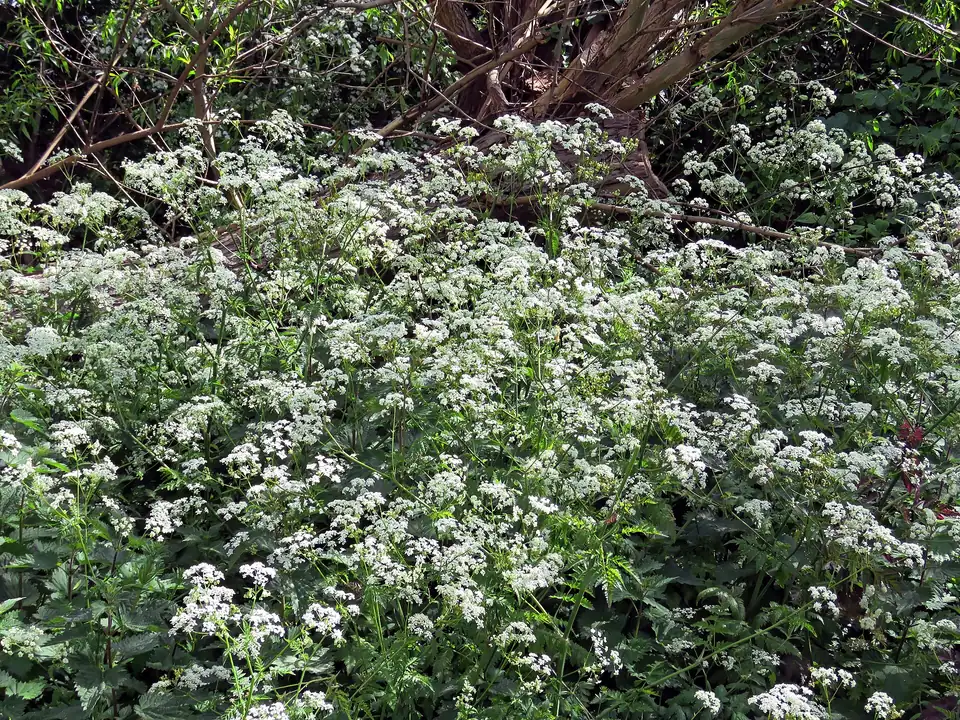
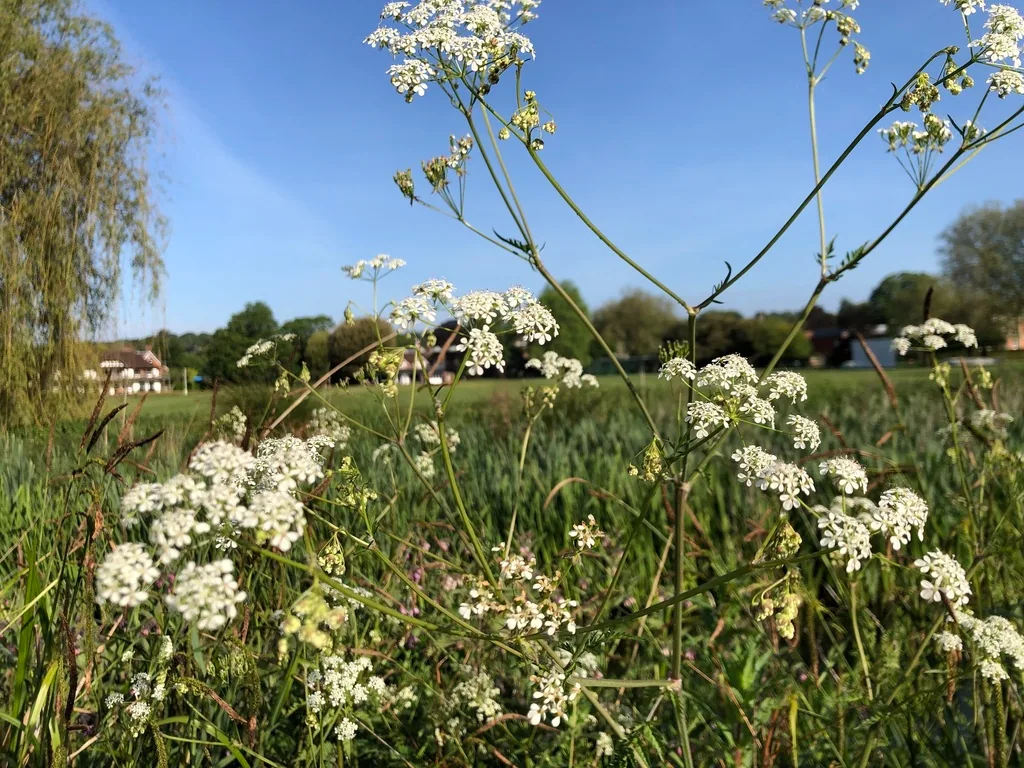
Cow parsley is described as a native plant that thrives in fertile, moist but free-draining soil in full sun to partial shade. [5] It is a prolific seeder that may outcompete native vegetation and is considered a watch list species. [1] The fresh leaves can be used as a pot herb, but the plant looks very similar to hemlock, which is extremely poisonous. [5]
This record is incomplete: the sources we read do not cover every field yet.
Not yet covered by our sources: Hardiness, coldest zone, Hardiness, warmest zone
Cow Parsley care
How to water Cow Parsley
Watering
Should not require additional watering
What the sources say (1)
As a native plant, it should not require additional watering or any added fertiliser.Watering notes
Thrives in fertile, moist but free-draining soil
What the sources say (1)
Cow parsley thrives in fertile, moist but free-draining soil, and will colonise areas in full sun to partial shade.How much light Cow Parsley needs
Full sun to partial shade
What the sources say (1)
Cow parsley thrives in fertile, moist but free-draining soil, and will colonise areas in full sun to partial shade.How much cold Cow Parsley can take
Hardiness, coldest zone
Not stated in the sources we read.
Hardiness, warmest zone
Not stated in the sources we read.
How to propagate Cow Parsley
Seed (self-seeds readily)
What the sources say (2)
Cow parsley self-seeds readily, but if you want to have control over where it grows, you can save seed to sow in spring.Seed - sow as soon as ripe (early to mid summer) in situ.How to grow Cow Parsley
The plant
Family
Apiaceae
What the sources say (1)
Order Apiales ( 1APIO ) Family Apiaceae ( 1UMBF ) Genus Anthriscus ( 1ANRG ) Species Anthriscus sylvestrisCow Parsley pests and problems
Spreading by self-seeding
Symptom: It will spread easily
What to do: Pull up seedlings as you spot them, or selectively cut back some plants before they shed their seed.
What the sources say (1)
It will spread easily, so you may want to keep it in check by pulling up seedlings as you spot them, or by selectively cutting back some plants before they shed their seed.
— How to Grow Cow Parsley | BBC Gardeners World Magazine [5]
Remedies
Each remedy shows what official sources say about it; traditional remedies without an official source are marked as such. Harmful ones are listed so you know to avoid them.
First aid
First aid: not a substitute for a doctor
skin irritation
washing with running water Official source, not independently tested
Observe the area for such signs of infection as red streaks around the area, swelling, pus, or a lot of discharge. If this happens, see your health care provider.
— poison.org [6] How: If plant material, juices or sap are on the skin, wash quickly with plenty of running water; wash the area thoroughly with running water and soap.
If you know you have plant material, juices, or sap on your skin, wash quickly with plenty of running water.
— poison.org [6]
Getting rid of it
invasive spread
hand pulling and digging Official source, not independently tested
Wear gloves and long sleeves to avoid skin contact as the sap can be an irritant to some.
— kingcounty.gov [7] How: For single plants or small patches, hand pull or dig up the roots when the soil is moist, removing all roots.
For individual plants or small patches, hand pull or dig up the roots when the soil is moist. Take care to remove all roots, as plants can regrow from the root crown.
— kingcounty.gov [7] forking out the taproot Official source, not independently tested
Hoeing isn’t an effective way to control cow parsley, as its taproot can regrow if damaged.
— rhs.org.uk [8] How: Use a hand fork for seedlings and a border fork for mature plants, inserting it below the taproot; best in late spring before flowering.
Doing this in late spring, when plants have begun to develop the tall flower stems but haven’t yet started flowering, gives you good purchase without the risk of spreading seed.
— rhs.org.uk [8] cutting and bagging flower heads Official source, not independently tested
Always remove flower and seed heads if present and put them in the garbage, NOT compost (does not get hot enough to kill all the seeds).
— kingcounty.gov [7] How: Cut and bag flower heads before digging out the roots; put flower and seed heads in the garbage, not the compost.
If flowering, you can cut and bag flower heads before digging out the roots.
— kingcounty.gov [7] repeated mowing Official source, not independently tested
Cutting plants down at flowering induces side shoot production but no secondary flower stems develop. Repeated cutting, 3-6 times per year, may give short-term control.
— gardenorganic.org.uk [9] How: Mow regularly in grassy areas; repeated cutting 3-6 times per year may give short-term control.
Mow regularly – repeated mowing of cow parsley in grassy areas will weaken and eventually kill it.
— rhs.org.uk [8] tilling Works
How: Till, then restore competitive vegetation to the disturbed areas.
Research has shown tilling to be the most effective method. Target plants when they are stressed after treatment or in late summer.
— kingcounty.gov [7] What the evidence says Research has shown tilling to be the most effective method. Target plants when they are stressed after treatment or in late summer.
— kingcounty.gov [7] spring grazing Not verified
Traditional remedy, not verified by an official source.
How: Graze in spring; the plant is also sensitive to trampling.
competitive grass cover Official source, not independently tested
How: Maintain healthy soils and competitive grasses in pastures.
Maintaining healthy soils and competitive grasses are important for sustained weed management in pastures.
— kingcounty.gov [7]
Is Cow Parsley toxic to pets?
Reported by the source, quoted verbatim. This is not medical or veterinary advice: if a person or an animal may have eaten this plant, contact a poison control centre or a veterinarian.
Animals
This plant is suspected of being poisonous to mammals
[2]The source flags the risk for this animal but does not explain why.
People
Calendar
Planting
Early summer (seedlings raised in modules)
What the sources say (1)
Pot on when seedlings are large enough to handle, and plant out in early summer.Pruning
End of summer
What the sources say (1)
Otherwise, leave flowerheads on the plant as long as possible and cut back at the end of the summer.Months as given by the sources, which are mostly from the United States (northern hemisphere). In the southern hemisphere they shift by about six months.
Edibility
Reported by the source, quoted verbatim. Do not eat a plant on the basis of this page alone: identification mistakes can be dangerous.
Similar plants
- Garden chervil Anthriscus cerefolium
- Amethyst eryngo Eryngium amethystinum
- Angelica Angelica archangelica
- Anise burnet saxifrage Pimpinella anisum
- Appalachian Angelica Angelica triquinata
- Asiatic pennywort Centella asiatica
- Bishop's Weed Ammi majus
- Caraway Carum carvi
Sources
Every value above is quoted from these documents. Links lead to the original publisher.
- Wild Chervil | Vermont Invasives · vtinvasives.org, consulted
- Anthriscus sylvestris - Useful Temperate Plants · temperate.theferns.info, consulted
- Anthriscus sylvestris (ANRSY)[Overview]| EPPO Global Database · gd.eppo.int, consulted
- Search for species - Wiesen-Kerbel (Anthriscus sylvestris (L.) Hoffm.) · i-flora.com, consulted
- How to Grow Cow Parsley | BBC Gardeners World Magazine · gardenersworld.com, consulted
- poison.org · poison.org
- kingcounty.gov · kingcounty.gov
- rhs.org.uk · rhs.org.uk
- gardenorganic.org.uk · gardenorganic.org.uk
Written by Emilio Marruso · last checked