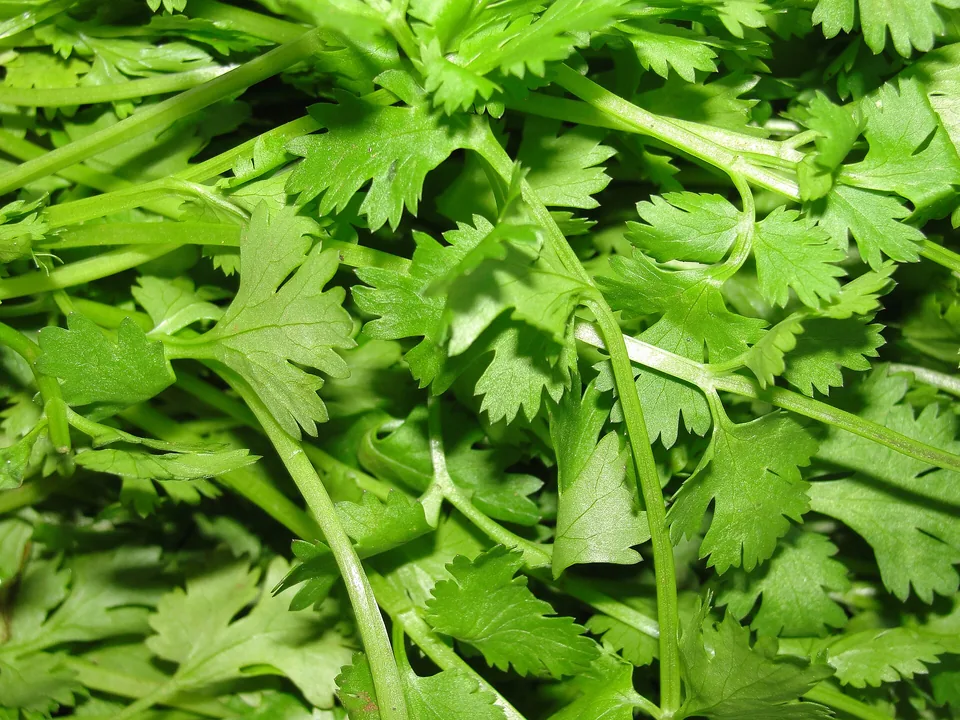
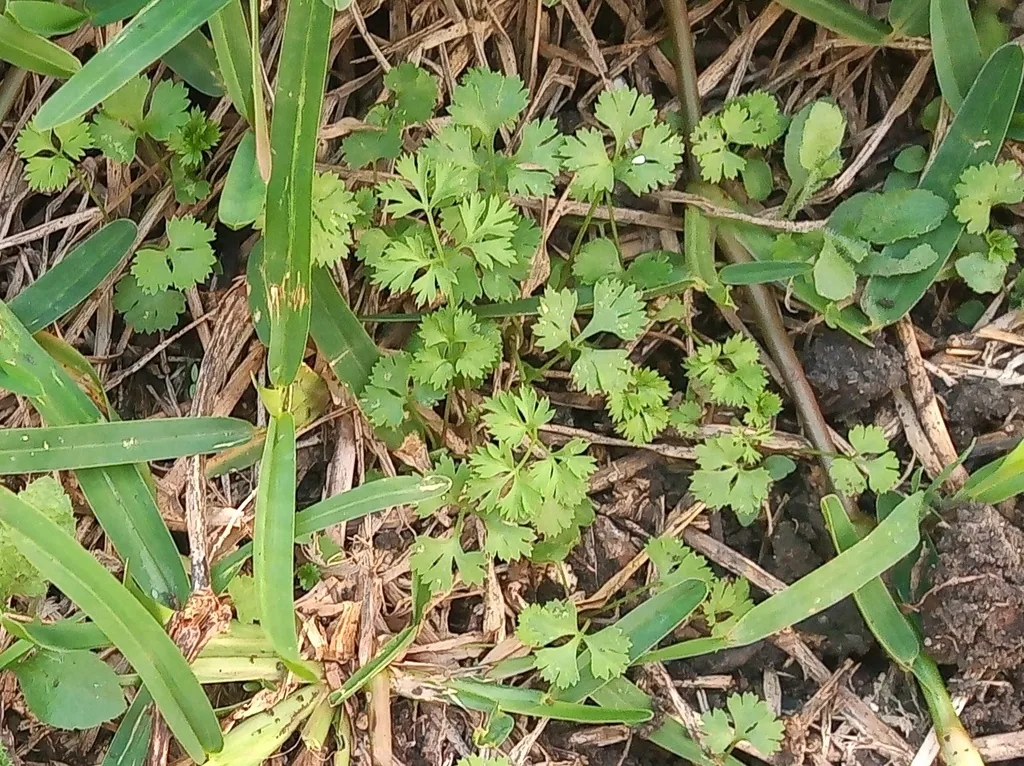

Cómo cultivar y cuidar Cilantro
Coriandrum sativum
Escrito por Emilio Marruso · última revisión
No tóxica para gatos y perros, según las fuentes · Fuentes
De un vistazo
El cilantro es una hierba de temporada fresca que te da dos cosechas: hojas frescas para ensaladas y platos mexicanos y asiáticos, y semillas para usar como especia. Siémbralo directamente en la tierra, a pleno sol o sombra ligera, riégalo con regularidad mientras se establece y recoge las hojas antes de que llegue el calor. Cuando las semillas se vuelvan marrón claro, corta los tallos y cuélgalos a secar.
- Sol
De pleno sol a sombra ligera
Qué dicen las fuentes (7)
Luz: Pleno sol a semisombra
Según NC State Extension: Light: Full sun (6 or more hours of direct sunlight a day) Partial Shade (Direct sunlight only part of the day, 2-6 hours)
— Coriandrum sativum (Chinese Parsley, Cilantro, Coriander, Dhania) | North Carolina Extension Gardener Plant Toolbox [1] Según Wisconsin Horticulture: Cilantro grows best in well-drained soil in full sun, but it will tolerate very light shade.
— Cilantro / Coriander, Coriandrum sativum – Wisconsin Horticulture [3] Según University of Maryland Extension: Plant so that it is shaded by other plants or in a spot where it will receive light, afternoon shade.
— Cilantro/Coriander | University of Maryland Extension [5] temporada cálida: If leafy harvest is the goal, grow cilantro in a cool or semi-shaded location during the warm season.
— How to grow cilantro for leaves — or coriander seeds | OSU Extension Service [7] Según Illinois Extension: Cilantro prefers a full sun location and average, well-drained garden soil.
— Cilantro | Herbs | Illinois Extension | Illinois [8] It prefers medium moist well-drained soil in full sun to light shade.
— Coriandrum sativum (Chinese Parsley, Cilantro, Coriander, Dhania) | North Carolina Extension Gardener Plant Toolbox [1] Cilantro grows best in well-drained soil in full sun, but it will tolerate very light shade.
— Cilantro / Coriander, Coriandrum sativum – Wisconsin Horticulture [3] - Riego
Riega con regularidad mientras se establece; reduce el riego cuando las semillas maduran
Qué dicen las fuentes (2)
Notas sobre el riego: Riego regular durante el establecimiento; reduce el riego cuando las semillas estén cerca de la madurez
Cilantro requires regular watering during establishment. Once the plants are established they need little water.
— Cilantro/Coriander in the Garden | USU [6] Keep plants evenly moist throughout the growing season. Reduce irrigation when the seeds are nearing maturity.
— Cilantro / Coriander, Coriandrum sativum – Wisconsin Horticulture [3] - Siembra
Siembra las semillas a 6–13 mm de profundidad; germinan en 21 días con la tierra a 13–20 °C
Qué dicen las fuentes (4)
Profundidad de siembra: 0.6-1.3 cm [0,2–0,5 in] (¼ a ½ pulgadas)
Plant seed ¼ to ½ inch deep in rows about a foot apart. Cilantro does not transplant well because of its long taproot.
— Cilantro / Coriander, Coriandrum sativum – Wisconsin Horticulture [3] Plant cilantro seeds ½ inch deep and space 2 inches apart if you are planning to use the plant for its leaves.
— Cilantro/Coriander in the Garden | USU [6] Germinación: Las semillas germinan a temperaturas del suelo de 12.8-20 °C [55–68 °F], en 21 días.
Seeds germinate at soil temperatures of 55–68° F, and mature plants tolerate light freezing.
— How to grow cilantro for leaves — or coriander seeds | OSU Extension Service [7] Seeds germinate in about 21 days and grow 1-3 feet tall.
— Cilantro/Coriander in the Garden | USU [6] - Abonado
Abona con nitrógeno a principios del verano, pero sin pasarte: las hojas pierden sabor
Qué dicen las fuentes (6)
Cuándo: durante la temporada de crecimiento, con un abono lateral de nitrógeno a principios del verano
Fertilize 1-2 times during the growing season by applying ¼ cup of a nitrogen based fertilizer (21-0-0) per 25 square foot of growing area.
— Cilantro/Coriander in the Garden | USU [6] Water sparingly as cilantro/coriander does not do well in damp or humid conditions. Side-dress cilantro with nitrogen in early summer. Over-fertilization decreases plant flavor.
— Cilantro/Coriander in the Garden | USU [6] Evitar: exceso de fertilización y demasiado nitrógeno
Be careful of over fertilization, too much nitrogen can make the plant less flavorful.
— Cilantro/Coriander in the Garden | USU [6] Water sparingly as cilantro/coriander does not do well in damp or humid conditions. Side-dress cilantro with nitrogen in early summer. Over-fertilization decreases plant flavor.
— Cilantro/Coriander in the Garden | USU [6] Signos de exceso: Hojas menos sabrosas
Be careful of over fertilization, too much nitrogen can make the plant less flavorful.
— Cilantro/Coriander in the Garden | USU [6] Water sparingly as cilantro/coriander does not do well in damp or humid conditions. Side-dress cilantro with nitrogen in early summer. Over-fertilization decreases plant flavor.
— Cilantro/Coriander in the Garden | USU [6] - Cosecha
Recoge las hojas cuando mida 15 cm, antes de que espigue; las semillas, cuando estén marrón claro
Qué dicen las fuentes (7)
Cómo cosechar: Hojas: recoge hojas frescas una vez que las plantas tengan unos 15 cm (6 pulgadas) de alto y antes de que se espiguen; quita las hojas exteriores más viejas para estimular nuevas hojas (las hojas más jóvenes tienen un sabor más intenso); corta las plantas enteras a una pulgada del suelo y déjalas volver a crecer para un segundo corte. Semillas: cosecha cuando se vuelven marrón claro y toda la planta esté seca, generalmente de 2 a 3 semanas después de la floración; corta los tallos antes de que se dispersen mucho, luego cuélgalos para secar sobre un paño o dentro de una bolsa de papel.
: Harvest when leaves are about 4-6 inches tall.
— Cilantro/Coriander in the Garden | USU [6] Pick fresh leaves any time after the plants are about 6 inches tall but before they bolt (the leaves may develop a disagreeable flavor at this stage).
— Cilantro / Coriander, Coriandrum sativum – Wisconsin Horticulture [3] Removing the older, outside leaves will encourage the plant to produce new leaves, but the younger leaves have more intense flavor.
— Cilantro / Coriander, Coriandrum sativum – Wisconsin Horticulture [3] Harvest seeds when they turn a light brown and the entire plant is dried, usually 2 to 3 weeks after flowering.
— Cilantro / Coriander, Coriandrum sativum – Wisconsin Horticulture [3] Whole plants can be cut off as a bunch at an inch above the ground , and the plant can regrow for a second cutting.
— Cilantro / Coriander, Coriandrum sativum – Wisconsin Horticulture [3] Cut the stems before much shattering has occurred and hang the plants in a warm, airy place to dry.
— Cilantro / Coriander, Coriandrum sativum – Wisconsin Horticulture [3] When plants begin to turn brown, cut off the seed heads, put them in a paper bag and hang this until the plant dries and seeds fall to the bottom of the bag.
— Cilantro/Coriander in the Garden | USU [6] - Plagas
Vigila los cicadélidos; puede sufrir mancha bacteriana, amarillez del áster y podredumbre de plántulas
Qué dicen las fuentes (5)
Plagas: chicharritas
: Cilantro does not have any serious pest problems , although some commercial growers have reported problems with a bacterial leaf spot.
— Cilantro / Coriander, Coriandrum sativum – Wisconsin Horticulture [3] Be on the lookout for leafhoppers and related diseases to protect plant health.
— Cilantro/Coriander in the Garden | USU [6] Enfermedades: mancha bacteriana de la hoja, amarillamiento del áster, mal de los semilleros
Cilantro does not have any serious pest problems , although some commercial growers have reported problems with a bacterial leaf spot.
— Cilantro / Coriander, Coriandrum sativum – Wisconsin Horticulture [3] Aster’s Yellow Disease | The disease is caused by leafhoppers; flowers turn yellow, plant grows tall and spindly, plant eventually becomes sterile.
— Cilantro/Coriander in the Garden | USU [6] Damping Off or Seedling Rot | Death of new seedlings and yellowing of plants. | Crop Rotation.
— Cilantro/Coriander in the Garden | USU [6] - Atención
Espiga con el calor: siembra temprano, cubre el suelo y mantén la humedad
Qué dicen las fuentes (4)
Calor: Cultivo de estación fría: se espiga fácilmente en clima caluroso y días largos, y las siembras de verano se espigan antes de producir muchas hojas; existen cultivares de espigado lento, pero ninguno resiste bien las temperaturas altas.
cultivado en interiores: Try to keep the soil temperature below 75°F, especially if grown near a heat source or a particular window that becomes quite warm
— Cilantro/Coriander in the Garden | USU [6] Cilantro is a cool season crop that tends to bolt (go to seed) in hot weather but will not survive a hard freeze.
— Cilantro / Coriander, Coriandrum sativum – Wisconsin Horticulture [3] Though some cultivars are less susceptible to early bolting, thus are listed as “slow bolting”, none hold well under high temperatures and long days.
— Cilantro / Coriander, Coriandrum sativum – Wisconsin Horticulture [3] Avoid planting during peak summer heat, when plants are likely to bolt before producing many leaves.
— How to grow cilantro for leaves — or coriander seeds | OSU Extension Service [7] - Tamaño
De 30 a 60 cm de alto y de ancho
Qué dicen las fuentes (4)
Altura adulta: 30.5-61 cm (1-2 pies)
: The foliage grows 1 to 1½ feet high, and the flower stems reach 2 to 3 feet.
— Cilantro / Coriander, Coriandrum sativum – Wisconsin Horticulture [3] Height: 1 ft. 0 in. - 2 ft. 0 in.
— Coriandrum sativum (Chinese Parsley, Cilantro, Coriander, Dhania) | North Carolina Extension Gardener Plant Toolbox [1] Cilantro grows one to two feet tall and has finely cut leaves that resemble flat leaf parsley.
— Cilantro | Herbs | Illinois Extension | Illinois [8] Anchura adulta: 30.5-61 cm (1-2 pies)
Width: 1 ft. 0 in. - 2 ft. 0 in.
— Coriandrum sativum (Chinese Parsley, Cilantro, Coriander, Dhania) | North Carolina Extension Gardener Plant Toolbox [1] - Multiplicación
Se cultiva a partir de semilla
Qué dicen las fuentes (1)
Propagación: Semilla
Coriander/Cilantro is easily grown from seed in average garden soil.
— Cilantro/Coriander | University of Maryland Extension [5] - Maceta
Crece en maceta
Qué dicen las fuentes (1)
En maceta: Sí
It can also be grown successfully in containers.
— Cilantro / Coriander, Coriandrum sativum – Wisconsin Horticulture [3] - Seguridad
No tóxico para gatos, perros y caballos
Resumen
El cilantro es una hierba culinaria de estación fría que se espiga fácilmente en climas más cálidos. [1] Prefiere suelo bien drenado a pleno sol o semisombra y se puede cultivar con éxito en contenedores. [1][3] Las hojas, tallos, flores y semillas son comestibles; las hojas como hierba (cilantro) y las semillas como especia (coriandro). [1]
Citado en inglés, como en la fuente.
Cuidados
Las medidas entre corchetes son nuestra conversión al otro sistema de unidades; el texto citado no cambia.
Riego
Riego
Las fuentes dan valores distintos según la región, la zona o las condiciones de cultivo.
Lo que dice cada fuente
Según Wisconsin Horticulture: Mantén las plantas uniformemente húmedas durante toda la temporada de crecimiento
Según USU Extension: Necesita poca agua una vez establecida; evita condiciones húmedas
Qué dicen las fuentes (2)
Según Wisconsin Horticulture: Keep plants evenly moist throughout the growing season. Reduce irrigation when the seeds are nearing maturity.Según USU Extension: Once the plants are established they need little water. Avoid over-watering as this plant does not do well in damp or humid conditions.Notas sobre el riego
Riego regular durante el establecimiento; reduce el riego cuando las semillas estén cerca de la madurez
Qué dicen las fuentes (2)
Cilantro requires regular watering during establishment. Once the plants are established they need little water.Keep plants evenly moist throughout the growing season. Reduce irrigation when the seeds are nearing maturity.Luz
Pleno sol a semisombra
Lo que dice cada fuente
Según NC State Extension: Pleno sol a semisombra
Según Wisconsin Horticulture: Pleno sol, tolera sombra muy ligera
Según University of Maryland Extension: Sombreado por otras plantas o sombra ligera por la tarde
temporada cálida: Lugar fresco o semisombreado
Según Illinois Extension: Pleno sol
Qué dicen las fuentes (7)
Según NC State Extension: Light:
Full sun (6 or more hours of direct sunlight a day)
Partial Shade (Direct sunlight only part of the day, 2-6 hours)Según Wisconsin Horticulture: Cilantro grows best in well-drained soil in full sun, but it will tolerate very light shade.Según University of Maryland Extension: Plant so that it is shaded by other plants or in a spot where it will receive light, afternoon shade.temporada cálida: If leafy harvest is the goal, grow cilantro in a cool or semi-shaded location during the warm season.Según Illinois Extension: Cilantro prefers a full sun location and average, well-drained garden soil.It prefers medium moist well-drained soil in full sun to light shade.Cilantro grows best in well-drained soil in full sun, but it will tolerate very light shade.Dónde cultivarla
En interior
Sí
Qué dicen las fuentes (1)
Yes, but make sure that the container is deep enough. Be sure to grow it in a place where it will get enough sun.En maceta
Sí
Qué dicen las fuentes (1)
It can also be grown successfully in containers.Distancia de plantación
Las fuentes dan valores distintos según la región, la zona o las condiciones de cultivo.
Lo que dice cada fuente
cultivo de hojas (fuente: Wisconsin Horticulture): 7.6-15.2 cm (3-6 in)
producción de semillas: 30.5 cm (12 pulgadas)
plantas utilizadas para las hojas: 5.1 cm (2 in)
semilla de cilantro: 20.3-25.4 cm (8-10 in)
Según University of Maryland Extension: 17.8-25.4 cm (7-10 in)
Según OSU Extension Service: 20.3 cm (8 in)
Qué dicen las fuentes (6)
cultivo de hojas (fuente: Wisconsin Horticulture): Once established, thin seedlings to 3 to 6 inches apartproducción de semillas: For seed production, thin plants to 12 inches apart.plantas utilizadas para las hojas: Plant cilantro seeds ½ inch deep and space 2 inches apart if you are planning to use the plant for its leaves.semilla de cilantro: For coriander seed, space the seeds 8-10 inches apart.Según University of Maryland Extension: Thin plants 7 to 10” apart. Can also be successfully grown in containers.Según OSU Extension Service: Thin plants to 8 inches apart with rows spaced 18–24 inches.Propagación
Semilla
Qué dicen las fuentes (1)
Coriander/Cilantro is easily grown from seed in average garden soil.Cultivo
La planta
Ciclo de vida
anual
Qué dicen las fuentes (2)
Coriandrum sativum is a fast-growing annual with two common names, based on how it is used.Coriander is a dainty annual that grows to about 2 feet tall with finely divided leaves.Familia
Apiaceae
Qué dicen las fuentes (1)
This member of the carrot or parsley family (Apiaceae) is native to southern Europe and Asia but has spread to many other parts of the world.Altura adulta
30.5-61 cm (1-2 pies)
Lo que dice cada fuente
:
Qué dicen las fuentes (3)
: The foliage grows 1 to 1½ feet high, and the flower stems reach 2 to 3 feet.Height: 1 ft. 0 in. - 2 ft. 0 in.Cilantro grows one to two feet tall and has finely cut leaves that resemble flat leaf parsley.Anchura adulta
30.5-61 cm (1-2 pies)
Qué dicen las fuentes (1)
Width: 1 ft. 0 in. - 2 ft. 0 in.Siembra y crecimiento
Días de germinación
21
Qué dicen las fuentes (1)
Seeds germinate in about 21 days and grow 1-3 feet tall.Profundidad de siembra
0.6-1.3 cm [0,2–0,5 in] (¼ a ½ pulgadas)
Qué dicen las fuentes (2)
Plant seed ¼ to ½ inch deep in rows about a foot apart. Cilantro does not transplant well because of its long taproot.Plant cilantro seeds ½ inch deep and space 2 inches apart if you are planning to use the plant for its leaves.Distancia entre hileras
Las fuentes no coinciden:
Días hasta la madurez
45-80 días hasta la cosecha de hojas; al menos 100 días para una cosecha de semillas (la fuente no dice desde cuándo se cuenta)
Lo que dice cada fuente
:
:
Qué dicen las fuentes (3)
: ‘Leisure’ – High yielding, uniform growth habit. Heat tolerant and slow to bolt, ready for harvest in 28-40 days.: ‘Slo Bolt’ is harvestable in about 45 days from sowing and is, as the name implies, slower to flower than many varieties.A growing season of at least 100 days in necessary for a seed crop, but the leaves can be harvested in 45 to 80 days .Cosecha y conservación
Cómo cosechar
Hojas: recoge hojas frescas una vez que las plantas tengan unos 15 cm (6 pulgadas) de alto y antes de que se espiguen; quita las hojas exteriores más viejas para estimular nuevas hojas (las hojas más jóvenes tienen un sabor más intenso); corta las plantas enteras a una pulgada del suelo y déjalas volver a crecer para un segundo corte. Semillas: cosecha cuando se vuelven marrón claro y toda la planta esté seca, generalmente de 2 a 3 semanas después de la floración; corta los tallos antes de que se dispersen mucho, luego cuélgalos para secar sobre un paño o dentro de una bolsa de papel.
Lo que dice cada fuente
:
Qué dicen las fuentes (7)
: Harvest when leaves are about 4-6 inches tall.Pick fresh leaves any time after the plants are about 6 inches tall but before they bolt (the leaves may develop a disagreeable flavor at this stage).Removing the older, outside leaves will encourage the plant to produce new leaves, but the younger leaves have more intense flavor.Harvest seeds when they turn a light brown and the entire plant is dried, usually 2 to 3 weeks after flowering.Whole plants can be cut off as a bunch at an inch above the ground , and the plant can regrow for a second cutting.Cut the stems before much shattering has occurred and hang the plants in a warm, airy place to dry.When plants begin to turn brown, cut off the seed heads, put them in a paper bag and hang this until the plant dries and seeds fall to the bottom of the bag.Conservación
Hojas: frescas en el refrigerador durante aproximadamente una semana (o con los tallos en agua), o congeladas en una bolsa resellable; las hojas secas pierden gran parte de su sabor. Semillas: las semillas secas se conservan durante meses en un recipiente hermético en un lugar fresco y oscuro.
Qué dicen las fuentes (3)
Cut leaves can be stored in the refrigerator for about a week or place a “bouquet” of leaves in water to maintain freshness in the refrigerator.When freezing, simply place in a resealable bag and put in the freezer.The dried seeds can be stored for months in an airtight container in a cool, dark place .Guardar semillas
Deja que las cabezas de las flores se vuelvan marrones, corta toda la planta (o los tallos antes de que se desprendan muchas semillas), sécala en una bolsa de papel o sobre un paño, y guarda las vainas enteras en un lugar fresco y seco.
Qué dicen las fuentes (2)
To save seed for your next crop, just store the whole pods in a cool, dry location.If growing cilantro for the seeds allow the flower heads to turn brown and cut the entire plant. Place the plants in a paper bag and store in a cool, dry location.Plagas y enfermedades
Plagas
chicharritas
Lo que dice cada fuente
:
Qué dicen las fuentes (2)
: Cilantro does not have any serious pest problems , although some commercial growers have reported problems with a bacterial leaf spot.Be on the lookout for leafhoppers and related diseases to protect plant health.Enfermedades
mancha bacteriana de la hoja, amarillamiento del áster, mal de los semilleros
Qué dicen las fuentes (3)
Cilantro does not have any serious pest problems , although some commercial growers have reported problems with a bacterial leaf spot.Aster’s Yellow Disease | The disease is caused by leafhoppers; flowers turn yellow, plant grows tall and spindly, plant eventually becomes sterile.Damping Off or Seedling Rot | Death of new seedlings and yellowing of plants. | Crop Rotation.Abonado
Cuándo
durante la temporada de crecimiento, con un abono lateral de nitrógeno a principios del verano
Qué dicen las fuentes (2)
Fertilize 1-2 times during the growing season by applying ¼ cup of a nitrogen based fertilizer (21-0-0) per 25 square foot of growing area.Water sparingly as cilantro/coriander does not do well in damp or humid conditions. Side-dress cilantro with nitrogen in early summer. Over-fertilization decreases plant flavor.Frecuencia
una o dos veces por temporada de crecimiento
Qué dicen las fuentes (1)
Fertilize 1-2 times during the growing season by applying ¼ cup of a nitrogen based fertilizer (21-0-0) per 25 square foot of growing area.Abonos naturales
5.1 a 10.2 cm [2–4 in] de materia orgánica bien compostada por 2.3 m², incorporada a los 10.2 a 15.2 cm [4–6 in] superiores del suelo antes de plantar
Qué dicen las fuentes (1)
Before planting, incorporate 2-4 inches of well-composted organic matter per 25 square feet of garden area. Work this into the top 4-6 inches of soilAbonos minerales
59 mL de un fertilizante nitrogenado (21-0-0) por 2.3 m² de área de cultivo
Qué dicen las fuentes (1)
Fertilize 1-2 times during the growing season by applying ¼ cup of a nitrogen based fertilizer (21-0-0) per 25 square foot of growing area.Evitar
exceso de fertilización y demasiado nitrógeno
Qué dicen las fuentes (2)
Be careful of over fertilization, too much nitrogen can make the plant less flavorful.Water sparingly as cilantro/coriander does not do well in damp or humid conditions. Side-dress cilantro with nitrogen in early summer. Over-fertilization decreases plant flavor.Signos de exceso
Hojas menos sabrosas
Qué dicen las fuentes (2)
Be careful of over fertilization, too much nitrogen can make the plant less flavorful.Water sparingly as cilantro/coriander does not do well in damp or humid conditions. Side-dress cilantro with nitrogen in early summer. Over-fertilization decreases plant flavor.Distancias
Entre plantas
Las fuentes dan valores distintos según la región, la zona o las condiciones de cultivo.
Lo que dice cada fuente
para cosecha de hojas (Utah): 5 cm [2 in]
para semilla de cilantro (Utah): 20-25 cm [7,9–9,8 in]
plántulas, una vez establecidas (Wisconsin): 7.6-15 cm [3–5,9 in]
para producción de semilla (Wisconsin): 30 cm [12 in]
Oregon: 20 cm [7,9 in] en la hilera
Qué dicen las fuentes (5)
para cosecha de hojas (Utah): Plant cilantro seeds ½ inch deep and space 2 inches apart if you are planning to use the plant for its leaves.para semilla de cilantro (Utah): For coriander seed, space the seeds 8-10 inches apart.plántulas, una vez establecidas (Wisconsin): Once established, thin seedlings to 3 to 6 inches apart .para producción de semilla (Wisconsin): For seed production, thin plants to 12 inches apart.Oregon: Thin plants to 8 inches apart with rows spaced 18–24 inches.Entre hileras
Las fuentes dan valores distintos según la región, la zona o las condiciones de cultivo.
Lo que dice cada fuente
Utah: 38 cm [15 in]
Oregon: 46-61 cm [18–24 in]
Qué dicen las fuentes (2)
Utah: Sow seeds about ½″ deep in rows ~15″ apart—thin seedlings to 2″ for leaf harvest or 8–10″ for seed production.Oregon: Thin plants to 8 inches apart with rows spaced 18–24 inches.Raíces
Sistema radicular
Raíz principal larga, lo que dificulta el trasplante; la siembra directa es preferible.
Qué dicen las fuentes (2)
Cilantro does not transplant well because of its long taproot.The herb grows best from direct seeding or from starts, though its long taproot makes transplanting difficult.Propagación
Germinación
Las semillas germinan a temperaturas del suelo de 12.8-20 °C [55–68 °F], en 21 días.
Tras la cosecha
Conservación
Las hojas cortadas se conservan una semana en el refrigerador, envueltas sin apretar en plástico o como ramo en agua; las hojas también se pueden congelar o secar. Las semillas secas se conservan durante meses en un recipiente hermético en un lugar fresco y oscuro.
Qué dicen las fuentes (4)
Cut leaves can be stored in the refrigerator for about a week or place a “bouquet” of leaves in water to maintain freshness in the refrigerator.Dry leaves, wrapped loosely in plastic will keep for a week in the refrigerator.Cilantro can be used fresh, or stored either by freezing or drying.The dried seeds can be stored for months in an airtight container in a cool, dark place .Calor y sequía
Calor
Cultivo de estación fría: se espiga fácilmente en clima caluroso y días largos, y las siembras de verano se espigan antes de producir muchas hojas; existen cultivares de espigado lento, pero ninguno resiste bien las temperaturas altas.
Lo que dice cada fuente
cultivado en interiores: Mantén el suelo por debajo de 23.9 °C [75 °F]
Qué dicen las fuentes (4)
cultivado en interiores: Try to keep the soil temperature below 75°F, especially if grown near a heat source or a particular window that becomes quite warmCilantro is a cool season crop that tends to bolt (go to seed) in hot weather but will not survive a hard freeze.Though some cultivars are less susceptible to early bolting, thus are listed as “slow bolting”, none hold well under high temperatures and long days.Avoid planting during peak summer heat, when plants are likely to bolt before producing many leaves.Problemas
Espigado
Síntoma: Tiende a espigarse (producir semillas) en climas cálidos.
Qué hacer: Planta temprano cuando hace fresco; cubre el suelo con mantillo para mantenerlo fresco y mantén la planta bien regada. Existen cultivares de espigado lento, pero ninguno resiste bien las altas temperaturas y los días largos.
Qué dicen las fuentes (3)
Cilantro is a cool season crop that tends to bolt (go to seed) in hot weather but will not survive a hard freeze.
— Cilantro / Coriander, Coriandrum sativum – Wisconsin Horticulture [3] Plant early when it is cool. Start seedlings indoors and transplant into the garden when frost has passed. Mulch the soil to keep it cool and make sure the plant is well watered.
— Cilantro/Coriander in the Garden | USU [6] none hold well under high temperatures and long days.
— Cilantro / Coriander, Coriandrum sativum – Wisconsin Horticulture [3] Mancha bacteriana en las hojas
Síntoma: Algunos cultivadores comerciales han reportado mancha bacteriana en las hojas.
Qué hacer: Los proveedores de semillas están analizando cada vez más las semillas para detectar contaminación bacteriana.
Qué dicen las fuentes (2)
Cilantro does not have any serious pest problems , although some commercial growers have reported problems with a bacterial leaf spot.
— Cilantro / Coriander, Coriandrum sativum – Wisconsin Horticulture [3] Seed suppliers are increasingly testing seed for bacterial contamination, to reduce problems for growers.
— Cilantro / Coriander, Coriandrum sativum – Wisconsin Horticulture [3] Enfermedad del amarillo del áster
Síntoma: Las flores se vuelven amarillas, la planta crece alta y delgada, y eventualmente se vuelve estéril.
Qué hacer: Usa insecticida adecuado para controlar los saltahojas (los portadores de la enfermedad).
Qué dicen las fuentes (2)
The disease is caused by leafhoppers; flowers turn yellow, plant grows tall and spindly, plant eventually becomes sterile.
— Cilantro/Coriander in the Garden | USU [6] Use appropriate insecticide to control leafhoppers (the carriers of the disease).
— Cilantro/Coriander in the Garden | USU [6] Ahogamiento o pudrición de plántulas
Síntoma: Muerte de plántulas nuevas y amarillamiento de las plantas.
Qué dicen las fuentes (1)
Death of new seedlings and yellowing of plants.
— Cilantro/Coriander in the Garden | USU [6]
Remedios
Cada remedio indica qué dicen las fuentes oficiales; los remedios tradicionales sin fuente oficial aparecen marcados. Los perjudiciales están para que sepas evitarlos.
Cuidar la planta
pulgones
chorro fuerte de agua Funciona
Cómo: Un buen chorro fuerte de agua.
Aphids are the most common and usually found on the underside of leaves and along the stems. A good hard spray of water is an easy control method.
— extension.psu.edu [9] Qué dicen las pruebas A good hard spray of water is an easy control method.
— extension.psu.edu [9] spray de jabón insecticida Funciona
Spray directly on pests like aphids or whiteflies, but rinse the cilantro leaves after a couple of hours to avoid residue buildup.
— cultivatedearth.com [10] While insecticidal soap is less apt to affect other organisms, certain plants might be sensitive to the soap and can suffer leaf burn.
— foodgardening.mequoda.com [12] Cómo: Usa las compradas, o hazlas en casa con unas gotas de jabón líquido suave en un cuarto de galón de agua; rocía directamente sobre plagas como pulgones o mosca blanca y enjuaga las hojas después de un par de horas para evitar acumulación de residuos.
Insecticidal soap is another reliable remedy—either store-bought or homemade using a few drops of mild liquid soap in a quart of water.
— cultivatedearth.com [10] Qué dicen las pruebas For example, insecticidal soap is a safe, effective organic insecticide with minimal environmental impact.
— extension.psu.edu [11] asociación de cultivos con alisón dulce, coreopsis y perifollo No verificado
Remedio tradicional, no verificado por una fuente oficial.
Cómo: Planta alisón dulce, coreopsis y perifollo, que ahuyentan a los pulgones, para minimizar el daño.
gusanos cortadores
orugas militares
ácaros araña
spray de jabón para platos Perjudicial
Cilantro must be cleaned thoroughly before consumption if sprayed with any DIY solutions.
— bugwiz.com [13] For example, spraying home remedies that contain dish detergent on plants on a sunny day can injure the plant, essentially burning it.
— extension.psu.edu [14] Cómo: Diluye unas gotas de jabón para platos en un cuarto de galón de agua; usa una esponja o rociador y empapa la planta; enjuágala con agua al terminar.
Soapy water also works wonders. Just dilute some drops of dish soap into a quart of water.
— bugwiz.com [13] Qué dicen las pruebas For example, spraying home remedies that contain dish detergent on plants on a sunny day can injure the plant, essentially burning it.
— extension.psu.edu [14]
mildiu polvoriento
rociado de ajo No verificado
Remedio tradicional, no verificado por una fuente oficial.
Cómo: Tritura algunos dientes de ajo y dilúyelos con agua; rocía la solución sobre las hojas de cilantro.
rociado con bicarbonato de sodio No verificado
Remedio tradicional, no verificado por una fuente oficial.
Cómo: Rocía una solución de bicarbonato de sodio mezclado con agua sobre las hojas.
babosas
trampa de cerveza No verificado
Remedio tradicional, no verificado por una fuente oficial.
Cómo: Un plato poco profundo lleno de cerveza barata; por la mañana desecha las capturas y repite el proceso.
mal de los semilleros
té de algas marinas o té de manzanilla No verificado
Remedio tradicional, no verificado por una fuente oficial.
Cómo: Té de algas marinas o té de manzanilla, para ayudar a prevenir la propagación de hongos en áreas pequeñas de las plantas.
Toxicidad
Según la fuente, citada textualmente. No es un consejo médico ni veterinario: si una persona o un animal pudo haber ingerido esta planta, contacta con un centro de toxicología o con un veterinario.
#non-toxic for cats #non-toxic for horses #non-toxic for dogs
[1]La fuente señala el riesgo para este animal pero no explica por qué.
Calendario
Siembra
Las fuentes dan valores distintos según la región, la zona o las condiciones de cultivo.
Lo que dice cada fuente
lugares más frescos en Utah: Principios de primavera, para cosecha de verano a otoño
áreas más cálidas: Otoño, cosecha en primavera
Según Wisconsin Horticulture: A principios de la primavera, al mismo tiempo en que normalmente se planta la lechuga
cultivo de hoja de otoño (fuente: Wisconsin Horticulture): A mediados de agosto
Según OSU Extension Service: Desde principios de primavera hasta principios del verano, y luego nuevamente a principios del otoño
Según Illinois Extension: Siembra directa después de que pase el peligro de las heladas
Qué dicen las fuentes (10)
lugares más frescos en Utah: In cooler locations in Utah, plant in the early spring for summer to fall harvest.áreas más cálidas: In warmer areas, plant in the fall and harvest in the spring.Según Wisconsin Horticulture: Sow seeds in early spring , at the same time lettuce is typically planted.cultivo de hoja de otoño (fuente: Wisconsin Horticulture): For a fall leaf crop, seed in mid-August.Según OSU Extension Service: Sow seeds directly into sunny, fertile beds from early spring through early summer, then again in early autumn.Según Illinois Extension: It is easily grown from seed that is directly sown in the garden after danger of frost is past.Sow seeds in early spring , at the same time lettuce is typically planted.Make successive sowings at 2 to 3 week intervals for an extended harvest when growing the plants for their leaves.For a fall leaf crop, seed in mid-August.In warmer areas, plant in the fall and harvest in the spring.Plantación
Las fuentes dan valores distintos según la región, la zona o las condiciones de cultivo.
Lo que dice cada fuente
Según USU Extension: Plántulas iniciadas en interiores 4-6 semanas antes del trasplante; trasplanta después de que haya pasado la helada
Según Wisconsin Horticulture: No trasplanta bien; siembra directamente
Qué dicen las fuentes (3)
Según USU Extension: Cilantro/coriander can also be started indoors 4-6 weeks before transplanting. Minimize root disturbance when transplanting seedlings.Según Wisconsin Horticulture: Cilantro does not transplant well because of its long taproot.Plant early when it is cool. Start seedlings indoors and transplant into the garden when frost has passed.Cosecha
Las fuentes dan valores distintos según la región, la zona o las condiciones de cultivo.
Lo que dice cada fuente
hojas (fuente: Wisconsin Horticulture): De 45 a 80 días
hojas (fuente: USU Extension): Cuando las hojas midan entre 4 y 6 pulgadas [10–15 cm] de alto
semillas (fuente: University of Maryland Extension): Medio verano
semillas (fuente: USU Extension): Finales del verano o principios del otoño
semillas (fuente: Wisconsin Horticulture): Cuando estén de color marrón claro y la planta esté seca, generalmente de 2 a 3 semanas después de la floración
Qué dicen las fuentes (8)
hojas (fuente: Wisconsin Horticulture): the leaves can be harvested in 45 to 80 dayshojas (fuente: USU Extension): Harvest when leaves are about 4-6 inches tall.semillas (fuente: University of Maryland Extension): if coriander seeds are desired, allow plants to flower, wait until the flower heads turn brown, and gather seeds as they ripen in mid-summer.semillas (fuente: USU Extension): let the plants grow until the seeds form in late summer or early fall.semillas (fuente: Wisconsin Horticulture): Harvest seeds when they turn a light brown and the entire plant is dried, usually 2 to 3 weeks after flowering.A growing season of at least 100 days in necessary for a seed crop, but the leaves can be harvested in 45 to 80 days .Harvest seeds when they turn a light brown and the entire plant is dried, usually 2 to 3 weeks after flowering.Pick fresh leaves any time after the plants are about 6 inches tall but before they boltMeses tal como los dan las fuentes, en su mayoría de Estados Unidos (hemisferio norte). En el hemisferio sur se desplazan unos seis meses.
Respecto a las heladas
Estimación menos precisa: no hay ninguna estación meteorológica a menos de 300 km.
Busca las fechas de heladas por código postal o ciudad
Siembra al aire libre: hacia la última helada
Plant seeds ¼- ½ inch deep after danger of frost has passed and mulch around the seedlings as soon as they emerge.
— Cilantro/Coriander in the Garden | USU [6] Trasplante: hacia la última helada
Start seedlings indoors and transplant into the garden when frost has passed.
— Cilantro/Coriander in the Garden | USU [6]
Cuenta desde las fechas medias de las heladas de tu zona.
Comestibilidad
Según la fuente, citada textualmente. No comas una planta basándote solo en esta página: los errores de identificación pueden ser peligrosos.
Leaves, stems, flowers and seeds are edible. Leaves/flowers as an herb and seeds (Coriander) as a spice.
[1]Cilantro roots are used in Thai and Vietnamese cooking. Dig the roots of plants that have not gone to seed in the fall to harvest them.
[3]Cilantro is used fresh in Mexican and Asian cuisine and added to salads.
[5]
Valores orientativos
Valores de una fuente secundaria, no comprobados palabra por palabra como el resto de esta página. Úselos como punto de partida.
- Horas de sol
- 8-10 horasValor orientativo, adáptalo a tu clima · Fuente secundaria
- Suelo
- Bien drenadoValor orientativo, adáptalo a tu clima · Fuente secundaria
- pH del suelo
- 6.2-6.8Valor orientativo, adáptalo a tu clima · Fuente secundaria
- Zonas de rusticidad USDA
- 2-11 [mínima invernal de −45,6 a 10 °C (de −50 a 50 °F)]Valor orientativo, adáptalo a tu clima · Fuente secundaria
- Crecimiento
- AltaValor orientativo, adáptalo a tu clima · Fuente secundaria
- Poda
- MayoValor orientativo, adáptalo a tu clima · Fuente secundaria
Plantas similares
- Apio caballar Smyrnium olusatrum
- Angélica Angelica archangelica
- Anís Pimpinella anisum
- Asiatic pennywort Centella asiatica
- Alcaravea Carum carvi
- Perifollo verde Anthriscus sylvestris
- Comino Cuminum cyminum
- Echinophora spinosa Echinophora spinosa
Fuentes
Cada valor anterior se cita de estos documentos. Los enlaces llevan al editor original.
- Coriandrum sativum (Chinese Parsley, Cilantro, Coriander, Dhania) | North Carolina Extension Gardener Plant Toolbox · plants.ces.ncsu.edu, consultado
- Coriander - Coriandrum sativum | North Carolina Extension Gardener Plant Toolbox · plants.ces.ncsu.edu, consultado
- Cilantro / Coriander, Coriandrum sativum – Wisconsin Horticulture · hort.extension.wisc.edu, consultado
- Cilantro - Coriandrum sativum | North Carolina Extension Gardener Plant Toolbox · plants.ces.ncsu.edu, consultado
- Cilantro/Coriander | University of Maryland Extension · extension.umd.edu, consultado
- Cilantro/Coriander in the Garden | USU · extension.usu.edu, consultado
- How to grow cilantro for leaves — or coriander seeds | OSU Extension Service · extension.oregonstate.edu, consultado
- Cilantro | Herbs | Illinois Extension | Illinois · extension.illinois.edu, consultado
- extension.psu.edu · extension.psu.edu
- cultivatedearth.com · cultivatedearth.com
- extension.psu.edu · extension.psu.edu
- foodgardening.mequoda.com · foodgardening.mequoda.com
- bugwiz.com · bugwiz.com
- extension.psu.edu · extension.psu.edu
Escrito por Emilio Marruso · última revisión