
Cómo cultivar y cuidar Calabacín
Cucurbita pepo
Escrito por Emilio Marruso · última revisión
No tóxica para gatos y perros, según las fuentes · Fuentes
De un vistazo
Cultivar calabazas es una alegría: siembra las semillas a 2,5 cm de profundidad cuando ya no haya riesgo de heladas y el suelo se haya templado. Dales sol pleno y una tierra algo húmeda, y las guías recorrerán todo el huerto. A finales de septiembre o principios de octubre, corta tus calabazas de piel dura y color intenso, y guarda las semillas: también se comen.
- Sol
Sol pleno
Qué dicen las fuentes (2)
Luz: Pleno sol
Full sun (6 or more hours of direct sunlight a day)
— Cucurbita pepo (Acorn Squash, Courgette, Ornamental Gourd, Patty Pan Squash, Pumpkin, Spaghetti Squash, Squash, Summer Squash, Winter Squash, Zucchini) | North Carolina Extension Gardener Plant Toolbox [1] It should have a rich garden soil and at least six hours of direct sunlight a day.
— Cucurbita pepo var. pepo Spaghetti Squash [7] - Riego
Mantén la tierra algo húmeda; riega si hay una sequía larga; el acolchado ayuda a conservar la humedad
Qué dicen las fuentes (3)
Riego: Suelo moderadamente húmedo; riega si ocurre un período seco prolongado
is an aggressive grower and prefers moderately moist soil with full access to sunlight
— Cucurbita pepo (Acorn Squash, Courgette, Ornamental Gourd, Patty Pan Squash, Pumpkin, Spaghetti Squash, Squash, Summer Squash, Winter Squash, Zucchini) | North Carolina Extension Gardener Plant Toolbox [1] Irrigate if an extended dry period occurs in early summer. Pumpkins tolerate short periods of hot, dry weather pretty well.
— Growing Pumpkins | Pumpkins | Illinois Extension | Illinois [8] Notas sobre el riego: Cubre con mantillo alrededor de las plantas; esto ayuda a retener la humedad y reducir la competencia.
Mulching around the squash aids with retaining moisture and reducing competition.
— Cucurbita pepo (Acorn Squash, Courgette, Ornamental Gourd, Patty Pan Squash, Pumpkin, Spaghetti Squash, Squash, Summer Squash, Winter Squash, Zucchini) | North Carolina Extension Gardener Plant Toolbox [1] - Frío
Aguanta inviernos de hasta −40 °C (−40 °F)
Muy rústica · USDA 3a · RHS H7 · Z3
Qué dicen las fuentes (2)
Rusticidad, zona más fría: 3a [mínima invernal de −40 a −37,2 °C (de −40 a −35 °F)]
3a, 3b, 4a, 4b, 5a, 5b, 6a, 6b, 7a, 7b, 8a, 8b, 9a, 9b, 10a, 10b, 11a, 11b
— Cucurbita pepo (Acorn Squash, Courgette, Ornamental Gourd, Patty Pan Squash, Pumpkin, Spaghetti Squash, Squash, Summer Squash, Winter Squash, Zucchini) | North Carolina Extension Gardener Plant Toolbox [1] Rusticidad, zona más cálida: 11b [mínima invernal de 7,2 a 10 °C (de 45 a 50 °F)]
3a, 3b, 4a, 4b, 5a, 5b, 6a, 6b, 7a, 7b, 8a, 8b, 9a, 9b, 10a, 10b, 11a, 11b
— Cucurbita pepo (Acorn Squash, Courgette, Ornamental Gourd, Patty Pan Squash, Pumpkin, Spaghetti Squash, Squash, Summer Squash, Winter Squash, Zucchini) | North Carolina Extension Gardener Plant Toolbox [1] - Suelo
Suelo con pH de 6,0–8,0
Qué dicen las fuentes (2)
pH del suelo, mínimo: 6.0
Soil Texture: High Organic Matter Loam (Silt) Soil pH: Neutral (6.0-8.0)
— Cucurbita pepo (Acorn Squash, Courgette, Ornamental Gourd, Patty Pan Squash, Pumpkin, Spaghetti Squash, Squash, Summer Squash, Winter Squash, Zucchini) | North Carolina Extension Gardener Plant Toolbox [1] pH del suelo, máximo: 8.0
Soil Texture: High Organic Matter Loam (Silt) Soil pH: Neutral (6.0-8.0)
— Cucurbita pepo (Acorn Squash, Courgette, Ornamental Gourd, Patty Pan Squash, Pumpkin, Spaghetti Squash, Squash, Summer Squash, Winter Squash, Zucchini) | North Carolina Extension Gardener Plant Toolbox [1] - Distancia
Calabazas rastreras: montículos a 1,5–1,8 m y hileras a 3–4,6 m
Qué dicen las fuentes (9)
Distancia de plantación: Calabaza de verano: semillas a 61-91 cm (24-36 pulgadas) de distancia, o en montículos a 122 cm (48 pulgadas) de distancia; calabaza de guía: montículos a 152-183 cm (5-6 pies) de distancia en hileras a 305-457 cm (10-15 pies) de distancia; calabaza spaghetti: centros a 183 cm (6 pies)
Calabaza de verano: Sow two or three seeds 24 to 36 inches apart for single-plant production, or four or five seeds in hills 48 inches apart.
— Summer Squash (Cucurbita pepo and Cucurbita maxima)-Hort Answers - University of Illinois Extension [2] Calabaza de guía: Allow 5 to 6 feet between hills, spaced in rows 10 to 15 feet apart.
— Growing Pumpkins | Pumpkins | Illinois Extension | Illinois [8] Calabaza semi-arbustiva: Allow 4 feet between hills and 8 feet between rows.
— Growing Pumpkins | Pumpkins | Illinois Extension | Illinois [8] Calabaza miniatura: Plant miniature varieties one inch deep, with two or three seeds every 2 feet in the row.
— Growing Pumpkins | Pumpkins | Illinois Extension | Illinois [8] Calabaza arbustiva: Plant bush varieties one inch deep (1 or 2 seeds per foot of row) and thin to a single plant every 3 feet.
— Growing Pumpkins | Pumpkins | Illinois Extension | Illinois [8] Calabaza espagueti: Plants should be planted on 6-foot centers.
— Cucurbita pepo var. pepo Spaghetti Squash [7] Sow two or three seeds 24 to 36 inches apart for single-plant production, or four or five seeds in hills 48 inches apart.
— Summer Squash (Cucurbita pepo and Cucurbita maxima)-Hort Answers - University of Illinois Extension [2] Allow 5 to 6 feet between hills, spaced in rows 10 to 15 feet apart.
— Growing Pumpkins | Pumpkins | Illinois Extension | Illinois [8] by squash bugs and powdery mildew. Plants should be planted on 6-foot centers.
— Cucurbita pepo var. pepo Spaghetti Squash [7] - Plantación
Trasplanta a finales de primavera o principios de verano, tras la última helada
Qué dicen las fuentes (1)
Plantación: Trasplanta a fines de primavera, principios de verano o después de la última helada
Cucurbita pepo should be transplanted in late spring, early summer, or after the last frost.
— Cucurbita pepo (Acorn Squash, Courgette, Ornamental Gourd, Patty Pan Squash, Pumpkin, Spaghetti Squash, Squash, Summer Squash, Winter Squash, Zucchini) | North Carolina Extension Gardener Plant Toolbox [1] - Abonado
Abona antes de plantar y aporta nitrógeno cuando salgan las guías; añade compost a finales de otoño
Qué dicen las fuentes (4)
Cuándo: Fósforo, potasio y el 70% del nitrógeno antes de plantar; el resto del nitrógeno cuando las plantas empiecen a trepar
Apply recommended amounts of phosphorus and potassium fertilizers before planting. Apply 60-100 pounds of nitrogen per acre.
— Pumpkin (Cucurbita pepo; C. maxima; C. moschata; C. mixta)-Hort Answers - University of Illinois Extension [3] Apply about 70% of the recommended amounts of nitrogen pre-plant and the rest as sidedressing or through drip irrigation when plants start to vine.
— Pumpkin (Cucurbita pepo; C. maxima; C. moschata; C. mixta)-Hort Answers - University of Illinois Extension [3] Frecuencia: Dos veces para el nitrógeno: antes de plantar y cuando las plantas empiecen a enredarse
Apply about 70% of the recommended amounts of nitrogen pre-plant and the rest as sidedressing or through drip irrigation when plants start to vine.
— Pumpkin (Cucurbita pepo; C. maxima; C. moschata; C. mixta)-Hort Answers - University of Illinois Extension [3] Abonos naturales: Compost incorporado al suelo circundante a fines del otoño
To maximize growth add compost material to the surrounding soil in late fall.
— Cucurbita pepo (Acorn Squash, Courgette, Ornamental Gourd, Patty Pan Squash, Pumpkin, Spaghetti Squash, Squash, Summer Squash, Winter Squash, Zucchini) | North Carolina Extension Gardener Plant Toolbox [1] - Cosecha
Finales de septiembre o principios de octubre, cuando la uña no marque la piel; deja 8–10 cm de tallo
Qué dicen las fuentes (12)
Cosecha: Calabaza de verano: 4 a 8 días después de la floración; calabaza espagueti: 90-100 días desde la siembra hasta la primera cosecha; calabaza: finales de septiembre o principios de octubre, antes de las heladas fuertes
Calabaza de verano: Squash grow rapidly; especially in hot weather and are usually ready to pick within 4 to 8 days after flowering.
— Summer Squash (Cucurbita pepo and Cucurbita maxima)-Hort Answers - University of Illinois Extension [2] Calabaza espagueti: From seeding to first harvest is usually around 90-100 days.
— Cucurbita pepo var. pepo Spaghetti Squash [7] Calabaza: If vines remain healthy, harvest in late September or early October, before heavy frosts.
— Growing Pumpkins | Pumpkins | Illinois Extension | Illinois [8] Squash grow rapidly; especially in hot weather and are usually ready to pick within 4 to 8 days after flowering.
— Summer Squash (Cucurbita pepo and Cucurbita maxima)-Hort Answers - University of Illinois Extension [2] From seeding to first harvest is usually around 90-100 days.
— Cucurbita pepo var. pepo Spaghetti Squash [7] If vines remain healthy, harvest in late September or early October, before heavy frosts.
— Growing Pumpkins | Pumpkins | Illinois Extension | Illinois [8] Cómo cosechar: Calabaza de verano: recógela cuando sea pequeña y tierna, revisando las plantas cada 1 o 2 días; recoge las variedades alargadas cuando tengan 5 cm (2 pulgadas) o menos de diámetro y 15-20 cm (6-8 pulgadas) de largo, y los tipos Patty Pan cuando tengan 7.6-10 cm (3-4 pulgadas) de diámetro; suele estar lista para recoger entre 4 y 8 días después de la floración. Calabaza: cosecha cuando la cáscara esté dura y no se pueda perforar con la uña y el fruto tenga un color sólido intenso (naranja en la mayoría de las variedades); córtala de la planta con tijeras de podar o un cuchillo afilado, dejando 7.6-10 cm (3-4 pulgadas) de tallo unido.
Most elongated varieties are picked when they are 2 inches or less in diameter and 6 to 8 inches long. Patty Pan types are harvested when they are 3 to 4 inches in diameter.
— Summer Squash (Cucurbita pepo and Cucurbita maxima)-Hort Answers - University of Illinois Extension [2] Go over the plants every 1 or 2 days.
— Summer Squash (Cucurbita pepo and Cucurbita maxima)-Hort Answers - University of Illinois Extension [2] Squash grow rapidly; especially in hot weather and are usually ready to pick within 4 to 8 days after flowering.
— Summer Squash (Cucurbita pepo and Cucurbita maxima)-Hort Answers - University of Illinois Extension [2] Harvest pumpkin fruits when the rind is hard and cannot be poked by finger-nail, and the fruit is orange in color.
— Pumpkin (Cucurbita pepo; C. maxima; C. moschata; C. mixta)-Hort Answers - University of Illinois Extension [3] Pumpkins can be harvested whenever they are a deep, solid color (orange for most varieties) and the rind is hard.
— Growing Pumpkins | Pumpkins | Illinois Extension | Illinois [8] Cut pumpkins from the vines carefully, using pruning shears or a sharp knife and leave 3 to 4 inches of stem attached.
— Growing Pumpkins | Pumpkins | Illinois Extension | Illinois [8] - Polinización
Las abejas llevan el polen; las variedades se cruzan y las semillas guardadas pueden salir distintas
Qué dicen las fuentes (3)
Guardar semillas: Las variedades dentro de la misma especie (C. pepo) se polinizan cruzadamente, y los cruces solo aparecen si se guardan y cultivan las semillas de estos frutos al año siguiente; las abejas transportan el polen por una milla [1,6 km] o más, por lo que los frutos deben cubrirse y polinizarse a mano si se desea semilla pura de variedades no híbridas.
The varieties within a botanical species (which may be referred to as pumpkins, squash or gourd) can cross-pollinate. Varieties from different species do not.
— Growing Pumpkins | Pumpkins | Illinois Extension | Illinois [8] Crosses show up only if seeds from these fruits are saved and grown the following year.
— Growing Pumpkins | Pumpkins | Illinois Extension | Illinois [8] Because bees carry pollen for distances of a mile or more, in suburban areas where many gardens are in close proximity, fruits must be bagged and pollinated by hand if pure seed of non-hybrid varieties is desired.
— Growing Pumpkins | Pumpkins | Illinois Extension | Illinois [8] - Plagas
Escarabajos del pepino, chinches de la calabaza, pulgones y babosas; oídio en las hojas
Qué dicen las fuentes (9)
Plagas: pulgones, escarabajos del pepino, chinche de la calabaza, barrenador de la vid de la calabaza, gusano de la raíz del maíz occidental, araña roja de dos manchas, gusanos del maíz de semilla, saltahojas, trips, babosas
Aphids [Vegetables] ( Aphididae ) - Cucumber Beetles ( Acalymma vittatum and Diabrotica undecimpunctata howardi ) - Squash Bug ( Anasa tristis ) - Squash Vine Borer ( Melittia cucurbitae ) - Western Corn Rootworm
— Summer Squash (Cucurbita pepo and Cucurbita maxima)-Hort Answers - University of Illinois Extension [2] Insect Relative Damage - Twospotted Spidermite [Vegetables] ( Tetranychus urticae )
— Summer Squash (Cucurbita pepo and Cucurbita maxima)-Hort Answers - University of Illinois Extension [2] Insects and insect relatives: - Aphids - Seed corn maggots - Leafhoppers - Thrips
— Summer Squash (Cucurbita pepo and Cucurbita maxima)-Hort Answers - University of Illinois Extension [2] Insects, Diseases, and Other Plant Problems: Slugs, aphids, and beetles
— Cucurbita pepo (Acorn Squash, Courgette, Ornamental Gourd, Patty Pan Squash, Pumpkin, Spaghetti Squash, Squash, Summer Squash, Winter Squash, Zucchini) | North Carolina Extension Gardener Plant Toolbox [1] Enfermedades: mancha angular, marchitez bacteriana, antracnosis, mildiu velloso, tizón temprano, añublo gomoso del tallo, tizón por phytophthora, mildiu polvoriento, escabiosis, pudrición de corona y fruto por fusarium, marchitez por fusarium, tizón por plectosporium, nematodo de la raíz, virus del mosaico del pepino, virus de la mancha anular de la papaya, virus del mosaico de la calabaza, virus del mosaico de la sandía, virus del mosaico amarillo del calabacín
Bacterial Disease - Angular Leaf Spot of Cucurbits ( Pseudomonas syringae pv. lachrymans ) - Bacterial Wilt of Cucurbits ( Erwinia tracheiphila )
— Summer Squash (Cucurbita pepo and Cucurbita maxima)-Hort Answers - University of Illinois Extension [2] Fungal Disease - Anthracnose [Vegetables] ( Colletotrichum spp. ) - Downy Mildew [Vegetables] ( Bremia, Peronospora, and Pseudoperonospora spp. ) - Early Blight or Alternaria Leaf Spot ( Alternaria spp. )
— Summer Squash (Cucurbita pepo and Cucurbita maxima)-Hort Answers - University of Illinois Extension [2] Gummy Stem Blight or Black Rot of Cucurbits ( Didymella bryonia ) - Phytophthora Blight [Vegetables] ( Phytophthora spp. [water molds] ) - Powdery Mildew [Vegetables] ( Erysiphe spp. ) - Scab of Cucurbits ( Cladosporium cucumerinum )
— Summer Squash (Cucurbita pepo and Cucurbita maxima)-Hort Answers - University of Illinois Extension [2] Fusarium crown and fruit rot ( Fusarium solani f.sp. cucurbitae ) - Fusarium wilt ( Fusarium oxysporum ) - Plectosporium blight ( Plectosporium tabacinum ) - Root knot nematode ( Meloidogyne spp.)
— Summer Squash (Cucurbita pepo and Cucurbita maxima)-Hort Answers - University of Illinois Extension [2] Viral diseases: cucumber mosaic, Papaya ringspot, Squash mosaic, Watermelon mosaic, and Zucchini yello mosaic
— Summer Squash (Cucurbita pepo and Cucurbita maxima)-Hort Answers - University of Illinois Extension [2] - Tamaño
De 30 a 90 cm de alto y de 60 cm a 7,6 m de ancho
Qué dicen las fuentes (2)
Altura adulta: 30.5-91.4 cm (1-3 pies)
Height: 1 ft. 0 in. - 3 ft. 0 in.
— Cucurbita pepo (Acorn Squash, Courgette, Ornamental Gourd, Patty Pan Squash, Pumpkin, Spaghetti Squash, Squash, Summer Squash, Winter Squash, Zucchini) | North Carolina Extension Gardener Plant Toolbox [1] Anchura adulta: 61-762 cm (2-25 pies)
Width: 2 ft. 0 in. - 25 ft. 0 in.
— Cucurbita pepo (Acorn Squash, Courgette, Ornamental Gourd, Patty Pan Squash, Pumpkin, Spaghetti Squash, Squash, Summer Squash, Winter Squash, Zucchini) | North Carolina Extension Gardener Plant Toolbox [1] - Multiplicación
Se multiplica por semilla
Qué dicen las fuentes (1)
Propagación: Semilla
It is easily sown from seed, especially when soils are warm.
— Cucurbita pepo (Acorn Squash, Courgette, Ornamental Gourd, Patty Pan Squash, Pumpkin, Spaghetti Squash, Squash, Summer Squash, Winter Squash, Zucchini) | North Carolina Extension Gardener Plant Toolbox [1] - Siembra
Siembra a 2,5 cm de profundidad tras las heladas, con el suelo a 14–16 °C
Qué dicen las fuentes (8)
Siembra: Después de que pase el peligro de las heladas, desde principios de primavera hasta mediados del verano; siembra las semillas de calabaza cuando la temperatura del suelo sea de 58 a 60 grados F [14–16 °C]
Calabaza de verano: Plant anytime after the danger of frost has passed, from early spring until midsummer.
— Summer Squash (Cucurbita pepo and Cucurbita maxima)-Hort Answers - University of Illinois Extension [2] Calabaza: Plant treated seeds when soil temperature is 58 to 60 degrees Farenheit.
— Pumpkin (Cucurbita pepo; C. maxima; C. moschata; C. mixta)-Hort Answers - University of Illinois Extension [3] Calabazas para Halloween: Plant pumpkins for Halloween from late May in northern locations to early July in extremely southern sites.
— Growing Pumpkins | Pumpkins | Illinois Extension | Illinois [8] Calabaza espagueti: Seed planting should be delayed until the soil has warmed completely with plantings as late as early July possible.
— Cucurbita pepo var. pepo Spaghetti Squash [7] Plant anytime after the danger of frost has passed, from early spring until midsummer.
— Summer Squash (Cucurbita pepo and Cucurbita maxima)-Hort Answers - University of Illinois Extension [2] Plant treated seeds when soil temperature is 58 to 60 degrees Farenheit.
— Pumpkin (Cucurbita pepo; C. maxima; C. moschata; C. mixta)-Hort Answers - University of Illinois Extension [3] Profundidad de siembra: 2.5 cm (1 pulgada)
Sow two or three seeds 24 to 36 inches apart for single-plant production, or four or five seeds in hills 48 inches apart. Cover one inch deep.
— Summer Squash (Cucurbita pepo and Cucurbita maxima)-Hort Answers - University of Illinois Extension [2] Vining pumpkins require a minimum of 50 to 100 square feet per hill. Plant seeds one inch deep (four or five seeds per hill).
— Growing Pumpkins | Pumpkins | Illinois Extension | Illinois [8] - Seguridad
No es tóxica para gatos, perros ni caballos
Resumen
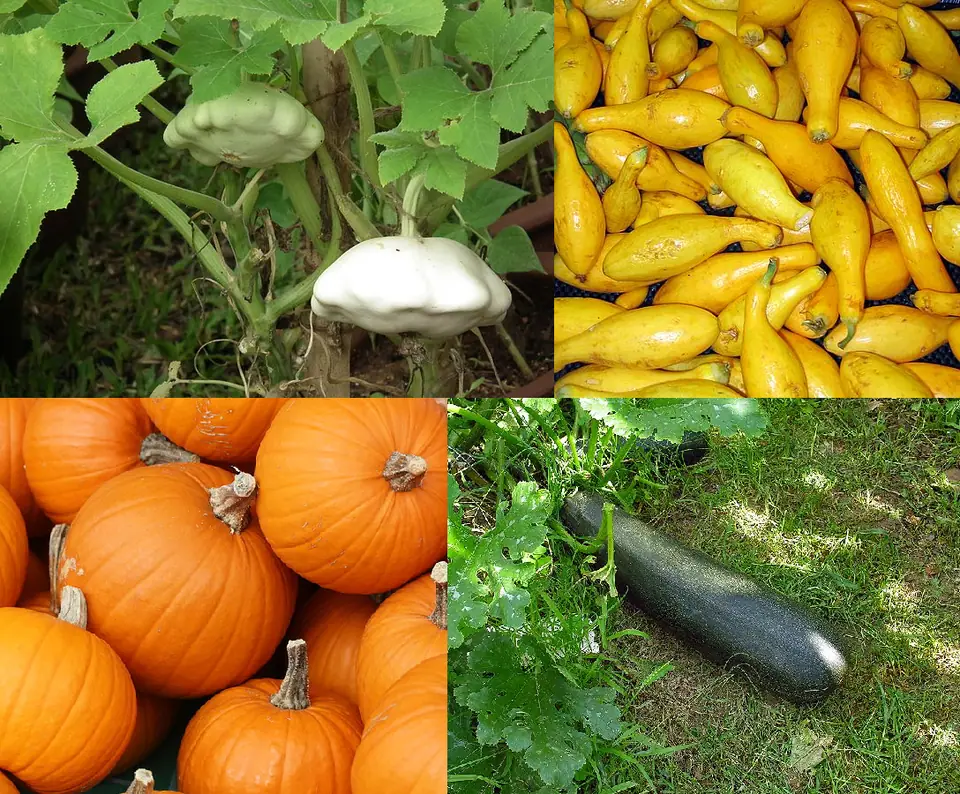
Cucurbita pepo incluye calabacines, calabazas de verano, calabazas de invierno y calabazas, que son hortalizas tiernas de clima cálido. [2][3] Las plantas necesitan pleno sol y suelo húmedo y bien drenado, y se siembran o trasplantan después del peligro de heladas. [1][3] Las plantas son propensas al mildiu polvoriento, escarabajos del pepino y chinches de la calabaza. [8][7]
Citado en inglés, como en la fuente.
Cuidados
Las medidas entre corchetes son nuestra conversión al otro sistema de unidades; el texto citado no cambia.
Riego
Riego
Suelo moderadamente húmedo; riega si ocurre un período seco prolongado
Qué dicen las fuentes (2)
is an aggressive grower and prefers moderately moist soil with full access to sunlightIrrigate if an extended dry period occurs in early summer. Pumpkins tolerate short periods of hot, dry weather pretty well.Notas sobre el riego
Cubre con mantillo alrededor de las plantas; esto ayuda a retener la humedad y reducir la competencia.
Qué dicen las fuentes (1)
Mulching around the squash aids with retaining moisture and reducing competition.Luz
Pleno sol
Qué dicen las fuentes (2)
Full sun (6 or more hours of direct sunlight a day)It should
have a rich garden soil and at least six hours of direct sunlight a day.Clima y frío
Rusticidad, zona más fría
3a [mínima invernal de −40 a −37,2 °C (de −40 a −35 °F)]
Qué dicen las fuentes (1)
3a, 3b, 4a, 4b, 5a, 5b, 6a, 6b, 7a, 7b, 8a, 8b, 9a, 9b, 10a, 10b, 11a, 11bRusticidad, zona más cálida
11b [mínima invernal de 7,2 a 10 °C (de 45 a 50 °F)]
Qué dicen las fuentes (1)
3a, 3b, 4a, 4b, 5a, 5b, 6a, 6b, 7a, 7b, 8a, 8b, 9a, 9b, 10a, 10b, 11a, 11bSuelo
pH del suelo, mínimo
6.0
Qué dicen las fuentes (1)
Soil Texture:
High Organic Matter
Loam (Silt)
Soil pH:
Neutral (6.0-8.0)pH del suelo, máximo
8.0
Qué dicen las fuentes (1)
Soil Texture:
High Organic Matter
Loam (Silt)
Soil pH:
Neutral (6.0-8.0)Dónde cultivarla
Calabaza de verano: semillas a 61-91 cm (24-36 pulgadas) de distancia, o en montículos a 122 cm (48 pulgadas) de distancia; calabaza de guía: montículos a 152-183 cm (5-6 pies) de distancia en hileras a 305-457 cm (10-15 pies) de distancia; calabaza spaghetti: centros a 183 cm (6 pies)
Lo que dice cada fuente
Calabaza de verano: 61.0-91.4 cm (24-36 pulgadas) de distancia para producción de planta individual, o en montículos a 121.9 cm (48 pulgadas) de distancia
Calabaza de guía: Montículos a 152.4-182.9 cm (5-6 pies) de distancia, en hileras a 304.8-457.2 cm (10-15 pies) de distancia
Calabaza semi-arbustiva: Montículos a 121.9 cm (4 pies) de distancia, hileras a 243.8 cm (8 pies) de distancia
Calabaza miniatura: 61.0 cm (2 pies) en la hilera, hileras a 182.9-243.8 cm (6-8 pies) de distancia
Calabaza arbustiva: 91.4 cm (3 pies) en la hilera, hileras a 121.9-182.9 cm (4-6 pies) de distancia
Calabaza espagueti: Centros a 182.9 cm (6 pies)
Qué dicen las fuentes (9)
Calabaza de verano: Sow two or three seeds 24 to 36 inches apart for single-plant production, or four or five seeds in hills 48 inches apart.Calabaza de guía: Allow 5 to 6 feet between hills, spaced in rows 10 to 15 feet apart.Calabaza semi-arbustiva: Allow 4 feet between hills and 8 feet between rows.Calabaza miniatura: Plant miniature varieties one inch deep, with two or three seeds every 2 feet in the row.Calabaza arbustiva: Plant bush varieties one inch deep (1 or 2 seeds per foot of row) and thin to a single plant every 3 feet.Calabaza espagueti: Plants should be planted on 6-foot centers.Sow two or three seeds 24 to 36 inches apart for single-plant production, or four or five seeds in hills 48 inches apart.Allow 5 to 6 feet between hills, spaced in rows 10 to 15 feet apart.by squash bugs and powdery mildew. Plants should be planted on 6-foot centers.Propagación
Semilla
Qué dicen las fuentes (1)
It is easily sown from seed, especially when soils are warm.Cultivo
La planta
Ciclo de vida
anual
Qué dicen las fuentes (1)
Like all cucurbits, spaghetti squash is a large, fast-growing annual with stout stems and large, three-lobed leaves.Familia
Cucurbitaceae
Qué dicen las fuentes (1)
Pumpkins and squash belong to the Cucurbitaceae family. Generally pumpkins belong to the Cucurbita pepo , C. maxima , and C. moschata species.Altura adulta
30.5-91.4 cm (1-3 pies)
Qué dicen las fuentes (1)
Height: 1 ft. 0 in. - 3 ft. 0 in.Anchura adulta
61-762 cm (2-25 pies)
Qué dicen las fuentes (1)
Width: 2 ft. 0 in. - 25 ft. 0 in.Siembra y crecimiento
Profundidad de siembra
2.5 cm (1 pulgada)
Qué dicen las fuentes (2)
Sow two or three seeds 24 to 36 inches apart for single-plant production, or four or five seeds in hills 48 inches apart. Cover one inch deep.Vining pumpkins require a minimum of 50 to 100 square feet per hill. Plant seeds one inch deep (four or five seeds per hill).Distancia entre hileras
Las fuentes dan valores distintos según la región, la zona o las condiciones de cultivo.
Lo que dice cada fuente
:
:
:
:
Qué dicen las fuentes (4)
: Allow 5 to 6 feet between hills, spaced in rows 10 to 15 feet apart.: Plant semi-bush varieties one inch deep (four or five seeds per hill) and thin to the best two plants per hill. Allow 4 feet between hills and 8 feet between rows.: Plant miniature varieties one inch deep, with two or three seeds every 2 feet in the row. Rows should be 6 to 8 feet apart: Plant bush varieties one inch deep (1 or 2 seeds per foot of row) and thin to a single plant every 3 feet. Allow 4 to 6 feet between rows.Días hasta la madurez
90-100 días desde la siembra hasta la primera cosecha (calabaza spaghetti)
Lo que dice cada fuente
:
Qué dicen las fuentes (2)
: Squash grow rapidly; especially in hot weather and are usually ready to pick within 4 to 8 days after flowering.From seeding to first harvest is usually around 90-100 days.Cosecha y conservación
Cómo cosechar
Calabaza de verano: recógela cuando sea pequeña y tierna, revisando las plantas cada 1 o 2 días; recoge las variedades alargadas cuando tengan 5 cm (2 pulgadas) o menos de diámetro y 15-20 cm (6-8 pulgadas) de largo, y los tipos Patty Pan cuando tengan 7.6-10 cm (3-4 pulgadas) de diámetro; suele estar lista para recoger entre 4 y 8 días después de la floración. Calabaza: cosecha cuando la cáscara esté dura y no se pueda perforar con la uña y el fruto tenga un color sólido intenso (naranja en la mayoría de las variedades); córtala de la planta con tijeras de podar o un cuchillo afilado, dejando 7.6-10 cm (3-4 pulgadas) de tallo unido.
Qué dicen las fuentes (6)
Most elongated varieties are picked when they are 2 inches or less in diameter and 6 to 8 inches long. Patty Pan types are harvested when they are 3 to 4 inches in diameter.Go over the plants every 1 or 2 days.Squash grow rapidly; especially in hot weather and are usually ready to pick within 4 to 8 days after flowering.Harvest pumpkin fruits when the rind is hard and cannot be poked by finger-nail, and the fruit is orange in color.Pumpkins can be harvested whenever they are a deep, solid color (orange for most varieties) and the rind is hard.Cut pumpkins from the vines carefully, using pruning shears or a sharp knife and leave 3 to 4 inches of stem attached.Conservación
Calabazas: almacénalas en un lugar seco donde la temperatura esté entre 10 y 12.8 °C (50 y 55 °F); los frutos que no estén completamente maduros, o que hayan sido dañados o sometidos a heladas fuertes, no se conservan; las calabazas sin tallo generalmente no se conservan bien.
Qué dicen las fuentes (2)
Fruits that are not fully mature or that have been injured or subjected to heavy frost do not keep. Store in a dry building where the temperature is between 50 and 55°F.Pumpkins without stems usually do not keep well.Guardar semillas
Las variedades dentro de la misma especie (C. pepo) se polinizan cruzadamente, y los cruces solo aparecen si se guardan y cultivan las semillas de estos frutos al año siguiente; las abejas transportan el polen por una milla [1,6 km] o más, por lo que los frutos deben cubrirse y polinizarse a mano si se desea semilla pura de variedades no híbridas.
Qué dicen las fuentes (3)
The varieties within a botanical species (which may be referred to as pumpkins, squash or gourd) can cross-pollinate. Varieties from different species do not.Crosses show up only if seeds from these fruits are saved and grown the following year.Because bees carry pollen for distances of a mile or more, in suburban areas where many gardens are in close proximity, fruits must be bagged and pollinated by hand if pure seed of non-hybrid varieties is desired.Plagas y enfermedades
Plagas
pulgones, escarabajos del pepino, chinche de la calabaza, barrenador de la vid de la calabaza, gusano de la raíz del maíz occidental, araña roja de dos manchas, gusanos del maíz de semilla, saltahojas, trips, babosas
Qué dicen las fuentes (4)
Aphids [Vegetables] ( Aphididae ) - Cucumber Beetles ( Acalymma vittatum and Diabrotica undecimpunctata howardi ) - Squash Bug ( Anasa tristis ) - Squash Vine Borer ( Melittia cucurbitae ) - Western Corn RootwormInsect Relative Damage - Twospotted Spidermite [Vegetables] ( Tetranychus urticae )Insects and insect relatives: - Aphids - Seed corn maggots - Leafhoppers - ThripsInsects, Diseases, and Other Plant Problems: Slugs, aphids, and beetlesEnfermedades
mancha angular, marchitez bacteriana, antracnosis, mildiu velloso, tizón temprano, añublo gomoso del tallo, tizón por phytophthora, mildiu polvoriento, escabiosis, pudrición de corona y fruto por fusarium, marchitez por fusarium, tizón por plectosporium, nematodo de la raíz, virus del mosaico del pepino, virus de la mancha anular de la papaya, virus del mosaico de la calabaza, virus del mosaico de la sandía, virus del mosaico amarillo del calabacín
Qué dicen las fuentes (5)
Bacterial Disease - Angular Leaf Spot of Cucurbits ( Pseudomonas syringae pv. lachrymans ) - Bacterial Wilt of Cucurbits ( Erwinia tracheiphila )Fungal Disease - Anthracnose [Vegetables] ( Colletotrichum spp. ) - Downy Mildew [Vegetables] ( Bremia, Peronospora, and Pseudoperonospora spp. ) - Early Blight or Alternaria Leaf Spot ( Alternaria spp. )Gummy Stem Blight or Black Rot of Cucurbits ( Didymella bryonia ) - Phytophthora Blight [Vegetables] ( Phytophthora spp. [water molds] ) - Powdery Mildew [Vegetables] ( Erysiphe spp. ) - Scab of Cucurbits ( Cladosporium cucumerinum )Fusarium crown and fruit rot ( Fusarium solani f.sp. cucurbitae ) - Fusarium wilt ( Fusarium oxysporum ) - Plectosporium blight ( Plectosporium tabacinum ) - Root knot nematode ( Meloidogyne spp.)Viral diseases: cucumber mosaic, Papaya ringspot, Squash mosaic, Watermelon mosaic, and Zucchini yello mosaicAbonado
Cuándo
Fósforo, potasio y el 70% del nitrógeno antes de plantar; el resto del nitrógeno cuando las plantas empiecen a trepar
Qué dicen las fuentes (2)
Apply recommended amounts of phosphorus and potassium fertilizers before planting. Apply 60-100 pounds of nitrogen per acre.Apply about 70% of the recommended amounts of nitrogen pre-plant and the rest as sidedressing or through drip irrigation when plants start to vine.Frecuencia
Dos veces para el nitrógeno: antes de plantar y cuando las plantas empiecen a enredarse
Qué dicen las fuentes (1)
Apply about 70% of the recommended amounts of nitrogen pre-plant and the rest as sidedressing or through drip irrigation when plants start to vine.Abonos naturales
Compost incorporado al suelo circundante a fines del otoño
Qué dicen las fuentes (1)
To maximize growth add compost material to the surrounding soil in late fall.Abonos minerales
Fertilizantes de fósforo y potasio según las tasas del análisis del suelo antes de plantar; nitrógeno 6.73-11.2 g/m² por temporada, 70% antes de plantar y el resto como abono lateral o mediante riego por goteo
Qué dicen las fuentes (3)
Test the soil and apply recommended amounts of nutrients. Apply recommended amounts of phosphorus and potassium fertilizers before planting.Apply recommended amounts of phosphorus and potassium fertilizers before planting. Apply 60-100 pounds of nitrogen per acre.Apply about 70% of the recommended amounts of nitrogen pre-plant and the rest as sidedressing or through drip irrigation when plants start to vine.Problemas
Mildiu polvoriento
Síntoma: Crecimiento de moho blanco y polvoriento en las superficies superiores de las hojas; puede matar las hojas prematuramente e interferir con la maduración.
Qué hacer: No se indica en la fuente.
Qué dicen las fuentes (1)
Powdery mildew causes a white, powdery mold growth on the upper surfaces of the leaves.
— Growing Pumpkins | Pumpkins | Illinois Extension | Illinois [8] Escarabajos del pepino y chinches de la calabaza
Síntoma: Atacan plántulas, enredaderas y frutos tanto inmaduros como maduros; las poblaciones aumentan a fines del verano.
Qué hacer: No se indica en la fuente.
Qué dicen las fuentes (1)
Cucumber beetles and squash bugs attack seedlings, vines and both immature and mature fruits.
— Growing Pumpkins | Pumpkins | Illinois Extension | Illinois [8] Babosas, pulgones y escarabajos
Síntoma: Se enumeran como insectos y plagas de la planta.
Qué hacer: No se indica en la fuente.
Qué dicen las fuentes (1)
Insects, Diseases, and Other Plant Problems: Slugs, aphids, and beetles
— Cucurbita pepo (Acorn Squash, Courgette, Ornamental Gourd, Patty Pan Squash, Pumpkin, Spaghetti Squash, Squash, Summer Squash, Winter Squash, Zucchini) | North Carolina Extension Gardener Plant Toolbox [1]
Remedios
Cada remedio indica qué dicen las fuentes oficiales; los remedios tradicionales sin fuente oficial aparecen marcados. Los perjudiciales están para que sepas evitarlos.
Cuidar la planta
chinches de la calabaza
Recoge a mano los adultos y aplasta los huevos Funciona
Cómo: En plantaciones pequeñas, recoge los insectos a mano; revisa si hay huevos al menos una vez por semana durante junio y aplástalos cuando los detectes.
In small plantings, hand-picking can be very effective. Attention should be given to the eggs which are easily detected in garden surveys and can be crushed when detected.
— extension.colostate.edu [9] Qué dicen las pruebas In small plantings, hand-picking can be very effective.
— extension.colostate.edu [9] trampa de tabla Funciona en parte
Cómo: Coloca una tabla de madera o cartón grueso en el suelo; las ninfas y los adultos se congregan debajo durante la noche; levanta la tabla o mata los insectos temprano en la mañana.
Scouting – place a wooden board or heavy cardboard on the ground to attract nymphs and adults who will congregate under the board overnight.
— extension.colostate.edu [9] Qué dicen las pruebas Picking up and removing the board or killing the bugs early in the morning can help reduce squash bug populations.
— extension.colostate.edu [9] cubo de agua jabonosa Fuente oficial, sin prueba independiente
Cómo: Ahoga las ninfas en agua jabonosa.
Nymphs can be hand crushed, drowned in soapy water, or removed using the sticky side of duct tape to trap them.
— extension.psu.edu [10] cinta adhesiva No verificado
Remedio tradicional, no verificado por una fuente oficial.
Cómo: Haz un pequeño rollo de cinta adhesiva con el lado pegajoso hacia afuera y pega todos los huevos a ella.
tierra de diatomeas Funciona en parte
Just make sure to use food grade diatomaceous earth in your garden.
— homestead-acres.com [11] There are versions sold for garden use but they often contain other chemicals and even insect attractants.
— homestead-acres.com [11] Cómo: Espolvorea tierra de diatomeas alrededor de la base de las plantas de calabaza.
If you are using this method sprinkle diatomaceous earth around the base of the squash plants.
— homestead-acres.com [11] Qué dicen las pruebas Diatomaceous earth/pyrethrins applications around the base of the plant can be an effective method to control squash bug and is a treatment allowed in Certified Organic vegetable production.
— extension.colostate.edu [9] cultivo trampa de capuchina No verificado
Remedio tradicional, no verificado por una fuente oficial.
Cómo: Planta cultivos trampa en el borde del cultivo principal y vigílalos; recoge a mano los insectos que encuentres en ellos.
spray de aceite de neem No verificado
Remedio tradicional, no verificado por una fuente oficial.
Cómo: Usa un spray de aceite de neem diluido según las instrucciones del envase, enfocándote en el envés de las hojas, donde a las chinches de la calabaza les gusta esconderse.
Escarabajos del pepino
espolvoreo con ceniza de madera No verificado
Remedio tradicional, no verificado por una fuente oficial.
Cómo: Espolvorea las plantas con cenizas de madera.
pulgones
spray de jabón insecticida Funciona
Cómo: Usa jabón insecticida.
They leave behind sticky excrement called honeydew which can turn into a black sooty mold. Use insecticidal soap.
— harvesttotable.com [12] Qué dicen las pruebas For example, insecticidal soap is a safe, effective organic insecticide with minimal environmental impact.
— extension.psu.edu [13] spray casero de jabón líquido Perjudicial
For example, spraying home remedies that contain dish detergent on plants on a sunny day can injure the plant, essentially burning it.
— extension.psu.edu [15] Cómo: Mezcla 1 cucharada de jabón líquido con 1 galón de agua, viértelo en una botella rociadora y rocía las hojas y los tallos; vuelve a aplicar después de que llueva.
MAKE YOUR OWN INSECTICIDE: To make your own effective, DIY insecticide, simply mix 1 tablespoon of liquid soap with 1 gallon of water.
— motherearthliving.com [14] Qué dicen las pruebas For example, spraying home remedies that contain dish detergent on plants on a sunny day can injure the plant, essentially burning it.
— extension.psu.edu [15] aceite de neem No verificado
Remedio tradicional, no verificado por una fuente oficial.
Cómo: Aceite de neem aplicado según las instrucciones del producto.
mildiu polvoriento
aceite de neem No verificado
Remedio tradicional, no verificado por una fuente oficial.
Cómo: Aplica aceite hortícola como el aceite de neem.
babosas
trampa de cerveza No verificado
Remedio tradicional, no verificado por una fuente oficial.
Cómo: Coloca cerveza rancia en un plato poco profundo o recipiente.
barrenador de la calabaza
trampa amarilla con agua Fuente oficial, sin prueba independiente
Cómo: A mediados de junio, coloca un recipiente de color amarillo lleno de agua y una gota de jabón para platos en el jardín; las polillas vuelan hacia él y quedan atrapadas.
In mid-June, place a yellow-colored container filled with water and a drop of dish soap in your garden.
— extension.psu.edu [10] Corta la vid para eliminar el barrenador No verificado
Remedio tradicional, no verificado por una fuente oficial.
Cómo: Haz un corte en la vid con un cuchillo y retira el barrenador; entierra el brote en ese punto para que vuelva a enraizar.
Toxicidad
Según la fuente, citada textualmente. No es un consejo médico ni veterinario: si una persona o un animal pudo haber ingerido esta planta, contacta con un centro de toxicología o con un veterinario.
#non-toxic for cats #non-toxic for horses #non-toxic for dogs
[1]La fuente señala el riesgo para este animal pero no explica por qué.
Calendario
Siembra
Después de que pase el peligro de las heladas, desde principios de primavera hasta mediados del verano; siembra las semillas de calabaza cuando la temperatura del suelo sea de 58 a 60 grados F [14–16 °C]
Lo que dice cada fuente
Calabaza de verano: Después de que pase el peligro de las heladas, desde principios de primavera hasta mediados del verano
Calabaza: Cuando la temperatura del suelo sea de 58 a 60 grados F [14–16 °C]
Calabazas para Halloween: Desde finales de mayo en ubicaciones del norte hasta principios de julio en sitios extremadamente sureños
Calabaza espagueti: Después de que el suelo se haya calentado por completo, hasta principios de julio como fecha tardía posible
Qué dicen las fuentes (6)
Calabaza de verano: Plant anytime after the danger of frost has passed, from early spring until midsummer.Calabaza: Plant treated seeds when soil temperature is 58 to 60 degrees Farenheit.Calabazas para Halloween: Plant pumpkins for Halloween from late May in northern locations to early July in extremely southern sites.Calabaza espagueti: Seed planting
should be delayed until the soil has warmed completely with plantings as late as early
July possible.Plant anytime after the danger of frost has passed, from early spring until midsummer.Plant treated seeds when soil temperature is 58 to 60 degrees Farenheit.Plantación
Trasplanta a fines de primavera, principios de verano o después de la última helada
Qué dicen las fuentes (1)
Cucurbita pepo should be transplanted in late spring, early summer, or after the last frost.Cosecha
Calabaza de verano: 4 a 8 días después de la floración; calabaza espagueti: 90-100 días desde la siembra hasta la primera cosecha; calabaza: finales de septiembre o principios de octubre, antes de las heladas fuertes
Lo que dice cada fuente
Calabaza de verano: 4 a 8 días después de la floración
Calabaza espagueti: Alrededor de 90-100 días desde la siembra hasta la primera cosecha
Calabaza: Finales de septiembre o principios de octubre, antes de las heladas fuertes
Qué dicen las fuentes (6)
Calabaza de verano: Squash grow rapidly; especially in hot weather and are usually ready to pick within 4 to 8 days after flowering.Calabaza espagueti: From seeding to first harvest is usually around 90-100
days.Calabaza: If vines remain healthy, harvest in late September or early October, before heavy frosts.Squash grow rapidly; especially in hot weather and are usually ready to pick within 4 to 8 days after flowering.From seeding to first harvest is usually around 90-100
days.If vines remain healthy, harvest in late September or early October, before heavy frosts.Meses tal como los dan las fuentes, en su mayoría de Estados Unidos (hemisferio norte). En el hemisferio sur se desplazan unos seis meses.
Respecto a las heladas
Estimación menos precisa: no hay ninguna estación meteorológica a menos de 300 km.
Busca las fechas de heladas por código postal o ciudad
Plantación: hacia la última helada
Plant anytime after the danger of frost has passed, from early spring until midsummer.
— Summer Squash (Cucurbita pepo and Cucurbita maxima)-Hort Answers - University of Illinois Extension [2] Trasplante: hacia la última helada
Cucurbita pepo should be transplanted in late spring, early summer, or after the last frost.
— Cucurbita pepo (Acorn Squash, Courgette, Ornamental Gourd, Patty Pan Squash, Pumpkin, Spaghetti Squash, Squash, Summer Squash, Winter Squash, Zucchini) | North Carolina Extension Gardener Plant Toolbox [1]
Cuenta desde las fechas medias de las heladas de tu zona.
Comestibilidad
Según la fuente, citada textualmente. No comas una planta basándote solo en esta página: los errores de identificación pueden ser peligrosos.
Valores orientativos
Valores de una fuente secundaria, no comprobados palabra por palabra como el resto de esta página. Úselos como punto de partida.
- Horas de sol
- 6-8 horasValor orientativo, adáptalo a tu clima · Fuente secundaria
- Suelo
- Bien drenadoValor orientativo, adáptalo a tu clima · Fuente secundaria
- Nivel de cuidado
- MedioValor orientativo, adáptalo a tu clima · Fuente secundaria
- Crecimiento
- AltaValor orientativo, adáptalo a tu clima · Fuente secundaria
- Poda
- Junio, julio, agosto, junio, julio, agosto, marzo, abril, mayo, junio, julio, agosto, septiembreValor orientativo, adáptalo a tu clima · Fuente secundaria
Plantas similares
- Chilacayote Cucurbita ficifolia
- Calabaza Cucurbita maxima
- Winter Squash Cucurbita argyrosperma
- Calabaza Cucurbita moschata
- Arabian Cucumber Cucumis dipsaceus
- Melón amargo Momordica charantia
- Bottle gourd Lagenaria siceraria
- Melón Cucumis melo
Fuentes
Cada valor anterior se cita de estos documentos. Los enlaces llevan al editor original.
- Cucurbita pepo (Acorn Squash, Courgette, Ornamental Gourd, Patty Pan Squash, Pumpkin, Spaghetti Squash, Squash, Summer Squash, Winter Squash, Zucchini) | North Carolina Extension Gardener Plant Toolbox · plants.ces.ncsu.edu, consultado
- Summer Squash (Cucurbita pepo and Cucurbita maxima)-Hort Answers - University of Illinois Extension · web.extension.illinois.edu, consultado
- Pumpkin (Cucurbita pepo; C. maxima; C. moschata; C. mixta)-Hort Answers - University of Illinois Extension · web.extension.illinois.edu, consultado
- Winter Squash - Cucurbita pepo | North Carolina Extension Gardener Plant Toolbox · plants.ces.ncsu.edu, consultado
- Spaghetti Squash - Cucurbita pepo | North Carolina Extension Gardener Plant Toolbox · plants.ces.ncsu.edu, consultado
- Patty Pan Squash - Cucurbita pepo | North Carolina Extension Gardener Plant Toolbox · plants.ces.ncsu.edu, consultado
- Cucurbita pepo var. pepo Spaghetti Squash · uaex.uada.edu, consultado
- Growing Pumpkins | Pumpkins | Illinois Extension | Illinois · extension.illinois.edu, consultado
- extension.colostate.edu · extension.colostate.edu
- extension.psu.edu · extension.psu.edu
- homestead-acres.com · homestead-acres.com
- harvesttotable.com · harvesttotable.com
- extension.psu.edu · extension.psu.edu
- motherearthliving.com · motherearthliving.com
- extension.psu.edu · extension.psu.edu
Escrito por Emilio Marruso · última revisión