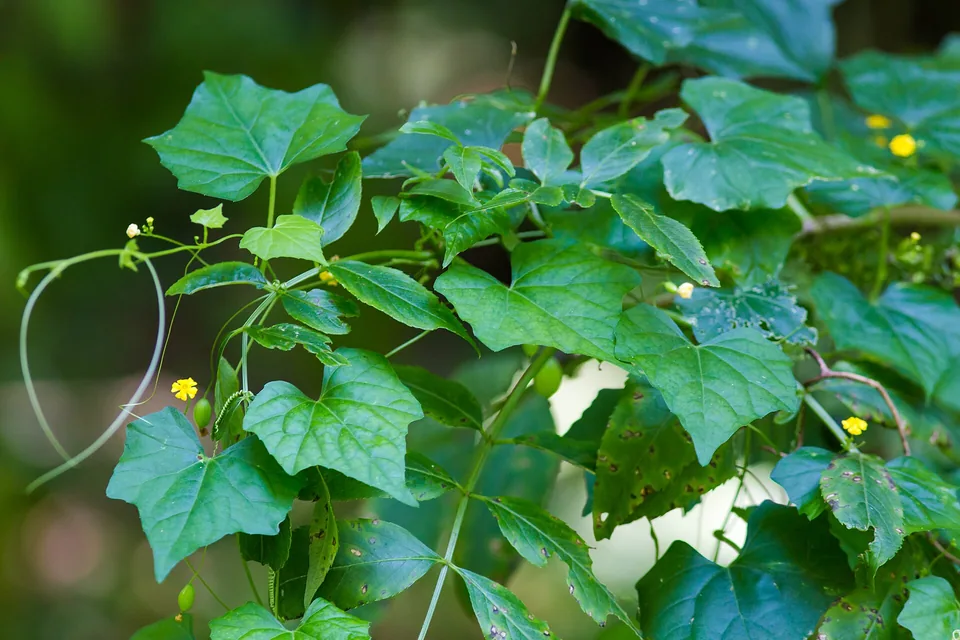


How to Grow and Care for Creeping Cucumber
Melothria pendula
Written by Emilio Marruso · last checked
Toxic to: People · Why
At a glance
A perennial cousin of the cucumber, this plant loves full sun and asks only for consistent watering, though it also tolerates dry spells. In summer and fall, pick the small green, unripe fruit: it tastes like a strong cucumber and can be eaten raw. Leave the black, ripe fruit alone, though, as it can have a strong laxative effect.
- Sun
Full sun
What the sources say (1)
Light: Full sun
Light: Full sun (6 or more hours of direct sunlight a day)
— Melothria pendula (Creeping Cucumber, Guadeloupe Cucumber, Meloncito, Speckled Gourd, Squirting Cucumber) | North Carolina Extension Gardener Plant Toolbox [1] - Water
Water regularly; it also tolerates dry spells
What the sources say (1)
Watering: Consistent watering; tolerates dry conditions
Creeping Cucumber does best in simple garden soil with good drainage, consistent watering, and full sun. It will tolerate dry conditions.
— Melothria pendula (Creeping Cucumber, Guadeloupe Cucumber, Meloncito, Speckled Gourd, Squirting Cucumber) | North Carolina Extension Gardener Plant Toolbox [1] - Cold
Survives winters down to 10 °F (−12.2 °C)
Hardy in cold winters · USDA 8a · RHS H5 · Z8
What the sources say (2)
Hardiness, coldest zone: 8a [winter low −12.2 to −9.4 °C (10 to 15 °F)]
USDA Plant Hardiness Zone: 8a, 8b, 9a, 9b, 10a, 10b, 11a, 11b
— Melothria pendula (Creeping Cucumber, Guadeloupe Cucumber, Meloncito, Speckled Gourd, Squirting Cucumber) | North Carolina Extension Gardener Plant Toolbox [1] Hardiness, warmest zone: 11b [winter low 7.2 to 10 °C (45 to 50 °F)]
USDA Plant Hardiness Zone: 8a, 8b, 9a, 9b, 10a, 10b, 11a, 11b
— Melothria pendula (Creeping Cucumber, Guadeloupe Cucumber, Meloncito, Speckled Gourd, Squirting Cucumber) | North Carolina Extension Gardener Plant Toolbox [1] - Harvest
Summer and fall: eat the green, unripe fruit, which tastes like a strong cucumber
What the sources say (1)
Harvest: Summer, fall
Fruit Value To Gardener: Edible Display/Harvest Time: Fall Summer
— Melothria pendula (Creeping Cucumber, Guadeloupe Cucumber, Meloncito, Speckled Gourd, Squirting Cucumber) | North Carolina Extension Gardener Plant Toolbox [1] - Pests
Squash bugs and powdery mildew; it can share pests with cucumbers and squash
What the sources say (2)
Pests: squash bugs
Be aware that viruses, diseases, and insects that infect other cucurbits can also live on the wild creeping cucumber. I found several squash bugs and eggs on this plant.
— Question of the Week – Creeping Cucumber | Home & Garden Information Center [3] Diseases: powdery mildew
Diseases, Insect Pests, and Other Plant Problems: The plant is susceptible to powdery mildew.
— Melothria pendula (Creeping Cucumber, Guadeloupe Cucumber, Meloncito, Speckled Gourd, Squirting Cucumber) | North Carolina Extension Gardener Plant Toolbox [1] - Propagation
From seed or stem cuttings
What the sources say (1)
Propagation: Seed, stem cutting
Life Cycle: Perennial Recommended Propagation Strategy: Seed Stem Cutting
— Melothria pendula (Creeping Cucumber, Guadeloupe Cucumber, Meloncito, Speckled Gourd, Squirting Cucumber) | North Carolina Extension Gardener Plant Toolbox [1] - Safety
Low toxicity if eaten; avoid the black, ripe fruit, which acts as a laxative
Overview
Melothria pendula is a climbing perennial vine that climbs with tendrils and is tagged as weedy. [1] It does best in well-drained garden soil in full sun with consistent watering, and tolerates dry conditions. [1] The berries are listed as low-severity poisonous to humans, with the ripe fruit acting as a strong laxative. [1]
Creeping Cucumber care
How to water Creeping Cucumber
Consistent watering; tolerates dry conditions
What the sources say (1)
Creeping Cucumber does best in simple garden soil with good drainage, consistent watering, and full sun. It will tolerate dry conditions.How much light Creeping Cucumber needs
Full sun
What the sources say (1)
Light:
Full sun (6 or more hours of direct sunlight a day)How much cold Creeping Cucumber can take
Hardiness, coldest zone
8a [winter low −12.2 to −9.4 °C (10 to 15 °F)]
What the sources say (1)
USDA Plant Hardiness Zone:
8a, 8b, 9a, 9b, 10a, 10b, 11a, 11bHardiness, warmest zone
11b [winter low 7.2 to 10 °C (45 to 50 °F)]
What the sources say (1)
USDA Plant Hardiness Zone:
8a, 8b, 9a, 9b, 10a, 10b, 11a, 11bHow to propagate Creeping Cucumber
Seed, stem cutting
What the sources say (1)
Life Cycle:
Perennial
Recommended Propagation Strategy:
Seed
Stem CuttingHow to grow Creeping Cucumber
The plant
Life cycle
perennial
What the sources say (1)
Family:
Cucurbitaceae
Uses (Ethnobotany):
Used to treat unspecified medicinal disorders, as a medicine. It is also used for food.
Life Cycle:
PerennialFamily
Cucurbitaceae
What the sources say (1)
Family:
Cucurbitaceae
Uses (Ethnobotany):
Used to treat unspecified medicinal disorders, as a medicine. It is also used for food.
Life Cycle:
PerennialPests and diseases
Pests
squash bugs
What the sources say (1)
Be aware that viruses, diseases, and insects that infect other cucurbits can also live on the wild creeping cucumber. I found several squash bugs and eggs on this plant.Diseases
powdery mildew
What the sources say (1)
Diseases, Insect Pests, and Other Plant Problems:
The plant is susceptible to powdery mildew.Creeping Cucumber pests and problems
Powdery mildew
Symptom: Plant is susceptible to powdery mildew.
What to do: No control given.
What the sources say (1)
The plant is susceptible to powdery mildew. See this plant in the following landscape
— Melothria pendula (Creeping Cucumber, Guadeloupe Cucumber, Meloncito, Speckled Gourd, Squirting Cucumber) | North Carolina Extension Gardener Plant Toolbox [1] Shared cucurbit pests and diseases
Symptom: Squash bugs and eggs were found on wild plants; viruses, diseases and insects of other cucurbits can live on it.
What to do: No control given.
What the sources say (1)
Be aware that viruses, diseases, and insects that infect other cucurbits can also live on the wild creeping cucumber.
— Question of the Week – Creeping Cucumber | Home & Garden Information Center [3]
Remedies
Each remedy shows what official sources say about it; traditional remedies without an official source are marked as such. Harmful ones are listed so you know to avoid them.
Treating the plant
powdery mildew
baking soda spray Not verified
Traditional remedy, not verified by an official source.
Drenching your cucumber plant with the baking soda mixture when the sun is at its peak may cause sunscald.
— housedigest.com [4] you may want to test the spray on a small area of a single, lower leaf before dousing the entire vine
— housedigest.com [4] How: Mix 1 tablespoon of baking soda, a half teaspoon of mild liquid dish soap and 1 gallon of water; spray both sides of the leaves and the stems.
Getting rid of it
creeping cucumber weed
hand pulling from the roots Works
There are some indications creeping cucumber may harbor the watermelon mosaic virus (WMV) and papaya ringspot virus (PRSV).
— blogs.ifas.ufl.edu [7] How: Pull it off the shrub and reach down as far as you can along the vine to grab it from the soil; with persistence you get control by the next fall.
Pull it off the bush and reach down as far as you can along the vine to grab it from the soil.
— ajc.com [5] What the evidence says Regularly pulling, hoeing or mowing weeds and encouraging grass to grow and out-compete the weeds is an excellent solution.
— extension.usu.edu [6]
Is Creeping Cucumber poisonous?
Reported by the source, quoted verbatim. This is not medical or veterinary advice: if a person or an animal may have eaten this plant, contact a poison control centre or a veterinarian.
Poison Severity: Low Poison Symptoms: Causes low toxicity when eaten.
[1]
Calendar
Harvest
Summer, fall
What the sources say (1)
Fruit Value To Gardener:
Edible
Display/Harvest Time:
Fall
SummerMonths as given by the sources, which are mostly from the United States (northern hemisphere). In the southern hemisphere they shift by about six months.
Edibility
Reported by the source, quoted verbatim. Do not eat a plant on the basis of this page alone: identification mistakes can be dangerous.
The berries, when unripe and light green can be eaten raw but can have a strong laxative effect, especially when black and ripe.
[1]The green, unripe fruit is generally considered safe to eat and tastes like a strong cucumber. However, the black, ripe fruit can be a laxative and should not be consumed.
[3]
Similar plants
- Arabian Cucumber Cucumis dipsaceus
- Bitter Melon Momordica charantia
- Cantaloupe Cucumis melo
- Bottle gourd Lagenaria siceraria
- Field pumpkin Cucurbita pepo
- Figleaf Gourd Cucurbita ficifolia
- Garden cucumber Cucumis sativus
- Loofah Luffa aegyptiaca
Sources
Every value above is quoted from these documents. Links lead to the original publisher.
- Melothria pendula (Creeping Cucumber, Guadeloupe Cucumber, Meloncito, Speckled Gourd, Squirting Cucumber) | North Carolina Extension Gardener Plant Toolbox · plants.ces.ncsu.edu, consulted
- Creeping Cucumber - Melothria pendula | North Carolina Extension Gardener Plant Toolbox · plants.ces.ncsu.edu, consulted
- Question of the Week – Creeping Cucumber | Home & Garden Information Center · hgic.clemson.edu, consulted
- housedigest.com · housedigest.com
- ajc.com · ajc.com
- extension.usu.edu · extension.usu.edu
- blogs.ifas.ufl.edu · blogs.ifas.ufl.edu
Written by Emilio Marruso · last checked