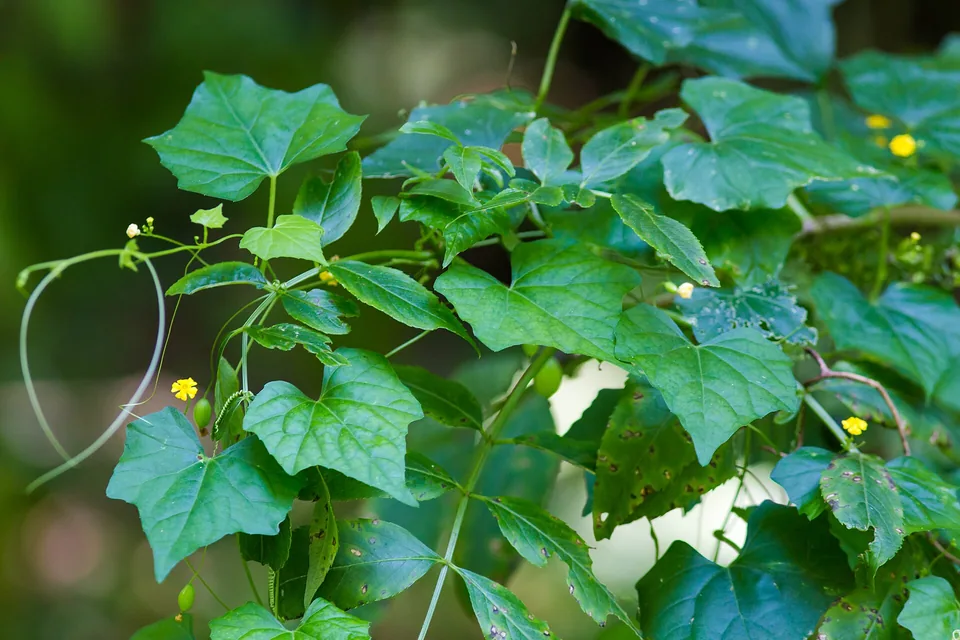


Cómo cultivar y cuidar Más conocido como pepino rastrero
Melothria pendula
Escrito por Emilio Marruso · última revisión
Tóxica para: Personas · Por qué
De un vistazo
Pariente perenne del pepino, esta planta adora el sol pleno y solo pide un riego constante, aunque también tolera la sequía. En verano y otoño, recoge los frutos verdes y sin madurar: saben a pepino intenso y se pueden comer crudos. Eso sí, no comas los frutos negros y maduros, porque pueden tener un fuerte efecto laxante.
- Sol
Sol pleno
Qué dicen las fuentes (1)
Luz: Pleno sol
Light: Full sun (6 or more hours of direct sunlight a day)
— Melothria pendula (Creeping Cucumber, Guadeloupe Cucumber, Meloncito, Speckled Gourd, Squirting Cucumber) | North Carolina Extension Gardener Plant Toolbox [1] - Riego
Riega con regularidad; también tolera la sequía
Qué dicen las fuentes (1)
Riego: Riego constante; tolera condiciones secas
Creeping Cucumber does best in simple garden soil with good drainage, consistent watering, and full sun. It will tolerate dry conditions.
— Melothria pendula (Creeping Cucumber, Guadeloupe Cucumber, Meloncito, Speckled Gourd, Squirting Cucumber) | North Carolina Extension Gardener Plant Toolbox [1] - Frío
Aguanta inviernos de hasta −12,2 °C (10 °F)
Rústica en inviernos fríos · USDA 8a · RHS H5 · Z8
Qué dicen las fuentes (2)
Rusticidad, zona más fría: 8a [mínima invernal de −12,2 a −9,4 °C (de 10 a 15 °F)]
USDA Plant Hardiness Zone: 8a, 8b, 9a, 9b, 10a, 10b, 11a, 11b
— Melothria pendula (Creeping Cucumber, Guadeloupe Cucumber, Meloncito, Speckled Gourd, Squirting Cucumber) | North Carolina Extension Gardener Plant Toolbox [1] Rusticidad, zona más cálida: 11b [mínima invernal de 7,2 a 10 °C (de 45 a 50 °F)]
USDA Plant Hardiness Zone: 8a, 8b, 9a, 9b, 10a, 10b, 11a, 11b
— Melothria pendula (Creeping Cucumber, Guadeloupe Cucumber, Meloncito, Speckled Gourd, Squirting Cucumber) | North Carolina Extension Gardener Plant Toolbox [1] - Cosecha
Verano y otoño: come los frutos verdes sin madurar, que saben a pepino intenso
Qué dicen las fuentes (1)
Cosecha: Verano, otoño
Fruit Value To Gardener: Edible Display/Harvest Time: Fall Summer
— Melothria pendula (Creeping Cucumber, Guadeloupe Cucumber, Meloncito, Speckled Gourd, Squirting Cucumber) | North Carolina Extension Gardener Plant Toolbox [1] - Plagas
Chinches de la calabaza y oídio; comparte plagas con pepinos y calabazas
Qué dicen las fuentes (2)
Plagas: chinches de la calabaza
Be aware that viruses, diseases, and insects that infect other cucurbits can also live on the wild creeping cucumber. I found several squash bugs and eggs on this plant.
— Question of the Week – Creeping Cucumber | Home & Garden Information Center [3] Enfermedades: mildiu polvoriento
Diseases, Insect Pests, and Other Plant Problems: The plant is susceptible to powdery mildew.
— Melothria pendula (Creeping Cucumber, Guadeloupe Cucumber, Meloncito, Speckled Gourd, Squirting Cucumber) | North Carolina Extension Gardener Plant Toolbox [1] - Multiplicación
Por semilla o esquejes de tallo
Qué dicen las fuentes (1)
Propagación: Semilla, esqueje de tallo
Life Cycle: Perennial Recommended Propagation Strategy: Seed Stem Cutting
— Melothria pendula (Creeping Cucumber, Guadeloupe Cucumber, Meloncito, Speckled Gourd, Squirting Cucumber) | North Carolina Extension Gardener Plant Toolbox [1] - Seguridad
Toxicidad baja si se ingiere; no comas los frutos negros y maduros, son laxantes
Resumen
Melothria pendula es una enredadera perenne trepadora que trepa con zarcillos y está catalogada como maleza. [1] Le va mejor en suelo de jardín bien drenado a pleno sol con riego constante, y tolera condiciones secas. [1] Las bayas están catalogadas como venenosas de baja gravedad para los humanos, y el fruto maduro actúa como un fuerte laxante. [1]
Citado en inglés, como en la fuente.
Cuidados
Riego
Riego constante; tolera condiciones secas
Qué dicen las fuentes (1)
Creeping Cucumber does best in simple garden soil with good drainage, consistent watering, and full sun. It will tolerate dry conditions.Luz
Pleno sol
Qué dicen las fuentes (1)
Light:
Full sun (6 or more hours of direct sunlight a day)Clima y frío
Rusticidad, zona más fría
8a [mínima invernal de −12,2 a −9,4 °C (de 10 a 15 °F)]
Qué dicen las fuentes (1)
USDA Plant Hardiness Zone:
8a, 8b, 9a, 9b, 10a, 10b, 11a, 11bRusticidad, zona más cálida
11b [mínima invernal de 7,2 a 10 °C (de 45 a 50 °F)]
Qué dicen las fuentes (1)
USDA Plant Hardiness Zone:
8a, 8b, 9a, 9b, 10a, 10b, 11a, 11bPropagación
Semilla, esqueje de tallo
Qué dicen las fuentes (1)
Life Cycle:
Perennial
Recommended Propagation Strategy:
Seed
Stem CuttingCultivo
La planta
Ciclo de vida
perenne
Qué dicen las fuentes (1)
Family:
Cucurbitaceae
Uses (Ethnobotany):
Used to treat unspecified medicinal disorders, as a medicine. It is also used for food.
Life Cycle:
PerennialFamilia
Cucurbitaceae
Qué dicen las fuentes (1)
Family:
Cucurbitaceae
Uses (Ethnobotany):
Used to treat unspecified medicinal disorders, as a medicine. It is also used for food.
Life Cycle:
PerennialPlagas y enfermedades
Plagas
chinches de la calabaza
Qué dicen las fuentes (1)
Be aware that viruses, diseases, and insects that infect other cucurbits can also live on the wild creeping cucumber. I found several squash bugs and eggs on this plant.Enfermedades
mildiu polvoriento
Qué dicen las fuentes (1)
Diseases, Insect Pests, and Other Plant Problems:
The plant is susceptible to powdery mildew.Problemas
Mildiu polvoriento
Síntoma: La planta es susceptible al mildiu polvoriento.
Qué hacer: No se proporciona control.
Qué dicen las fuentes (1)
The plant is susceptible to powdery mildew. See this plant in the following landscape
— Melothria pendula (Creeping Cucumber, Guadeloupe Cucumber, Meloncito, Speckled Gourd, Squirting Cucumber) | North Carolina Extension Gardener Plant Toolbox [1] Plagas y enfermedades compartidas de las cucurbitáceas
Síntoma: Se encontraron chinches de la calabaza y huevos en plantas silvestres; los virus, enfermedades e insectos de otras cucurbitáceas pueden vivir en ella.
Qué hacer: No se proporciona control.
Qué dicen las fuentes (1)
Be aware that viruses, diseases, and insects that infect other cucurbits can also live on the wild creeping cucumber.
— Question of the Week – Creeping Cucumber | Home & Garden Information Center [3]
Remedios
Cada remedio indica qué dicen las fuentes oficiales; los remedios tradicionales sin fuente oficial aparecen marcados. Los perjudiciales están para que sepas evitarlos.
Cuidar la planta
mildiu polvoriento
rociado con bicarbonato de sodio No verificado
Remedio tradicional, no verificado por una fuente oficial.
Drenching your cucumber plant with the baking soda mixture when the sun is at its peak may cause sunscald.
— housedigest.com [4] you may want to test the spray on a small area of a single, lower leaf before dousing the entire vine
— housedigest.com [4] Cómo: Mezcla 1 cucharada de bicarbonato de sodio, media cucharadita de jabón líquido suave para platos y 1 galón de agua; rocía ambos lados de las hojas y los tallos.
Cómo eliminarla
maleza de pepinillo rastrero
Arranca a mano desde las raíces. Funciona
There are some indications creeping cucumber may harbor the watermelon mosaic virus (WMV) and papaya ringspot virus (PRSV).
— blogs.ifas.ufl.edu [7] Cómo: Arráncalo del arbusto y baja lo más que puedas a lo largo de la enredadera para agarrarlo del suelo; con persistencia lo controlas para el próximo otoño.
Pull it off the bush and reach down as far as you can along the vine to grab it from the soil.
— ajc.com [5] Qué dicen las pruebas Regularly pulling, hoeing or mowing weeds and encouraging grass to grow and out-compete the weeds is an excellent solution.
— extension.usu.edu [6]
Toxicidad
Según la fuente, citada textualmente. No es un consejo médico ni veterinario: si una persona o un animal pudo haber ingerido esta planta, contacta con un centro de toxicología o con un veterinario.
Poison Severity: Low Poison Symptoms: Causes low toxicity when eaten.
[1]
Calendario
Cosecha
Verano, otoño
Qué dicen las fuentes (1)
Fruit Value To Gardener:
Edible
Display/Harvest Time:
Fall
SummerMeses tal como los dan las fuentes, en su mayoría de Estados Unidos (hemisferio norte). En el hemisferio sur se desplazan unos seis meses.
Comestibilidad
Según la fuente, citada textualmente. No comas una planta basándote solo en esta página: los errores de identificación pueden ser peligrosos.
The berries, when unripe and light green can be eaten raw but can have a strong laxative effect, especially when black and ripe.
[1]The green, unripe fruit is generally considered safe to eat and tastes like a strong cucumber. However, the black, ripe fruit can be a laxative and should not be consumed.
[3]
Plantas similares
- Arabian Cucumber Cucumis dipsaceus
- Melón amargo Momordica charantia
- Melón Cucumis melo
- Bottle gourd Lagenaria siceraria
- Calabacín Cucurbita pepo
- Chilacayote Cucurbita ficifolia
- Pepino Cucumis sativus
- Esponjas vegetales Luffa aegyptiaca
Fuentes
Cada valor anterior se cita de estos documentos. Los enlaces llevan al editor original.
- Melothria pendula (Creeping Cucumber, Guadeloupe Cucumber, Meloncito, Speckled Gourd, Squirting Cucumber) | North Carolina Extension Gardener Plant Toolbox · plants.ces.ncsu.edu, consultado
- Creeping Cucumber - Melothria pendula | North Carolina Extension Gardener Plant Toolbox · plants.ces.ncsu.edu, consultado
- Question of the Week – Creeping Cucumber | Home & Garden Information Center · hgic.clemson.edu, consultado
- housedigest.com · housedigest.com
- ajc.com · ajc.com
- extension.usu.edu · extension.usu.edu
- blogs.ifas.ufl.edu · blogs.ifas.ufl.edu
Escrito por Emilio Marruso · última revisión