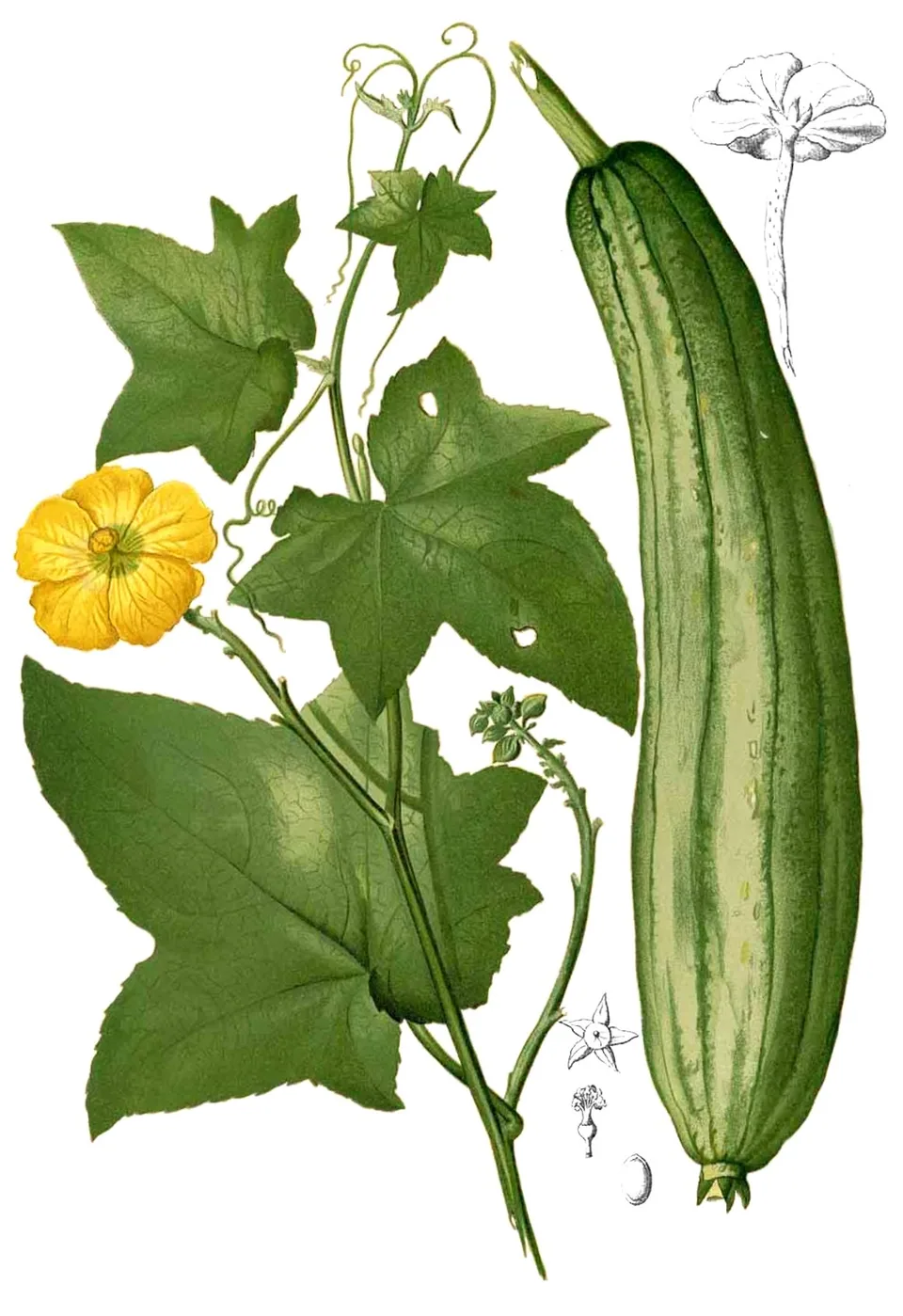


Cómo cultivar y cuidar Esponjas vegetales
Luffa aegyptiaca
Escrito por Emilio Marruso · última revisión
De un vistazo
La lufa es una enredadera que te regala dos cosechas en una: recoge los frutos tiernos de menos de 18 cm para comerlos como calabacín, o déjalos madurar hasta 200 días y tendrás tus propias esponjas. Dale sol pleno y una tierra siempre húmeda y con buen drenaje, y verás cómo alcanza de 9 a 15 m.
- Sol
Sol pleno: 6 horas al día o más
Qué dicen las fuentes (1)
Luz: Pleno sol (6 o más horas de luz solar directa al día)
Light: Full sun (6 or more hours of direct sunlight a day)
— Luffa aegyptiaca (Loofah, Luffa Sponge, Smooth Luffa, Sponge Gourd) | North Carolina Extension Gardener Plant Toolbox [1] - Riego
Mantén la tierra húmeda de forma constante, pero con buen drenaje
Qué dicen las fuentes (1)
Riego: Suelo uniformemente húmedo y bien drenado
To thrive in the garden, sponge gourds need at least 6 hours of full sun, well-drained, evenly moist, rich loam, good air circulation, and a sturdy trellis to climb.
— Luffa aegyptiaca (Loofah, Luffa Sponge, Smooth Luffa, Sponge Gourd) | North Carolina Extension Gardener Plant Toolbox [1] - Frío
Aguanta inviernos de hasta −12,2 °C (10 °F)
Rústica en inviernos fríos · USDA 8a · RHS H5 · Z8
Qué dicen las fuentes (2)
Rusticidad, zona más fría: 8a [mínima invernal de −12,2 a −9,4 °C (de 10 a 15 °F)]
USDA Plant Hardiness Zone: 8a, 8b, 9a, 9b, 10a, 10b, 11a, 11b
— Luffa aegyptiaca (Loofah, Luffa Sponge, Smooth Luffa, Sponge Gourd) | North Carolina Extension Gardener Plant Toolbox [1] Rusticidad, zona más cálida: 11b [mínima invernal de 7,2 a 10 °C (de 45 a 50 °F)]
USDA Plant Hardiness Zone: 8a, 8b, 9a, 9b, 10a, 10b, 11a, 11b
— Luffa aegyptiaca (Loofah, Luffa Sponge, Smooth Luffa, Sponge Gourd) | North Carolina Extension Gardener Plant Toolbox [1] - Suelo
Suelo con un pH no superior a 6,0
Qué dicen las fuentes (1)
pH del suelo, máximo: 6.0
High Organic Matter Loam (Silt) Soil pH: Acid (<6.0)
— Luffa aegyptiaca (Loofah, Luffa Sponge, Smooth Luffa, Sponge Gourd) | North Carolina Extension Gardener Plant Toolbox [1] - Abonado
Abona antes de plantar y durante la temporada; con demasiado nitrógeno da más tallo y menos frutos
Qué dicen las fuentes (4)
Cuándo: Antes de plantar (incorporado al suelo) y como abono lateral durante la temporada de crecimiento; el fertilizante granulado seco se aplica al plantar
It is recommended to split applications of N, P, and K, incorporating them into the soil pre-plant and as a side dressing during the growing season.
— [6] If using dry granular fertilizer, it should be applied at planting to ensure nutrient availability during early root development.
— [6] Evitar: Exceso de nitrógeno (demasiado crecimiento de la vid, menos frutos y de peor calidad) y exceso de fósforo (bloquea el zinc y otros micronutrientes)
Nitrogen within this range promotes healthy foliage and vigorous growth; however, levels exceeding 6.0% can lead to excessive vegetative growth, nutrient imbalances, and reduced fruit yields and quality
— [6] Excess P, though rare, can cause imbalances with other nutrients, particularly micronutrients like zinc, iron, and copper, which may become less available or even deficient
— [6] - Cosecha
Para comer, frutos tiernos de 15–20 cm; para esponja, cuando estén marrones, ligeros y secos y suenen las semillas
Qué dicen las fuentes (3)
Cómo cosechar: Para esponjas: cosecha cuando la piel se sienta suelta y quebradiza alrededor de las fibras endurecidas, o cuando las calabazas estén color canela, livianas y secas y las semillas suenen; cosecha inmediatamente después de la primera helada. Para comer: recoge frutos jóvenes de 15-20 cm (6-8 pulgadas), menores de 18 cm (7 pulgadas) y verdes.
Luffa sponges are ready to harvest when the skin feels loose and brittle around the hardened fibers inside.
— Growing Luffa | Home & Garden Information Center [4] harvest immediately after the first frost in the fall when the gourds are tan, light and dry, and the seeds shake inside when rattled
— Luffa aegyptiaca (Loofah, Luffa Sponge, Smooth Luffa, Sponge Gourd) | North Carolina Extension Gardener Plant Toolbox [1] They are pretty like a zucchini if picked at around 6-8 inches in length.
— Growing Loofa Gourds | The Garden Scoop | Illinois Extension | Illinois [3] - Plagas
Crisomélidos del pepino, chinches de la calabaza, pulgones y araña roja; oídio y mildiu
Qué dicen las fuentes (2)
Plagas: escarabajos del pepino, chinches de la calabaza, trips, pulgones, arañitas rojas
Cucumber beetles, squash bugs, thrips, aphids, and spider mites can be problematic.
— Luffa aegyptiaca (Loofah, Luffa Sponge, Smooth Luffa, Sponge Gourd) | North Carolina Extension Gardener Plant Toolbox [1] Enfermedades: mildiú polvoriento, mildiú velloso, enfermedades de manchas foliares
Powdery mildew, downy mildew, and various leaf spot diseases are possible.
— Luffa aegyptiaca (Loofah, Luffa Sponge, Smooth Luffa, Sponge Gourd) | North Carolina Extension Gardener Plant Toolbox [1] - Tamaño
De 9 a 15 m de alto y 30–90 cm de ancho
Qué dicen las fuentes (2)
Altura adulta: 914-1524 cm (30-50 pies)
Dimensions: Height: 30 ft. 0 in. - 50 ft. 0 in. Width: 1 ft. 0 in. - 3 ft. 0 in.
— Luffa aegyptiaca (Loofah, Luffa Sponge, Smooth Luffa, Sponge Gourd) | North Carolina Extension Gardener Plant Toolbox [1] Anchura adulta: 30-91 cm (1-3 pies)
Dimensions: Height: 30 ft. 0 in. - 50 ft. 0 in. Width: 1 ft. 0 in. - 3 ft. 0 in.
— Luffa aegyptiaca (Loofah, Luffa Sponge, Smooth Luffa, Sponge Gourd) | North Carolina Extension Gardener Plant Toolbox [1] - Multiplicación
Por semilla: sacude las semillas de una lufa seca y guarda algunas para el año siguiente
Qué dicen las fuentes (2)
Propagación: Semilla
Start luffas from seeds in warm soil in late spring.
— Growing Luffa | Home & Garden Information Center [4] Guardar semillas: Sacude las semillas sueltas de la calabaza seca y guarda algunas para el próximo año.
To process the sponges, peel the skin off, shake the seeds loose (save some for next year)
— Growing Luffa | Home & Garden Information Center [4] - Siembra
Siembra fuera tras las heladas; en climas más frescos, en interior 6–8 semanas antes de la última helada
Qué dicen las fuentes (5)
Siembra: Siembra las semillas directamente en el jardín después de la amenaza de heladas; en zonas más frías inicia las semillas en interiores de 6 a 8 semanas antes de la última fecha de helada
zonas con una temporada de crecimiento libre de heladas de al menos cuatro meses: In zones that meet those requirements, sow seeds directly in the garden after the threat of frost.
— Luffa aegyptiaca (Loofah, Luffa Sponge, Smooth Luffa, Sponge Gourd) | North Carolina Extension Gardener Plant Toolbox [1] zonas más frescas: In cooler zones, start seeds indoors 6 to 8 weeks before the last frost date after soaking the seeds in water for 24 hours.
— Luffa aegyptiaca (Loofah, Luffa Sponge, Smooth Luffa, Sponge Gourd) | North Carolina Extension Gardener Plant Toolbox [1] Según Clemson Extension: Start luffas from seeds in warm soil in late spring.
— Growing Luffa | Home & Garden Information Center [4] Según Illinois Extension: we did get an early start, growing seedlings under grow lights before the frost-free date. My wife started the seeds along with a few other veggies back in March.
— Growing Loofa Gourds | The Garden Scoop | Illinois Extension | Illinois [3] In zones that meet those requirements, sow seeds directly in the garden after the threat of frost. In cooler zones, start seeds indoors 6 to 8 weeks before the last frost date
— Luffa aegyptiaca (Loofah, Luffa Sponge, Smooth Luffa, Sponge Gourd) | North Carolina Extension Gardener Plant Toolbox [1]
Resumen
Luffa aegyptiaca es una enredadera anual trepadora de la familia de los pepinos, cultivada como hortaliza y para esponjas de luffa. [1] Necesita pleno sol, suelo rico y bien drenado con humedad uniforme y un enrejado resistente. [1] Los frutos jóvenes se comen como calabaza, mientras que los frutos fibrosos completamente maduros se secan para esponjas. [1]
Citado en inglés, como en la fuente.
Esta ficha está incompleta: las fuentes consultadas aún no cubren todos los campos.
Aún no cubierto por nuestras fuentes: Distancia de plantación
Cuidados
Las medidas entre corchetes son nuestra conversión al otro sistema de unidades; el texto citado no cambia.
Riego
Suelo uniformemente húmedo y bien drenado
Qué dicen las fuentes (1)
To thrive in the garden, sponge gourds need at least 6 hours of full sun, well-drained, evenly moist, rich loam, good air circulation, and a sturdy trellis to climb.Luz
Pleno sol (6 o más horas de luz solar directa al día)
Qué dicen las fuentes (1)
Light:
Full sun (6 or more hours of direct sunlight a day)Clima y frío
Rusticidad, zona más fría
8a [mínima invernal de −12,2 a −9,4 °C (de 10 a 15 °F)]
Qué dicen las fuentes (1)
USDA Plant Hardiness Zone:
8a, 8b, 9a, 9b, 10a, 10b, 11a, 11bRusticidad, zona más cálida
11b [mínima invernal de 7,2 a 10 °C (de 45 a 50 °F)]
Qué dicen las fuentes (1)
USDA Plant Hardiness Zone:
8a, 8b, 9a, 9b, 10a, 10b, 11a, 11bSuelo
6.0
Qué dicen las fuentes (1)
High Organic Matter
Loam (Silt)
Soil pH:
Acid (<6.0)Dónde cultivarla
No figura en las fuentes consultadas.
Propagación
Semilla
Qué dicen las fuentes (1)
Start luffas from seeds in warm soil in late spring.Cultivo
La planta
Ciclo de vida
anual
Qué dicen las fuentes (1)
Sponge gourd is an annual climbing vine in the cucumber family.Familia
Cucurbitaceae
Qué dicen las fuentes (1)
Genus:
Luffa
Species:
aegyptiaca
Family:
Cucurbitaceae
Uses (Ethnobotany):
The loofah has been usedAltura adulta
914-1524 cm (30-50 pies)
Qué dicen las fuentes (1)
Dimensions:
Height: 30 ft. 0 in. - 50 ft. 0 in.
Width: 1 ft. 0 in. - 3 ft. 0 in.Anchura adulta
30-91 cm (1-3 pies)
Qué dicen las fuentes (1)
Dimensions:
Height: 30 ft. 0 in. - 50 ft. 0 in.
Width: 1 ft. 0 in. - 3 ft. 0 in.Siembra y crecimiento
Días hasta la madurez
hasta 200 días para madurar por completo como esponja vegetal
Qué dicen las fuentes (1)
The early start is needed to allow enough time for the gourds to fully ripen, since they can take up to 200 days to reach maturityCosecha y conservación
Cómo cosechar
Para esponjas: cosecha cuando la piel se sienta suelta y quebradiza alrededor de las fibras endurecidas, o cuando las calabazas estén color canela, livianas y secas y las semillas suenen; cosecha inmediatamente después de la primera helada. Para comer: recoge frutos jóvenes de 15-20 cm (6-8 pulgadas), menores de 18 cm (7 pulgadas) y verdes.
Qué dicen las fuentes (3)
Luffa sponges are ready to harvest when the skin feels loose and brittle around the hardened fibers inside.harvest immediately after the first frost in the fall when the gourds are tan, light and dry, and the seeds shake inside when rattledThey are pretty like a zucchini if picked at around 6-8 inches in length.Guardar semillas
Sacude las semillas sueltas de la calabaza seca y guarda algunas para el próximo año.
Qué dicen las fuentes (1)
To process the sponges, peel the skin off, shake the seeds loose (save some for next year)Plagas y enfermedades
Plagas
escarabajos del pepino, chinches de la calabaza, trips, pulgones, arañitas rojas
Qué dicen las fuentes (1)
Cucumber beetles, squash bugs, thrips, aphids, and spider mites can be problematic.Enfermedades
mildiú polvoriento, mildiú velloso, enfermedades de manchas foliares
Qué dicen las fuentes (1)
Powdery mildew, downy mildew, and various leaf spot diseases are possible.Abonado
Cuándo
Antes de plantar (incorporado al suelo) y como abono lateral durante la temporada de crecimiento; el fertilizante granulado seco se aplica al plantar
Qué dicen las fuentes (2)
It is recommended to split applications of N, P, and K, incorporating them into the soil pre-plant and as a side dressing during the growing season.If using dry granular fertilizer, it should be applied at planting to ensure nutrient availability during early root development.Frecuencia
Aplicaciones divididas: una antes de plantar, luego abonos laterales durante la temporada; con fertirrigación, muchas dosis pequeñas durante la temporada
Qué dicen las fuentes (2)
It is recommended to split applications of N, P, and K, incorporating them into the soil pre-plant and as a side dressing during the growing season.For luffa plants in fertigation, N, P, and K can be applied in multiple micro- doses through the irrigation system over the course of the season.Abonos minerales
Fertilizante N, P y K en proporciones equilibradas, dividido entre la incorporación previa a la siembra y los abonos laterales
Lo que dice cada fuente
Producción en campo (pautas de pepino adaptadas): Nitrógeno 168 kg [370,4 lb]/ha
Producción en campo con fertirriego por goteo en suelos ricos en fósforo: Fertilizante líquido 8-0-8 o 10-0-10 mediante riego por goteo
Qué dicen las fuentes (4)
Producción en campo (pautas de pepino adaptadas): Before rates are established, growers can follow UF/IFAS recommendations for cucumber production (Liu et al. 2022): target soil pH of 6.0 to 6.5; nitrogen supplementation of 150 lbs/acre;Producción en campo con fertirriego por goteo en suelos ricos en fósforo: In northeast Florida, soil is rich in phosphorus. Growers should use liquid fertilizers of either 8-0-8 or 10-0-10 for fertigation through drip irrigation.Potassium is essential for plant health, water relations, and fruit yield and quality. It is typically applied in balanced proportions with N and P in an NPK fertilizer program.It is recommended to split applications of N, P, and K, incorporating them into the soil pre-plant and as a side dressing during the growing season.Microelementos
Zinc, hierro y cobre: el exceso de fósforo los hace menos disponibles, sobre todo el zinc
Qué dicen las fuentes (2)
Excess P, though rare, can cause imbalances with other nutrients, particularly micronutrients like zinc, iron, and copper, which may become less available or even deficientAdditionally, excessive P can suppress the root uptake mechanisms responsible for absorbing certain micronutrients, particularly zinc. This imbalance can lead to deficiency symptoms such as interveinal chlorosis, stunted growth, or poor fruit development,Evitar
Exceso de nitrógeno (demasiado crecimiento de la vid, menos frutos y de peor calidad) y exceso de fósforo (bloquea el zinc y otros micronutrientes)
Qué dicen las fuentes (2)
Nitrogen within this range promotes healthy foliage and vigorous growth; however, levels exceeding 6.0% can lead to excessive vegetative growth, nutrient imbalances, and reduced fruit yields and qualityExcess P, though rare, can cause imbalances with other nutrients, particularly micronutrients like zinc, iron, and copper, which may become less available or even deficientSignos de carencia
Nitrógeno: hojas de color verde amarillo pálido desde los bordes hacia adentro, luego caída prematura de las hojas comenzando por las más viejas. Fósforo: amarillamiento entre las nervaduras, manchas púrpuras o bronceadas. Potasio: amarillamiento en los bordes de las hojas más viejas y bajeras
Qué dicen las fuentes (4)
Early symptoms show pale yellowish-green chlorosis starting from leaf margins and progressing inward.Severe deficiency results in premature leaf senescence and abscission, particularly affecting older leaves first due to nitrogen mobility.Visible purplish or bronze spots, along with necrotic areas, indicate tissue death due to severe phosphorus deficiency.The leaves, particularly the older and lower ones, exhibit yellowing (chlorosis) around the edges, a common symptom of potassium deficiency.Signos de exceso
Exceso de nitrógeno: crecimiento excesivo de la vid y las hojas con menor rendimiento y calidad de frutos. Exceso de fósforo: deficiencia inducida de zinc con clorosis intervenal y crecimiento atrofiado
Qué dicen las fuentes (2)
Nitrogen within this range promotes healthy foliage and vigorous growth; however, levels exceeding 6.0% can lead to excessive vegetative growth, nutrient imbalances, and reduced fruit yields and qualityAdditionally, excessive P can suppress the root uptake mechanisms responsible for absorbing certain micronutrients, particularly zinc. This imbalance can lead to deficiency symptoms such as interveinal chlorosis, stunted growth, or poor fruit development,Problemas
Enfermedades fúngicas
Síntoma: Mildiu polvoriento, mildiu velloso y manchas foliares
Qué hacer: No se proporciona manejo en la fuente.
Qué dicen las fuentes (1)
Powdery mildew, downy mildew, and various leaf spot diseases are possible.
— Luffa aegyptiaca (Loofah, Luffa Sponge, Smooth Luffa, Sponge Gourd) | North Carolina Extension Gardener Plant Toolbox [1] Insectos plaga
Síntoma: Escarabajos del pepino, chinches de la calabaza, trips, pulgones y arañitas rojas
Qué hacer: No se proporciona manejo en la fuente.
Qué dicen las fuentes (1)
Cucumber beetles, squash bugs, thrips, aphids, and spider mites can be problematic.
— Luffa aegyptiaca (Loofah, Luffa Sponge, Smooth Luffa, Sponge Gourd) | North Carolina Extension Gardener Plant Toolbox [1]
Remedios
Cada remedio indica qué dicen las fuentes oficiales; los remedios tradicionales sin fuente oficial aparecen marcados. Los perjudiciales están para que sepas evitarlos.
Cuidar la planta
escarabajo rojo de la calabaza
Recoge escarabajos a mano en agua jabonosa. Funciona
Be aware that the products suggested to be combined in these home remedies may include additives that could harm the environment.
— extension.psu.edu [10] Cómo: Recoge los escarabajos a mano por la mañana temprano y sumérgelos en agua jabonosa; usa cubiertas flotantes para proteger las plantas jóvenes y elimina las malezas de cucurbitáceas cercanas que albergan adultos.
Hand-pick beetles in the early morning and drop them into soapy water, use floating row covers to protect young plants, and remove nearby cucurbit weeds that host adults.
— botanapp.com [8] Qué dicen las pruebas Many insect and disease issues can be solved in the home garden by hand-picking insects or clipping and disposing of diseased plant parts.
— extension.unh.edu [9]
pulgones
jabón insecticida en infestaciones graves Funciona
Cómo: Controla los pulgones que propagan el virus con mantillos reflectantes y jabón insecticida en infestaciones graves.
control aphids that spread the virus by using reflective mulches and insecticidal soap on heavy infestations
— botanapp.com [8] Qué dicen las pruebas insecticidal soap is a safe, effective organic insecticide with minimal environmental impact
— extension.psu.edu [11]
mildiu polvoriento
pulverización con leche desnatada No verificado
Remedio tradicional, no verificado por una fuente oficial.
Cómo: Mezcla 1 taza de leche desnatada (solo desnatada) con 5 tazas de agua y rocía las plantas cada semana durante 3 semanas hasta que las hojas se desarrollen.
Calendario
Siembra
Siembra las semillas directamente en el jardín después de la amenaza de heladas; en zonas más frías inicia las semillas en interiores de 6 a 8 semanas antes de la última fecha de helada
Lo que dice cada fuente
zonas con una temporada de crecimiento libre de heladas de al menos cuatro meses: Siembra las semillas directamente en el jardín después de la amenaza de heladas
zonas más frescas: Inicia las semillas en interiores de 6 a 8 semanas antes de la última fecha de helada
Según Clemson Extension: Finales de primavera, en suelo cálido
Según Illinois Extension: Plántulas iniciadas en marzo bajo luces de cultivo, antes de la fecha libre de heladas
Qué dicen las fuentes (5)
zonas con una temporada de crecimiento libre de heladas de al menos cuatro meses: In zones that meet those requirements, sow seeds directly in the garden after the threat of frost.zonas más frescas: In cooler zones, start seeds indoors 6 to 8 weeks before the last frost date after soaking the seeds in water for 24 hours.Según Clemson Extension: Start luffas from seeds in warm soil in late spring.Según Illinois Extension: we did get an early start, growing seedlings under grow lights before the frost-free date. My wife started the seeds along with a few other veggies back in March.In zones that meet those requirements, sow seeds directly in the garden after the threat of frost. In cooler zones, start seeds indoors 6 to 8 weeks before the last frost dateCosecha
Las fuentes dan valores distintos según la región, la zona o las condiciones de cultivo.
Lo que dice cada fuente
uso de esponja: fuente NC State Extension: Inmediatamente después de la primera helada en otoño
uso de esponja: fuente Illinois Extension: Antes de una helada
fruto joven: fuente NC State Extension: Menos de 7 pulgadas [18 cm] de largo
fruto joven: fuente Illinois Extension: 6-8 pulgadas [15–20 cm] de largo
Qué dicen las fuentes (4)
uso de esponja: fuente NC State Extension: harvest immediately after the first frost in the fall when the gourds are tan, light and dryuso de esponja: fuente Illinois Extension: They do need to be harvested before a frost, because the cold will really zap this warm-season vegetable and can ruin unharvested loofas.fruto joven: fuente NC State Extension: fruits that are edible when young (typically less than 7 inches long and green) and can be eaten as squash or fresh cucumber substitutefruto joven: fuente Illinois Extension: Like other squash, Luffa is edible if harvested early enough. They are pretty like a zucchini if picked at around 6-8 inches in length.Meses tal como los dan las fuentes, en su mayoría de Estados Unidos (hemisferio norte). En el hemisferio sur se desplazan unos seis meses.
Respecto a las heladas
Estimación menos precisa: no hay ninguna estación meteorológica a menos de 300 km.
Busca las fechas de heladas por código postal o ciudad
Siembra en interior: de 6 a 8 semanas antes de la última helada
In cooler zones, start seeds indoors 6 to 8 weeks before the last frost date
— Luffa aegyptiaca (Loofah, Luffa Sponge, Smooth Luffa, Sponge Gourd) | North Carolina Extension Gardener Plant Toolbox [1] Siembra al aire libre: hacia la última helada
sow seeds directly in the garden after the threat of frost
— Luffa aegyptiaca (Loofah, Luffa Sponge, Smooth Luffa, Sponge Gourd) | North Carolina Extension Gardener Plant Toolbox [1] Cosecha: hacia la primera helada
harvest immediately after the first frost in the fall when the gourds are tan, light and dry, and the seeds shake inside when rattled
— Luffa aegyptiaca (Loofah, Luffa Sponge, Smooth Luffa, Sponge Gourd) | North Carolina Extension Gardener Plant Toolbox [1]
Cuenta desde las fechas medias de las heladas de tu zona.
Comestibilidad
Según la fuente, citada textualmente. No comas una planta basándote solo en esta página: los errores de identificación pueden ser peligrosos.
Valores orientativos
Valores de una fuente secundaria, no comprobados palabra por palabra como el resto de esta página. Úselos como punto de partida.
- Horas de sol
- 6-8 horasValor orientativo, adáptalo a tu clima · Fuente secundaria
- Nivel de cuidado
- MedioValor orientativo, adáptalo a tu clima · Fuente secundaria
- Crecimiento
- AltaValor orientativo, adáptalo a tu clima · Fuente secundaria
- Poda
- marzo, abril, mayo, junio, julio, agosto, septiembre, mayo, septiembre, octubre, noviembreValor orientativo, adáptalo a tu clima · Fuente secundaria
Plantas similares
- Arabian Cucumber Cucumis dipsaceus
- Melón amargo Momordica charantia
- Bottle gourd Lagenaria siceraria
- Melón Cucumis melo
- Calabacín Cucurbita pepo
- Chilacayote Cucurbita ficifolia
- Pepino Cucumis sativus
- Generalmente conocido como pepinillo Cucumis anguria
Fuentes
Cada valor anterior se cita de estos documentos. Los enlaces llevan al editor original.
- Luffa aegyptiaca (Loofah, Luffa Sponge, Smooth Luffa, Sponge Gourd) | North Carolina Extension Gardener Plant Toolbox · plants.ces.ncsu.edu, consultado
- Luffa Sponge - Luffa aegyptiaca | North Carolina Extension Gardener Plant Toolbox · plants.ces.ncsu.edu, consultado
- Growing Loofa Gourds | The Garden Scoop | Illinois Extension | Illinois · extension.illinois.edu, consultado
- Growing Luffa | Home & Garden Information Center · hgic.clemson.edu, consultado
- Ask IFAS: Topic - Luffa · ask.ifas.ufl.edu, consultado
- edis.ifas.ufl.edu · edis.ifas.ufl.edu
- edis.ifas.ufl.edu · edis.ifas.ufl.edu
- botanapp.com · botanapp.com
- extension.unh.edu · extension.unh.edu
- extension.psu.edu · extension.psu.edu
- extension.psu.edu · extension.psu.edu
Escrito por Emilio Marruso · última revisión