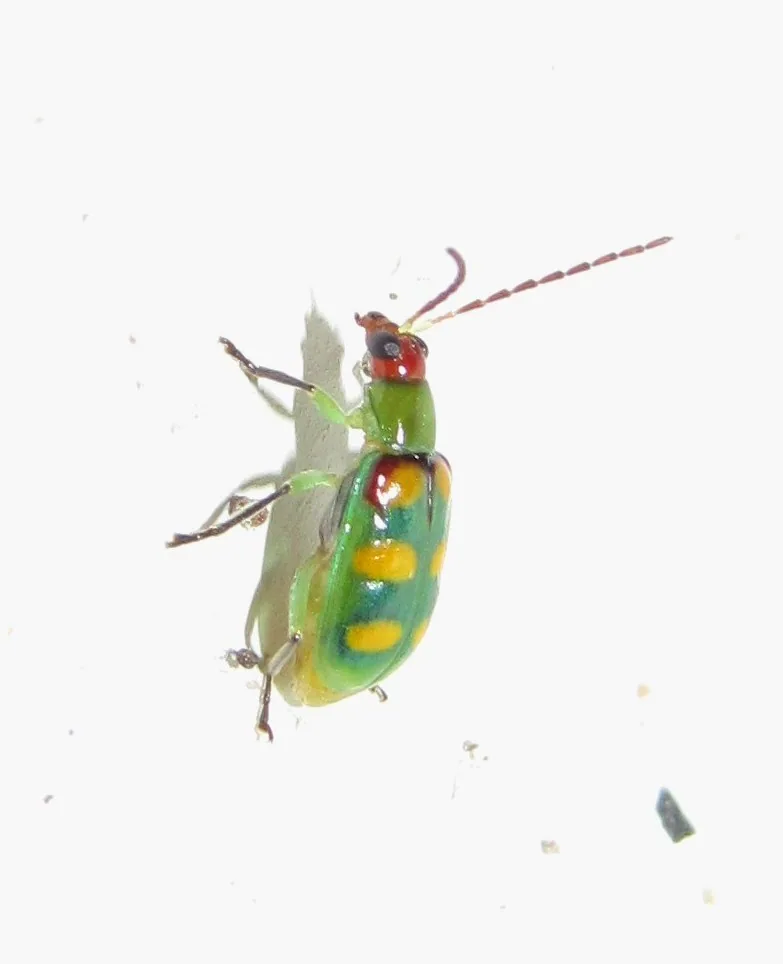
Insect
Cucumber beetles
Diabrotica
Written by Emilio Marruso
Classification: Arthropoda › Hexapoda › Insecta › Coleoptera › Chrysomelidae
Plants it attacks
Plants in our guide where this problem is reported. Open a plant to see the sources.
- Watermelon
Symptom: Adults feed on leaves and vines which reduces vigor and transmit bacterial disease; larvae bore into roots and stems causing plants to wilt and die.
- Maroon Cucumber
Symptom: Insect pest infestation
- Cantaloupe
Symptom: Cucumber beetles can infect plants with the bacteria responsible for bacterial wilt, a disease fatal for cantaloupe.
- Garden cucumber
Symptom: Adults feed on leaves and vines; larvae bore into roots and stems causing wilt; transmit bacterial wilt
- Field pumpkin
Symptom: Attack seedlings, vines and both immature and mature fruits; populations build in late summer.
Also reported on: Squash, Tall Cosmos, Winter Squash
Remedies
What our plant sheets report, with the outcome checked against official sources. Traditional remedies without an official source are flagged.
Treat
fabric row covers Works
How: Cover young plants with fabric row covers such as spun-bonded polyester; remove the covers during flowering to ensure pollination.
Reported for 1 plant: Cantaloupe
hand-picking Works
How: Hand-pick the beetles early in the morning.
Reported for 1 plant: Maroon Cucumber
handpicking Works
How: Handpick the beetles off the plants.
Reported for 1 plant: Cantaloupe
handpicking beetles Works
How: Hand-remove cucumber beetles or knock them into a container of soapy water.
Reported for 1 plant: Garden cucumber
row cover Works
How: Cover seedlings with floating row covers before beetles arrive, secure the edges and check that no beetles are trapped underneath; remove the covers when flowering begins.
Reported for 1 plant: Garden cucumber
row covers Works
How: Protect plants with row covers such as spunbonded polyester remay or cheesecloth; remove by midsummer so pollinators can reach the flowers.
Reported for 1 plant: Maroon Cucumber
kaolin clay Partly works
How: Spray the plants with kaolin clay to repel the beetles from feeding on the crop; it does not kill them.
Reported for 1 plant: Garden cucumber
neem oil spray Partly works
How: Spray neem oil on the plants at the first sign of damage.
Reported for 1 plant: Garden cucumber
row covers Partly works
How: Cover young plants until they start to bloom, then remove for pollination.
Reported for 1 plant: Winter Squash
straw mulch Partly works
How: Use straw mulch or plastic mulch (reflective plastic works particularly well); it won't stop the beetles totally but makes their lives a little harder.
Reported for 1 plant: Garden cucumber
yellow container with soapy water Official source, not independently tested
How: In mid-June place a yellow-colored container filled with water and a drop of dish soap in the garden; flying insects are attracted to the yellow and trapped.
Reported for 1 plant: Squash
trap crop Not verified
How: Plant a trap crop nearby (amaranth foliage attracts the beetles).
Reported for 2 plants: Tall Cosmos, Garden cucumber
companion planting Not verified
How: nasturtium, marigold, corn and radishes repel cucumber beetles
Reported for 1 plant: Watermelon
garlic spray Not verified
How: Homemade recipes involve crushing garlic, soaking it in water, and straining the mixture.
Reported for 1 plant: Garden cucumber
hand removal Not verified
How: remove beetles by hand if only a small number
Reported for 1 plant: Watermelon
intercropping with broccoli, nasturtium or radish Not verified
How: Intercrop broccoli, nasturtium, or radish with the squash.
Reported for 1 plant: Field pumpkin
wood ash dusting Not verified
How: Dust the plants with wood ashes.
Reported for 1 plant: Field pumpkin
Where it is found
Regulated as a quarantine pest in: Chile, China.