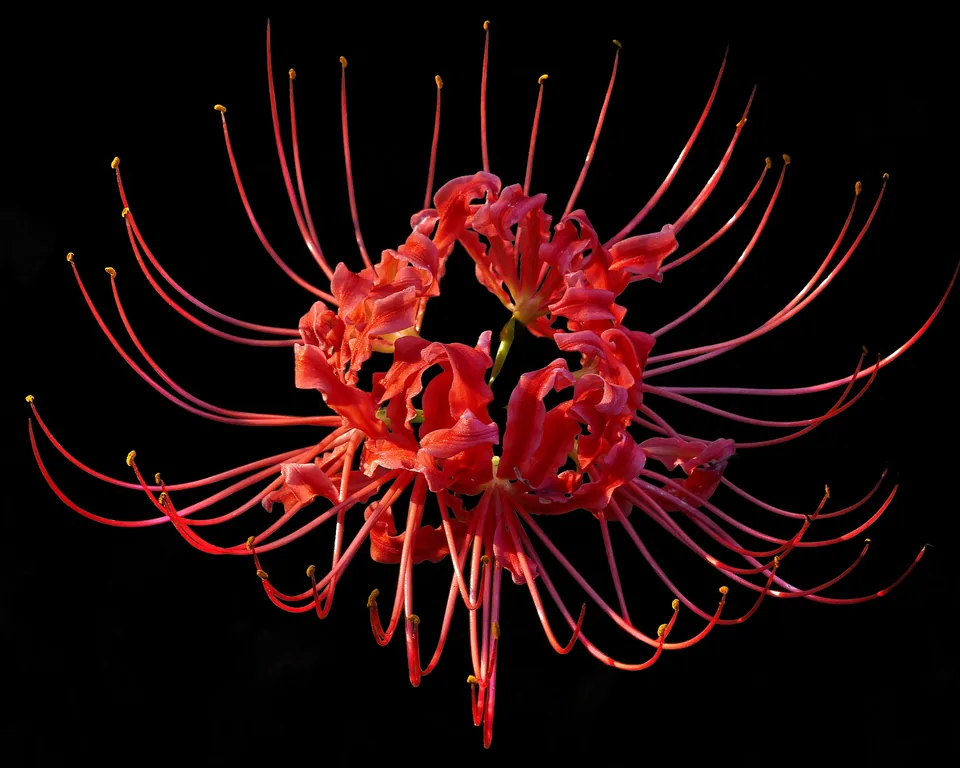


How to Grow and Care for Red Spider Lily
Lycoris radiata
Written by Emilio Marruso · last checked
Toxic to: People · Why
At a glance
This easygoing bulb asks for very little: plant it in fall in rich, well-drained soil, in full sun or, for the best flowers, partial shade. It needs no feeding, grows happily in a pot, and forms clumps you can lift and divide in spring once the leaves turn yellow. Just keep the soil fairly dry while it rests.
- Sun
Full sun to partial shade; it flowers best in partial shade
What the sources say (1)
Light: Full sun to partial shade; best flowering in partial shade
Situate the bulbs in full sun to partial shade. The best flowering will occur in partial shade.
— Lycoris radiata (Equinox Flower, Hurricane Lily, Naked Lily, Red Magic Lily, Red Spider Lily, Red Surprise Lily, Spider Lily) | North Carolina Extension Gardener Plant Toolbox [1] - Water
Don't overwater; keep the soil fairly dry while the plant rests
What the sources say (2)
Watering: Keep the soil fairly dry in the dormant season; avoid overwatering to prevent root rot
In the dormant season, it is best if the soil remains fairly dry.
— Lycoris radiata (Equinox Flower, Hurricane Lily, Naked Lily, Red Magic Lily, Red Spider Lily, Red Surprise Lily, Spider Lily) | North Carolina Extension Gardener Plant Toolbox [1] Avoid overwatering to prevent root rot. In the dormant season, it is best if the soil remains fairly dry.
— Plant Showcase - Lycoris radiata (Hurricane Lily, Spider Lily) - Brunswick County Center | N.C. Cooperative Extension [6] - Cold
Survives winters down to −10 °F (−23.3 °C)
Very hardy · USDA 6a · RHS H7 · Z6
What the sources say (4)
Hardiness, coldest zone: 6a [winter low −23.3 to −20.6 °C (−10 to −5 °F)]
6a, 6b, 7a, 7b, 8a, 8b, 9a, 9b, 10a, 10b
— Lycoris radiata (Equinox Flower, Hurricane Lily, Naked Lily, Red Magic Lily, Red Spider Lily, Red Surprise Lily, Spider Lily) | North Carolina Extension Gardener Plant Toolbox [1] This easy-to-grow bulb is described as hardy from zones 6a to 10b, but it can be damaged below 28 degrees F.
— Plant Showcase - Lycoris radiata (Hurricane Lily, Spider Lily) - Brunswick County Center | N.C. Cooperative Extension [6] Hardiness, warmest zone: 10b [winter low 1.7 to 4.4 °C (35 to 40 °F)]
6a, 6b, 7a, 7b, 8a, 8b, 9a, 9b, 10a, 10b
— Lycoris radiata (Equinox Flower, Hurricane Lily, Naked Lily, Red Magic Lily, Red Spider Lily, Red Surprise Lily, Spider Lily) | North Carolina Extension Gardener Plant Toolbox [1] This easy-to-grow bulb is described as hardy from zones 6a to 10b, but it can be damaged below 28 degrees F.
— Plant Showcase - Lycoris radiata (Hurricane Lily, Spider Lily) - Brunswick County Center | N.C. Cooperative Extension [6] - Soil
Rich, moist soil that drains well
What the sources say (1)
Watering notes: Rich, moist, well-drained soil
Plant the bulbs with the neck exposed, spaced 6 to 12 inches apart, in rich, moist well-drained soils.
— Lycoris radiata (Equinox Flower, Hurricane Lily, Naked Lily, Red Magic Lily, Red Spider Lily, Red Surprise Lily, Spider Lily) | North Carolina Extension Gardener Plant Toolbox [1] - Spacing
6–12 in between bulbs
What the sources say (2)
Spacing: 15.2-30.5 cm (6-12 in)
Plant the bulbs with the neck exposed, spaced 6 to 12 inches apart, in rich, moist well-drained soils.
— Lycoris radiata (Equinox Flower, Hurricane Lily, Naked Lily, Red Magic Lily, Red Spider Lily, Red Surprise Lily, Spider Lily) | North Carolina Extension Gardener Plant Toolbox [1] Plant the bulbs in the fall with the neck exposed, spaced 6- to 12-in. apart in rich, moist, well-drained soil.
— Plant Showcase - Lycoris radiata (Hurricane Lily, Spider Lily) - Brunswick County Center | N.C. Cooperative Extension [6] - Planting
Plant the bulbs in fall
What the sources say (1)
Planting: Fall
Plant the bulbs in the fall with the neck exposed, spaced 6- to 12-in. apart in rich, moist, well-drained soil.
— Plant Showcase - Lycoris radiata (Hurricane Lily, Spider Lily) - Brunswick County Center | N.C. Cooperative Extension [6] - Feeding
No feeding needed
What the sources say (1)
How often: No feeding required
They prefer rich, organic soil but can grow in poor soil. No fertilization is required.
— Lycoris (Cluster Amaryllis, Equinox Flower, Hurricane Lilies, Magic Lily, Naked Lily, Resurrection Lily, Spider Lilies, Surprise Lily) | North Carolina Extension Gardener Plant Toolbox [2] - Pests
Sometimes bulb flies; too much water rots the roots
What the sources say (2)
Pests: narcissus bulb fly
Red spider lily has no serious insect or disease problems. Narcissus bulb fly occasionally feeds on this species. Avoid overwatering to prevent root rot.
— Lycoris radiata (Equinox Flower, Hurricane Lily, Naked Lily, Red Magic Lily, Red Spider Lily, Red Surprise Lily, Spider Lily) | North Carolina Extension Gardener Plant Toolbox [1] Diseases: root rot (from overwatering)
Avoid overwatering to prevent root rot. In the dormant season, it is best if the soil remains fairly dry.
— Plant Showcase - Lycoris radiata (Hurricane Lily, Spider Lily) - Brunswick County Center | N.C. Cooperative Extension [6] - Size
1–2 ft tall and 1–2 ft wide
What the sources say (2)
Mature height: 30.5-61.0 cm (1 ft 0 in - 2 ft 0 in)
Height: 1 ft. 0 in. - 2 ft. 0 in. Width: 1 ft. 0 in. - 2 ft. 0 in.
— Lycoris radiata (Equinox Flower, Hurricane Lily, Naked Lily, Red Magic Lily, Red Spider Lily, Red Surprise Lily, Spider Lily) | North Carolina Extension Gardener Plant Toolbox [1] Mature width: 30.5-61.0 cm (1 ft 0 in - 2 ft 0 in)
Height: 1 ft. 0 in. - 2 ft. 0 in. Width: 1 ft. 0 in. - 2 ft. 0 in.
— Lycoris radiata (Equinox Flower, Hurricane Lily, Naked Lily, Red Magic Lily, Red Spider Lily, Red Surprise Lily, Spider Lily) | North Carolina Extension Gardener Plant Toolbox [1] - Propagation
Lift and divide the clumps in spring, after the leaves turn yellow
What the sources say (2)
Propagation: Division; offsets (clumps can be lifted and divided in spring after the leaves turn yellow)
The bulbs naturalize easily through offsets and are quite long-lived.
— Lycoris radiata (Equinox Flower, Hurricane Lily, Naked Lily, Red Magic Lily, Red Spider Lily, Red Surprise Lily, Spider Lily) | North Carolina Extension Gardener Plant Toolbox [1] the individual bulbs will grow into larger clumps that can be lifted and divided in spring after the leaves turn yellow.
— Plant Showcase - Lycoris radiata (Hurricane Lily, Spider Lily) - Brunswick County Center | N.C. Cooperative Extension [6] - Containers
Grows in containers too
What the sources say (1)
In containers: Yes
These bulbs require an extensive root system to produce flowers; therefore, if container planting is being considered, be sure the pot size is adequate.
— Lycoris radiata (Equinox Flower, Hurricane Lily, Naked Lily, Red Magic Lily, Red Spider Lily, Red Surprise Lily, Spider Lily) | North Carolina Extension Gardener Plant Toolbox [1] - Safety
Toxic if eaten: the bulb causes stomach pain, nausea and vomiting
Overview
Red spider lily is a late-summer-blooming perennial bulb native to China, Japan, Korea and Nepal. [1] The bulbs are planted with the neck exposed in rich, moist, well-drained soil, in full sun to partial shade. [1] Overwatering causes root rot, and the soil is best kept fairly dry in the dormant season. [1][6]
This record is incomplete: the sources we read do not cover every field yet.
Not yet covered by our sources: Pruning
Red Spider Lily care
How to water Red Spider Lily
Watering
Keep the soil fairly dry in the dormant season; avoid overwatering to prevent root rot
What the sources say (2)
In the dormant season, it is best if the soil remains fairly dry.Avoid overwatering to prevent root rot. In the dormant season, it is best if the soil remains fairly dry.Watering notes
Rich, moist, well-drained soil
What the sources say (1)
Plant the bulbs with the neck exposed, spaced 6 to 12 inches apart, in rich, moist well-drained soils.How much light Red Spider Lily needs
Full sun to partial shade; best flowering in partial shade
What the sources say (1)
Situate the bulbs in full sun to partial shade. The best flowering will occur in partial shade.How much cold Red Spider Lily can take
Hardiness, coldest zone
6a [winter low −23.3 to −20.6 °C (−10 to −5 °F)]
What the sources say (2)
6a, 6b, 7a, 7b, 8a, 8b, 9a, 9b, 10a, 10bThis easy-to-grow bulb is described as hardy from zones 6a to 10b, but it can be damaged below 28 degrees F.Hardiness, warmest zone
10b [winter low 1.7 to 4.4 °C (35 to 40 °F)]
What the sources say (2)
6a, 6b, 7a, 7b, 8a, 8b, 9a, 9b, 10a, 10bThis easy-to-grow bulb is described as hardy from zones 6a to 10b, but it can be damaged below 28 degrees F.Where to grow Red Spider Lily
In containers
Yes
What the sources say (1)
These bulbs require an extensive root system to produce flowers; therefore, if container planting is being considered, be sure the pot size is adequate.Spacing
15.2-30.5 cm (6-12 in)
What the sources say (2)
Plant the bulbs with the neck exposed, spaced 6 to 12 inches apart, in rich, moist well-drained soils.Plant the bulbs in the fall with the neck exposed, spaced 6- to 12-in. apart in rich, moist, well-drained soil.How to propagate Red Spider Lily
Division; offsets (clumps can be lifted and divided in spring after the leaves turn yellow)
What the sources say (2)
The bulbs naturalize easily through offsets and are quite long-lived.the individual bulbs will grow into larger clumps that can be lifted and divided in spring after the leaves turn yellow.How to grow Red Spider Lily
The plant
Life cycle
perennial (bulb)
What the sources say (1)
The red spider lily is a cultivated, late summer blooming perennial bulb in the amaryllis family (Amaryllidaceae).Family
Amaryllidaceae
What the sources say (1)
The red spider lily is a cultivated, late summer blooming perennial bulb in the amaryllis family (Amaryllidaceae).Mature height
30.5-61.0 cm (1 ft 0 in - 2 ft 0 in)
What the sources say (1)
Height: 1 ft. 0 in. - 2 ft. 0 in.
Width: 1 ft. 0 in. - 2 ft. 0 in.Mature width
30.5-61.0 cm (1 ft 0 in - 2 ft 0 in)
What the sources say (1)
Height: 1 ft. 0 in. - 2 ft. 0 in.
Width: 1 ft. 0 in. - 2 ft. 0 in.Harvest and storage
Storage
Store bulbs dry at 45-55°F [7–13 °C]
What the sources say (1)
Attracts Pollinators
Easy to Grow
Bulb Storage:
Store bulbs dry at 45-55°FPests and diseases
Pests
narcissus bulb fly
What the sources say (1)
Red spider lily has no serious insect or disease problems. Narcissus bulb fly occasionally feeds on this species. Avoid overwatering to prevent root rot.Diseases
root rot (from overwatering)
What the sources say (1)
Avoid overwatering to prevent root rot. In the dormant season, it is best if the soil remains fairly dry.Fertilizing
How often
No feeding required
What the sources say (1)
They prefer rich, organic soil but can grow in poor soil. No fertilization is required.Red Spider Lily pests and problems
Narcissus bulb fly
Symptom: Occasionally feeds on this species
What the sources say (1)
Red spider lily has no serious insect or disease problems. Narcissus bulb fly occasionally feeds on this species.
— Lycoris radiata (Equinox Flower, Hurricane Lily, Naked Lily, Red Magic Lily, Red Spider Lily, Red Surprise Lily, Spider Lily) | North Carolina Extension Gardener Plant Toolbox [1] Root rot
Symptom: Caused by overwatering
What to do: Avoid overwatering; keep the soil fairly dry in the dormant season
What the sources say (1)
Avoid overwatering to prevent root rot. In the dormant season, it is best if the soil remains fairly dry.
— Plant Showcase - Lycoris radiata (Hurricane Lily, Spider Lily) - Brunswick County Center | N.C. Cooperative Extension [6]
Remedies
Each remedy shows what official sources say about it; traditional remedies without an official source are marked as such. Harmful ones are listed so you know to avoid them.
Treating the plant
slugs
beer trap Not verified
Traditional remedy, not verified by an official source.
How: pour the slugs a beer: they are attracted to the ale and end up drowning in it
spider mites
insecticidal soap spray Works
How: treat spider mite infestations with insecticidal soap, applying the solution every few days until the pests are controlled
Treat spider mite infestations with insecticidal soap or horticultural oil, applying the solution every few days until the pests are controlled.
— japan-experience.com [8] What the evidence says insecticidal soap is a safe, effective organic insecticide with minimal environmental impact.
— extension.psu.edu [9] dish soap and water spray Harmful
How: spray the plants with a mixture of water and a few drops of dish soap
You can also spray your plants with a mixture of water and a few drops of dish soap or neem oil to deter the mites.
— nygarden.com [10] What the evidence says spraying home remedies that contain dish detergent on plants on a sunny day can injure the plant, essentially burning it.
— extension.psu.edu [11] neem oil spray Partly works
Despite these being biological pesticides, it is important to read the directions on the label and wear safety equipment.
— extension.illinois.edu [13] How: spray the plants with a mixture of water and neem oil
You can also spray your plants with a mixture of water and a few drops of dish soap or neem oil to deter the mites.
— nygarden.com [10] What the evidence says neem oil is not effective against every insect and disease, and often must be frequently reapplied to reach the desired outcome.
— extension.unh.edu [12]
lily disease
removing and destroying diseased plant parts Works
How: start treatment as soon as possible by removing and destroying any affected parts of the plant, and never throw diseased plant material in the compost
Treatment must begin as soon as possible by removing and destroying any affected parts of the plant.
— housedigest.com [14] What the evidence says Many insect and disease issues can be solved in the home garden by hand-picking insects or clipping and disposing of diseased plant parts.
— extension.unh.edu [12]
voles
wire mesh cages Not verified
Traditional remedy, not verified by an official source.
How: protect the bulbs from burrowing rodents with wire mesh cages or other physical barriers
Is Red Spider Lily poisonous?
Reported by the source, quoted verbatim. This is not medical or veterinary advice: if a person or an animal may have eaten this plant, contact a poison control centre or a veterinarian.
Causes only low toxicity if bulb is eaten. Abdominal pain, salivation, shivering, nausea, vomiting, and diarrhea.
[1]- Poisonous parts
Poison Toxic Principle: Lycorine, an alkaloid Causes Contact Dermatitis: No Poison Part: Roots
[1]- Toxic principle
Poison Toxic Principle: Lycorine, an alkaloid Causes Contact Dermatitis: No
[1]- Symptoms
Causes only low toxicity if bulb is eaten. Abdominal pain, salivation, shivering, nausea, vomiting, and diarrhea.
[1]- Severity
This plant has low severity poison characteristics. See below
[1]
Hurricane Lilies contain various toxic alkaloids and can cause poisoning if consumed.
[6]- Toxic principle
Hurricane Lilies contain various toxic alkaloids and can cause poisoning if consumed.
[6]
Calendar
Planting
Fall
What the sources say (1)
Plant the bulbs in the fall with the neck exposed, spaced 6- to 12-in. apart in rich, moist, well-drained soil.Pruning
Not stated in the sources we read.
Months as given by the sources, which are mostly from the United States (northern hemisphere). In the southern hemisphere they shift by about six months.
Indicative values
Values from a secondary source, not checked word for word like the rest of this page. Use them as a starting point.
- Drought tolerant
- yesIndicative value, adapt it to your climate · Secondary source
- Soil pH
- 6-7Indicative value, adapt it to your climate · Secondary source
- Growth rate
- HighIndicative value, adapt it to your climate · Secondary source
- Pruning
- November, December, January, February, March, April, MayIndicative value, adapt it to your climate · Secondary source
Similar plants
- Surprise Lily Lycoris squamigera
- African Blood Lily Scadoxus multiflorus
- African Blue Lily Agapanthus praecox
- Allium triquetrum Allium triquetrum
- Amazon Lily Urceolina amazonica
- Aztec Lily Zephyranthes formosissima
- Blue Globe Onion Allium caeruleum
- Broadleaf wild leek Allium ampeloprasum
Sources
Every value above is quoted from these documents. Links lead to the original publisher.
- Lycoris radiata (Equinox Flower, Hurricane Lily, Naked Lily, Red Magic Lily, Red Spider Lily, Red Surprise Lily, Spider Lily) | North Carolina Extension Gardener Plant Toolbox · plants.ces.ncsu.edu, consulted
- Lycoris (Cluster Amaryllis, Equinox Flower, Hurricane Lilies, Magic Lily, Naked Lily, Resurrection Lily, Spider Lilies, Surprise Lily) | North Carolina Extension Gardener Plant Toolbox · plants.ces.ncsu.edu, consulted
- Spider Lily - Lycoris radiata | North Carolina Extension Gardener Plant Toolbox · plants.ces.ncsu.edu, consulted
- Red Spider Lily - Lycoris radiata | North Carolina Extension Gardener Plant Toolbox · plants.ces.ncsu.edu, consulted
- Hurricane Lily - Lycoris radiata | North Carolina Extension Gardener Plant Toolbox · plants.ces.ncsu.edu, consulted
- Plant Showcase - Lycoris radiata (Hurricane Lily, Spider Lily) - Brunswick County Center | N.C. Cooperative Extension · brunswick.ces.ncsu.edu, consulted
- Spiderlily, Red · uaex.uada.edu, consulted
- japan-experience.com · japan-experience.com
- extension.psu.edu · extension.psu.edu
- nygarden.com · nygarden.com
- extension.psu.edu · extension.psu.edu
- extension.unh.edu · extension.unh.edu
- extension.illinois.edu · extension.illinois.edu
- housedigest.com · housedigest.com
Written by Emilio Marruso · last checked