

How to Grow and Care for Surprise Lily
Lycoris squamigera
Written by Emilio Marruso · last checked
Toxic to: People · Why
At a glance
This perennial bulb is a gift for patient gardeners: plant it in spring or fall, in full sun or partial shade, and it asks for little water and no feeding at all. It may not bloom the first year, so be patient. After that it comes back year after year, and it even grows happily in containers.
- Sun
Full sun to partial shade
What the sources say (2)
Light: Full sun to partial shade
The surprise lily is easy to grow. They prefer full sun to partial shade.
— Lycoris squamigera (Magic Lily, Mystery Lily, Naked Ladies, Resurrection Lily, Sesame Lily, Surprise Lily, Upstart) | North Carolina Extension Gardener Plant Toolbox [1] They do best in full sun to part shade locations with fairly good drainage
— Surprise lilies shock with late bloom | The Garden Scoop | Illinois Extension | Illinois [3] - Water
Moderate water while growing, very little during its rest period
What the sources say (3)
Watering: Water moderately during the growing season and sparingly during the rest period
they should be watered sparingly during the rest period and moderately during their growing season.
— Lycoris squamigera (Magic Lily, Mystery Lily, Naked Ladies, Resurrection Lily, Sesame Lily, Surprise Lily, Upstart) | North Carolina Extension Gardener Plant Toolbox [1] They should be watered moderately when they are growing.
— Surprise Lilies Bring Late-Summer Delight [2] Watering notes: Does not require a lot of watering
Insects and diseases pose no problems and the plant does not require a lot of watering.
— Bring Magic Into Your Garden With Resurrection Lily - Extension Gardener | NC State Extension [7] - Cold
Survives winters down to −20 °F (−28.9 °C)
Very hardy · USDA 5a · RHS H7 · Z5
What the sources say (2)
Hardiness, coldest zone: 5a [winter low −28.9 to −26.1 °C (−20 to −15 °F)]
USDA Plant Hardiness Zone: 5a, 5b, 6a, 6b, 7a, 7b, 8a, 8b, 9a
— Lycoris squamigera (Magic Lily, Mystery Lily, Naked Ladies, Resurrection Lily, Sesame Lily, Surprise Lily, Upstart) | North Carolina Extension Gardener Plant Toolbox [1] Hardiness, warmest zone: 9a [winter low −6.7 to −3.9 °C (20 to 25 °F)]
USDA Plant Hardiness Zone: 5a, 5b, 6a, 6b, 7a, 7b, 8a, 8b, 9a
— Lycoris squamigera (Magic Lily, Mystery Lily, Naked Ladies, Resurrection Lily, Sesame Lily, Surprise Lily, Upstart) | North Carolina Extension Gardener Plant Toolbox [1] - Spacing
6–8 in between bulbs
What the sources say (4)
Spacing: 15.2-20.3 cm (6-8 in)
According to NC State Extension: When planting, bury bulbs to a depth of 8 to 12 inches. and space them 6 inches apart.
— Lycoris squamigera (Magic Lily, Mystery Lily, Naked Ladies, Resurrection Lily, Sesame Lily, Surprise Lily, Upstart) | North Carolina Extension Gardener Plant Toolbox [1] According to Iowa State Extension: Plant bulbs in early fall 5 to 6 inches deep and 6 to 8 inches apart.
— Surprise Lilies | Yard and Garden [5] When planting, bury bulbs to a depth of 8 to 12 inches. and space them 6 inches apart.
— Lycoris squamigera (Magic Lily, Mystery Lily, Naked Ladies, Resurrection Lily, Sesame Lily, Surprise Lily, Upstart) | North Carolina Extension Gardener Plant Toolbox [1] Plant bulbs in early fall 5 to 6 inches deep and 6 to 8 inches apart.
— Surprise Lilies | Yard and Garden [5] - Planting
Plant in spring or early fall
What the sources say (5)
Planting: Spring or fall (early fall)
According to Penn State Extension: They can be planted in spring or fall, but gardeners are cautioned to be patient because they will not bloom the first year after planting.
— Surprise Lilies Bring Late-Summer Delight [2] According to Iowa State Extension: Plant bulbs in early fall 5 to 6 inches deep and 6 to 8 inches apart.
— Surprise Lilies | Yard and Garden [5] According to NC State Extension Gardener: Plant L. squamigera bulbs about 6 inches deep in the fall.
— Bring Magic Into Your Garden With Resurrection Lily - Extension Gardener | NC State Extension [7] They can be planted in spring or fall, but gardeners are cautioned to be patient because they will not bloom the first year after planting.
— Surprise Lilies Bring Late-Summer Delight [2] Plant bulbs in early fall 5 to 6 inches deep and 6 to 8 inches apart.
— Surprise Lilies | Yard and Garden [5] - Feeding
No feeding needed
What the sources say (1)
How often: No feeding required
They prefer rich, organic soil but can grow in poor soil. No fertilization is required.
— Lycoris (Cluster Amaryllis, Equinox Flower, Hurricane Lilies, Magic Lily, Naked Lily, Resurrection Lily, Spider Lilies, Surprise Lily) | North Carolina Extension Gardener Plant Toolbox [4] - Pests
Watch for aphids and lily leaf beetles
What the sources say (1)
Pests: aphids, lily leaf beetle
This plant has no serious insect or disease problems. They may be susceptible to aphids and lily leaf beetle.
— Lycoris squamigera (Magic Lily, Mystery Lily, Naked Ladies, Resurrection Lily, Sesame Lily, Surprise Lily, Upstart) | North Carolina Extension Gardener Plant Toolbox [1] - Watch out
Bulbs don't bloom the first year after planting: be patient
- Size
1.5–2 ft tall and wide
What the sources say (2)
Mature height: 45.7-61 cm (1 ft 6 in to 2 ft)
Dimensions: Height: 1 ft. 6 in. - 2 ft. 0 in. Width: 1 ft. 6 in. - 2 ft. 0 in.
— Lycoris squamigera (Magic Lily, Mystery Lily, Naked Ladies, Resurrection Lily, Sesame Lily, Surprise Lily, Upstart) | North Carolina Extension Gardener Plant Toolbox [1] Mature width: 45.7-61 cm (1 ft 6 in to 2 ft)
Dimensions: Height: 1 ft. 6 in. - 2 ft. 0 in. Width: 1 ft. 6 in. - 2 ft. 0 in.
— Lycoris squamigera (Magic Lily, Mystery Lily, Naked Ladies, Resurrection Lily, Sesame Lily, Surprise Lily, Upstart) | North Carolina Extension Gardener Plant Toolbox [1] - Propagation
Divide the bulbs or separate the small offsets
What the sources say (2)
Propagation: Division of bulbs; bulb offsets
The surprise lily is propagated by division, but they will not bloom the first year after being divided since the bulbs need to establish new roots.
— Lycoris squamigera (Magic Lily, Mystery Lily, Naked Ladies, Resurrection Lily, Sesame Lily, Surprise Lily, Upstart) | North Carolina Extension Gardener Plant Toolbox [1] Lycoris squamigera multiples quickly via daughter bulbs or offsets.
— Surprise Lilies | Yard and Garden [5] - Containers
Grows in containers too
What the sources say (1)
In containers: Yes
Consider these bulbs as a container planting, border, patio planting, meadow, or woodland setting.
— Lycoris squamigera (Magic Lily, Mystery Lily, Naked Ladies, Resurrection Lily, Sesame Lily, Surprise Lily, Upstart) | North Carolina Extension Gardener Plant Toolbox [1] - Safety
Mildly toxic if eaten: can cause stomach pain, nausea, vomiting and diarrhea
Overview
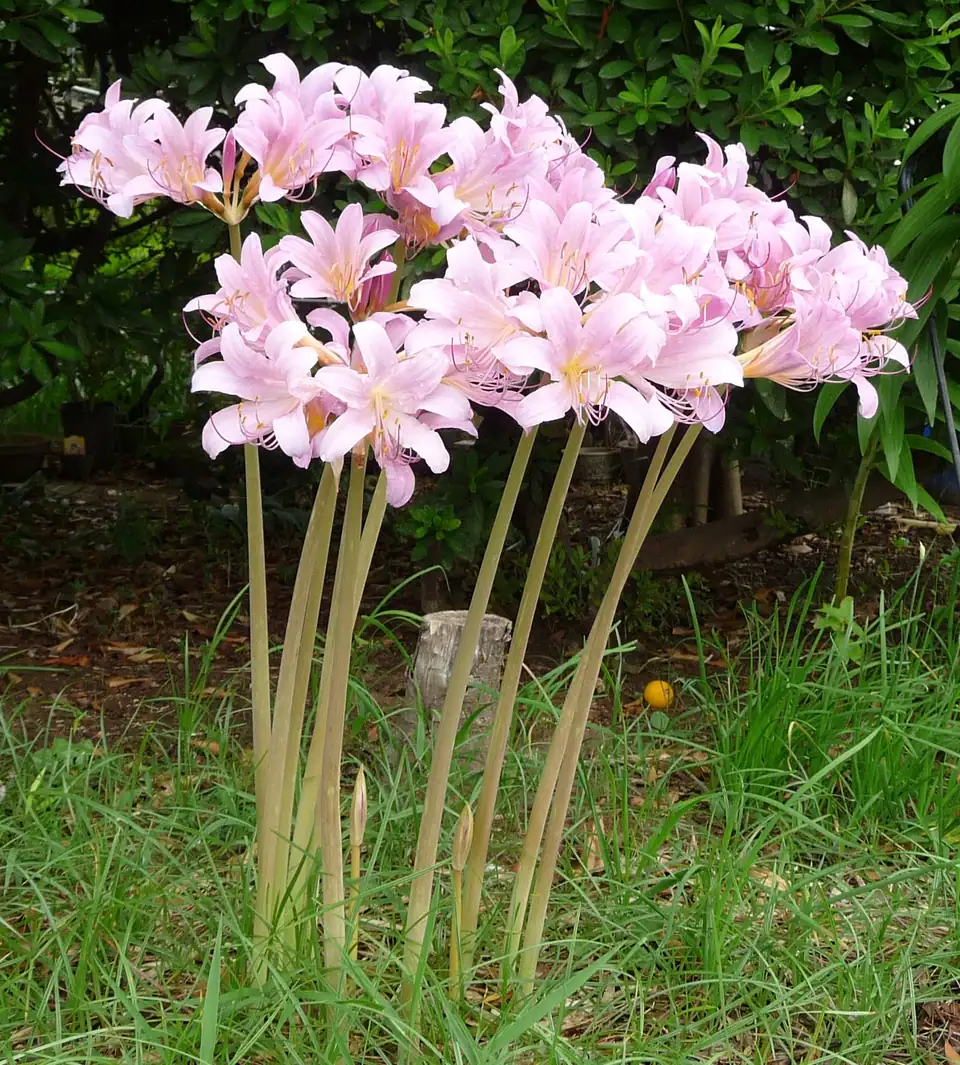
Surprise lily is a perennial bulb whose strap-like leaves die back before the flowers rise on naked stems in late summer. [1] It prefers full sun to partial shade and is watered moderately during the growing season. [1][2] It is listed as hardy in USDA zones 5a to 9a. [1]
This record is incomplete: the sources we read do not cover every field yet.
Not yet covered by our sources: Pruning
Surprise Lily care
How to water Surprise Lily
Watering
Water moderately during the growing season and sparingly during the rest period
What the sources say (2)
they should be watered sparingly during the rest period and moderately during their growing season.They should be watered moderately when they are growing.Watering notes
Does not require a lot of watering
What the sources say (1)
Insects and diseases pose no problems and the plant does not require a lot of watering.How much light Surprise Lily needs
Full sun to partial shade
What the sources say (2)
The surprise lily is easy to grow. They prefer full sun to partial shade.They do best in full sun to part shade locations with fairly good drainageHow much cold Surprise Lily can take
Hardiness, coldest zone
5a [winter low −28.9 to −26.1 °C (−20 to −15 °F)]
What the sources say (1)
USDA Plant Hardiness Zone:
5a, 5b, 6a, 6b, 7a, 7b, 8a, 8b, 9aHardiness, warmest zone
9a [winter low −6.7 to −3.9 °C (20 to 25 °F)]
What the sources say (1)
USDA Plant Hardiness Zone:
5a, 5b, 6a, 6b, 7a, 7b, 8a, 8b, 9aWhere to grow Surprise Lily
In containers
Yes
What the sources say (1)
Consider these bulbs as a container planting, border, patio planting, meadow, or woodland setting.Spacing
15.2-20.3 cm (6-8 in)
What each source says
According to NC State Extension: 15.2 cm (6 in)
According to Iowa State Extension: 15.2-20.3 cm (6-8 in)
What the sources say (4)
According to NC State Extension: When planting, bury bulbs to a depth of 8 to 12 inches. and space them 6 inches apart.According to Iowa State Extension: Plant bulbs in early fall 5 to 6 inches deep and 6 to 8 inches apart.When planting, bury bulbs to a depth of 8 to 12 inches. and space them 6 inches apart.Plant bulbs in early fall 5 to 6 inches deep and 6 to 8 inches apart.How to propagate Surprise Lily
Division of bulbs; bulb offsets
What the sources say (2)
The surprise lily is propagated by division, but they will not bloom the first year after being divided since the bulbs need to establish new roots.Lycoris squamigera multiples quickly via daughter bulbs or offsets.How to grow Surprise Lily
The plant
Life cycle
perennial
What the sources say (1)
The surprise lily is a perennial bulb in the Amaryllis family, and it is the hardiest of all the plants in the Lycoris species.Family
Amaryllidaceae
What the sources say (1)
Lycoris squamigera is a member of the Amaryllidaceae family. It is native to Japan.Mature height
45.7-61 cm (1 ft 6 in to 2 ft)
What the sources say (1)
Dimensions:
Height: 1 ft. 6 in. - 2 ft. 0 in.
Width: 1 ft. 6 in. - 2 ft. 0 in.Mature width
45.7-61 cm (1 ft 6 in to 2 ft)
What the sources say (1)
Dimensions:
Height: 1 ft. 6 in. - 2 ft. 0 in.
Width: 1 ft. 6 in. - 2 ft. 0 in.Pests and diseases
Pests
aphids, lily leaf beetle
What the sources say (1)
This plant has no serious insect or disease problems. They may be susceptible to aphids and lily leaf beetle.Fertilizing
How often
No feeding required
What the sources say (1)
They prefer rich, organic soil but can grow in poor soil. No fertilization is required.Surprise Lily pests and problems
Cold injury
Symptom: Bulbs suffer cold injury when temperatures drop below 28 degrees Fahrenheit
What to do: Apply a 2-inch layer of mulch to protect the bulbs over winter
What the sources say (1)
The bulbs will suffer cold injury when temperatures drop below 28 degrees Fahrenheit. To protect them over winter, it is best to apply about a 2-inch layer of mulch.
— Lycoris squamigera (Magic Lily, Mystery Lily, Naked Ladies, Resurrection Lily, Sesame Lily, Surprise Lily, Upstart) | North Carolina Extension Gardener Plant Toolbox [1] Aphids and lily leaf beetle
Symptom: May be susceptible to aphids and lily leaf beetle
What to do: Not stated in the source
What the sources say (1)
This plant has no serious insect or disease problems. They may be susceptible to aphids and lily leaf beetle.
— Lycoris squamigera (Magic Lily, Mystery Lily, Naked Ladies, Resurrection Lily, Sesame Lily, Surprise Lily, Upstart) | North Carolina Extension Gardener Plant Toolbox [1] No bloom in the first year
Symptom: Bulbs do not bloom the first year after planting
What to do: Be patient
What the sources say (1)
They can be planted in spring or fall, but gardeners are cautioned to be patient because they will not bloom the first year after planting.
— Surprise Lilies Bring Late-Summer Delight [2]
Remedies
Each remedy shows what official sources say about it; traditional remedies without an official source are marked as such. Harmful ones are listed so you know to avoid them.
Treating the plant
cold injury
winter mulch Official source, not independently tested
How: apply about a 2-inch layer of mulch over the bulbs for the winter
To protect them over winter, it is best to apply about a 2-inch layer of mulch.
— Lycoris squamigera (Magic Lily, Mystery Lily, Naked Ladies, Resurrection Lily, Sesame Lily, Surprise Lily, Upstart) | North Carolina Extension Gardener Plant Toolbox [1]
bulb rot
destroying infected bulbs Official source, not independently tested
How: careful digging to avoid wounding, control of insect and mite pests, and destruction of infected bulbs
Control is achieved through careful digging to avoid wounding. It is also helpful to control insect and mite pests. Infected bulbs should be destroyed.
— portal.ct.gov [9]
botrytis blight
removing affected plant parts Official source, not independently tested
How: rake and remove affected plant parts after the tops are killed in the fall; avoid overhead irrigation and crowding
Control involves raking and removing any affected plant parts after the tops are killed in the fall. It is also helpful to avoid overhead irrigation and crowding of the plants.
— portal.ct.gov [9]
Is Surprise Lily poisonous?
Reported by the source, quoted verbatim. This is not medical or veterinary advice: if a person or an animal may have eaten this plant, contact a poison control centre or a veterinarian.
CAUSES ONLY LOW TOXICITY IF EATEN. Abdominal pain, salivation, shivering, nausea, vomiting, and diarrhea.
[1]
Calendar
Planting
Spring or fall (early fall)
What each source says
According to Penn State Extension: Spring or fall
According to Iowa State Extension: Early fall
According to NC State Extension Gardener: Fall
What the sources say (5)
According to Penn State Extension: They can be planted in spring or fall, but gardeners are cautioned to be patient because they will not bloom the first year after planting.According to Iowa State Extension: Plant bulbs in early fall 5 to 6 inches deep and 6 to 8 inches apart.According to NC State Extension Gardener: Plant L. squamigera bulbs about 6 inches deep in the fall.They can be planted in spring or fall, but gardeners are cautioned to be patient because they will not bloom the first year after planting.Plant bulbs in early fall 5 to 6 inches deep and 6 to 8 inches apart.Pruning
Not stated in the sources we read.
Months as given by the sources, which are mostly from the United States (northern hemisphere). In the southern hemisphere they shift by about six months.
Indicative values
Values from a secondary source, not checked word for word like the rest of this page. Use them as a starting point.
- Hours of sun
- 4-6 hoursIndicative value, adapt it to your climate · Secondary source
- Drought tolerant
- yesIndicative value, adapt it to your climate · Secondary source
- Soil pH
- 6-7Indicative value, adapt it to your climate · Secondary source
- Growth rate
- LowIndicative value, adapt it to your climate · Secondary source
- Pruning
- March, April, May, February, March, April, May, June, July, August, SeptemberIndicative value, adapt it to your climate · Secondary source
Similar plants
- Red Spider Lily Lycoris radiata
- African Blood Lily Scadoxus multiflorus
- African Blue Lily Agapanthus praecox
- Allium triquetrum Allium triquetrum
- Amazon Lily Urceolina amazonica
- Aztec Lily Zephyranthes formosissima
- Blue Globe Onion Allium caeruleum
- Broadleaf wild leek Allium ampeloprasum
Sources
Every value above is quoted from these documents. Links lead to the original publisher.
- Lycoris squamigera (Magic Lily, Mystery Lily, Naked Ladies, Resurrection Lily, Sesame Lily, Surprise Lily, Upstart) | North Carolina Extension Gardener Plant Toolbox · plants.ces.ncsu.edu, consulted
- Surprise Lilies Bring Late-Summer Delight · extension.psu.edu, consulted
- Surprise lilies shock with late bloom | The Garden Scoop | Illinois Extension | Illinois · extension.illinois.edu, consulted
- Lycoris (Cluster Amaryllis, Equinox Flower, Hurricane Lilies, Magic Lily, Naked Lily, Resurrection Lily, Spider Lilies, Surprise Lily) | North Carolina Extension Gardener Plant Toolbox · plants.ces.ncsu.edu, consulted
- Surprise Lilies | Yard and Garden · yardandgarden.extension.iastate.edu, consulted
- Sesame Lily - Lycoris squamigera | North Carolina Extension Gardener Plant Toolbox · plants.ces.ncsu.edu, consulted
- Bring Magic Into Your Garden With Resurrection Lily - Extension Gardener | NC State Extension · extensiongardener.ces.ncsu.edu, consulted
- Spider Lilies - Lycoris | North Carolina Extension Gardener Plant Toolbox · plants.ces.ncsu.edu, consulted
- portal.ct.gov · portal.ct.gov
Written by Emilio Marruso · last checked