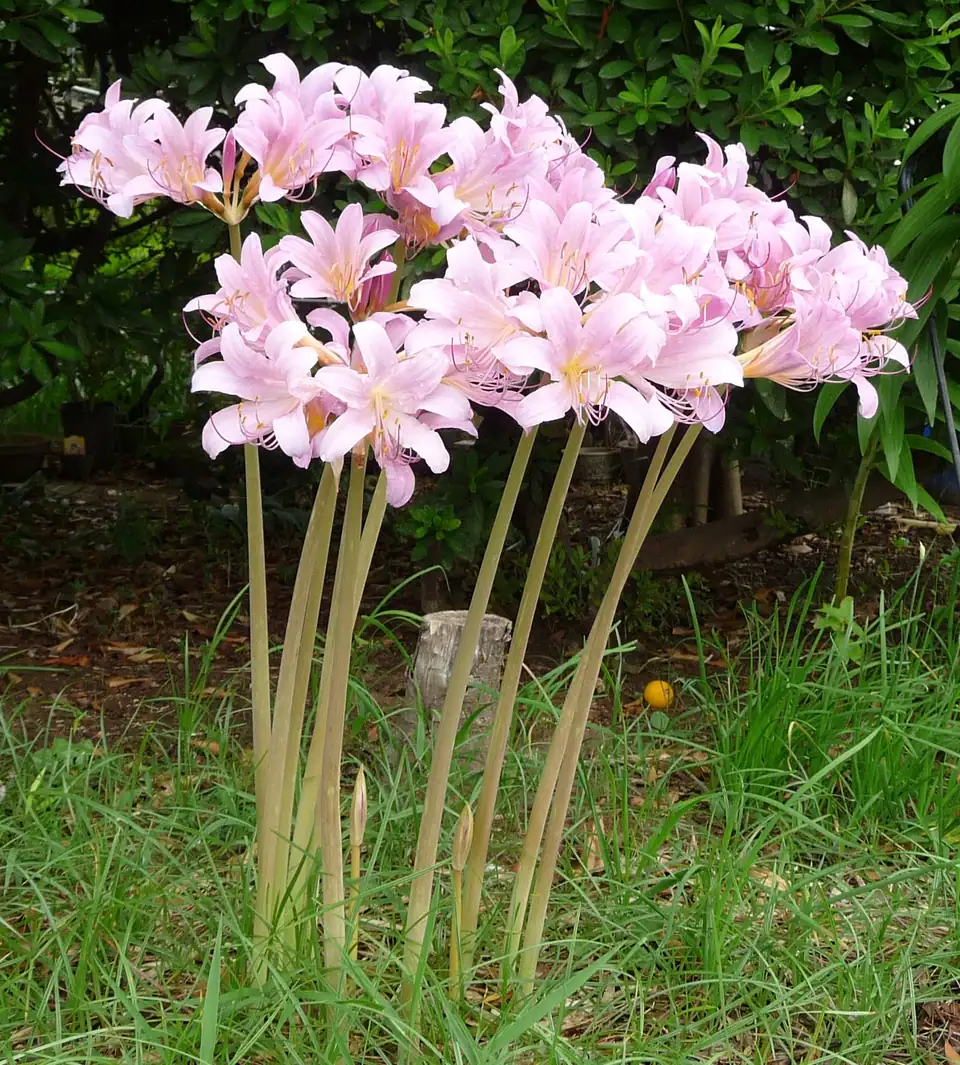


Cómo cultivar y cuidar Surprise Lily
Lycoris squamigera
Escrito por Emilio Marruso · última revisión
Tóxica para: Personas · Por qué
De un vistazo
Este bulbo perenne es un regalo para jardineros pacientes: plántalo en primavera u otoño, a pleno sol o en semisombra, y apenas te pedirá agua y nada de abono. El primer año puede que no florezca, así que ten paciencia. Después volverá año tras año, y también crece feliz en maceta.
- Sol
Sol pleno o semisombra
Qué dicen las fuentes (2)
Luz: Pleno sol a semisombra
The surprise lily is easy to grow. They prefer full sun to partial shade.
— Lycoris squamigera (Magic Lily, Mystery Lily, Naked Ladies, Resurrection Lily, Sesame Lily, Surprise Lily, Upstart) | North Carolina Extension Gardener Plant Toolbox [1] They do best in full sun to part shade locations with fairly good drainage
— Surprise lilies shock with late bloom | The Garden Scoop | Illinois Extension | Illinois [3] - Riego
Riego moderado mientras crece y escaso durante el reposo
Qué dicen las fuentes (3)
Riego: Riega moderadamente durante la temporada de crecimiento y con moderación durante el período de reposo
they should be watered sparingly during the rest period and moderately during their growing season.
— Lycoris squamigera (Magic Lily, Mystery Lily, Naked Ladies, Resurrection Lily, Sesame Lily, Surprise Lily, Upstart) | North Carolina Extension Gardener Plant Toolbox [1] They should be watered moderately when they are growing.
— Surprise Lilies Bring Late-Summer Delight [2] Notas sobre el riego: No requiere mucho riego
Insects and diseases pose no problems and the plant does not require a lot of watering.
— Bring Magic Into Your Garden With Resurrection Lily - Extension Gardener | NC State Extension [7] - Frío
Aguanta inviernos de hasta −28,9 °C (−20 °F)
Muy rústica · USDA 5a · RHS H7 · Z5
Qué dicen las fuentes (2)
Rusticidad, zona más fría: 5a [mínima invernal de −28,9 a −26,1 °C (de −20 a −15 °F)]
USDA Plant Hardiness Zone: 5a, 5b, 6a, 6b, 7a, 7b, 8a, 8b, 9a
— Lycoris squamigera (Magic Lily, Mystery Lily, Naked Ladies, Resurrection Lily, Sesame Lily, Surprise Lily, Upstart) | North Carolina Extension Gardener Plant Toolbox [1] Rusticidad, zona más cálida: 9a [mínima invernal de −6,7 a −3,9 °C (de 20 a 25 °F)]
USDA Plant Hardiness Zone: 5a, 5b, 6a, 6b, 7a, 7b, 8a, 8b, 9a
— Lycoris squamigera (Magic Lily, Mystery Lily, Naked Ladies, Resurrection Lily, Sesame Lily, Surprise Lily, Upstart) | North Carolina Extension Gardener Plant Toolbox [1] - Distancia
15–20 cm entre bulbos
Qué dicen las fuentes (4)
Distancia de plantación: 15.2-20.3 cm (6-8 pulgadas)
Según NC State Extension: When planting, bury bulbs to a depth of 8 to 12 inches. and space them 6 inches apart.
— Lycoris squamigera (Magic Lily, Mystery Lily, Naked Ladies, Resurrection Lily, Sesame Lily, Surprise Lily, Upstart) | North Carolina Extension Gardener Plant Toolbox [1] Según Iowa State Extension: Plant bulbs in early fall 5 to 6 inches deep and 6 to 8 inches apart.
— Surprise Lilies | Yard and Garden [5] When planting, bury bulbs to a depth of 8 to 12 inches. and space them 6 inches apart.
— Lycoris squamigera (Magic Lily, Mystery Lily, Naked Ladies, Resurrection Lily, Sesame Lily, Surprise Lily, Upstart) | North Carolina Extension Gardener Plant Toolbox [1] Plant bulbs in early fall 5 to 6 inches deep and 6 to 8 inches apart.
— Surprise Lilies | Yard and Garden [5] - Plantación
Planta en primavera o a principios de otoño
Qué dicen las fuentes (5)
Plantación: Primavera u otoño (principios de otoño)
Según Penn State Extension: They can be planted in spring or fall, but gardeners are cautioned to be patient because they will not bloom the first year after planting.
— Surprise Lilies Bring Late-Summer Delight [2] Según Iowa State Extension: Plant bulbs in early fall 5 to 6 inches deep and 6 to 8 inches apart.
— Surprise Lilies | Yard and Garden [5] Según NC State Extension Gardener: Plant L. squamigera bulbs about 6 inches deep in the fall.
— Bring Magic Into Your Garden With Resurrection Lily - Extension Gardener | NC State Extension [7] They can be planted in spring or fall, but gardeners are cautioned to be patient because they will not bloom the first year after planting.
— Surprise Lilies Bring Late-Summer Delight [2] Plant bulbs in early fall 5 to 6 inches deep and 6 to 8 inches apart.
— Surprise Lilies | Yard and Garden [5] - Abonado
No necesita abono
Qué dicen las fuentes (1)
Frecuencia: No requiere abono
They prefer rich, organic soil but can grow in poor soil. No fertilization is required.
— Lycoris (Cluster Amaryllis, Equinox Flower, Hurricane Lilies, Magic Lily, Naked Lily, Resurrection Lily, Spider Lilies, Surprise Lily) | North Carolina Extension Gardener Plant Toolbox [4] - Plagas
Vigila los pulgones y el criocero del lirio
Qué dicen las fuentes (1)
Plagas: pulgones, escarabajo de la hoja del lirio
This plant has no serious insect or disease problems. They may be susceptible to aphids and lily leaf beetle.
— Lycoris squamigera (Magic Lily, Mystery Lily, Naked Ladies, Resurrection Lily, Sesame Lily, Surprise Lily, Upstart) | North Carolina Extension Gardener Plant Toolbox [1] - Atención
Los bulbos no florecen el primer año tras plantarlos: ten paciencia
- Tamaño
46–61 cm de alto y de ancho
Qué dicen las fuentes (2)
Altura adulta: 45.7-61 cm (1 pie 6 pulgadas a 2 pies)
Dimensions: Height: 1 ft. 6 in. - 2 ft. 0 in. Width: 1 ft. 6 in. - 2 ft. 0 in.
— Lycoris squamigera (Magic Lily, Mystery Lily, Naked Ladies, Resurrection Lily, Sesame Lily, Surprise Lily, Upstart) | North Carolina Extension Gardener Plant Toolbox [1] Anchura adulta: 45.7-61 cm (1 pie 6 pulgadas a 2 pies)
Dimensions: Height: 1 ft. 6 in. - 2 ft. 0 in. Width: 1 ft. 6 in. - 2 ft. 0 in.
— Lycoris squamigera (Magic Lily, Mystery Lily, Naked Ladies, Resurrection Lily, Sesame Lily, Surprise Lily, Upstart) | North Carolina Extension Gardener Plant Toolbox [1] - Multiplicación
Divide los bulbos o separa los bulbillos
Qué dicen las fuentes (2)
Propagación: División de bulbos; hijuelos del bulbo
The surprise lily is propagated by division, but they will not bloom the first year after being divided since the bulbs need to establish new roots.
— Lycoris squamigera (Magic Lily, Mystery Lily, Naked Ladies, Resurrection Lily, Sesame Lily, Surprise Lily, Upstart) | North Carolina Extension Gardener Plant Toolbox [1] Lycoris squamigera multiples quickly via daughter bulbs or offsets.
— Surprise Lilies | Yard and Garden [5] - Maceta
Crece también en maceta
Qué dicen las fuentes (1)
En maceta: Sí
Consider these bulbs as a container planting, border, patio planting, meadow, or woodland setting.
— Lycoris squamigera (Magic Lily, Mystery Lily, Naked Ladies, Resurrection Lily, Sesame Lily, Surprise Lily, Upstart) | North Carolina Extension Gardener Plant Toolbox [1] - Seguridad
Poco tóxica si se ingiere: puede causar dolor de estómago, náuseas, vómitos y diarrea
Resumen
El lirio sorpresa es un bulbo perenne cuyas hojas en forma de cinta se secan antes de que las flores se eleven sobre tallos desnudos a fines del verano. [1] Prefiere pleno sol a semisombra y se riega moderadamente durante la temporada de crecimiento. [1][2] Está catalogada como resistente en las zonas USDA 5a a 9a. [1]
Citado en inglés, como en la fuente.
Esta ficha está incompleta: las fuentes consultadas aún no cubren todos los campos.
Aún no cubierto por nuestras fuentes: Poda
Cuidados
Riego
Riego
Riega moderadamente durante la temporada de crecimiento y con moderación durante el período de reposo
Qué dicen las fuentes (2)
they should be watered sparingly during the rest period and moderately during their growing season.They should be watered moderately when they are growing.Notas sobre el riego
No requiere mucho riego
Qué dicen las fuentes (1)
Insects and diseases pose no problems and the plant does not require a lot of watering.Luz
Pleno sol a semisombra
Qué dicen las fuentes (2)
The surprise lily is easy to grow. They prefer full sun to partial shade.They do best in full sun to part shade locations with fairly good drainageClima y frío
Rusticidad, zona más fría
5a [mínima invernal de −28,9 a −26,1 °C (de −20 a −15 °F)]
Qué dicen las fuentes (1)
USDA Plant Hardiness Zone:
5a, 5b, 6a, 6b, 7a, 7b, 8a, 8b, 9aRusticidad, zona más cálida
9a [mínima invernal de −6,7 a −3,9 °C (de 20 a 25 °F)]
Qué dicen las fuentes (1)
USDA Plant Hardiness Zone:
5a, 5b, 6a, 6b, 7a, 7b, 8a, 8b, 9aDónde cultivarla
En maceta
Sí
Qué dicen las fuentes (1)
Consider these bulbs as a container planting, border, patio planting, meadow, or woodland setting.Distancia de plantación
15.2-20.3 cm (6-8 pulgadas)
Lo que dice cada fuente
Según NC State Extension: 15.2 cm (6 pulgadas)
Según Iowa State Extension: 15.2-20.3 cm (6-8 pulgadas)
Qué dicen las fuentes (4)
Según NC State Extension: When planting, bury bulbs to a depth of 8 to 12 inches. and space them 6 inches apart.Según Iowa State Extension: Plant bulbs in early fall 5 to 6 inches deep and 6 to 8 inches apart.When planting, bury bulbs to a depth of 8 to 12 inches. and space them 6 inches apart.Plant bulbs in early fall 5 to 6 inches deep and 6 to 8 inches apart.Propagación
División de bulbos; hijuelos del bulbo
Qué dicen las fuentes (2)
The surprise lily is propagated by division, but they will not bloom the first year after being divided since the bulbs need to establish new roots.Lycoris squamigera multiples quickly via daughter bulbs or offsets.Cultivo
La planta
Ciclo de vida
perenne
Qué dicen las fuentes (1)
The surprise lily is a perennial bulb in the Amaryllis family, and it is the hardiest of all the plants in the Lycoris species.Familia
Amaryllidaceae
Qué dicen las fuentes (1)
Lycoris squamigera is a member of the Amaryllidaceae family. It is native to Japan.Altura adulta
45.7-61 cm (1 pie 6 pulgadas a 2 pies)
Qué dicen las fuentes (1)
Dimensions:
Height: 1 ft. 6 in. - 2 ft. 0 in.
Width: 1 ft. 6 in. - 2 ft. 0 in.Anchura adulta
45.7-61 cm (1 pie 6 pulgadas a 2 pies)
Qué dicen las fuentes (1)
Dimensions:
Height: 1 ft. 6 in. - 2 ft. 0 in.
Width: 1 ft. 6 in. - 2 ft. 0 in.Plagas y enfermedades
Plagas
pulgones, escarabajo de la hoja del lirio
Qué dicen las fuentes (1)
This plant has no serious insect or disease problems. They may be susceptible to aphids and lily leaf beetle.Abonado
Frecuencia
No requiere abono
Qué dicen las fuentes (1)
They prefer rich, organic soil but can grow in poor soil. No fertilization is required.Problemas
Daño por frío
Síntoma: Los bulbos sufren daños por frío cuando las temperaturas bajan de 28 grados Fahrenheit
Qué hacer: Aplica una capa de 2 pulgadas de mantillo para proteger los bulbos durante el invierno
Qué dicen las fuentes (1)
The bulbs will suffer cold injury when temperatures drop below 28 degrees Fahrenheit. To protect them over winter, it is best to apply about a 2-inch layer of mulch.
— Lycoris squamigera (Magic Lily, Mystery Lily, Naked Ladies, Resurrection Lily, Sesame Lily, Surprise Lily, Upstart) | North Carolina Extension Gardener Plant Toolbox [1] Pulgones y escarabajo del lirio
Síntoma: Puede ser susceptible a pulgones y escarabajo del lirio
Qué hacer: No indicado en la fuente
Qué dicen las fuentes (1)
This plant has no serious insect or disease problems. They may be susceptible to aphids and lily leaf beetle.
— Lycoris squamigera (Magic Lily, Mystery Lily, Naked Ladies, Resurrection Lily, Sesame Lily, Surprise Lily, Upstart) | North Carolina Extension Gardener Plant Toolbox [1] Sin floración en el primer año
Síntoma: Los bulbos no florecen el primer año después de plantarlos
Qué hacer: Ten paciencia
Qué dicen las fuentes (1)
They can be planted in spring or fall, but gardeners are cautioned to be patient because they will not bloom the first year after planting.
— Surprise Lilies Bring Late-Summer Delight [2]
Remedios
Cada remedio indica qué dicen las fuentes oficiales; los remedios tradicionales sin fuente oficial aparecen marcados. Los perjudiciales están para que sepas evitarlos.
Cuidar la planta
daño por frío
mantillo de invierno Fuente oficial, sin prueba independiente
Cómo: aplica una capa de mantillo de unas 2 pulgadas sobre los bulbos para el invierno
To protect them over winter, it is best to apply about a 2-inch layer of mulch.
— Lycoris squamigera (Magic Lily, Mystery Lily, Naked Ladies, Resurrection Lily, Sesame Lily, Surprise Lily, Upstart) | North Carolina Extension Gardener Plant Toolbox [1]
pudrición del bulbo
Destruye los bulbos infectados Fuente oficial, sin prueba independiente
Cómo: excavación cuidadosa para evitar heridas, control de plagas de insectos y ácaros, y destrucción de bulbos infectados
Control is achieved through careful digging to avoid wounding. It is also helpful to control insect and mite pests. Infected bulbs should be destroyed.
— portal.ct.gov [9]
tizón de botrytis
eliminación de partes afectadas de la planta Fuente oficial, sin prueba independiente
Cómo: rastrilla y retira las partes afectadas de la planta después de que las puntas se mueran en otoño; evita el riego por aspersión y el apiñamiento
Control involves raking and removing any affected plant parts after the tops are killed in the fall. It is also helpful to avoid overhead irrigation and crowding of the plants.
— portal.ct.gov [9]
Toxicidad
Según la fuente, citada textualmente. No es un consejo médico ni veterinario: si una persona o un animal pudo haber ingerido esta planta, contacta con un centro de toxicología o con un veterinario.
CAUSES ONLY LOW TOXICITY IF EATEN. Abdominal pain, salivation, shivering, nausea, vomiting, and diarrhea.
[1]
Calendario
Plantación
Primavera u otoño (principios de otoño)
Lo que dice cada fuente
Según Penn State Extension: Primavera u otoño
Según Iowa State Extension: Principios de otoño
Según NC State Extension Gardener: Otoño
Qué dicen las fuentes (5)
Según Penn State Extension: They can be planted in spring or fall, but gardeners are cautioned to be patient because they will not bloom the first year after planting.Según Iowa State Extension: Plant bulbs in early fall 5 to 6 inches deep and 6 to 8 inches apart.Según NC State Extension Gardener: Plant L. squamigera bulbs about 6 inches deep in the fall.They can be planted in spring or fall, but gardeners are cautioned to be patient because they will not bloom the first year after planting.Plant bulbs in early fall 5 to 6 inches deep and 6 to 8 inches apart.Poda
No figura en las fuentes consultadas.
Meses tal como los dan las fuentes, en su mayoría de Estados Unidos (hemisferio norte). En el hemisferio sur se desplazan unos seis meses.
Valores orientativos
Valores de una fuente secundaria, no comprobados palabra por palabra como el resto de esta página. Úselos como punto de partida.
- Horas de sol
- 4-6 horasValor orientativo, adáptalo a tu clima · Fuente secundaria
- Resiste la sequía
- SíValor orientativo, adáptalo a tu clima · Fuente secundaria
- pH del suelo
- 6-7Valor orientativo, adáptalo a tu clima · Fuente secundaria
- Crecimiento
- BajoValor orientativo, adáptalo a tu clima · Fuente secundaria
- Poda
- marzo, abril, mayo, febrero, marzo, abril, mayo, junio, julio, agosto, septiembreValor orientativo, adáptalo a tu clima · Fuente secundaria
Plantas similares
- Red Spider Lily Lycoris radiata
- African Blood Lily Scadoxus multiflorus
- Agapanto Agapanthus praecox
- Allium triquetrum Allium triquetrum
- Amazon Lily Urceolina amazonica
- Aztec Lily Zephyranthes formosissima
- Blue Globe Onion Allium caeruleum
- Ajoporro Allium ampeloprasum
Fuentes
Cada valor anterior se cita de estos documentos. Los enlaces llevan al editor original.
- Lycoris squamigera (Magic Lily, Mystery Lily, Naked Ladies, Resurrection Lily, Sesame Lily, Surprise Lily, Upstart) | North Carolina Extension Gardener Plant Toolbox · plants.ces.ncsu.edu, consultado
- Surprise Lilies Bring Late-Summer Delight · extension.psu.edu, consultado
- Surprise lilies shock with late bloom | The Garden Scoop | Illinois Extension | Illinois · extension.illinois.edu, consultado
- Lycoris (Cluster Amaryllis, Equinox Flower, Hurricane Lilies, Magic Lily, Naked Lily, Resurrection Lily, Spider Lilies, Surprise Lily) | North Carolina Extension Gardener Plant Toolbox · plants.ces.ncsu.edu, consultado
- Surprise Lilies | Yard and Garden · yardandgarden.extension.iastate.edu, consultado
- Sesame Lily - Lycoris squamigera | North Carolina Extension Gardener Plant Toolbox · plants.ces.ncsu.edu, consultado
- Bring Magic Into Your Garden With Resurrection Lily - Extension Gardener | NC State Extension · extensiongardener.ces.ncsu.edu, consultado
- Spider Lilies - Lycoris | North Carolina Extension Gardener Plant Toolbox · plants.ces.ncsu.edu, consultado
- portal.ct.gov · portal.ct.gov
Escrito por Emilio Marruso · última revisión