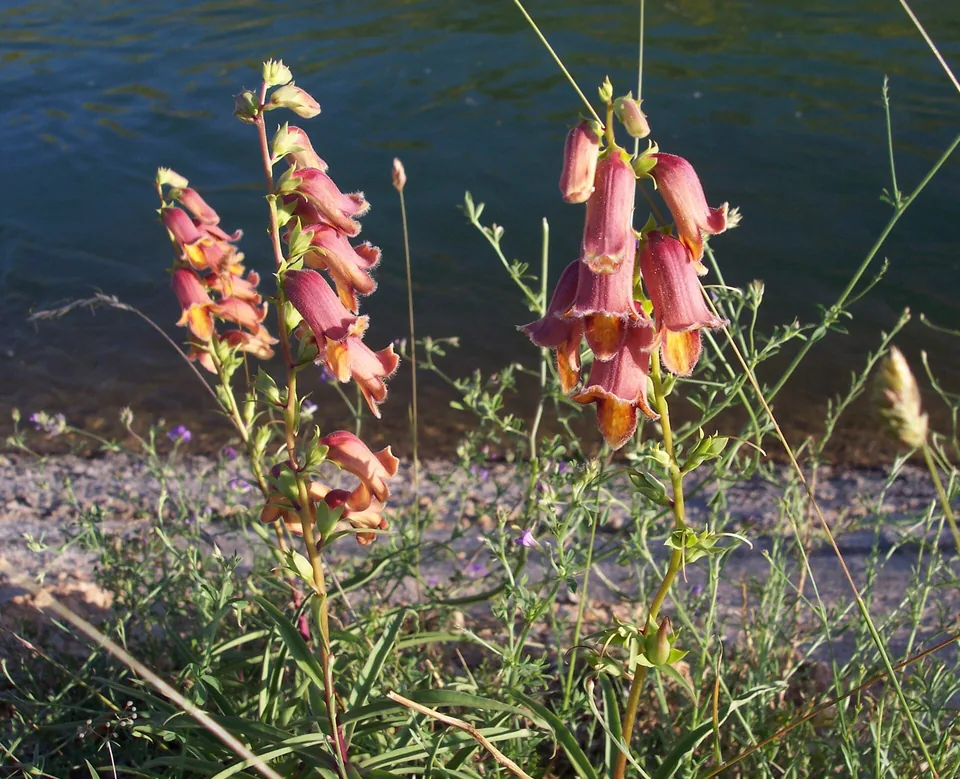


How to Grow and Care for Willow Leaf Foxglove
Digitalis obscura
Written by Emilio Marruso · last checked
Toxic to: People · Why
At a glance
This perennial foxglove is happy in full sun or partial shade and shrugs off drought once it has gritty, well-drained soil. Water deeply but not too often, and cut the faded flower spikes after bloom to encourage a second round of flowers. It is fairly trouble-free: just keep it out of soggy winter soil, and remember that its leaves are highly toxic.
- Sun
Full sun to partial shade
What the sources say (1)
Light: Full sun to partial shade
Light: Full sun (6 or more hours of direct sunlight a day) Partial Shade (Direct sunlight only part of the day, 2-6 hours)
— Digitalis obscura (Dusty Foxglove, Willow Leaf Foxglove) | North Carolina Extension Gardener Plant Toolbox [1] - Water
Water deeply but not often; it handles drought, but wet winter soil can kill it
What the sources say (3)
Watering: Water deeply but not too frequently
Plant in full or partial sun and water deeply but not too frequently.
— Digitalis obscura (Dusty Foxglove, Willow Leaf Foxglove) | North Carolina Extension Gardener Plant Toolbox [1] Watering notes: Wet soils in winter can be fatal; prefers gritty, well-drained soil; drought tolerant
Wet soils in winter can be fatal.
— Digitalis obscura (Dusty Foxglove, Willow Leaf Foxglove) | North Carolina Extension Gardener Plant Toolbox [1] Resistance To Challenges: Deer Drought
— Digitalis obscura (Dusty Foxglove, Willow Leaf Foxglove) | North Carolina Extension Gardener Plant Toolbox [1] - Cold
Survives winters down to −30 °F (−34.4 °C)
Very hardy · USDA 4a · RHS H7 · Z4
What the sources say (2)
Hardiness, coldest zone: 4a [winter low −34.4 to −31.7 °C (−30 to −25 °F)]
USDA Plant Hardiness Zone: 4a, 4b, 5a, 5b, 6a, 6b, 7a, 7b, 8a, 8b
— Digitalis obscura (Dusty Foxglove, Willow Leaf Foxglove) | North Carolina Extension Gardener Plant Toolbox [1] Hardiness, warmest zone: 8b [winter low −9.4 to −6.7 °C (15 to 20 °F)]
USDA Plant Hardiness Zone: 4a, 4b, 5a, 5b, 6a, 6b, 7a, 7b, 8a, 8b
— Digitalis obscura (Dusty Foxglove, Willow Leaf Foxglove) | North Carolina Extension Gardener Plant Toolbox [1] - Soil
Gritty, well-drained soil, pH 6.0–8.0
What the sources say (4)
Watering notes: Wet soils in winter can be fatal; prefers gritty, well-drained soil; drought tolerant
Wet soils in winter can be fatal.
— Digitalis obscura (Dusty Foxglove, Willow Leaf Foxglove) | North Carolina Extension Gardener Plant Toolbox [1] Resistance To Challenges: Deer Drought
— Digitalis obscura (Dusty Foxglove, Willow Leaf Foxglove) | North Carolina Extension Gardener Plant Toolbox [1] Soil pH, minimum: 6.0
Soil pH: Neutral (6.0-8.0)
— Digitalis obscura (Dusty Foxglove, Willow Leaf Foxglove) | North Carolina Extension Gardener Plant Toolbox [1] Soil pH, maximum: 8.0
Soil pH: Neutral (6.0-8.0)
— Digitalis obscura (Dusty Foxglove, Willow Leaf Foxglove) | North Carolina Extension Gardener Plant Toolbox [1] - Pruning
After bloom, cut off the flower spikes for a second bloom
What the sources say (1)
Pruning: After bloom (remove flower spikes to encourage a secondary bloom)
Remove the flower spikes after bloom to encourage a secondary bloom.
— Digitalis obscura (Dusty Foxglove, Willow Leaf Foxglove) | North Carolina Extension Gardener Plant Toolbox [1] - Pests
Fairly trouble-free; watch for aphids, slugs, Japanese beetles and leaf spots
What the sources say (2)
Pests: aphids, mealy bugs, slugs, Japanese beetle
Potential insect pests include aphids, mealy bugs, slugs and Japanese beetle.
— Digitalis obscura (Dusty Foxglove, Willow Leaf Foxglove) | North Carolina Extension Gardener Plant Toolbox [1] Diseases: southern blight, anthracnose, fungal leaf spots
Fairly trouble-free, but watch out for southern blight, anthracnose, and fungal leaf spots.
— Digitalis obscura (Dusty Foxglove, Willow Leaf Foxglove) | North Carolina Extension Gardener Plant Toolbox [1] - Propagation
Grows from seed
What the sources say (1)
Propagation: Seed
Recommended Propagation Strategy: Seed
— Digitalis obscura (Dusty Foxglove, Willow Leaf Foxglove) | North Carolina Extension Gardener Plant Toolbox [1] - Safety
The leaves are highly toxic: never eat them
Overview
Willow Leaf Foxglove is a herbaceous perennial with yellowy-orange flowers, native to Spain. [1] It grows in well-drained soil in full sun to partial shade and does not tolerate wet winter soil. [1] All main parts of the plant are poisonous, with high severity. [1]
Willow Leaf Foxglove care
How to water Willow Leaf Foxglove
Watering
Water deeply but not too frequently
What the sources say (1)
Plant in full or partial sun and water deeply but not too frequently.Watering notes
Wet soils in winter can be fatal; prefers gritty, well-drained soil; drought tolerant
What the sources say (2)
Wet soils in winter can be fatal.Resistance To Challenges:
Deer
DroughtHow much light Willow Leaf Foxglove needs
Full sun to partial shade
What the sources say (1)
Light:
Full sun (6 or more hours of direct sunlight a day)
Partial Shade (Direct sunlight only part of the day, 2-6 hours)How much cold Willow Leaf Foxglove can take
Hardiness, coldest zone
4a [winter low −34.4 to −31.7 °C (−30 to −25 °F)]
What the sources say (1)
USDA Plant Hardiness Zone:
4a, 4b, 5a, 5b, 6a, 6b, 7a, 7b, 8a, 8bHardiness, warmest zone
8b [winter low −9.4 to −6.7 °C (15 to 20 °F)]
What the sources say (1)
USDA Plant Hardiness Zone:
4a, 4b, 5a, 5b, 6a, 6b, 7a, 7b, 8a, 8bBest soil for Willow Leaf Foxglove
Soil pH, minimum
6.0
What the sources say (1)
Soil pH:
Neutral (6.0-8.0)Soil pH, maximum
8.0
What the sources say (1)
Soil pH:
Neutral (6.0-8.0)How to propagate Willow Leaf Foxglove
Seed
What the sources say (1)
Recommended Propagation Strategy:
SeedHow to grow Willow Leaf Foxglove
The plant
Life cycle
perennial
What the sources say (1)
Willow Leaf Foxglove is a woody, shrubby herbaceous perennial from Spain that is unmistakable from other foxglovesPests and diseases
Pests
aphids, mealy bugs, slugs, Japanese beetle
What the sources say (1)
Potential insect pests include aphids, mealy bugs, slugs and Japanese beetle.Diseases
southern blight, anthracnose, fungal leaf spots
What the sources say (1)
Fairly trouble-free, but watch out for southern blight, anthracnose, and fungal leaf spots.Willow Leaf Foxglove pests and problems
Fungal and insect problems
Symptom: Southern blight, anthracnose and fungal leaf spots; aphids, mealy bugs, slugs and Japanese beetle
What to do: Fairly trouble-free; watch for these problems
What the sources say (1)
watch out for southern blight, anthracnose, and fungal leaf spots.
— Digitalis obscura (Dusty Foxglove, Willow Leaf Foxglove) | North Carolina Extension Gardener Plant Toolbox [1]
Remedies
Each remedy shows what official sources say about it; traditional remedies without an official source are marked as such. Harmful ones are listed so you know to avoid them.
First aid
First aid: not a substitute for a doctor
skin contact
remove clothing and flush skin with water Official source, not independently tested
DO NOT make a person throw up unless told to do so by poison control or a health care professional.
— medlineplus.gov [2] Symptoms of poisoning may take time to develop. However, if you think someone has been poisoned, DO NOT wait for symptoms to develop. Get medical help right away.
— medlineplus.gov [2] How: If the poison has spilled on the person's clothes, remove the clothing and flush the skin with water.
If the poison has spilled on the person's clothes, remove the clothing and flush the skin with water.
— medlineplus.gov [2]
Treating the plant
slugs
removing dead leaves and debris Official source, not independently tested
How: Remove dead leaves and debris from around plants.
Remove dead leaves and debris from around plants to avoid slugs.
— ucanr.edu [3]
anthracnose
removing infected plant parts Official source, not independently tested
How: Remove and destroy infected plants or plant parts if practical.
Remove and destroy infected plants or plant parts if practical.
— pnwhandbooks.org [4]
Is Willow Leaf Foxglove poisonous?
Reported by the source, quoted verbatim. This is not medical or veterinary advice: if a person or an animal may have eaten this plant, contact a poison control centre or a veterinarian.
Poison Severity: High Poison Symptoms:
[1]- Poisonous parts
Poison Part: Flowers Leaves Roots Stems
[1]- Toxic principle
Poison Toxic Principle: glycosides
[1]- Symptoms
Nausea, vomiting and diarrhea, as well as xanthopsia (jaundiced or yellow vision) and the appearance of blurred outlines (halos), drooling, abnormal heart rate, cardiac arrhythmias, weakness, collapse, dilated pupils, tremors, seizures. Can result in death.
[1]- Severity
Poison Severity: High Poison Symptoms:
[1]
Edibility: Leaves are highly toxic.
[1]
Calendar
Pruning
After bloom (remove flower spikes to encourage a secondary bloom)
What the sources say (1)
Remove the flower spikes after bloom to encourage a secondary bloom.Months as given by the sources, which are mostly from the United States (northern hemisphere). In the southern hemisphere they shift by about six months.
Indicative values
Values from a secondary source, not checked word for word like the rest of this page. Use them as a starting point.
- Mature height
- 30.5-61 cm (1-2 ft)Indicative value, adapt it to your climate · Secondary source
- Hours of sun
- 4-7 hoursIndicative value, adapt it to your climate · Secondary source
- Drought tolerant
- yesIndicative value, adapt it to your climate · Secondary source
- Growth rate
- LowIndicative value, adapt it to your climate · Secondary source
Similar plants
- Foxglove Digitalis purpurea
- Yellow Foxglove Digitalis grandiflora
- Straw Foxglove Digitalis lutea
- Abies grandis Abies grandis
- Abraham Trachystemon orientalis
- Abyssinian banana Ensete ventricosum
- Acacia longifolia Acacia longifolia
- Acanthus hungaricus Acanthus hungaricus
Sources
Every value above is quoted from these documents. Links lead to the original publisher.
- Digitalis obscura (Dusty Foxglove, Willow Leaf Foxglove) | North Carolina Extension Gardener Plant Toolbox · plants.ces.ncsu.edu, consulted
- medlineplus.gov · medlineplus.gov
- ucanr.edu · ucanr.edu
- pnwhandbooks.org · pnwhandbooks.org
Written by Emilio Marruso · last checked