
How to Grow and Care for Straw Foxglove
Digitalis lutea
Written by Emilio Marruso · last checked
Toxic to: People · Why
At a glance
This yellow foxglove is a long-lived perennial that stands upright and attracts hummingbirds, making it a lovely accent in a flower border. Once established it is drought tolerant and does well in dry soils. Sow the seeds in early spring, plant the seedlings out in summer, and stake the sturdy flower stems so summer winds can't break them.
- Sun
Takes full sun if the soil stays moist
What the sources say (1)
Watering notes: Full sun is tolerated if the soil is moist
It prefers semi-shade but succeeds in full sun if the soil is moist
— Yellow Foxglove (Digitalis lutea) — Practical Plants [3] - Water
Drought tolerant once established; does well in dry soils
What the sources say (1)
Watering: Drought tolerant once established; succeeds in dry soils
It also succeeds in dry soils and, once established, is drought tolerant
— Yellow Foxglove (Digitalis lutea) — Practical Plants [3] - Cold
Survives winters down to −40 °F (−40 °C)
Very hardy · USDA 3 · RHS H7 · Z3
What the sources say (4)
Hardiness, coldest zone: 3 [winter low −40 to −34.4 °C (−40 to −30 °F)]
hardy in zones 3 to 9, which makes it a versatile plant, but it prefers soils that are near-neutral in pH
— Digitalis lutea (straw foxglove): Go Botany [5] Plant Type: Perennial Hardiness Zone: 3 - 9
— Digitalis lutea | Chicago Botanic Garden [2] Hardiness, warmest zone: 9 [winter low −6.7 to −1.1 °C (20 to 30 °F)]
hardy in zones 3 to 9, which makes it a versatile plant, but it prefers soils that are near-neutral in pH
— Digitalis lutea (straw foxglove): Go Botany [5] Plant Type: Perennial Hardiness Zone: 3 - 9
— Digitalis lutea | Chicago Botanic Garden [2] - Planting
Plant the seedlings out in summer
What the sources say (1)
Planting: Summer (seedlings planted out)
When they are large enough to handle, prick the seedlings out into individual pots and plant them out in the summer.
— Yellow Foxglove (Digitalis lutea) — Practical Plants [3] - Watch out
Summer winds can break the flower stems: stake them
- Size
20 to 39 inches tall
What the sources say (1)
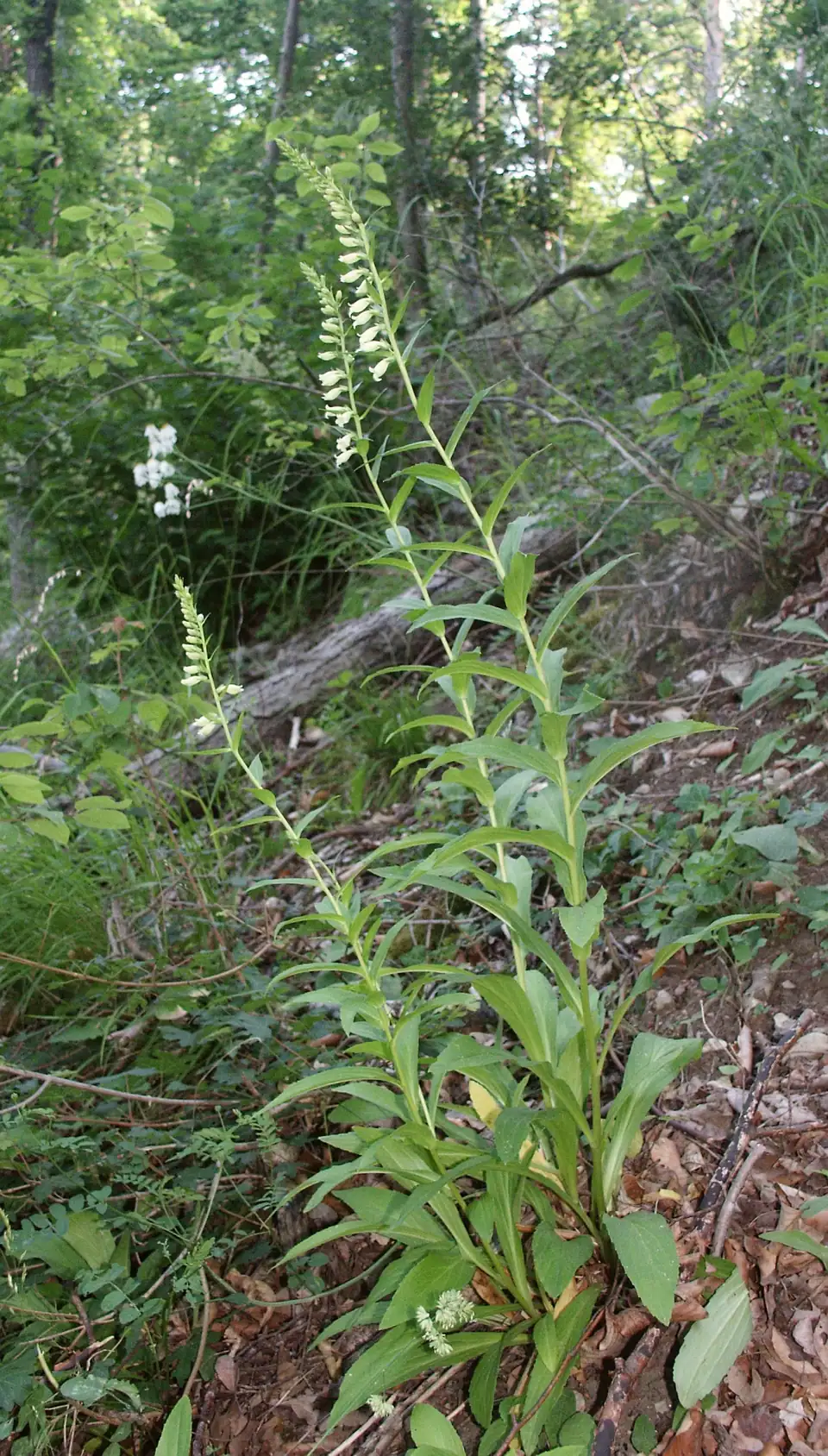
Mature height: 50-100 cm [20–39 in]
50-100 cm hoch, unverzweigt. Stängel kahl . Blätter wechselständig, lanzettlich, fein gezähnt, am Rand fein bewimpert
— Digitalis lutea L. [1] - Propagation
Grows from seed
What the sources say (1)
Propagation: Seed
Seed - surface sow early spring in a cold frame. The seed usually germinates in 2 - 4 weeks at 20°c
— Yellow Foxglove (Digitalis lutea) — Practical Plants [3] - Sowing
Sow in early spring on the soil surface, in a cold frame
What the sources say (1)
Sowing: Early spring (surface sow in a cold frame)
Seed - surface sow early spring in a cold frame. The seed usually germinates in 2 - 4 weeks at 20°c
— Yellow Foxglove (Digitalis lutea) — Practical Plants [3] - Safety
All parts of the plant are poisonous: never eat any of it
Overview
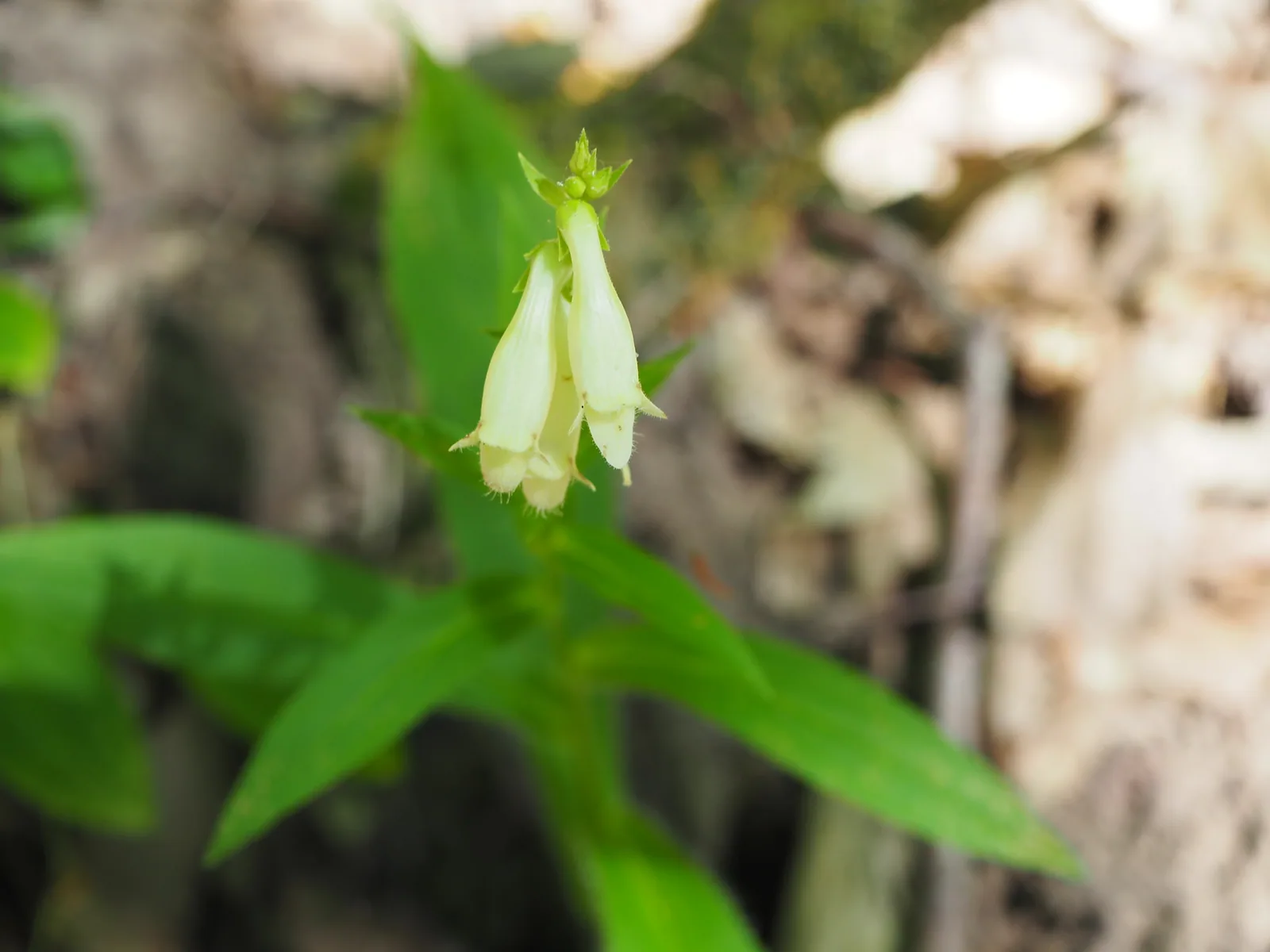
Digitalis lutea (straw foxglove) is an upright perennial grown in cottage gardens and perennial borders. [2] The plant is poisonous. [2][3]
This record is incomplete: the sources we read do not cover every field yet.
Not yet covered by our sources: Pruning
Straw Foxglove care
How to water Straw Foxglove
Watering
Drought tolerant once established; succeeds in dry soils
What the sources say (1)
It also succeeds in dry soils and, once established, is drought tolerantWatering notes
Full sun is tolerated if the soil is moist
What the sources say (1)
It prefers semi-shade but succeeds in full sun if the soil is moistHow much light Straw Foxglove needs
The sources disagree:
Habitat Woodlands, hedgerows and uncultivated fields on siliceous soils [12] . Light full sun Shade tolerance light shade
[3]
How much cold Straw Foxglove can take
Hardiness, coldest zone
3 [winter low −40 to −34.4 °C (−40 to −30 °F)]
Hardiness, warmest zone
9 [winter low −6.7 to −1.1 °C (20 to 30 °F)]
How to propagate Straw Foxglove
Seed
What the sources say (1)
Seed - surface sow early spring in a cold frame. The seed usually germinates in 2 - 4 weeks at 20°cHow to grow Straw Foxglove
The plant
Life cycle
perennial
What the sources say (1)
## Life form
Perennial hemicryptophyte
## Habitats
## Habitats © Delarze & al. 2015Family
Plantaginaceae
What the sources say (1)
Species
SIFS: 137300
Checklist: 1015360
- Plantaginaceae
- Digitalis
- Digitalis lutea L.Mature height
50-100 cm [20–39 in]
What the sources say (1)
50-100 cm hoch, unverzweigt. Stängel kahl . Blätter wechselständig, lanzettlich, fein gezähnt, am Rand fein bewimpertStraw Foxglove pests and problems
Wind breakage of flower stems
Symptom: Flowers are borne on sturdy stems that summer winds may break
What to do: Stake the stems
What the sources say (1)
The flowers are borne on sturdy stems but may need some staking to prevent summer winds from breaking them.
— Digitalis lutea | Chicago Botanic Garden [2]
Remedies
Each remedy shows what official sources say about it; traditional remedies without an official source are marked as such. Harmful ones are listed so you know to avoid them.
First aid
First aid: not a substitute for a doctor
swallowing foxglove plant
do not induce vomiting, go to the emergency room Official source, not independently tested
call your poison center right away at 1-800-222-1222 . Expert assistance is available 24 hours a day.
— poison.org [7] How: If anyone consumes any part of the foxglove plant, do not induce vomiting. If you are certain a part of the plant was swallowed, go to the Emergency Room immediately.
If anyone consumes any part of the foxglove plant, do not induce vomiting. If you are certain a part of the plant was swallowed, go to the Emergency Room immediately.
— poison.org [7]
Is Straw Foxglove poisonous?
Reported by the source, quoted verbatim. This is not medical or veterinary advice: if a person or an animal may have eaten this plant, contact a poison control centre or a veterinarian.
Use this upright plant, which attracts hummingbirds, as an accent in the perennial border. Caution: leaves are poisonous.
[2]All parts of the plant are poisonous [12] [11] . The plant is less dangerous that the common foxglove (D. purpurea) since its effects are not cumulative [12] .
[3]- Poisonous parts
All parts of the plant are poisonous [12] [11] . The plant is less dangerous that the common foxglove (D. purpurea) since its effects are not cumulative [12] .
[3]
Calendar
Sowing
Early spring (surface sow in a cold frame)
What the sources say (1)
Seed - surface sow early spring in a cold frame. The seed usually germinates in 2 - 4 weeks at 20°cPlanting
Summer (seedlings planted out)
What the sources say (1)
When they are large enough to handle, prick the seedlings out into individual pots and plant them out in the summer.Pruning
Not stated in the sources we read.
Months as given by the sources, which are mostly from the United States (northern hemisphere). In the southern hemisphere they shift by about six months.
Similar plants
- Foxglove Digitalis purpurea
- Yellow Foxglove Digitalis grandiflora
- Willow Leaf Foxglove Digitalis obscura
- Angelonia Angelonia angustifolia
- Birdeye Speedwell Veronica persica
- Blue Toadflax Linaria canadensis
- Brazilian Snapdragon Achetaria azurea
- Butter and Eggs Linaria vulgaris
Sources
Every value above is quoted from these documents. Links lead to the original publisher.
- Digitalis lutea L. · infoflora.ch, consulted
- Digitalis lutea | Chicago Botanic Garden · chicagobotanic.org, consulted
- Yellow Foxglove (Digitalis lutea) — Practical Plants · practicalplants.org, consulted
- Digitalis lutea (Straw foxglove) · florafinder.com, consulted
- Digitalis lutea (straw foxglove): Go Botany · gobotany.nativeplanttrust.org, consulted
- Phylogenetic tree - Gelber Fingerhut (Digitalis lutea L.) · i-flora.com, consulted
- poison.org · poison.org
Written by Emilio Marruso · last checked