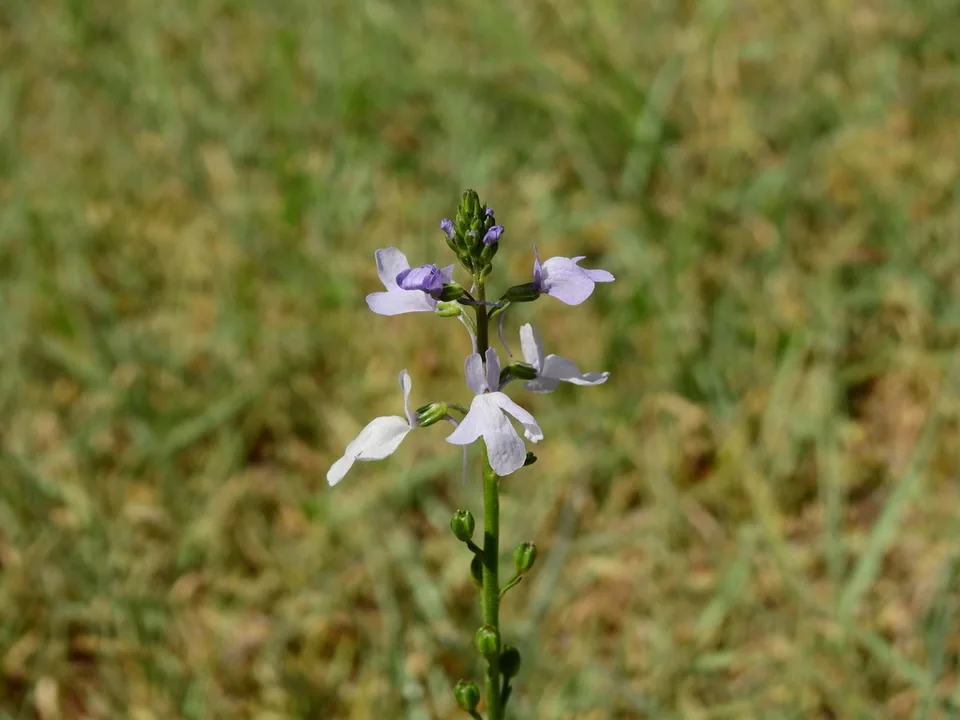
How to Grow and Care for Blue Toadflax
Linaria canadensis
Written by Emilio Marruso · last checked
At a glance
This slender little plant lives one or two years and grows from seed. Give it full sun, or just a little shade, and moist soil that drains well, and it will reach 1 to 1.5 feet tall while staying only 6 to 9 inches wide. Its narrow shape suits a sunny spot, but keep an eye on it, since it may become weedy.
- Sun
Full sun; a little shade is fine
What the sources say (2)
Light: Full sun; a little shade is tolerated
Prefers full sun and moist, well-drained, acidic, sandy or loamy soil with little competition from other plants.
— Linaria canadensis (Annual Toadlfax, Blue Toadflax, Canadian Toadflax, Common Toadflax, Old-field Toadflax, Toad-flax) | North Carolina Extension Gardener Plant Toolbox [1] Rocky soil, mesic conditions, and a little shade are also tolerated.
— Linaria canadensis (Annual Toadlfax, Blue Toadflax, Canadian Toadflax, Common Toadflax, Old-field Toadflax, Toad-flax) | North Carolina Extension Gardener Plant Toolbox [1] - Water
Keep the soil moist but never soggy
What the sources say (1)
Watering: Moist, well-drained soil
Prefers full sun and moist, well-drained, acidic, sandy or loamy soil with little competition from other plants.
— Linaria canadensis (Annual Toadlfax, Blue Toadflax, Canadian Toadflax, Common Toadflax, Old-field Toadflax, Toad-flax) | North Carolina Extension Gardener Plant Toolbox [1] - Cold
Survives winters down to 10 °F (−12.2 °C)
Hardy in cold winters · USDA 8a · RHS H5 · Z8
What the sources say (2)
Hardiness, coldest zone: 8a [winter low −12.2 to −9.4 °C (10 to 15 °F)]
USDA Plant Hardiness Zone: 8a, 8b, 9a, 9b, 10a, 10b
— Linaria canadensis (Annual Toadlfax, Blue Toadflax, Canadian Toadflax, Common Toadflax, Old-field Toadflax, Toad-flax) | North Carolina Extension Gardener Plant Toolbox [1] Hardiness, warmest zone: 10b [winter low 1.7 to 4.4 °C (35 to 40 °F)]
USDA Plant Hardiness Zone: 8a, 8b, 9a, 9b, 10a, 10b
— Linaria canadensis (Annual Toadlfax, Blue Toadflax, Canadian Toadflax, Common Toadflax, Old-field Toadflax, Toad-flax) | North Carolina Extension Gardener Plant Toolbox [1] - Soil
Soil that drains well, with a pH of 6.0 or lower
What the sources say (2)
Watering: Moist, well-drained soil
Prefers full sun and moist, well-drained, acidic, sandy or loamy soil with little competition from other plants.
— Linaria canadensis (Annual Toadlfax, Blue Toadflax, Canadian Toadflax, Common Toadflax, Old-field Toadflax, Toad-flax) | North Carolina Extension Gardener Plant Toolbox [1] Soil pH, maximum: 6.0
Soil pH: Acid (<6.0) Soil Drainage: Good Drainage Moist Occasionally Dry
— Linaria canadensis (Annual Toadlfax, Blue Toadflax, Canadian Toadflax, Common Toadflax, Old-field Toadflax, Toad-flax) | North Carolina Extension Gardener Plant Toolbox [1] - Watch out
It may spread and become weedy
- Size
1 to 1.5 ft tall and 6 to 9 in wide
What the sources say (2)
Mature height: 30-46 cm (1 ft 0 in - 1 ft 6 in)
Dimensions: Height: 1 ft. 0 in. - 1 ft. 6 in. Width: 0 ft. 6 in. - 0 ft. 9 in.
— Linaria canadensis (Annual Toadlfax, Blue Toadflax, Canadian Toadflax, Common Toadflax, Old-field Toadflax, Toad-flax) | North Carolina Extension Gardener Plant Toolbox [1] Mature width: 15-23 cm (0 ft 6 in - 0 ft 9 in)
Dimensions: Height: 1 ft. 0 in. - 1 ft. 6 in. Width: 0 ft. 6 in. - 0 ft. 9 in.
— Linaria canadensis (Annual Toadlfax, Blue Toadflax, Canadian Toadflax, Common Toadflax, Old-field Toadflax, Toad-flax) | North Carolina Extension Gardener Plant Toolbox [1] - Propagation
Grow new plants from seed
What the sources say (1)
Propagation: Seed
Recommended Propagation Strategy: Seed Country Or Region Of Origin:
— Linaria canadensis (Annual Toadlfax, Blue Toadflax, Canadian Toadflax, Common Toadflax, Old-field Toadflax, Toad-flax) | North Carolina Extension Gardener Plant Toolbox [1]
Overview
Blue toadflax is a native annual or biennial wildflower, sometimes cultivated as an ornamental. [1] It prefers full sun and moist, well-drained, acidic, sandy or loamy soil. [1] It may become weedy, though it is less aggressive than yellow or Dalmatian toadflax. [1]
This record is incomplete: the sources we read do not cover every field yet.
Not yet covered by our sources: Pruning
Blue Toadflax care
How to water Blue Toadflax
Moist, well-drained soil
What the sources say (1)
Prefers full sun and moist, well-drained, acidic, sandy or loamy soil with little competition from other plants.How much light Blue Toadflax needs
Full sun; a little shade is tolerated
What the sources say (2)
Prefers full sun and moist, well-drained, acidic, sandy or loamy soil with little competition from other plants.Rocky soil, mesic conditions, and a little shade are also tolerated.How much cold Blue Toadflax can take
Hardiness, coldest zone
8a [winter low −12.2 to −9.4 °C (10 to 15 °F)]
What the sources say (1)
USDA Plant Hardiness Zone:
8a, 8b, 9a, 9b, 10a, 10bHardiness, warmest zone
10b [winter low 1.7 to 4.4 °C (35 to 40 °F)]
What the sources say (1)
USDA Plant Hardiness Zone:
8a, 8b, 9a, 9b, 10a, 10bBest soil for Blue Toadflax
6.0
What the sources say (1)
Soil pH:
Acid (<6.0)
Soil Drainage:
Good Drainage
Moist
Occasionally DryHow to propagate Blue Toadflax
Seed
What the sources say (1)
Recommended Propagation Strategy:
Seed
Country Or Region Of Origin:How to grow Blue Toadflax
The plant
Life cycle
annual, biennial
What the sources say (1)
Life Cycle:
Annual
Biennial
Recommended Propagation Strategy:
SeedFamily
Plantaginaceae
What the sources say (1)
Genus:
Linaria
Species:
canadensis
Family:
Plantaginaceae
Life Cycle:Mature height
30-46 cm (1 ft 0 in - 1 ft 6 in)
What the sources say (1)
Dimensions:
Height: 1 ft. 0 in. - 1 ft. 6 in.
Width: 0 ft. 6 in. - 0 ft. 9 in.Mature width
15-23 cm (0 ft 6 in - 0 ft 9 in)
What the sources say (1)
Dimensions:
Height: 1 ft. 0 in. - 1 ft. 6 in.
Width: 0 ft. 6 in. - 0 ft. 9 in.Blue Toadflax pests and problems
Weediness
Symptom: May become weedy
What to do: No management given in the source
What the sources say (1)
Blue toadflax may become weedy; however, it is not as aggressive or invasive as Linaria vularis
— Linaria canadensis (Annual Toadlfax, Blue Toadflax, Canadian Toadflax, Common Toadflax, Old-field Toadflax, Toad-flax) | North Carolina Extension Gardener Plant Toolbox [1]
Remedies
Each remedy shows what official sources say about it; traditional remedies without an official source are marked as such. Harmful ones are listed so you know to avoid them.
Getting rid of it
oldfield toadflax in lawn
dense turf by proper mowing, fertilizing and watering Works
How: Maintain a dense, actively growing turf through proper mowing, fertilizing, and watering practices; mow at the proper height; core and limit traffic to reduce compaction. Best to control it in spring or fall when actively growing.
Maintain a dense, actively growing turf through proper mowing, fertilizing, and watering practices.
— turffiles.ncsu.edu [3] What the evidence says Proper turf management is important for biennial broadleaf weed control.
— turffiles.ncsu.edu [3]
Calendar
Pruning
Not stated in the sources we read.
Months as given by the sources, which are mostly from the United States (northern hemisphere). In the southern hemisphere they shift by about six months.
Similar plants
- Butter and Eggs Linaria vulgaris
- Purple Toadflax Linaria purpurea
- Toadflax Linaria maroccana
- Angelonia Angelonia angustifolia
- Birdeye Speedwell Veronica persica
- Brazilian Snapdragon Achetaria azurea
- Buckhorn plantain Plantago coronopus
- Coral Plant Russelia equisetiformis
Sources
Every value above is quoted from these documents. Links lead to the original publisher.
- Linaria canadensis (Annual Toadlfax, Blue Toadflax, Canadian Toadflax, Common Toadflax, Old-field Toadflax, Toad-flax) | North Carolina Extension Gardener Plant Toolbox · plants.ces.ncsu.edu, consulted
- Toad-flax - Linaria canadensis | North Carolina Extension Gardener Plant Toolbox · plants.ces.ncsu.edu, consulted
- turffiles.ncsu.edu · turffiles.ncsu.edu
Written by Emilio Marruso · last checked